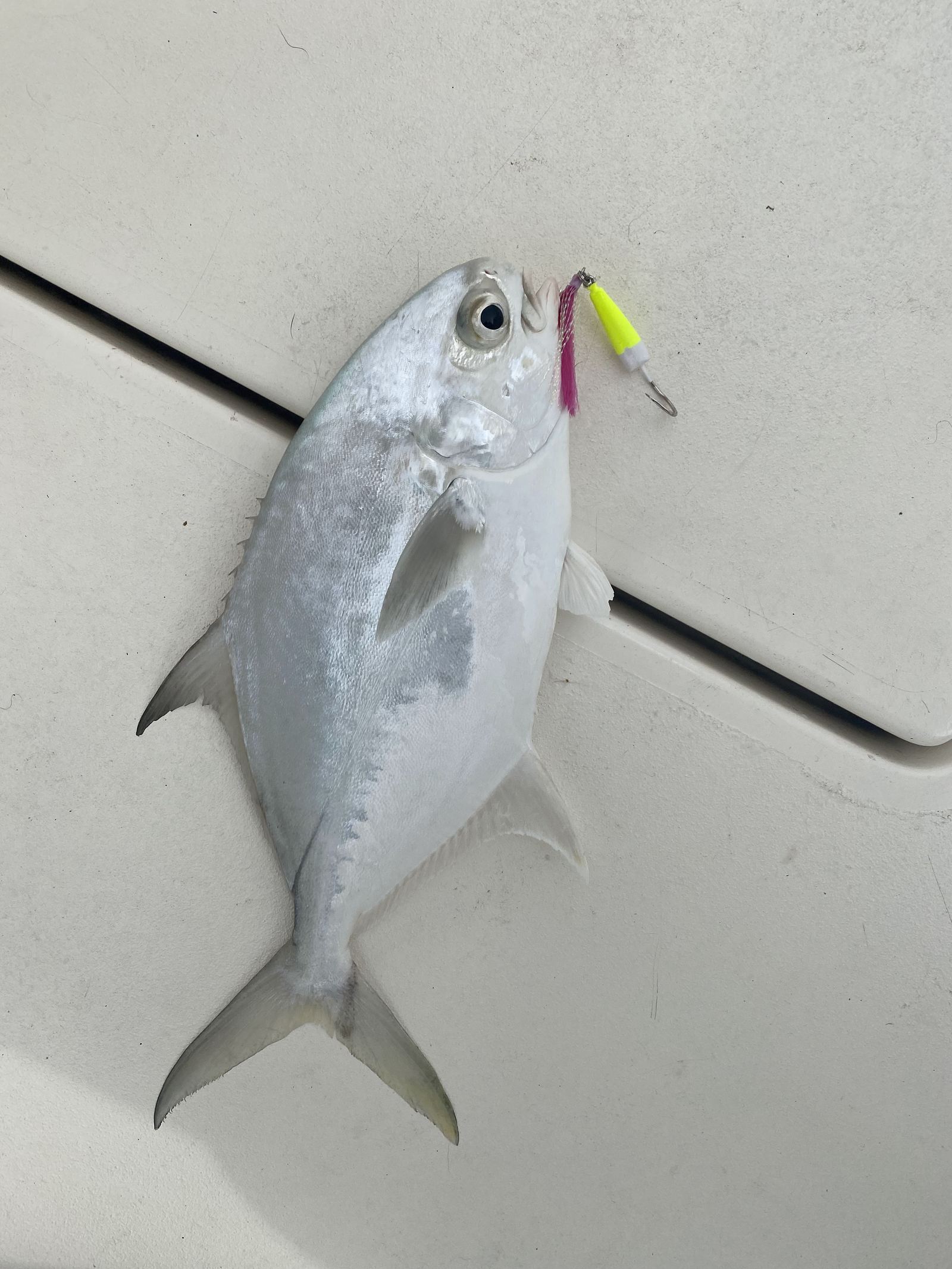
You can catch every inshore fish in Sarasota Bay on live bait — but a box of the right artificials lets you cover water, match the moment, and fish when the bait well runs dry. These are the seven lures that actually earn their spot in a Sarasota tackle box, and the exact time to tie each one on. If you’d rather fish bait, our live bait guide covers that side.
1. Soft-plastic paddletail on a jig head — the do-everything
If you carry one lure, carry this. A 3–4” paddletail (white, root beer, or new penny) on a 1/8–1/4 oz jig head catches spotted seatrout, redfish, snook, and flounder — every gamefish on the bay. When: all day, all year, over the grass flats. Slow-hop it along the bottom for reds and flounder, swim it mid-column for trout. Jig-head technique carries over from our jigging guide.
2. Walking topwater plug — the dawn blowup
A walk-the-dog surface plug (Spook, Skitter Walk) worked across a flat at first light draws the most violent strikes in fishing. When: the first hour of daylight and the last hour before dark, spring through fall, over 2–4 feet of grass. Snook and big trout crush it; reds will too on a calm morning. Full method in our topwater guide.
3. Popping cork + soft plastic or shrimp — the great equalizer
Nothing puts a beginner on trout faster. A popping cork with a soft plastic or a Gulp shrimp suspended 18–30” below it, popped every few seconds, calls fish in and keeps the bait in the strike zone. When: over deep grass, any tide, especially when the water’s stained or the fish are scattered. This is the highest-percentage rig on the bay — see the popping cork guide.
4. Gold weedless spoon — the redfish flat
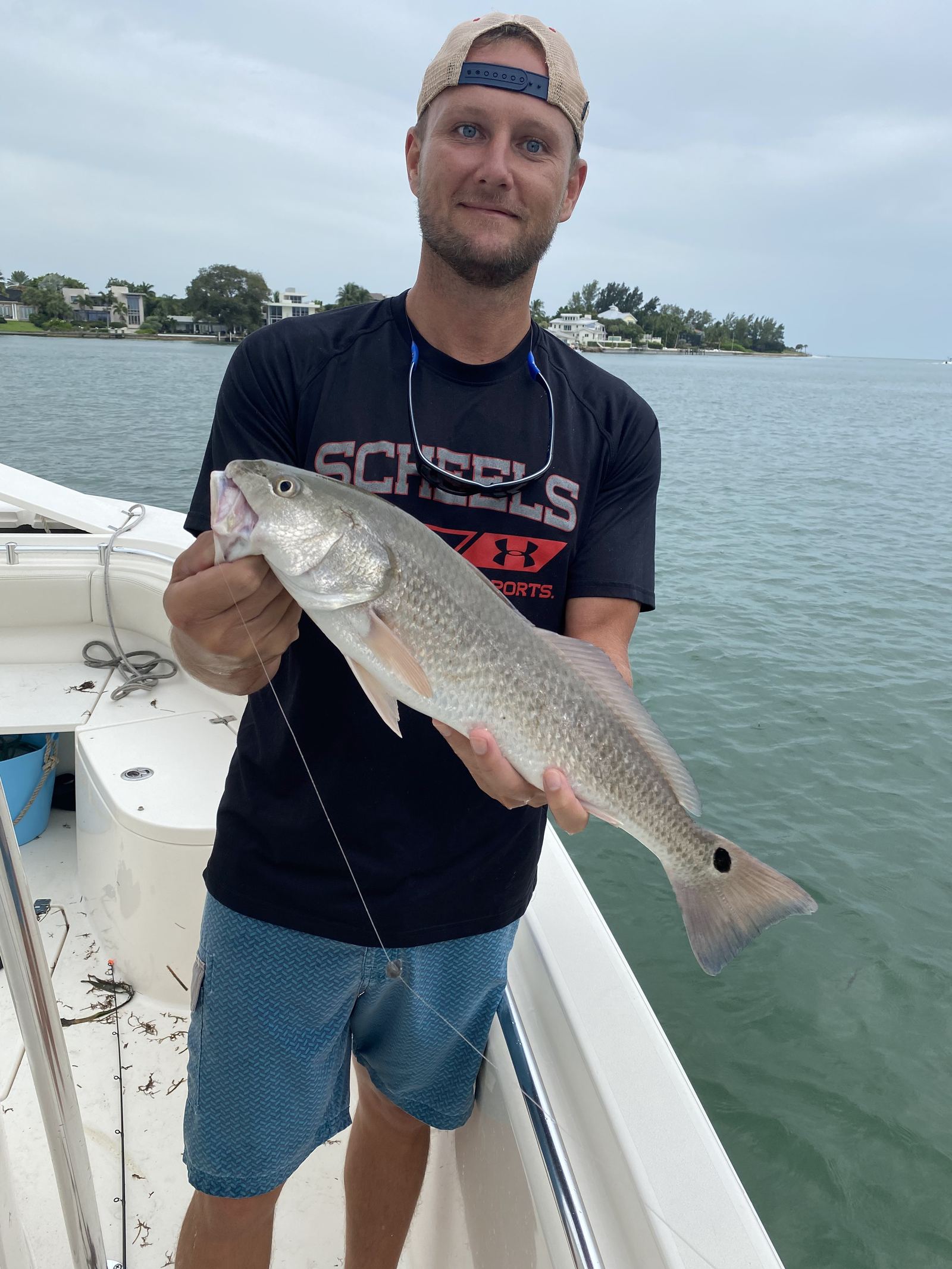
A gold or copper weedless spoon is a redfish classic for a reason: it flashes, it comes through grass clean, and reds track it down. When: on the flats for cruising or tailing redfish, especially on a higher tide when they push up shallow. Sight-fish it — cast ahead of the fish and lead it. Technique in our sight fishing guide.
5. Soft jerkbait — snook in the mangroves
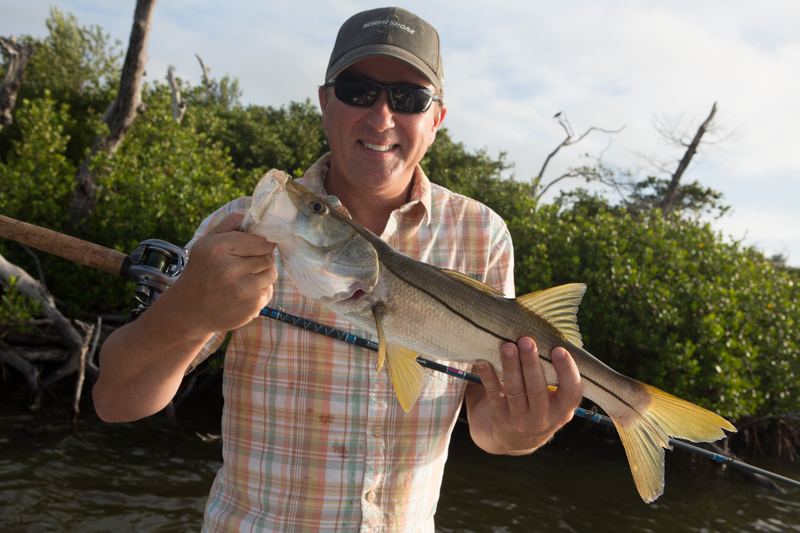
A weightless or lightly weighted soft jerkbait (DOA CAL, Slug-Go) darts erratically and lands quietly — perfect for pitching to snook tucked under mangroves and around dock pilings. When: high tide along the mangrove shoreline, and around docks and structure where a loud lure would spook fish.
6. Flair hawk / bucktail jig — the pass and current fish
When you’re fishing the passes and bridge shadow lines, a heavy flair-hawk or bucktail jig gets down in the current where snook and tarpon hold. When: moving tide in Big Pass, New Pass, and around the bridges, day or night. Bounce it in the current seams; the flair-hawk is the pass-snook standard.
7. Suspending twitchbait — the winter fish
A suspending twitchbait (MirrOlure MirrOdine, Paul Brown’s) hangs in the water column on the pause, which is exactly what cold, sluggish fish want. When: December–February, when the water drops into the 50s–60s and trout and snook won’t chase. Twitch-twitch-pause, and let it sit. This is the lure that saves a cold-front day.
What’s the single best lure for Sarasota Bay?
A soft-plastic paddletail on a jig head — it catches everything, costs little, and works every month of the year. If you’re brand new, start with a popping cork and a Gulp shrimp; it’s the easiest way to catch a trout on the flats.
A note on the grass
Sarasota Bay’s seagrass is why the fishing is good — and prop scars take 5 to 10 years to heal. Trim up and pole, troll, or drift across the shallow flats instead of running them. The Sarasota County seagrass and reef program and FWC’s seagrass information explain what’s at stake. Fish that live on healthy grass, like redfish and trout, depend on it.
FAQ
Artificials or live bait for Sarasota Bay? Both work. Live bait (our guide) is more forgiving; lures let you cover water and fish light. Most locals carry both and switch based on the day.
What color soft plastic works best? Natural tones (new penny, root beer) in clear water; white or chartreuse in stained water or low light. When in doubt, throw white.
When should I throw topwater? First and last light, spring through fall, over shallow grass and calm water. Once the sun’s high, switch to a paddletail or popping cork.
Related
Match your lure to the fish: spotted seatrout, redfish, and snook, and the techniques that throw them — topwater, popping cork, and sight fishing. Then time your trip with the fishing calendar.