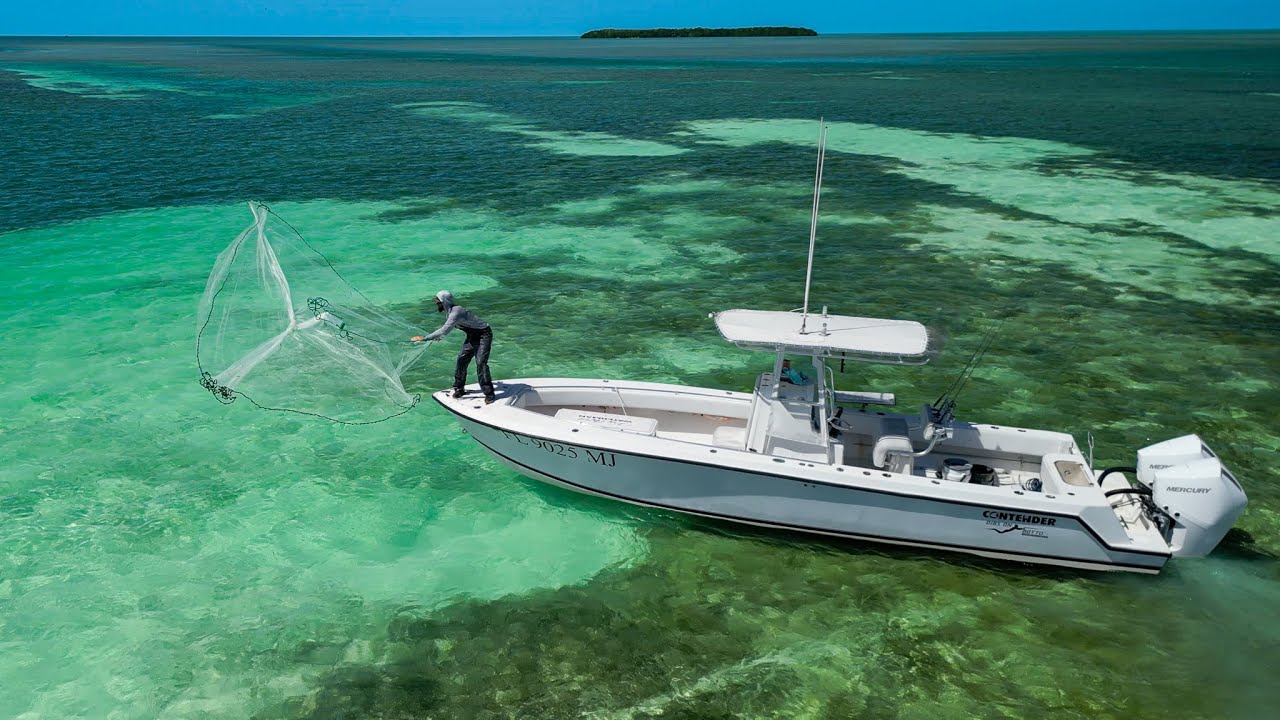
Catching your own live bait is the single biggest skill divide between anglers who catch fish in Sarasota and anglers who watch. A round livewell of frisky scaled sardines, a bucket of shrimp caught under a dock light, or a dozen pass crabs dipped on an outgoing tide will out-fish a tackle box of lures on most days from April through November. This guide covers every bait that matters here — how to catch it, where, when, the Florida law that governs it, and how to keep it alive once it’s aboard.
Sarasota’s advantage is that almost all of it swims within a mile of the ramp. Whitebait hold on the grass flats, shrimp glow under seawall lights at night, pinfish live on every grass-to-sand edge, and pass crabs flush through Big Pass and New Pass on the tide. Learn to gather your own and you fish on your schedule, not the bait shop’s.
What live baits can you catch in Sarasota?
Seven baits cover nearly everything that swims here. Match the bait to the fish you want, then jump to the deep-dive guide for the how-to.
| Bait | Best gathered by | Catches | Deep guide |
|---|---|---|---|
| Whitebait (scaled sardine) | Cast net + chum | Snook, redfish, trout, mackerel, tarpon | Cast-netting whitebait |
| Threadfin herring (“greenies”) | Sabiki / cast net | Kingfish, tarpon, cobia | Cast-netting whitebait |
| Live shrimp | Buy, or night dip-net | Everything inshore | Shrimp & crabs |
| Pass crabs | Dip net on the tide | Tarpon (#1), permit, cobia | Shrimp & crabs |
| Fiddler / blue crabs | Hand, trap, dip | Sheepshead, black drum, redfish | Shrimp & crabs |
| Pinfish & pigfish | Trap, sabiki | Snook, reds, grouper, big trout | Pinfish & baitfish |
| Mullet | Cast net | Snook, tarpon, big trout, cut bait | Pinfish & baitfish |
This page is about catching bait. Once you have it, the live bait fishing technique guide covers rigging, circle hooks, free-lining, and live-chumming a flat until fish blow up.
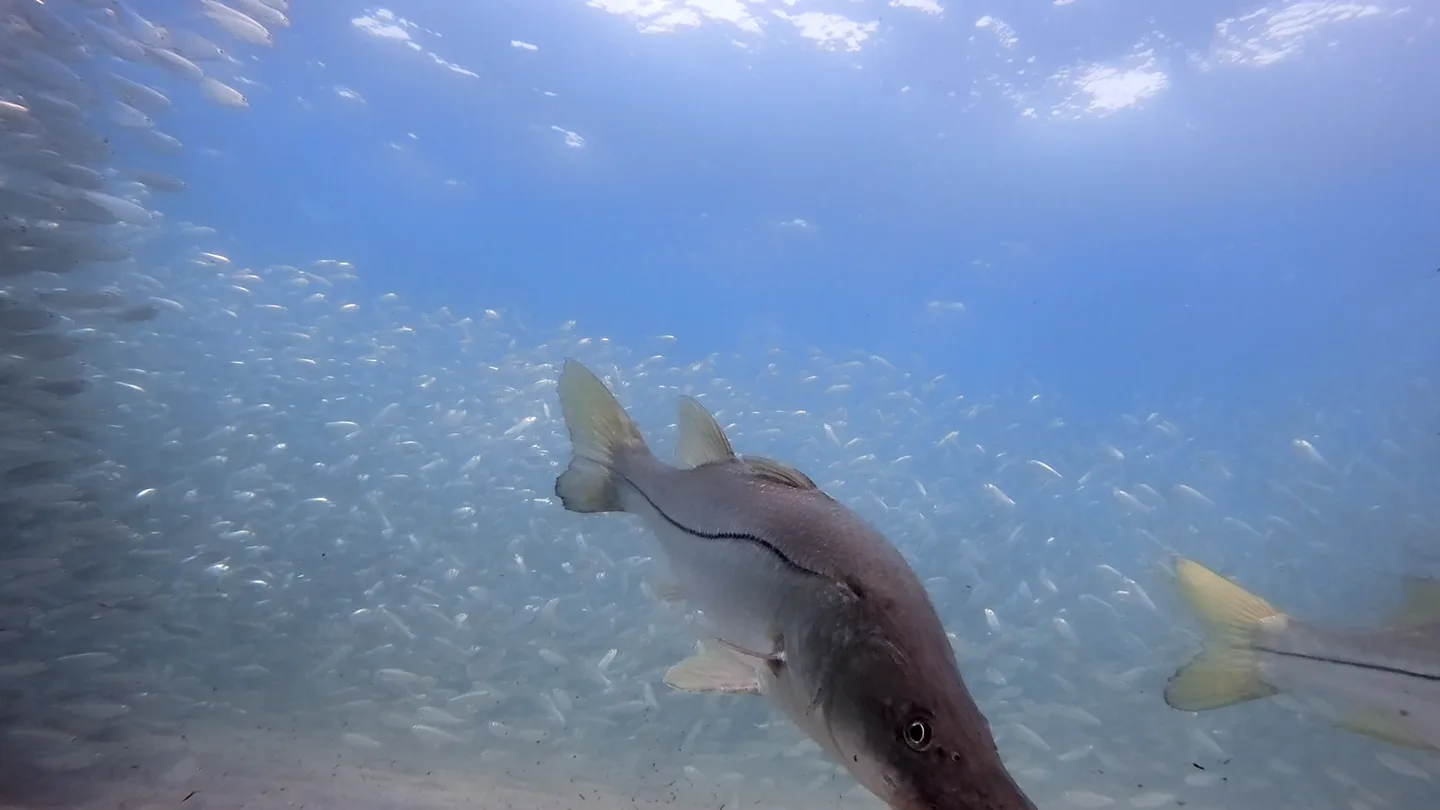
Seven baits cover nearly everything — all within a mile of the ramp.
Whitebait — the premium Sarasota bait
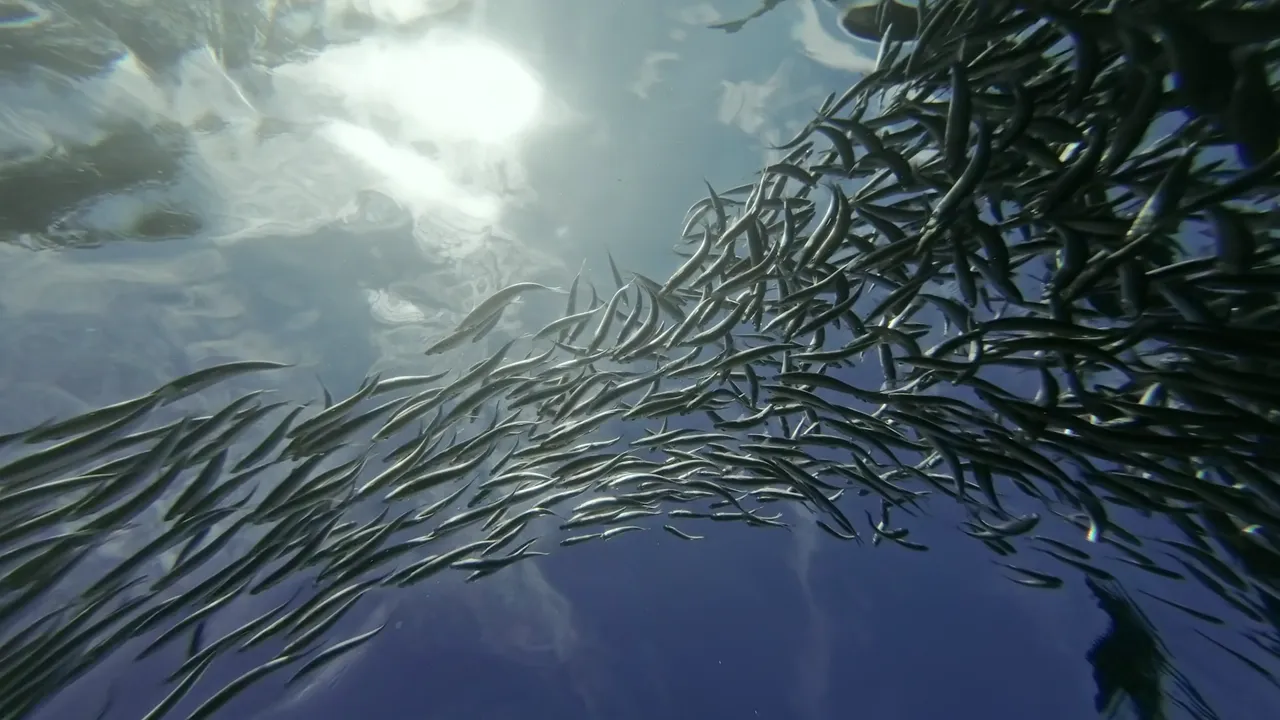
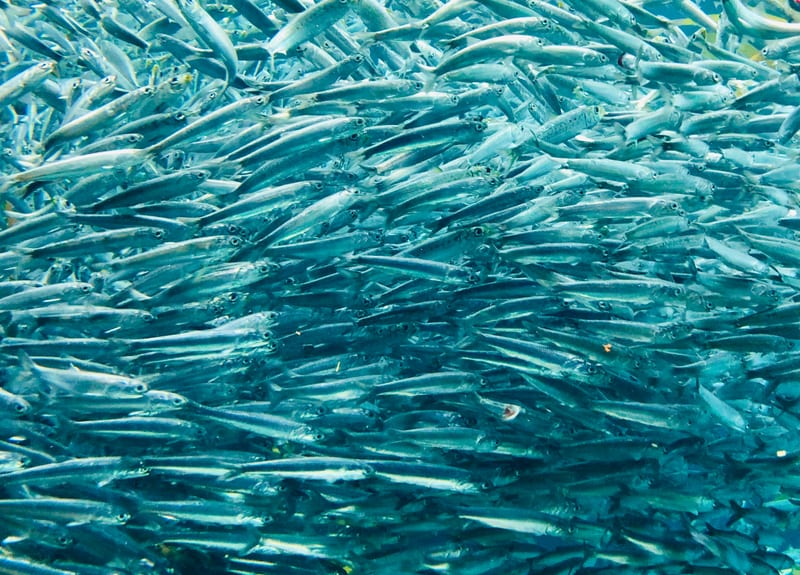
Scaled sardine (Harengula jaguana) is the local currency. Anglers call it whitebait, pilchard, or loosely “greenback.” It is a 4–6 inch silver baitfish with a single dark spot behind the gill, and it is the dominant forage on Sarasota Bay’s grass flats spring through fall. Snook, redfish, trout, Spanish mackerel, and mangrove snapper eat it every day. The FWC scaled sardine profile has the full ID.
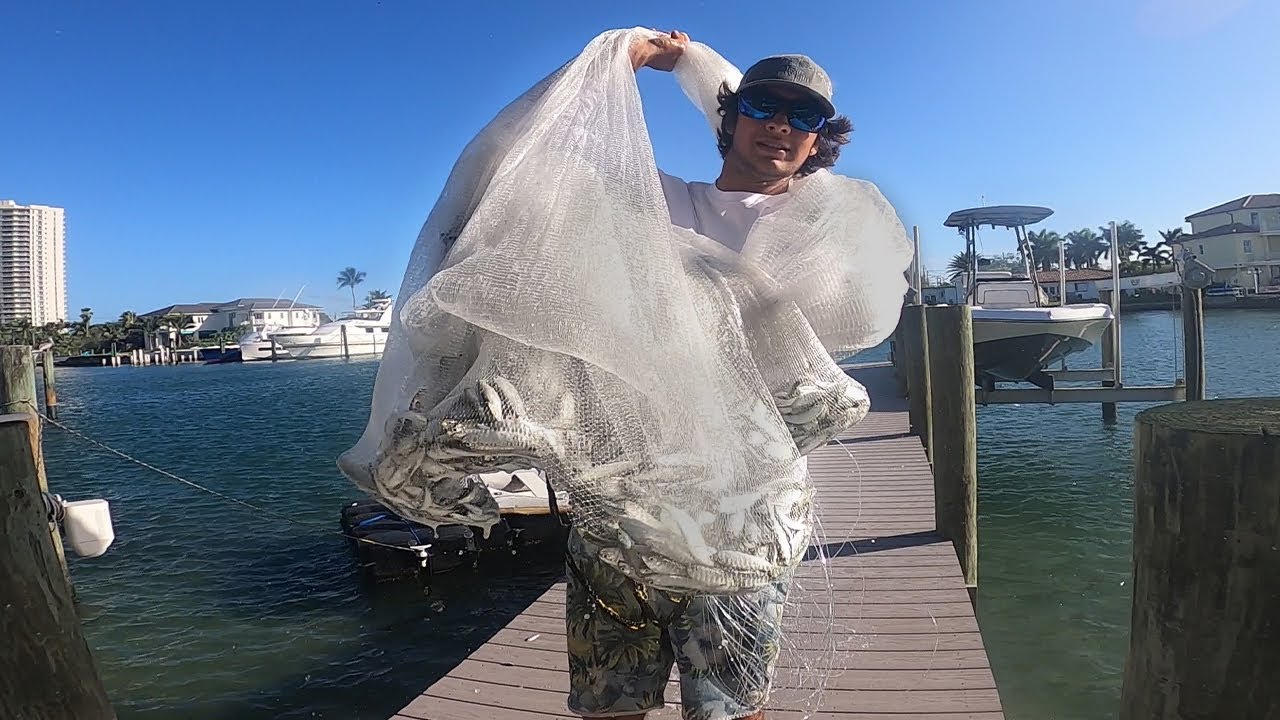
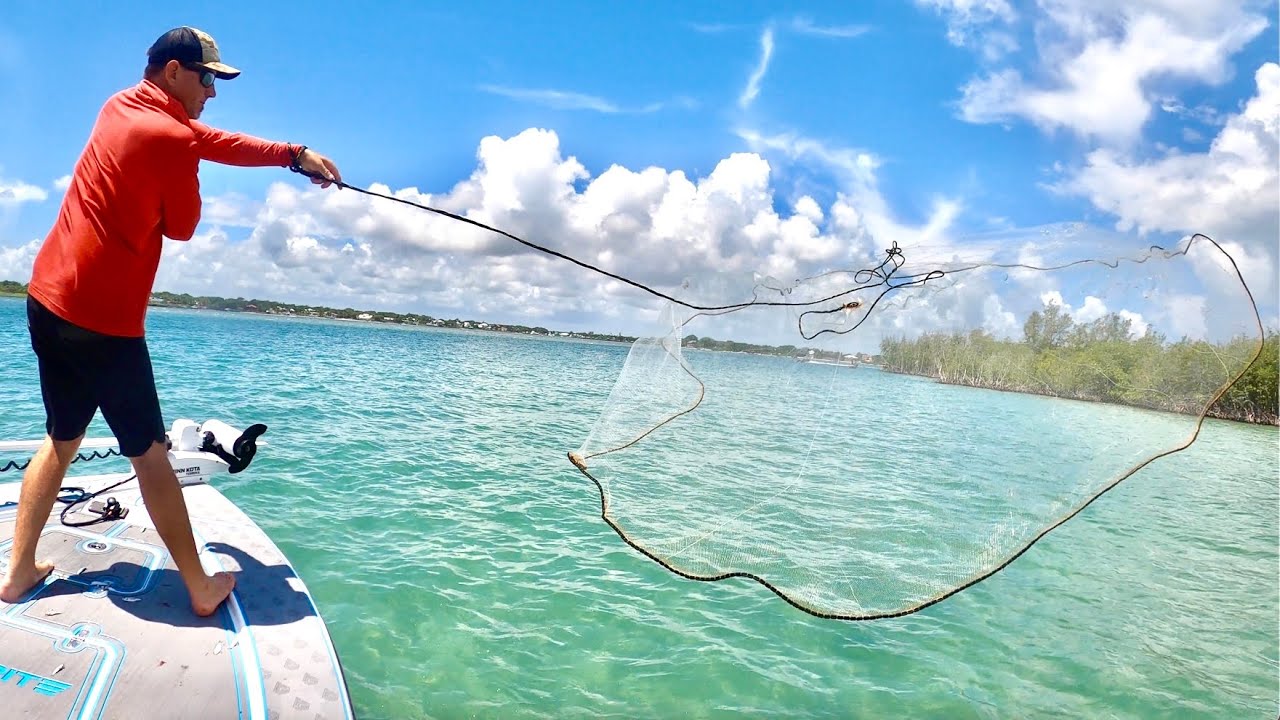
You catch it with a cast net and chum. The 30 minutes before to 30 minutes after sunrise is the window — bait surfaces and “flicks” on top, and you can see the school as a dark cloud or a shimmer over the sand. Later in the morning it sinks and sees you coming. A golf-ball clump of Purina-based chum every 15–20 seconds holds the school in your casting circle and lifts whitebait off the bottom (pinfish stay down — that’s how you sort them). Full detail: cast-netting whitebait.
Local whitebait spots include Zwicks Channel, the flat south of Marker #5 in summer, the Middle Grounds grass north of the New Pass sandbar, and the edges of Big Pass and New Pass. More GPS-level detail lives in Sarasota’s best fishing spots and the passes and inlets guide. Diving pelicans are a tell: birds working the surface mark a bait school you can cast-net.
Live shrimp and crabs
Most SWFL anglers buy live shrimp — the bait shops keep them year-round and they’re hardy and universal. Catching your own is a night activity: a submersible green light off a seawall or dock, a long-handled dip net, and a marked bucket. Shrimp glow-eye under the light and drift with the current; you slide the net into their path rather than chase them. Florida allows 5 gallons heads-on per person per day, and Sarasota has no seasonal closure (FWC shrimp regs).
Crabs split three ways. Pass crabs are the #1 tarpon bait April–July — small swimming crabs that flush out the passes on strong falling tides, dip-netted from the rip lines. Fiddler crabs are the sheepshead bait, hand-grabbed on exposed shoreline at low tide. Blue crabs, quartered, take sheepshead, black drum, and redfish. All three, plus keeping shrimp alive, are covered in catching shrimp and crabs.
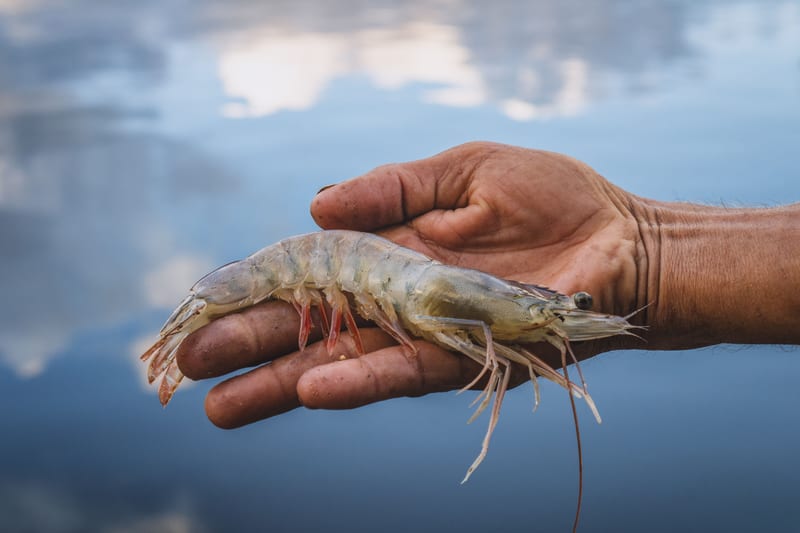
Pinfish and pigfish
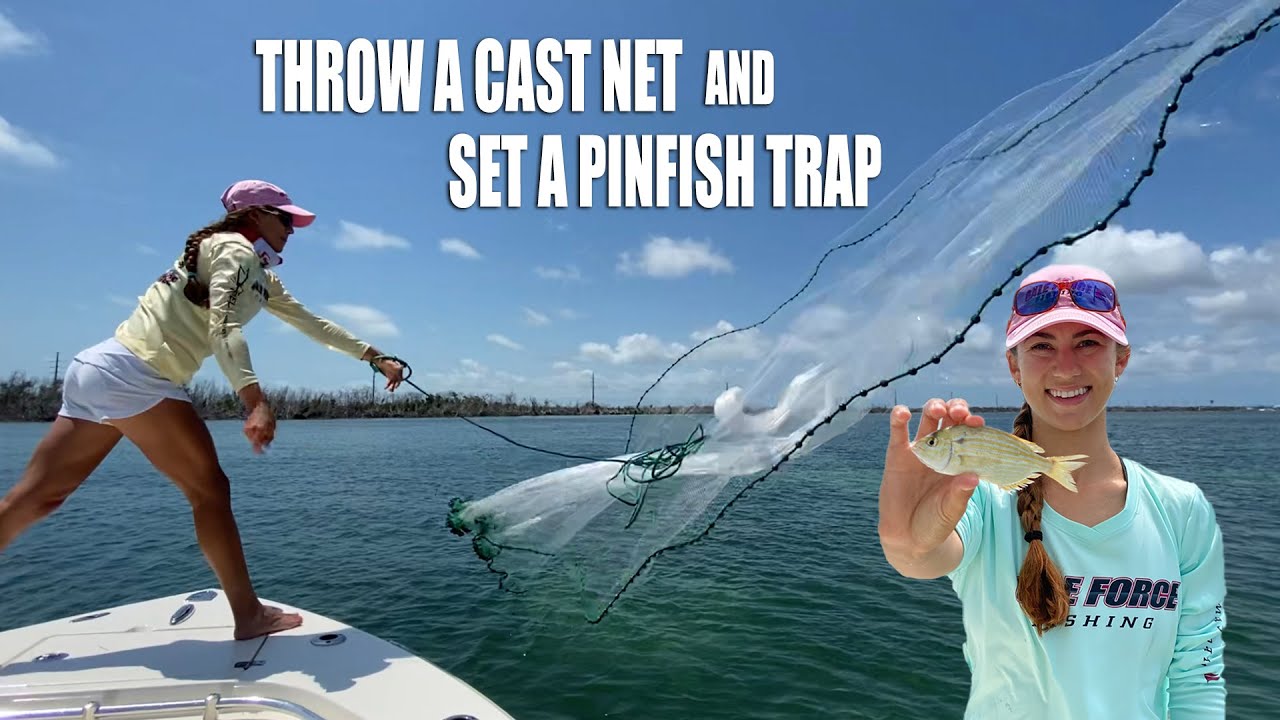
Pinfish are the workhorse cut- and live-bait for snook, redfish, and gag grouper — tough, easy to keep, and everywhere on the grass-to-sand edges. Catch them on a small gold-hook sabiki tipped with shrimp, or set a baited wire trap overnight and pull it in the morning. Pigfish (a grunt) is the premier live seatrout bait — they grunt, and trout home in on the sound.
The advantage of this group is durability. Pinfish and mullet keep in a plain aerated bucket all day, so you can catch them the evening before and skip netting on the morning of the trip — a pinfish trap pulled at the ramp means you launch with bait already aboard. Threadfin herring are the exception: oily, fragile, and oxygen-hungry like whitebait, they’re worth the extra care because they’re the top bait for king mackerel, cobia, and big snook — catch them on a #6–#8 sabiki with green quills thrown into a surface school.
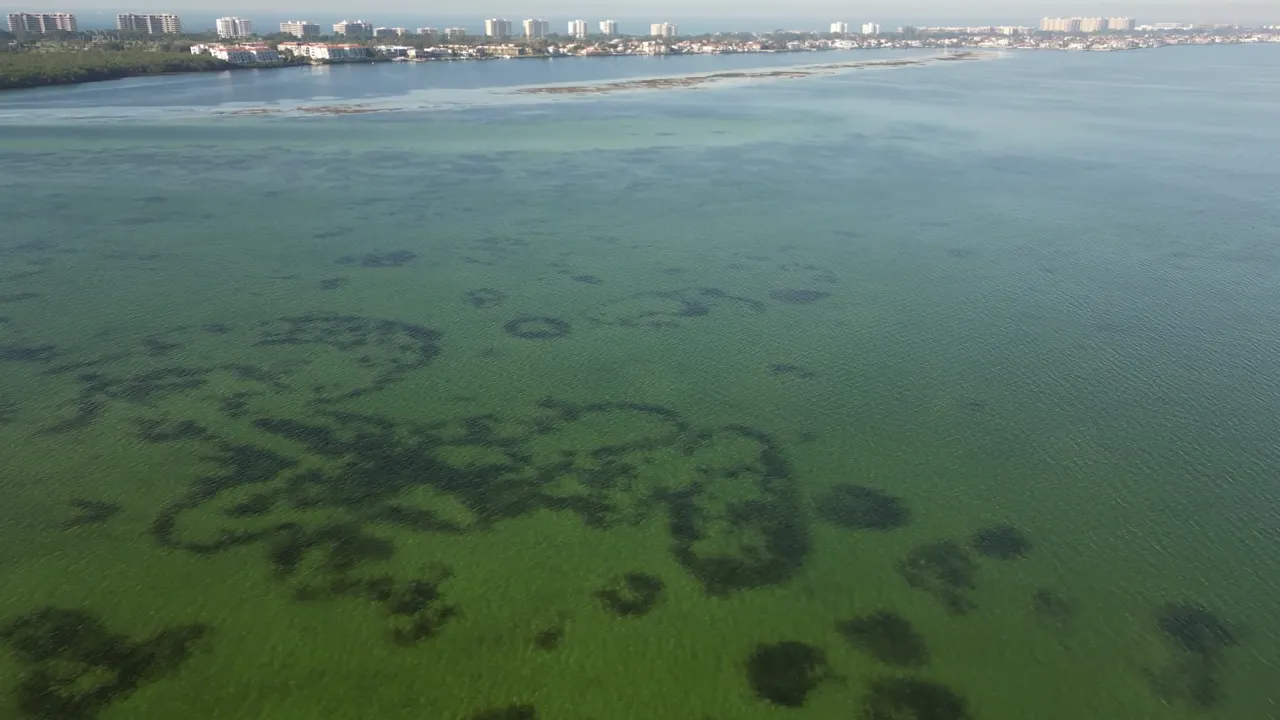
Pinfish live on every grass-to-sand edge and keep all day in a bucket.
Mullet — finger baits and the fall run
Mullet is the biggest bait in the box and the one that draws the biggest fish. It splits into two jobs by size. Finger mullet, three to five inches, are a premium live bait for snook, redfish and tarpon — big enough that a good fish commits, small enough to swim naturally on a free-lined circle hook. Big mullet, hand-sized and up, are tarpon and shark bait live, and the best cut bait on this coast: a fresh mullet head or a thick chunk on the bottom in a pass is a classic big-fish soak.
You catch them with a cast net, not a sabiki — mullet do not eat a hook. Use a fast-sinking net and throw it quietly; mullet spook off noise and shadow more than whitebait does. Work the places they hold tight to structure: seawalls and canal mouths, creek mouths on a falling tide, and the beach troughs, where schools run the sand a rod-length off the beach. Approach with the trolling motor off if you can, and throw ahead of a moving school rather than on top of it.
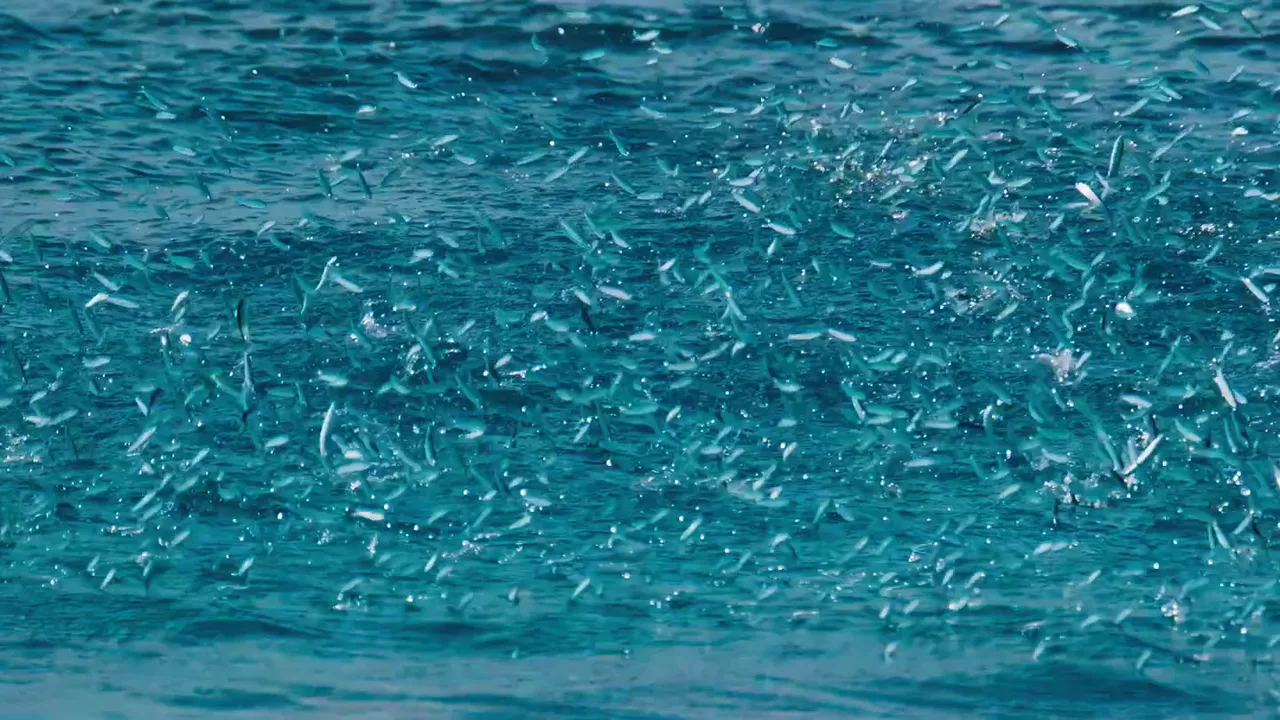
Fish the edge of the school, not the middle of it.
The one time of year every angler here watches for is the fall mullet run, when huge schools push down the beaches and everything that eats — snook, tarpon, kingfish, jacks, sharks — sets up on the edges of them. During the run you often do not need to hunt bait at all: it is on the beach in front of you, and the fishing is a matter of putting a bait on the edge of the school rather than into the middle of it.
Mullet are also the easy ones to keep. Like pinfish, they hold in a plain aerated bucket or a flow-through well all day, so a net-full the evening before still fishes fine the next morning. Netting technique, mesh sizes and traps are covered in catching pinfish and baitfish, and the throw itself in cast-netting whitebait.
When is each bait available? A Sarasota bait calendar
Bait availability drives what you can fish for, month by month. This is the general pattern — a cold winter or a red-tide event shifts it, so check water conditions before you commit.
| Bait | Winter (Dec–Feb) | Spring (Mar–May) | Summer (Jun–Aug) | Fall (Sep–Nov) |
|---|---|---|---|---|
| Whitebait | Scarce — buy or use shrimp | Shows on bridges/markers | Peak on the flats | Strong, then thins |
| Threadfin | Sparse | Building | Peak | Good |
| Live shrimp | Prime (runs on falling tide) | Steady | Steady | Steady |
| Pass crabs | None | Starts Apr | Peak (moon tides) | Winds down |
| Fiddler crabs | Prime (sheepshead run) | Good | Good | Building |
| Pinfish | Available | Strong | Peak | Strong |
| Mullet | Fall run tapers | Present | Present | Fall mullet run |
The practical takeaway: from April through November whitebait carries the program, and in the winter you pivot to live shrimp and fiddler crabs for the sheepshead and black drum season. Pass crabs are a tight May–August window tied to the moon tides and the tarpon run. Match your monthly plan to the month-by-month Sarasota fishing calendar.
What gear do you need to catch bait?
You don’t need all of it at once — build toward the baits you fish most.
| Gear | For | Spec |
|---|---|---|
| Cast net | Whitebait, threadfin, mullet | 8–10 ft, 1/4 in or 3/8 in mesh |
| Round livewell + high-flow pump | Whitebait, threadfin | 750+ GPH; do not outrun the pump |
| Sabiki rigs | Threadfin, pinfish, pigfish | #4–#12 hooks |
| Pinfish trap | Pinfish | Wire/plastic, baited overnight |
| Green submersible light + dip net | Shrimp | Faint surface glow |
| Dip net (long handle) | Pass crabs, shrimp | ≤96 in perimeter |
| Chum bucket | Whitebait | Purina or fish-meal mix + pogie oil |
A cast net and a decent livewell are the two purchases that change your fishing most — everything else is cheap and situational. The bait and tackle shops guide lists where to buy nets, sabikis, and traps locally, and which shops keep live bait when you’d rather skip the catching.
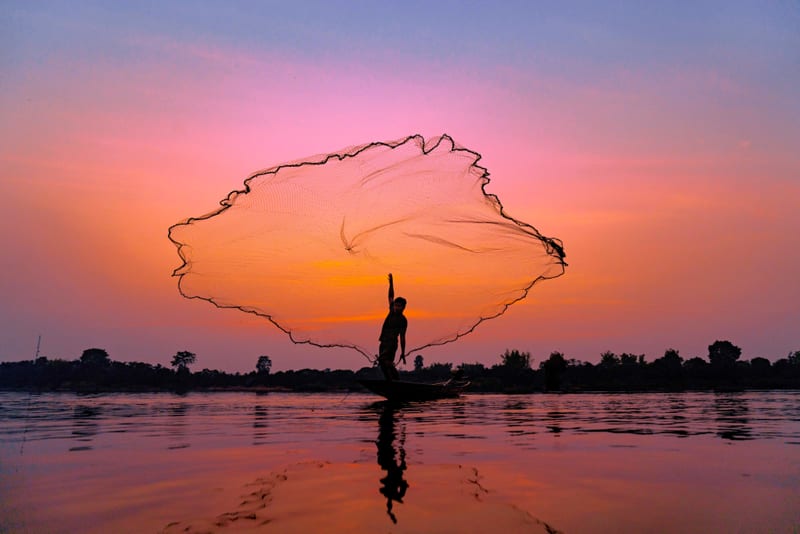
Florida cast-net and bait law (2026)
Netting bait is legal and easy in Florida, but a few rules govern it. Verify current regulations at myfwc.com before you fish — these change.
| Rule | The number | Source |
|---|---|---|
| Max cast net | 14 ft stretched length (≤500 sq ft mesh) | FL rec gear |
| Nets per vessel | 2 max; 1 per person off a vessel | Cast-net rules |
| Dip net | ≤96 in perimeter | FL rec gear |
| License | Saltwater rec license required to net any marine organism | Fishing licenses |
| Shrimp limit | 5 gal heads-on/person/day; 5 gal/vessel | FWC shrimp |
Key points: whitebait, greenbacks, threadfin, menhaden, pinfish, and pigfish are unregulated bait species — legal to cast-net with no size or bag limit. Gamefish like snook, trout, and tarpon may not be taken by net. A recreational saltwater fishing license is required the moment you throw a net for bait (exemptions: under-16, Florida residents 65+, and certain shore-based cases). Cast-net restrictions also apply in some state parks, aquatic preserves, and near artificial reefs — check the specific water, including Sarasota Bay aquatic preserve zones. The full rundown is in the FWC regulations guide and the official 2026 saltwater regulations.
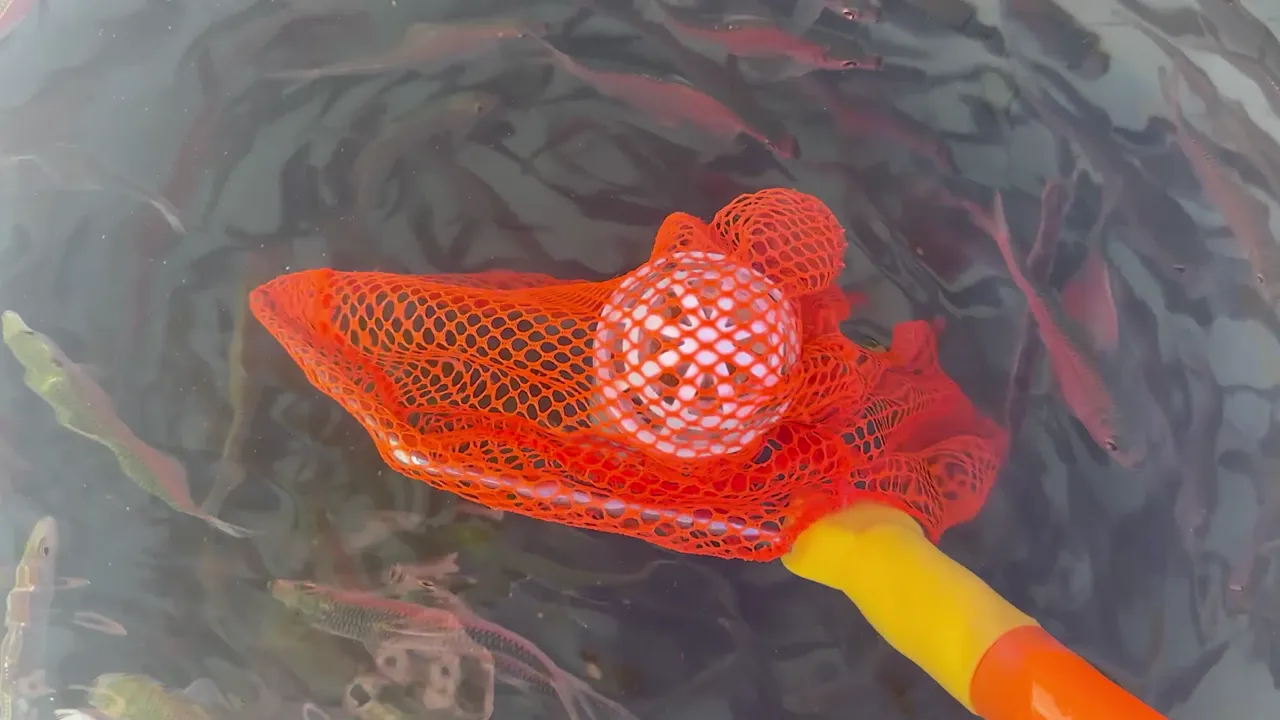
Flow keeps bait alive — outrun the pump and the well goes over dead.
How do you keep live bait alive?
Catching bait is half the job. Keeping it frisky is the other half, and it’s where most trips fail. Different baits have wildly different oxygen needs.
- Whitebait, threadfin, and menhaden are oxygen hogs. Use a round or oval livewell with no square corners, plumbed so water enters at an angle and spins the well — baits swim into the current like they do in the wild. Run a high-flow open-loop pump (750+ GPH; a 30-gallon well wants ~1,260 GPH), not a battery bubbler. Reference: Marlin livewell 101 and boattest livewells.
- It’s flow, not a fish count. A round well on a strong pump carries far more bait than any per-gallon rule suggests; a weak pump crashes on a fraction of it. Outrun the pump’s capacity and ammonia and oxygen crash — you’ll dump a well of dead bait an hour in.
- Keep the water clean and cool, net dead ones out fast, and never put bare hands in the well. Sunscreen and oil coat the baits’ gills and kill them (saltwater sportsman).
- Shrimp want an aerated bait bucket with clean, cool water changed often — pull dead shrimp immediately, they foul the water fast.
- Pinfish, mullet, and crabs are far hardier — a basic aerated well or a flow-through bucket handles them all day.
Fine bubbles beat big bubbles. If you’re running a small boat without a good well, catch bait in smaller batches and fish it fast rather than trying to store a full load.
FAQ
Do I need a license to cast-net bait in Sarasota? Yes. A Florida recreational saltwater fishing license is required the moment you attempt to take any marine organism by net, bait included. Exemptions apply for anglers under 16, Florida residents 65 and older, and certain shore-based situations. See the fishing license guide.
What’s the best all-around live bait here? Scaled sardines (whitebait) from April through November — they catch snook, redfish, trout, and mackerel. In winter, live shrimp from the bait shop is the everything bait.
When is the best time to catch whitebait? The 30 minutes before to 30 minutes after sunrise. Bait surfaces and flicks on top early; it sinks and spooks as the light comes up.
Can I just buy bait instead of catching it? Yes — CB’s Saltwater Outfitters on Siesta Key and New Pass Grill & Bait Shop on Lido keep live bait. But whitebait sells out early and shops don’t always have it; catching your own means you always fish.
What bait catches tarpon in Sarasota? Pass crabs on a falling tide May–August, plus threadfin, big mullet, and live crabs. See catching shrimp and crabs and the tarpon species page.
Related
Once you’ve filled the well, learn to fish it with the live bait technique guide. Go deep on each bait in cast-netting whitebait, catching shrimp and crabs, and catching pinfish and baitfish. For where to throw, see Sarasota’s best fishing spots and the passes and inlets guide; for the rules, the FWC regulations guide and fishing licenses.