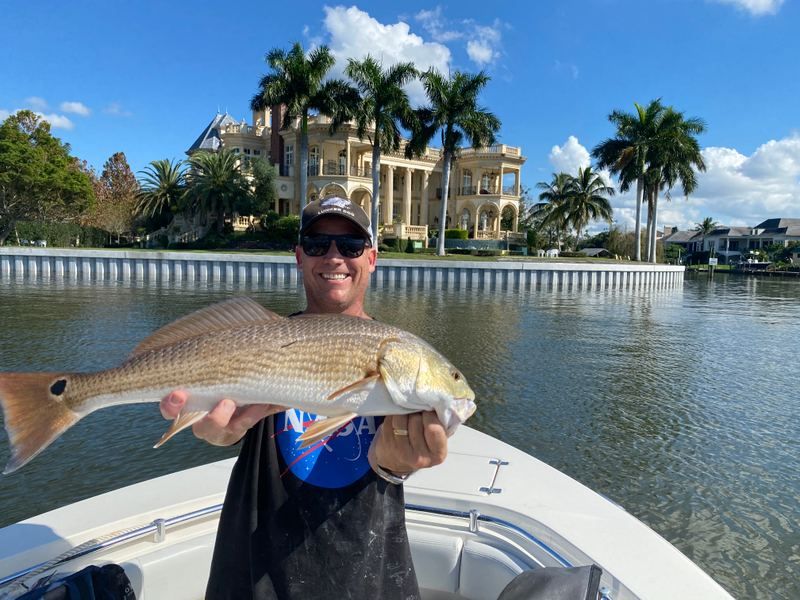
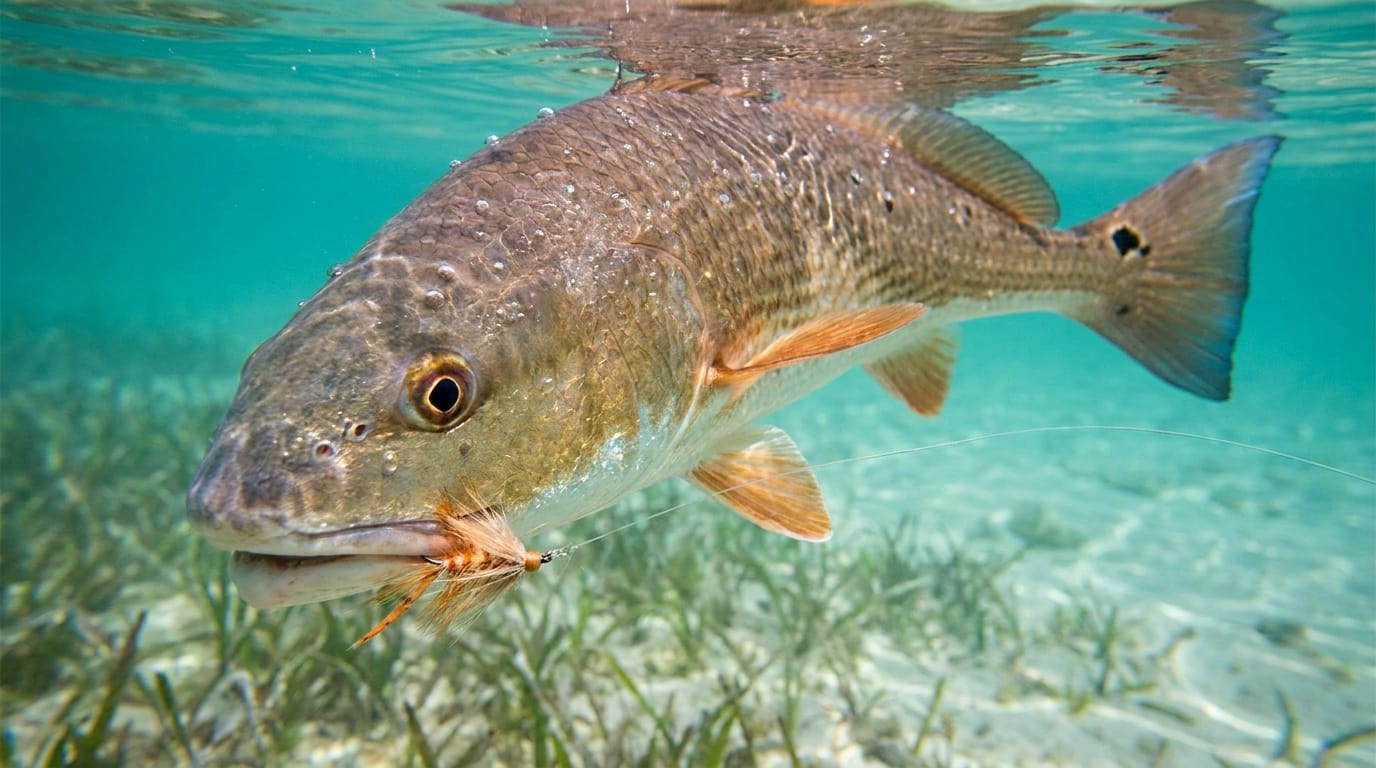
Redfish are open year-round in Sarasota Bay with an 18–27 inch slot, one fish per person, and a two-fish vessel limit. They are the most catchable of the inshore big four in every month — and from September through February, when 50-to-200-fish schools push water across Long Bar and the Bulkhead, they are the best sight-fishing target on this coast.
Can you keep redfish in Sarasota?
Yes. Harvest is open in the Sarasota Bay Region under the 2026 rules on the FWC red drum page:
| Rule | Sarasota Bay Region, 2026 |
|---|---|
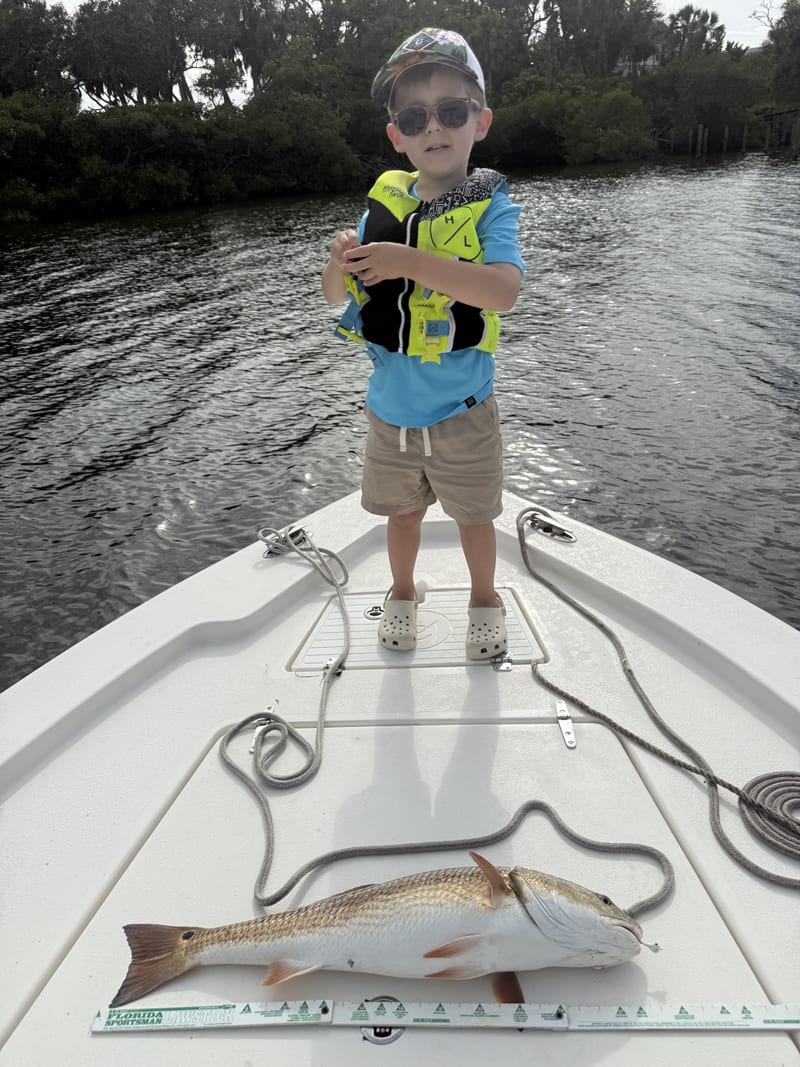
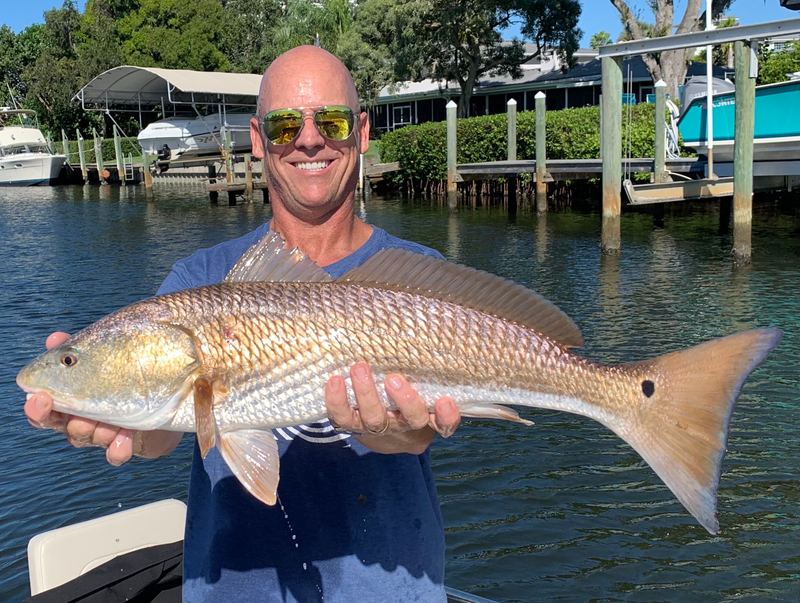
| Slot | 18–27” total length |
| Bag limit | 1 per person per day |
| Vessel limit | 2 per vessel per day |
| Season | Open year-round |
| Transport | 4 fish per person off-the-water limit |
| Gear | Hook and line or cast net; spearing and snatch-hooking prohibited; multiple hooks with natural bait prohibited |
| For-hire | Captain and crew may not keep a bag limit; no commercial harvest |
FWC manages redfish by region: the Sarasota Bay Region runs from State Road 64 in Bradenton south to 27°04.727’ N near the Venice airport. Harvest here reopened after the post-2018-red-tide catch-and-release years, and plenty of local guides still release every red on principle. Worth copying. Regulations change — verify current rules before you fish, and check the FWC red tide status map before planning around the fall schools.
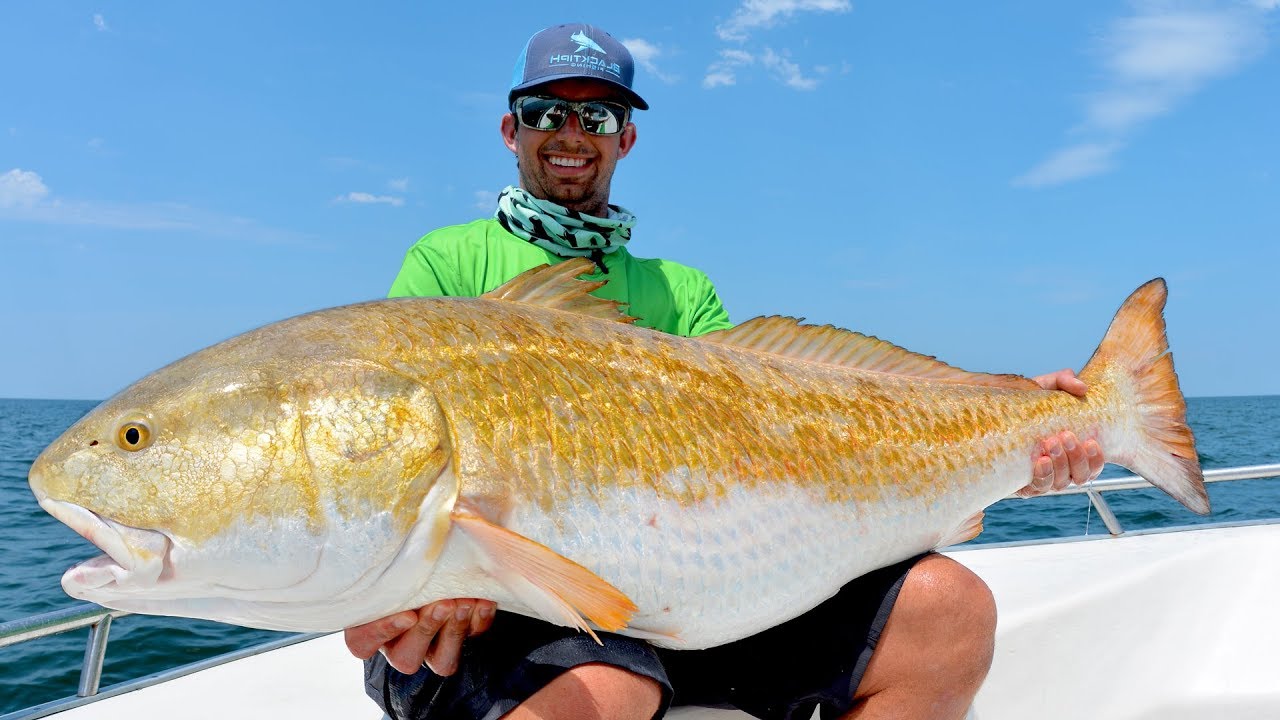
The Florida record is 52.31 lb, caught at Cocoa in 1996 (Florida state records). Local reality: slot fish on the flats, and 30–42 inch bulls at Longboat Pass, Big Pass, and the Bulkhead in fall. Those bulls are the breeding stock — fish 27–30 inches and up have left the bay to join the nearshore spawning schools, and they all go back.
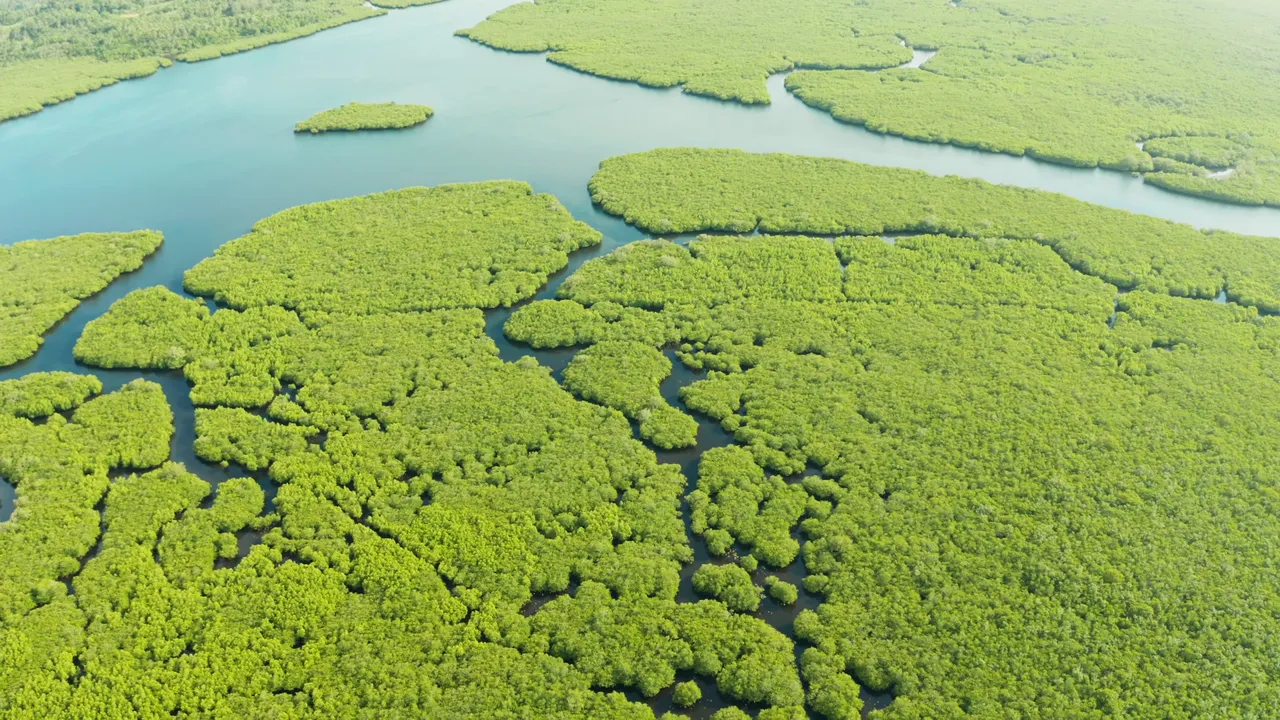
Mangrove islands and the tidal creeks between them hold redfish for their first years.
How big do redfish get, and what is a “bull red”?
A redfish lives two lives, and understanding the split is the key to the whole fishery.
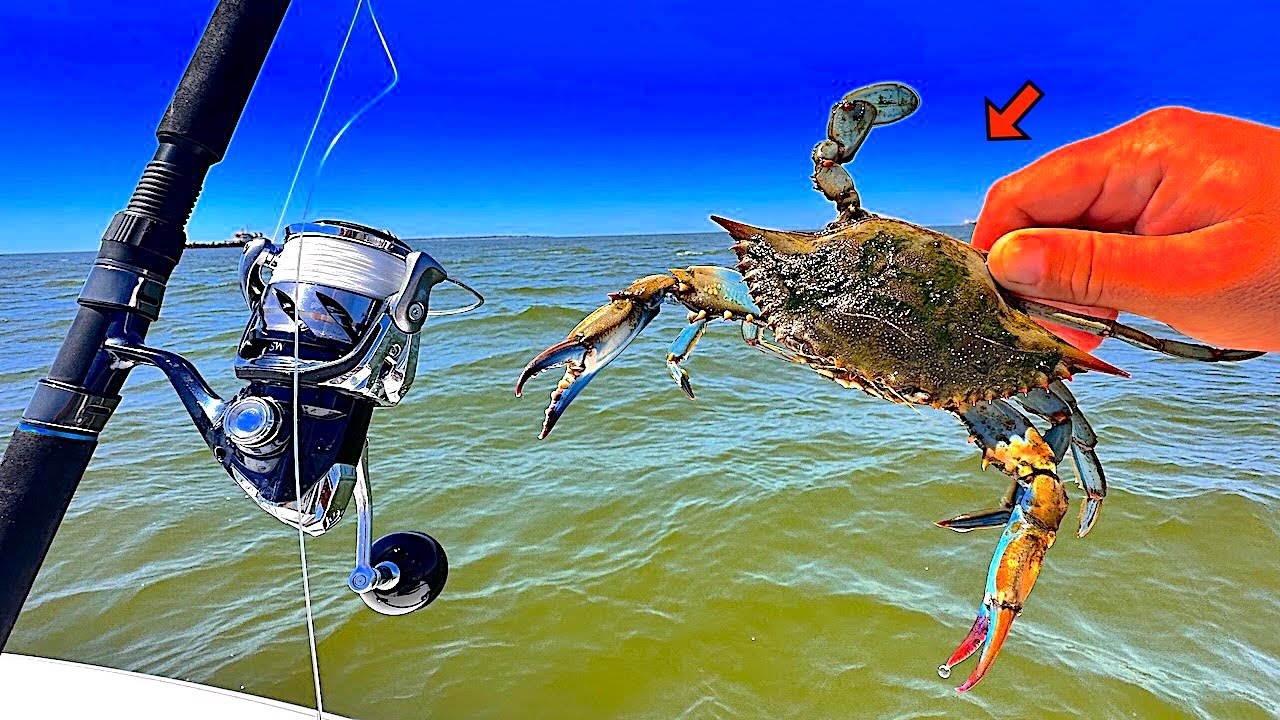
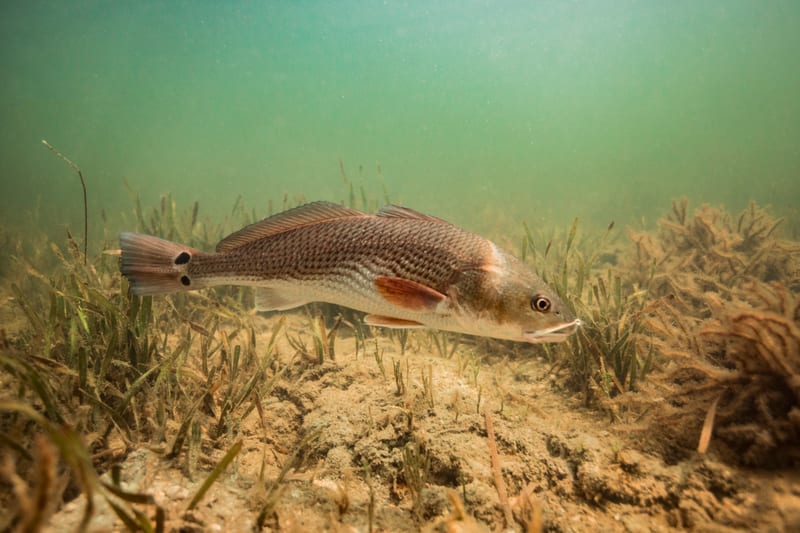
The bay years (slot fish). Young red drum spend their first three to five years inside the estuary — Sarasota Bay, the passes, the backcountry creeks. These are the 18–27 inch slot fish you sight-cast on the flats. They grow fast, feed nose-down on crabs and shrimp, and hold the same bars and mangrove edges year-round.
The ocean years (bulls). Around 30 inches and roughly four years old, a redfish matures and leaves the bay for good, joining the nearshore and near-pass spawning schools. These “bull reds” run 30 to 45-plus inches, live 40 years and more (the oldest documented fish are over 60), and return to the passes each fall to spawn. Every over-slot fish you catch is breeding stock — handle it in the water, support its belly, and let it swim off. The FWC red drum profile has the full life history.
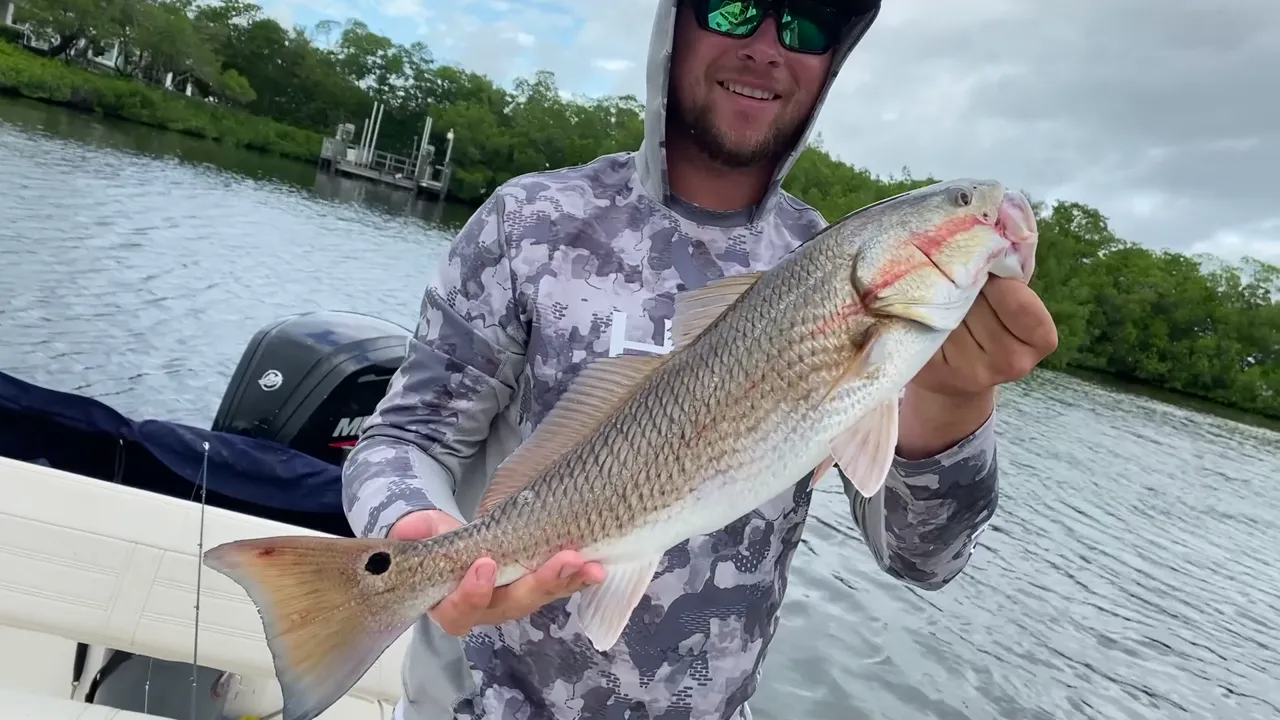
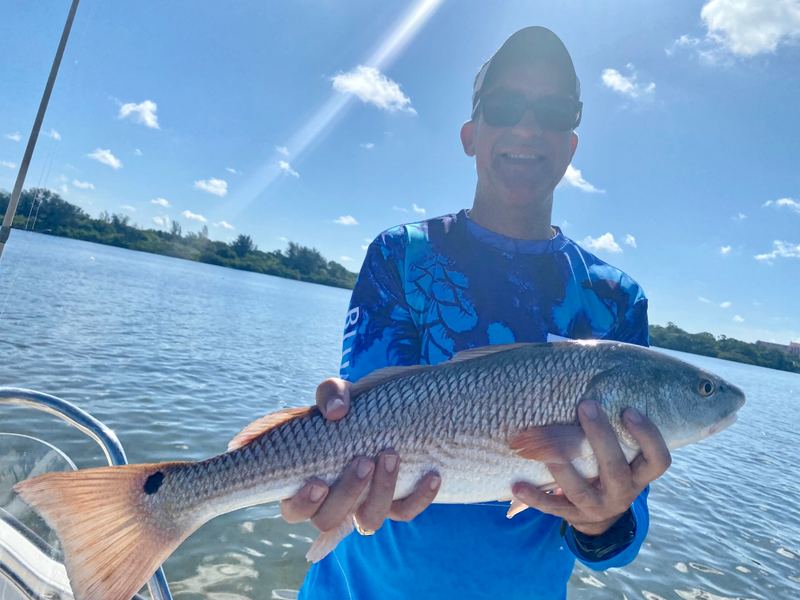
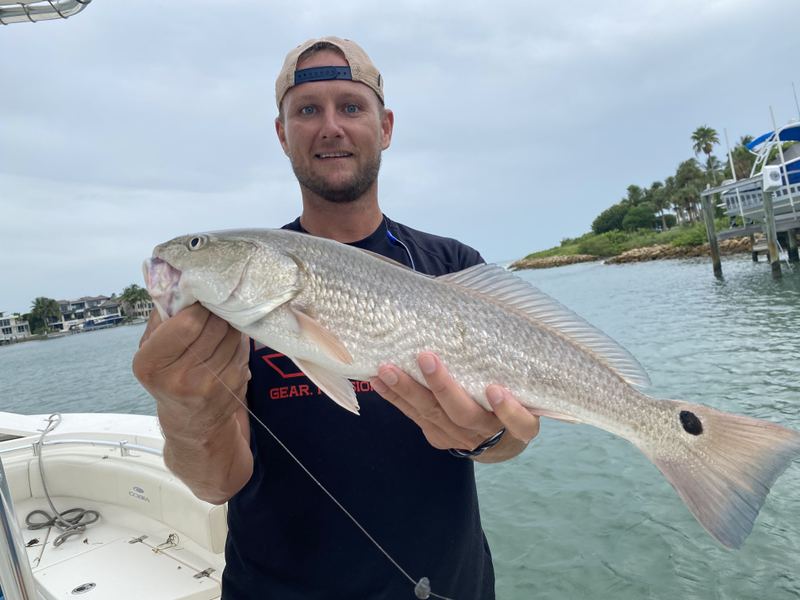
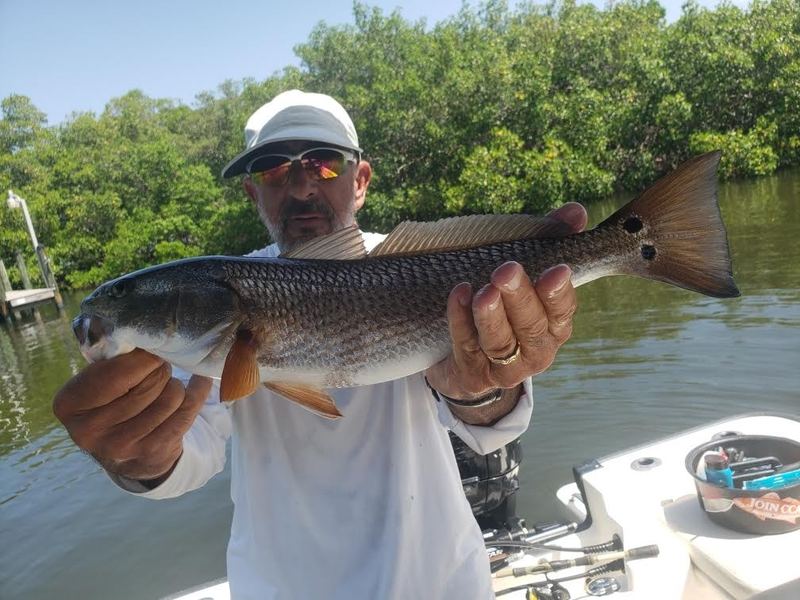
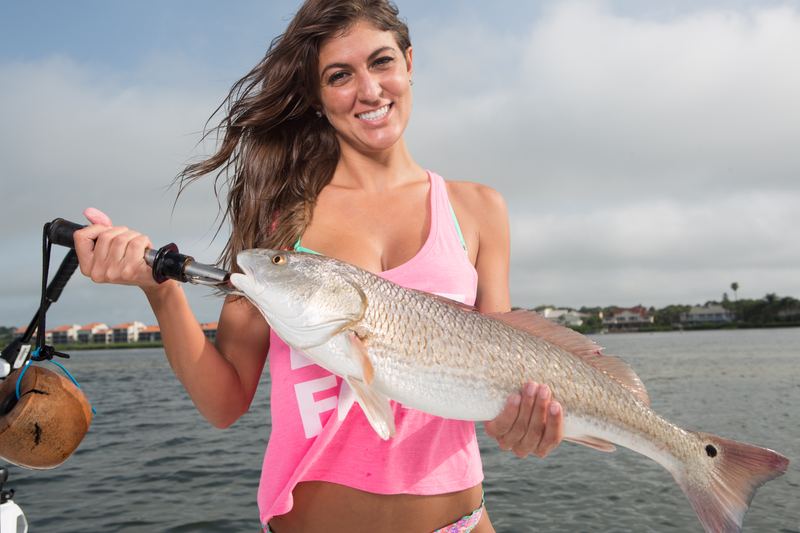
The tail spot. That black eyespot near the tail — sometimes one, often several, occasionally a dozen — is a decoy: a predator striking the “eye” hits the wrong end and the redfish escapes forward. It is the single fastest ID mark on the water.
Practical translation for booking a trip: spring through summer is a slot-fish, flats, and shoreline game; September through November is when the bulls stack at the passes and the big bay schools form. Tell us which you want and we fish the right water.
Where can I catch redfish in Sarasota?
Redfish are bottom-feeders built for crushing crabs — copper-bronze, blunt-nosed, black spot (or several) on the tail. Find the food and the tide line and you find them.
Flats and bars: Long Bar Pointe on the east side of upper Sarasota Bay, the Bulkhead near Cortez, Palma Sola Bay, Buttonwood Harbor, Stephens Point, the Whale Key flats behind Longboat Key, the Roberts Bay spoils off Siesta Key, the Blackburn Bay oyster edges, Lemon Bay, and — at the south end of our water — Bull Bay and Turtle Bay in Charlotte Harbor.
Structure: every oyster bar in Roberts Bay, Blackburn Bay, and Dona Bay; residential docks on Bird Key and Siesta Key at mid tide; the Cortez Bridge fenders.
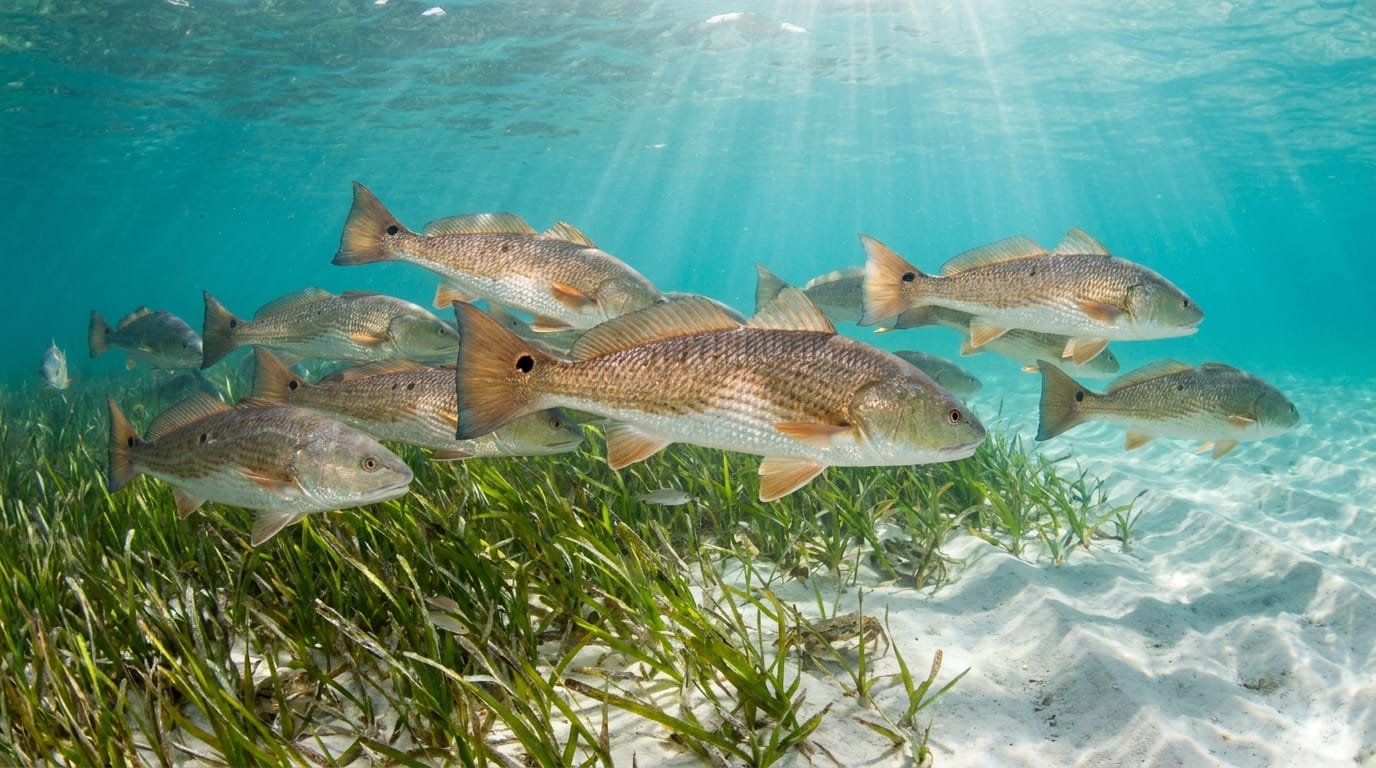
Tailing tides: spring negative lows, December through February, at dawn — the Palma Sola and Bulkhead grass. Tails in the air, backs out of the water, the whole show.
What is the best time of year for redfish in Sarasota?
| Month | Pattern |
|---|---|
| Dec–Feb | Big winter schools on negative low tides. Fish pothole edges and exposed bars — Palma Sola, Long Bar, Buttonwood Harbor. Clear, low water makes this the best sight-fishing of the year. Slow-roll a gold spoon. |
| Mar–May | Schools break into smaller pods; mangrove shorelines on higher tides; crab-flush feeding on the big springs. |
| Jun–Aug | Early bite, then shade. Fish dock lines midday; big summer tides push them deep under the mangroves. |
| Sep–Nov | THE redfish months. Over-slot schools stage at the passes and bars — Bulkhead, Long Bar, Beer Can Island. Pods of 50–200 fish with pushed water and nervous bait overhead. |
September through November answers the search you actually typed: if you get one redfish window a year in Sarasota, take a September or October morning on the north bay bars.
What is the best bait for redfish?
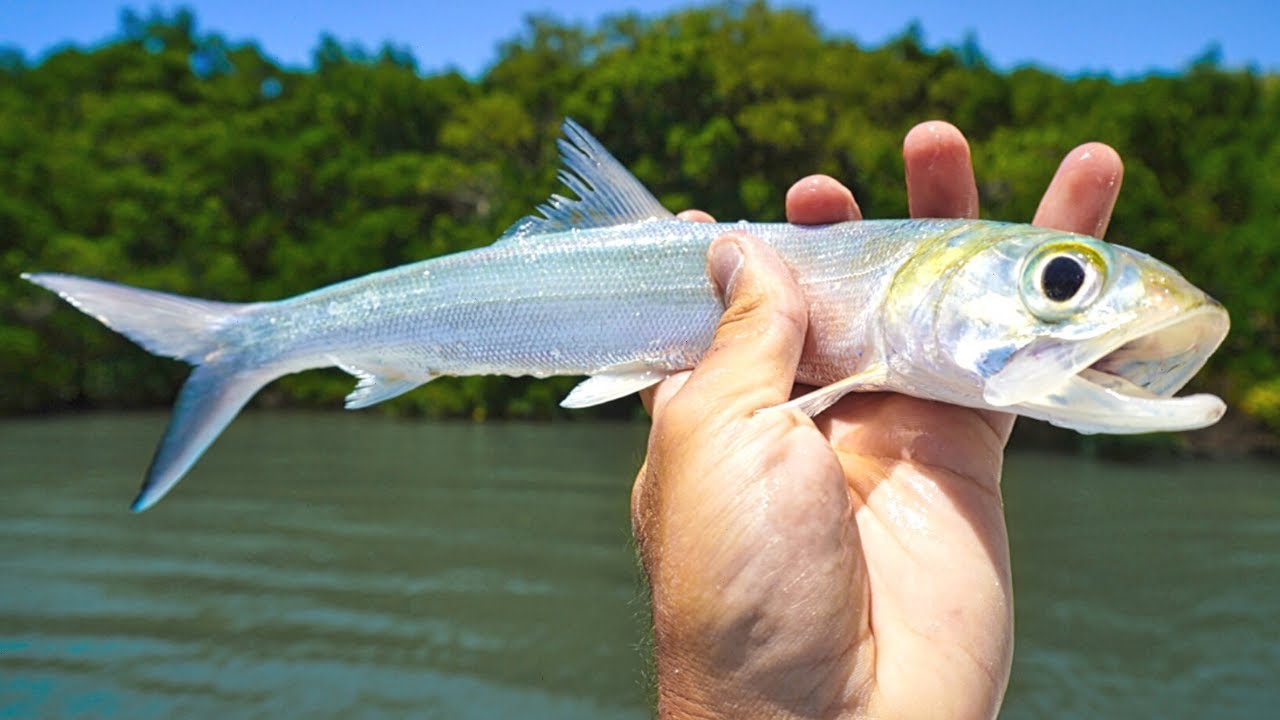
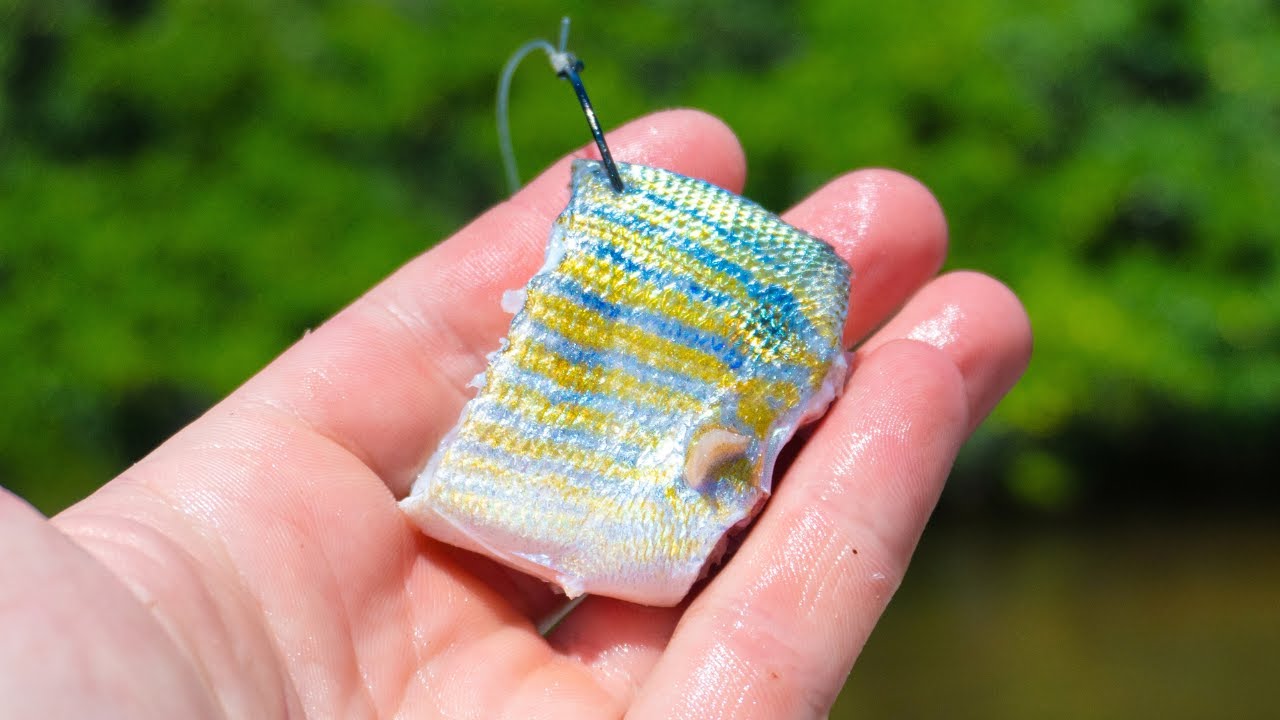
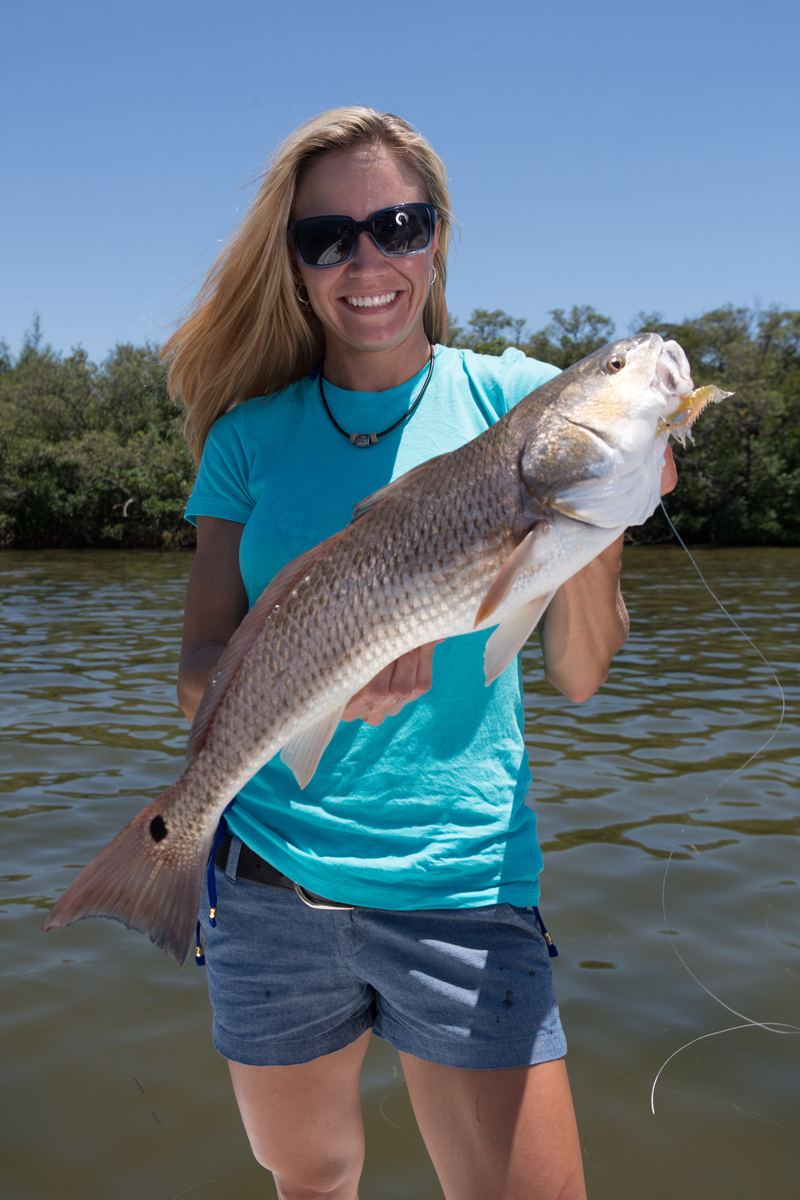
Scent beats sight. A chunk of cut ladyfish, mullet, or pinfish soaked on a pothole edge out-fishes almost everything, because reds feed nose-down on the bottom. Anchor the bait, put the rod in a holder, and be patient.
The rest of the local menu:
- Live bait: shrimp free-lined or under a cork; live whitebait chummed against mangrove edges in summer — the standard live bait program
- Lures: the weedless gold spoon is the classic Sarasota winter red lure; 3–4” paddletails on 1/8 oz jigheads; DOA shrimp; weedless jerkbaits over grass; topwater early in fall
- Fly: crab and shrimp patterns — Kwan, EP crab — thrown at tailing fish; fly fishing the winter negative lows is a legitimate technical game here
Tackle: 7’ to 7’6” medium spinning rod, 3000 reel, 10–15 lb braid, 20–25 lb fluorocarbon leader. Tide: low incoming for the potholes and bars, flood tide against the mangroves. Check NOAA tide predictions and pick the stage before you pick the spot.
How do you sight-fish redfish without spooking them?
This is the skill that separates the anglers who see schools from the anglers who catch fish out of them. Winter reds in a foot of clear water spook at trolling-motor prop wash and hull slap.
- Shut down 300+ yards from the flat. Push-pole, drift, or trolling motor on the lowest setting.
- Approach from down-sun with the wind at your back. Look for pushed water, wakes, tails, and flashes — through the water, not at it.
- Cast to the edge of the school, ahead of its travel line. A bait landing in the middle blows up all 100 fish.
- With cut bait, lead the school: place it up-path and let them come to it.
The full playbook is on our sight fishing guide. Polarized glasses are not optional — copper or amber lenses over grass.
What are the most common redfish mistakes?
- Running the flat on the outboard — one pass blows out every fish on it
- Casting into the middle of a school instead of the edge
- Jigheads too heavy, fouling grass on every cast
- Stacking coolers past the vessel limit — it’s 2 per vessel, not 1 per angler
- Assuming Tampa Bay or Charlotte Harbor rules apply — the region lines at SR 64 and Venice matter
- Fishing without a current license — get it (free shore-based version for residents included) at Go Outdoors Florida
FAQ
What is the redfish limit in Florida in 2026? In the Sarasota Bay Region: 1 per person per day, maximum 2 per vessel, 18–27 inch slot, open year-round. Other regions differ — check the FWC red drum page for your water.
What is the redfish slot size? 18 to 27 inches total length in the Sarasota Bay Region. Everything under, over, and every bull red at the passes goes back.
Where can I catch redfish from shore in Sarasota? Wade the Palma Sola Bay and Bulkhead flats at low tide, work oyster edges in Blackburn and Roberts Bays, or soak cut bait around the Venice jetties and legal-access seawalls.
Do redfish really school in Sarasota Bay? Yes — September through November, pods of 50 to 200 over-slot fish stage on the north bay bars before and after spawning. December through February they re-form on the negative low tides.
Why do redfish have a spot on their tail? The eye-spot misdirects predators — a dolphin strikes the “head” that isn’t. Some fish carry a dozen or more spots.
Related reading
The same shorelines fish differently by species: snook hold the mangrove edges and passes, spotted seatrout cover the grass between the bars, and sheepshead take over the docks and bridges in winter. In fall, the bull reds at the passes share water with the last of the season’s tarpon.