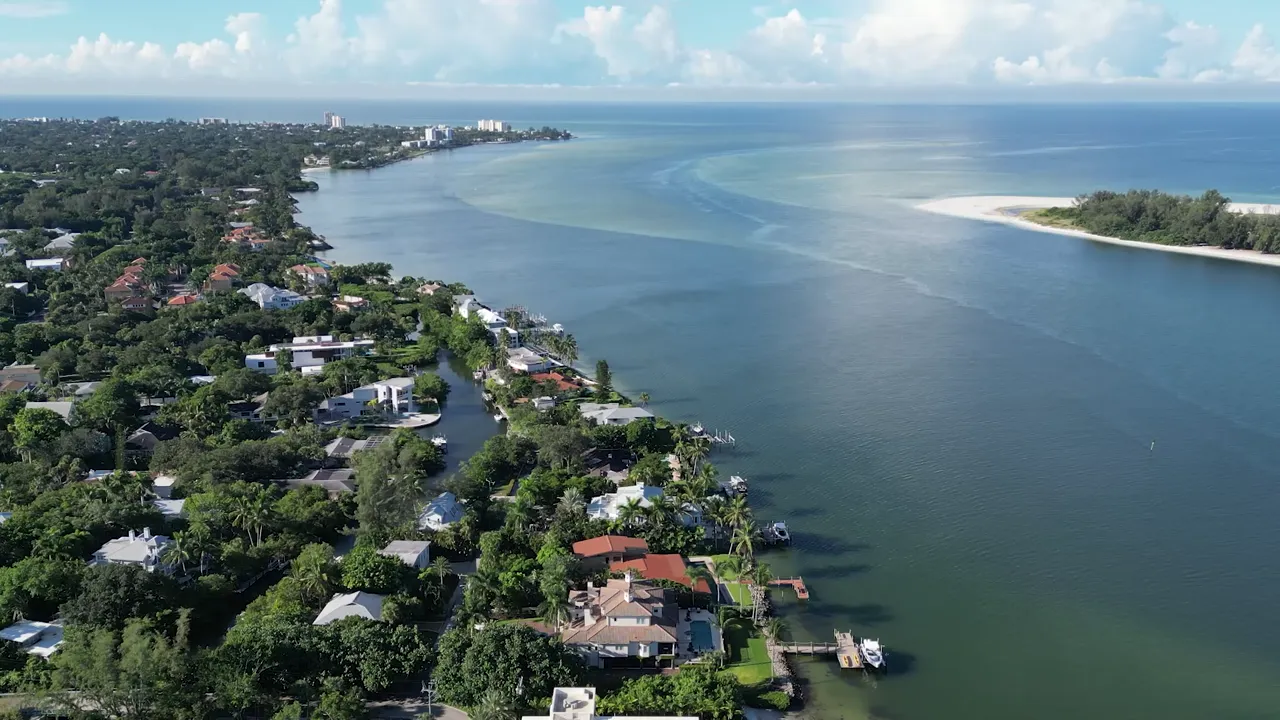
Six passes connect the Gulf to the bays between Anna Maria Island and Charlotte Harbor: Longboat Pass, New Pass, Big Sarasota Pass, Venice Inlet, Stump Pass, and Boca Grande Pass. Every one of them concentrates bait and moving water, which makes them the most reliable fish magnets on this coast — and only two of them (Venice Inlet and Longboat Pass) are safe for a boater who doesn’t know the local shoals.
Here’s how each pass runs, fishes, and bites, north to south.
Which pass is safe to run in my boat?
| Pass | Navigation | Channel condition (2026) |
|---|---|---|
| Longboat Pass | Marked, dredged | Most reliable of the three northern passes |
| New Pass | Marked but shifting | 4–7 ft, shoals badly along Longboat side, worst in winter |
| Big Sarasota Pass | Effectively unmarked | Outer bar shoal and constantly moving — local knowledge only |
| Venice Inlet | Jettied, stable | The one all-weather inlet in Sarasota County |
| Stump Pass | Natural, storm-shifted | Recurring county maintenance dredging; shifting bar at the mouth |
| Boca Grande Pass | Deep, marked | Deep water but severe current; crowded drift fleet in tarpon season |
The US Coast Guard Auxiliary’s standing advice: boaters unfamiliar with New Pass or Big Pass should use Venice Inlet or Longboat Pass instead — USCG Auxiliary Sarasota waterways guidance. For current shoaling reports, the Sarasota Power & Sail Squadron pass updates are the local source.
How does Longboat Pass fish?
Longboat Pass separates the south end of Anna Maria Island (Coquina Beach) from the north tip of Longboat Key, crossed by the SR 789 drawbridge. Mean tidal range is about 1.5 ft, with currents ebbing and flooding at 1.6–1.8 knots — enough to move bait without making the pass unfishable.
- Snook stage in the pass and along the trench off Coquina Beach spring through summer.
- Pompano run the Coquina shoreline March–May.
- Spanish mackerel, redfish, flounder work the bridge pilings and rocks.
- Tarpon cruise off the pass mouth May–July.
Inside, the Jewfish Key sandbar complex and Greer Island (“Beer Can Island”) spit shoal the channel edges and draw heavy weekend anchor-out traffic — fish early. Shore anglers have the Coquina Beach jetty and bridge-adjacent shorelines; the Coquina Beach south ramp is the closest launch.
Is New Pass worth fishing despite the shoaling?
New Pass runs between south Longboat Key and Lido Key under the second SR 789 drawbridge, with Mote Marine Laboratory on the City Island side. The channel carries roughly 4–7 feet and shifts constantly — deepest water tends to run south along Lido, with extensive shoaling on the Longboat side, worst in winter.
The fishing is better than the navigation. Strong current pushes bait past the bridge pilings and jetty rock, stacking snook, redfish, sheepshead, and flounder on structure; ladyfish and mackerel hold in the channel; the beach-side trough holds summer snook. A footnote for structure fishermen: when the old New Pass Bridge was replaced, its rubble became the Alan Fisher artificial reef, 1.3 nm offshore in 30 feet — coordinates in our artificial reefs guide.
Why do locals rate Big Sarasota Pass for snook?
Big Pass, between south Lido Key and north Siesta Key, is deep and wide inside — but its outer bar is unmarked, shoal, and constantly changing. Navigation aids have been removed in whole or part, and any markers you see may have been moved and are not charted. Treat the outer bar as local-knowledge-only in any sea.
That same bar is why it’s arguably the best snook pass on the coast. Fish the bar edges and the swash channel on moving water — an outgoing tide in June is the classic setup. Sheepshead and jack crevalle hold in the pass year-round, and tarpon stage off the bar May through July. The Big Pass sandbar on the north Siesta side is a landmark day-anchorage; shore anglers reach the channel current from North Shell Road on Siesta Key.
What makes Venice Inlet the reliable one?
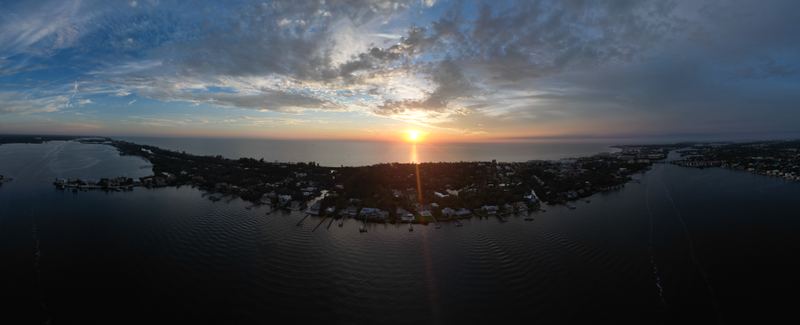
Venice Inlet, between Casey Key (Nokomis) and Venice, is the only fully jettied, stable inlet in Sarasota County — rock jetties both sides, connecting the Gulf to Roberts Bay and the ICW.
- North Jetty — Sarasota County’s North Jetty Park, 1000 Casey Key Rd, Nokomis: bait shack, restrooms, open.
- South Jetty — City of Venice’s Humphris Park, west end of Tarpon Center Dr. The walkway was damaged by Hurricane Idalia (2023) and again by Helene and Milton (2024). The parking lot reopened January 2025, but the jetty walkway remains closed as of mid-2026 with no reopening date; a US Army Corps maintenance report is due November 2026. Check status: City of Venice South Jetty.
Winter sheepshead pile onto the jetty rock; the rest of the year brings snook, redfish, snapper, pompano, flounder, mackerel, bluefish, and the occasional tarpon or cobia. One regulation trap: the FWC’s Gulf and Southwest snook management zones split near the inlet, so check the FWC snook zone map before keeping a fish — and verify current rules before you fish.
How does Stump Pass fish after all the dredging?
Stump Pass, at the south end of Manasota Key in Englewood, connects the Gulf to Lemon Bay. It’s a natural inlet first dredged for navigation in 1980, and storms relocate it constantly — Charlotte County runs a recurring maintenance-dredge program, with the sand placed on adjacent eroding beaches (Stump Pass dredge project).
Snook, redfish, trout, flounder, snapper, whiting, and sheepshead all work the pass and its bars; tarpon show off the mouth in season, and the Lemon Bay grass flats sit right inside. Stump Pass Beach State Park (900 Gulf Blvd, Englewood — 245 acres across three islands, a known shark-tooth beach) puts shore anglers on the pass: Stump Pass Beach State Park. Cross the shifting mouth bar with caution and current knowledge.
What are the rules at Boca Grande Pass?
Boca Grande Pass, between Gasparilla Island and Cayo Costa, is the main entrance to Charlotte Harbor and one of the deepest natural passes in Florida — roughly 80 feet at its deepest, with abrupt breaks from 70 to 50 to 60 to 30 feet across the pass. It is the self-titled Tarpon Fishing Capital of the World: thousands of tarpon stage here April–June, and strong outgoing “hill tides” flush pass crabs and push fish to the surface.
The current is severe enough to endanger an anchored boat — the fleet drifts, in regimented lanes, and in-season crowds are real. FWC special regulations apply inside the pass:
| Rule | Detail |
|---|---|
| Tarpon (statewide) | Catch-and-release only; possession only with a tarpon tag in pursuit of a record; hook-and-line only; no multiple hooks with natural bait |
| In-pass gear rule (year-round) | Gear with a weight rigged to hang below the hook when suspended vertically is prohibited — the anti-jig-snagging rule, all species |
| April, May, June | Breakaway gear prohibited; maximum three lines deployed per vessel |
Source and full FAQ: FWC tarpon and Boca Grande gear rules. Verify current rules before you fish. Background on the pass: Florida State Parks — Boca Grande Pass, and the local authority for harbor-wide advice is Fishin’ Franks in Port Charlotte.
When should I fish a pass?
Moving water. All six passes fish best on a strong tide, and the specific window matters more than the spot:
- Outgoing tide flushes bait (and pass crabs at Boca Grande) out to waiting fish — the classic snook and tarpon bite.
- First two hours of incoming brings clean Gulf water and pushes bait onto the bars.
- Slack tide is the dead zone — use it to move or re-rig.
- Night tides around bridge shadow lines (Longboat, New Pass) are the summer snook pattern; a live bait freelined down-current beats everything else in the passes.
NOAA tide predictions for local stations are at tidesandcurrents.noaa.gov — check the current tables, not just high/low times, since the current lags the tide in these passes.
FAQ
Which Sarasota pass is safest for a visiting boater? Venice Inlet — jettied and stable — then Longboat Pass, which is marked and dredged. The Coast Guard Auxiliary explicitly steers unfamiliar boaters away from New Pass and Big Pass.
Where can I fish a pass without a boat? North Jetty Park at Venice Inlet, Coquina Beach at Longboat Pass, North Shell Road on Siesta Key at Big Pass, and Stump Pass Beach State Park at Stump Pass. The Venice South Jetty walkway remains closed as of mid-2026.
When is tarpon season at Boca Grande Pass? April through June is peak, with hill tides (strong outgoing) the prime windows. Tarpon are catch-and-release statewide.
Can I keep snook caught in a pass? Only in open season with a snook stamp, and the harvest zone boundary splits near Venice Inlet — check the FWC snook map for the Gulf vs. Southwest zone lines before keeping a fish.
Is there a fee at the pass parks? North Jetty Park is a county park; Stump Pass Beach State Park charges standard Florida State Parks entry. Check each park’s page for current fees.
Related
The passes are the front doors — the structure behind them is in our artificial reefs guide (the old New Pass Bridge is now a reef), and the winter backup plan is upstream in rivers and backcountry. Species timing: snook own the passes in summer, tarpon in late spring, redfish on the adjacent bars in fall.