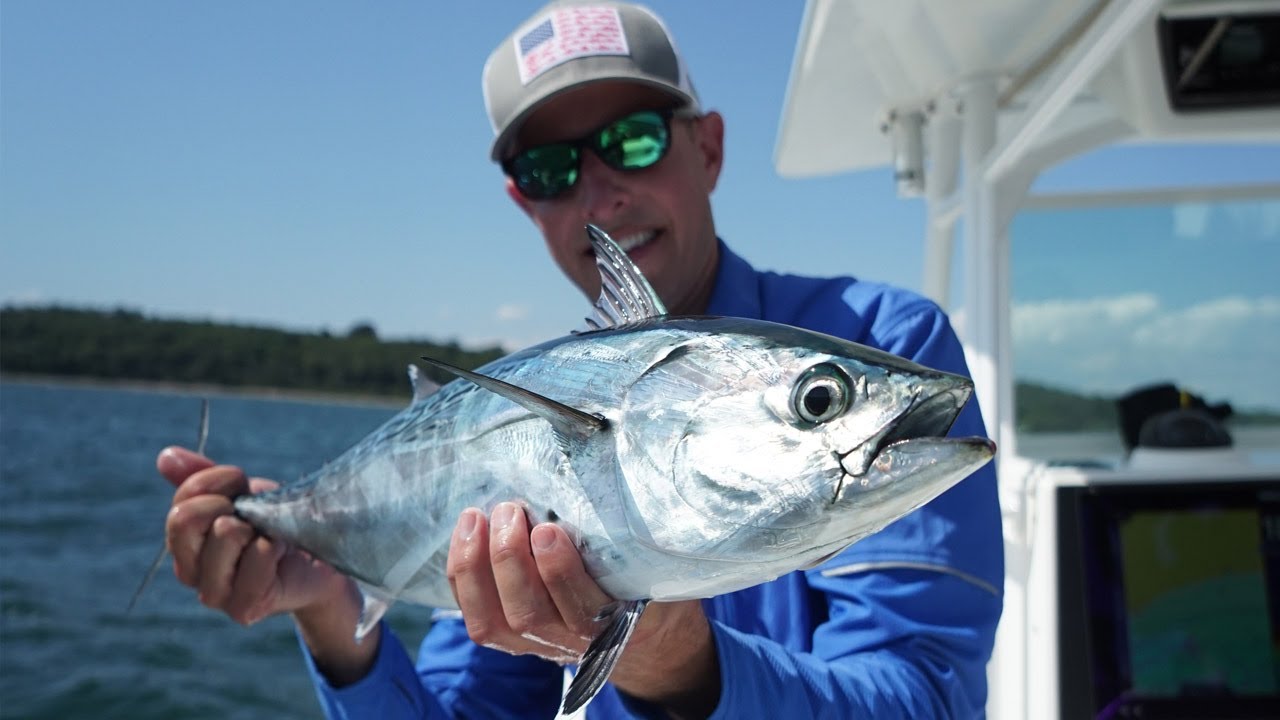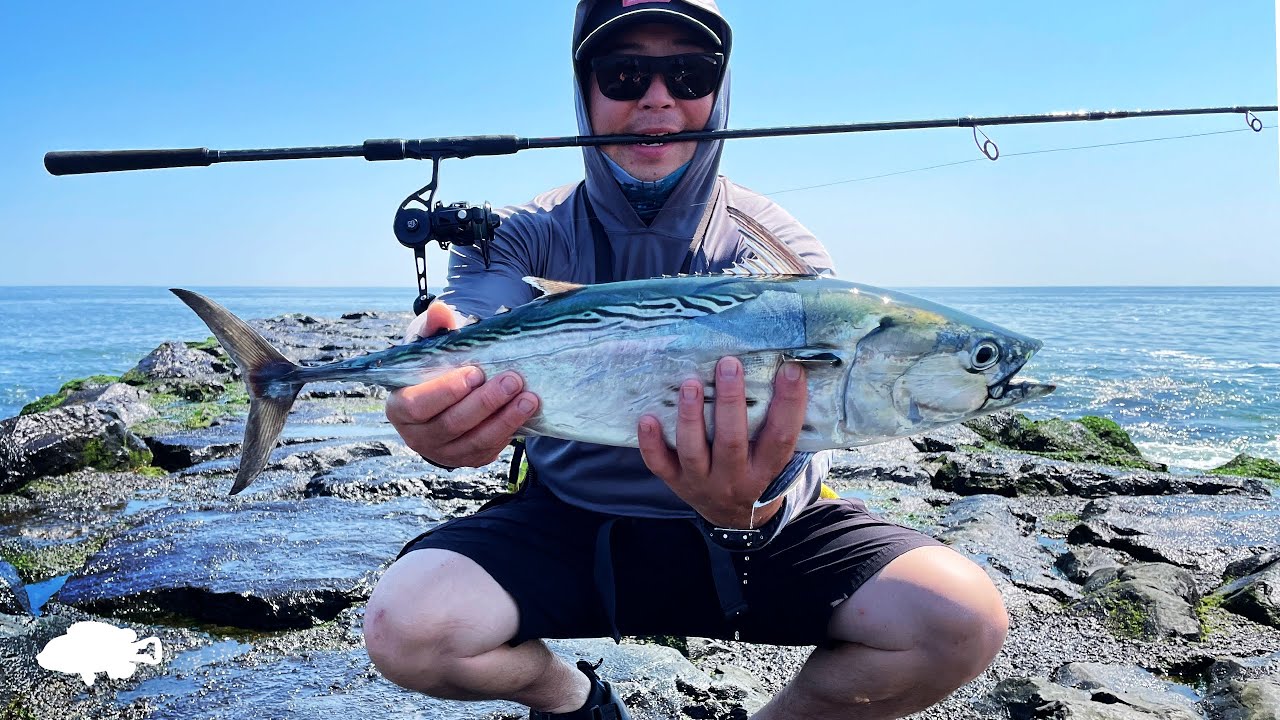
If a fish just melted 100 yards of line off your reel in one run along a Sarasota beach in November, you almost certainly hooked a little tunny (Euthynnus alletteratus) — called “false albacore,” “fat albert,” or, locally, “bonito.” They are the fastest thing most anglers will ever hook from the Sarasota surf or a nearshore boat, they blitz glass minnows on the surface every fall, and — the part everyone learns the hard way — they are almost inedible. Pure sport: unregulated, no limit worth chasing, and the best light-tackle screaming-drag fish on this coast.
How do I know I caught a false albacore and not a bonito or mackerel?
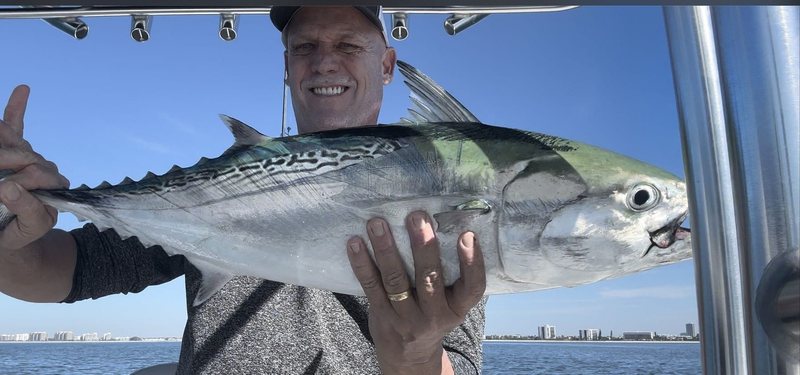
“Bonito” is the local nickname; the fish is actually a little tunny, a member of the tuna family. Real Atlantic bonito are rare here. Use these marks:
| Feature | Little tunny (false albacore) | Look-alikes |
|---|---|---|
| Back markings | Wavy, worm-like dark lines above the lateral line | Atlantic bonito have straight diagonal stripes |
| Spots | Dark fingerprint spots between the pectoral and pelvic fins | Bonito and mackerel lack these spots |
| Body | Football-shaped, no scales except a corselet | Spanish and king mackerel are elongated with teeth |
| Teeth | Tiny — they inhale bait, don’t slash | Mackerel have obvious cutting teeth |
| Meat | Deep red, bloody | Mackerel meat is lighter |
Three names, three different fish. Little tunny (Euthynnus alletteratus) is what you caught. Atlantic bonito (Sarda sarda) is a separate species — straight stripes, no fingerprint spots, uncommon on this coast. Albacore tuna (Thunnus alalunga) is a third fish entirely: a long-finned open-ocean tuna managed federally under HMS rules, and not something that shows up in 30 feet of water off Siesta Key. FWC groups little tunny with Atlantic bonito on its billfish, tuna and swordfish page; albacore sits with the permit species.
The fight is the tell as much as the markings: little tunny make blistering, sustained runs and dogged circling dives, not the jump-and-slash of a mackerel. The Florida state record is 27 lb, caught off Key Largo in 1976; the fly record is 19 lb from the Dry Tortugas (Catch a Florida Memory saltwater records). Sarasota fish run a fraction of that and still empty a reel.
Where and when do you catch false albacore in Sarasota?
The fall run is the event. As water cools from October into December, little tunny push glass minnows and bay anchovies tight to the beaches and passes:
- Nearshore beaches off Siesta, Lido, and Longboat Key — look for diving terns and pelicans over surface “busts.” Run the boat upwind of the blitz and cast in, never through it.
- The passes — Big Sarasota Pass and New Pass on moving tides when bait flushes out.
- Nearshore reefs and hard bottom in 20–50 ft off Sarasota and Venice — the artificial reefs hold them when the beach bite is off.
- The surf — long-casting anglers reach fall fish from the beach on calm mornings; see the surf and shore guide.
They can appear in scattered numbers in spring, but October–December is when Sarasota gets true blitzes. Watch the birds — a diving flock is a school of tunny herding bait to the surface, and it moves fast. Our fishing report covers the fall run, month by month.
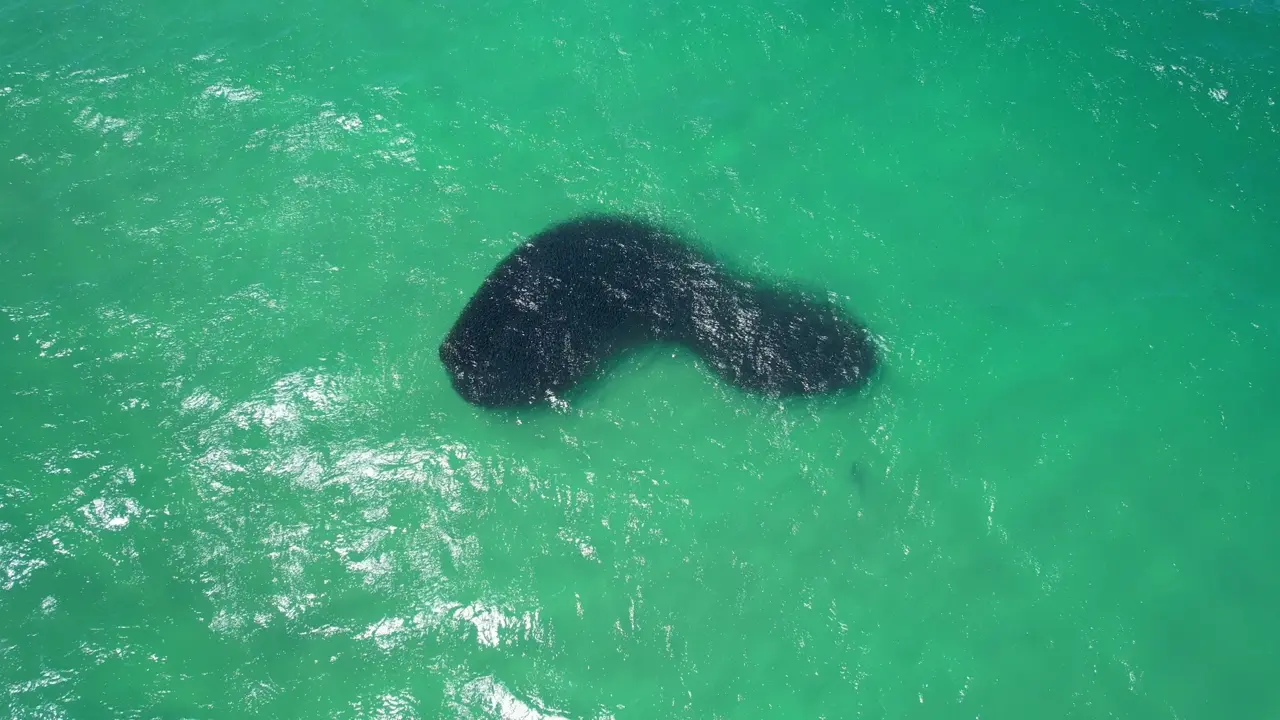
Pressed from below, a bait school balls up and holds against the surface.
What’s the best lure for false albacore?
Match the tiny bait and retrieve fast. They are notoriously line-shy and fixated on small profiles:
| Offering | How to fish it |
|---|---|
| Small metal jig / spoon (1/2–1 oz, epoxy jigs) | Cast past the blitz, retrieve as fast as you can crank |
| Glass-minnow fly (Clouser, Surf Candy) on 9–10wt | The classic fly-rod target — see fly fishing |
| Small paddletail on a 1/4–1/2 oz jighead | Jig the edges of the school |
| Live glass minnows / small pilchards | When they won’t eat metal, match the hatch with live bait |
Tackle: a 7–7’6” medium spinning rod, 4000–5000 reel with a strong drag and at least 200 yards of 15–20 lb braid, and a 30 lb fluorocarbon leader. That first run is why the reel matters — a little tunny will spool an undersized reel before you get the boat turned. No wire needed; their teeth are tiny. Trolling small spoons or feathers behind planers also picks up fish between blitzes.
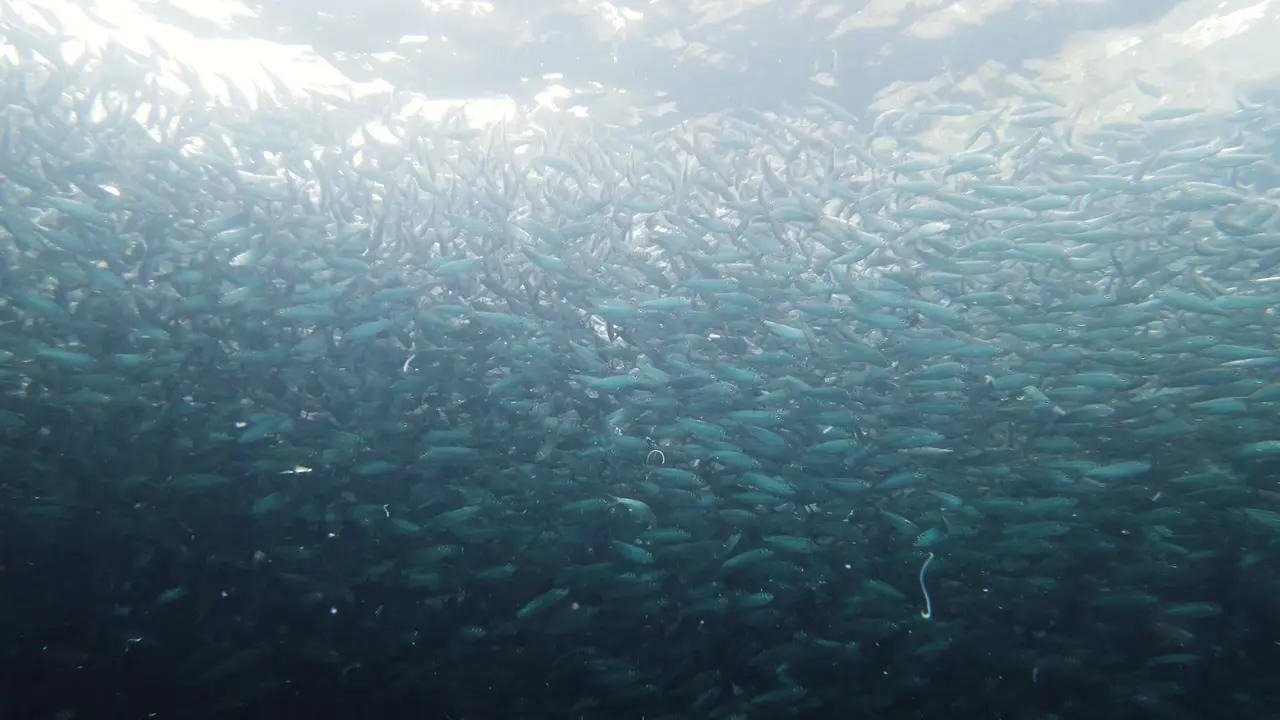
A wall of baitfish, every one of them the size of a metal jig.
Are false albacore good to eat?
No — and this is why they’re unregulated. The meat is deep red, oily, and strongly bloody; it is widely considered one of the least palatable fish on the coast for the table. A handful of people bleed and ice them immediately and grill or smoke the loins, but nobody in Sarasota keeps them for dinner.
Their real kitchen value is bait. Fresh little tunny is premium cut and strip bait, prized for:
- Kingfish trolling (a whole rigged tunny “strip” or a live one is elite king mackerel bait)
- Sharks and big jack crevalle around the passes and reefs
- Grouper and cobia chunks on nearshore hard bottom
Bleed anything you keep for bait the moment it comes over the rail and get it on ice — the fresher, the better it fishes.
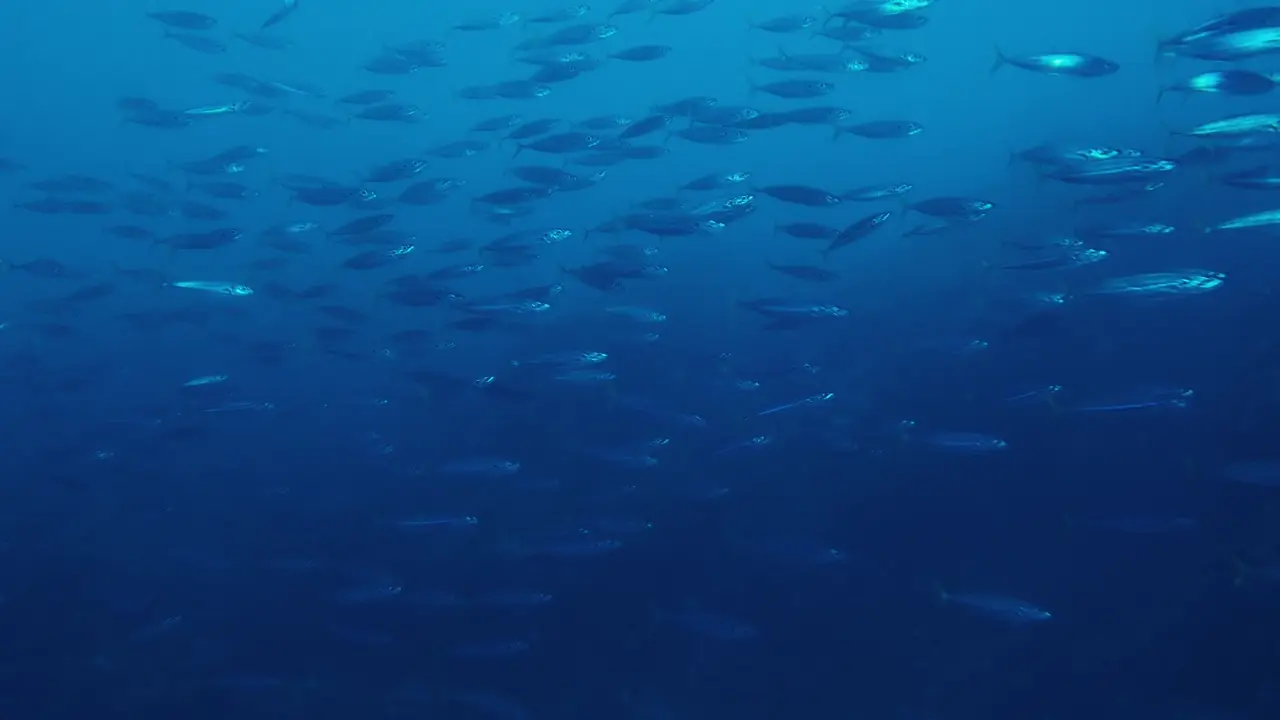
There's no bottom to mark tunny — find them under the diving birds.
What are the 2026 regulations for false albacore in Florida?
| Item | 2026 rule |
|---|---|
| Size limit | None |
| Bag limit | 2 fish or 100 pounds per person per day, whichever is more |
| Season | Open year-round |
| HMS permit | Not required (unlike bluefin, bigeye, yellowfin, skipjack and albacore tuna) |
| License | Florida saltwater license required (free shore-based license for residents) |
Little tunny fall under Florida’s statewide default limit for unregulated species — two fish or 100 pounds per person per day, whichever is more. FWC lists them alongside Atlantic bonito as the tuna that carry no federal HMS permit requirement. Standard recreational gear rules apply. Details on the FWC unregulated species page and the FWC billfish, tuna and swordfish page; license info at FWC saltwater licenses. Verified July 2026 — check current rules before you fish.
FAQ
Is a bonito the same as a false albacore? In Sarasota, “bonito” is the local nickname for little tunny (false albacore). True Atlantic bonito (Sarda sarda) are a different, uncommon species here, and albacore tuna (Thunnus alalunga) is a third fish again. The fingerprint spots below the pectoral fin confirm little tunny.
Can you eat false albacore? Legal to keep, but the meat is dark, oily, and bloody — most anglers release them or keep them for cut bait, where they’re outstanding for kingfish and sharks.
Why do false albacore pull so hard? They’re tuna — built for speed, with a rigid body and a huge tail. A 10-pounder makes runs that outclass much larger inshore fish, which is why they need a reel with 200+ yards of line.
When is the false albacore run in Sarasota? October through December, tied to the fall bait migration. Watch for diving birds over surface blitzes along the beaches and passes.
Related reading
The fall blitz that holds little tunny also lights up Spanish mackerel and jack crevalle — three screaming-drag fish on the same birds. Turn your catch into king mackerel bait, and if the fly rod is your thing, false albacore are the premier light-tackle fly target on the coast. Track the run on our fishing report and the October and November calendars.