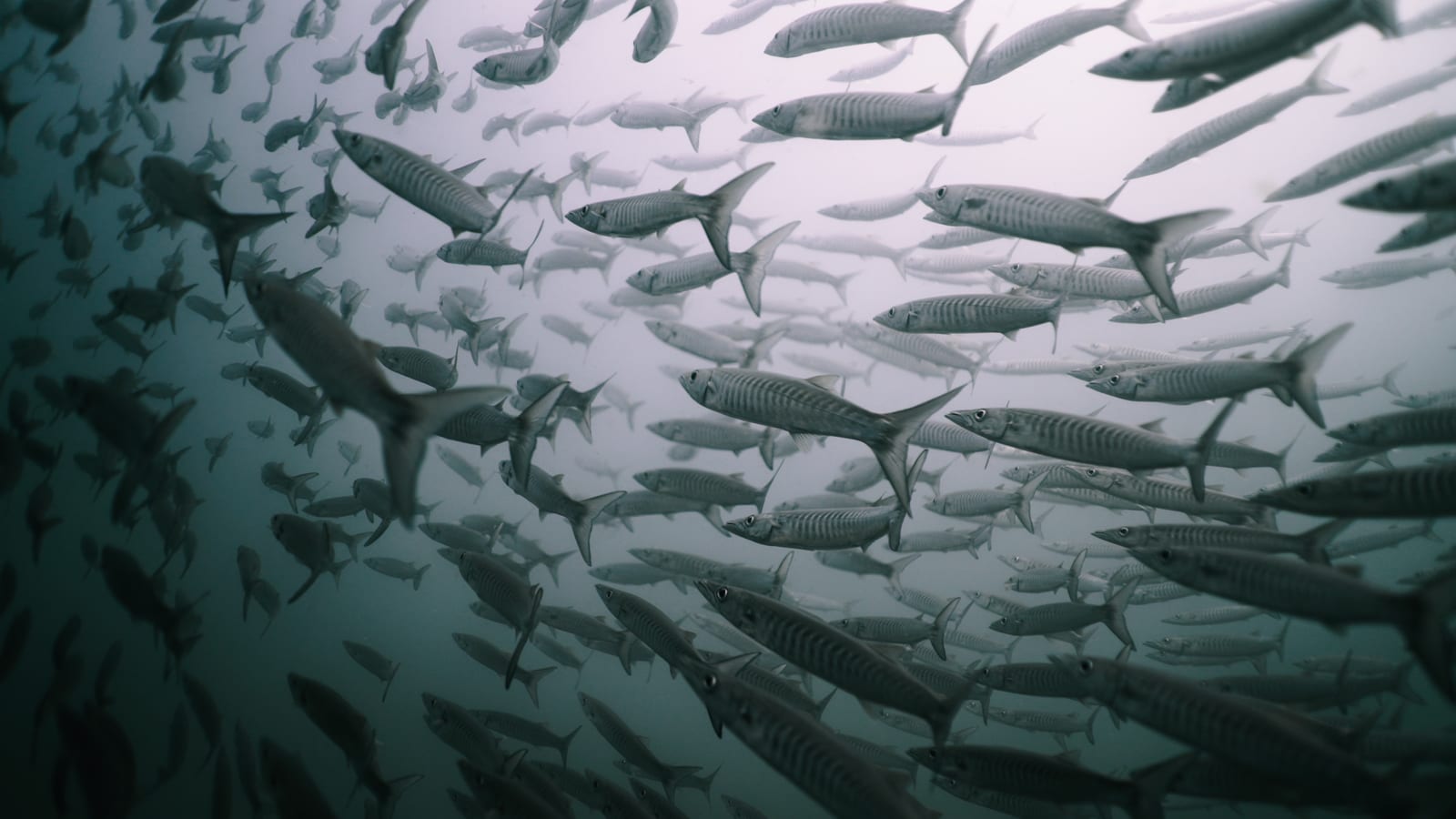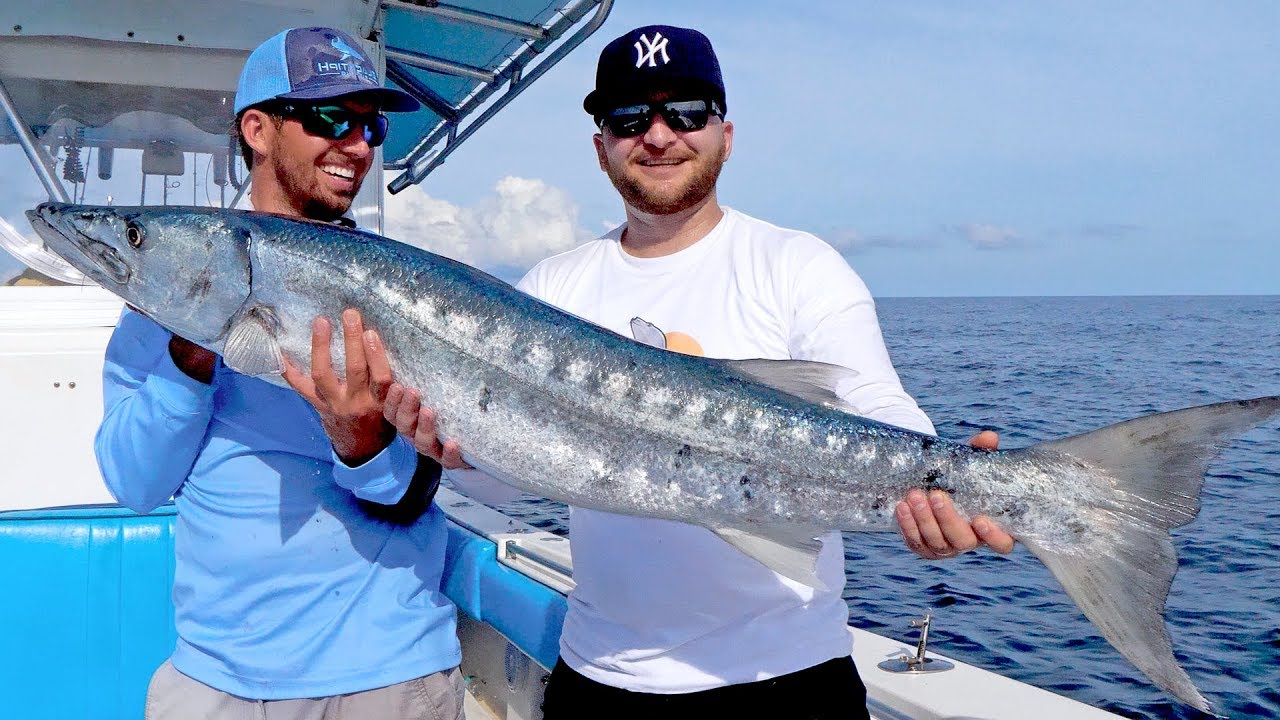
That toothy, silver, log-shaped fish that followed your hooked snapper to the boat and then ate it whole is a great barracuda (Sphyraena barracuda). They stack on Sarasota’s nearshore reefs, wrecks, and pass structure through the warm months, they strike faster than almost anything that swims, and they’ll test your knots and your nerve. In Sarasota-county Gulf waters they carry no specific size or bag limit — but larger fish carry ciguatera risk, so most anglers fish them purely for the electric, follow-and-crush strike.
How do I know it’s a great barracuda?
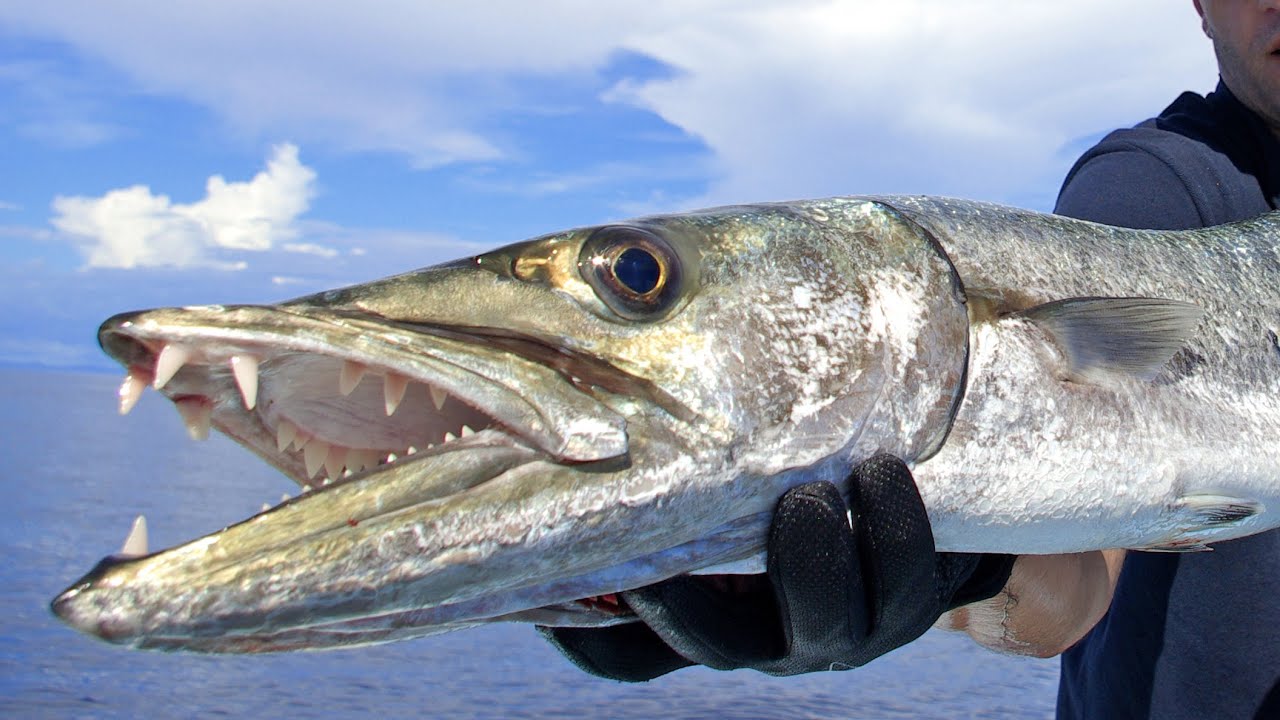
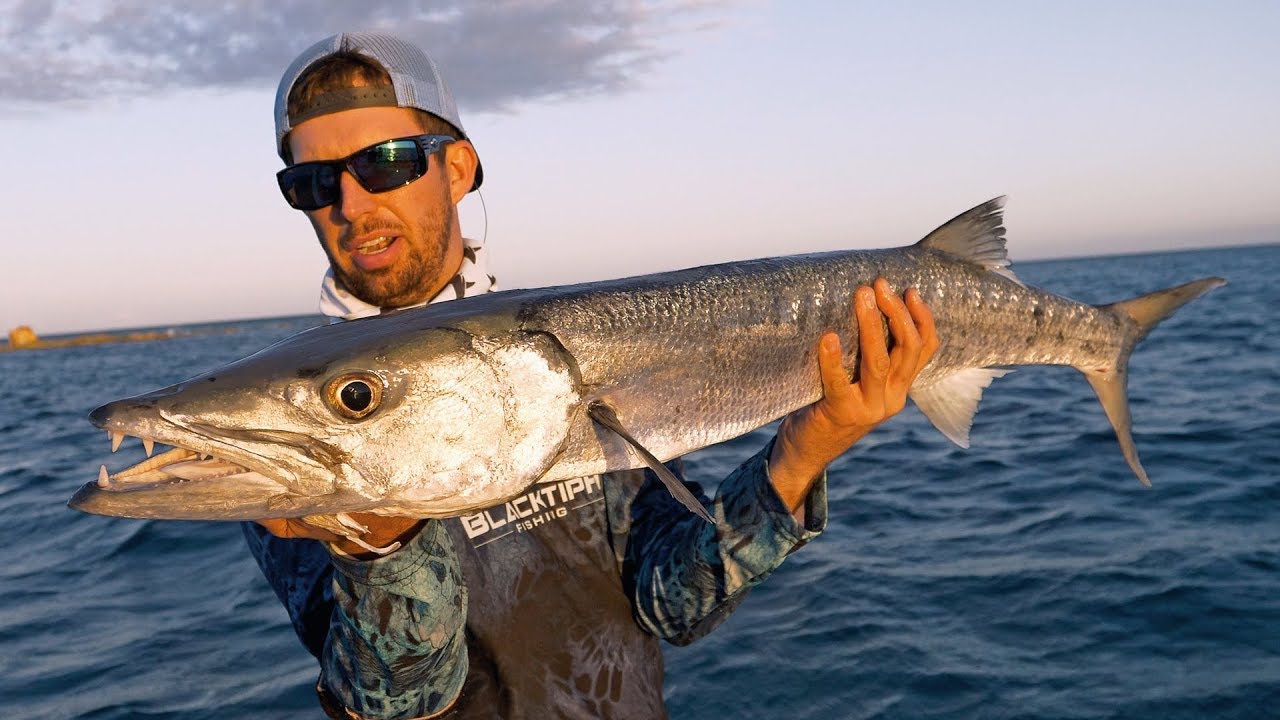
There’s rarely doubt once you see the teeth, but the marks:
| Feature | Great barracuda | Look-alikes |
|---|---|---|
| Body | Long, silver, torpedo-shaped | King mackerel are similar-shaped but lack the underslung jaw |
| Jaw | Underslung lower jaw full of dagger teeth | Mackerel teeth are small triangles |
| Spots | Scattered dark blotches on the lower rear flanks | Kings and Spanish mackerel lack the black blotches |
| Two dorsal fins | Widely separated | — |
| Behavior | Hovers motionless, then strikes in a blur | — |
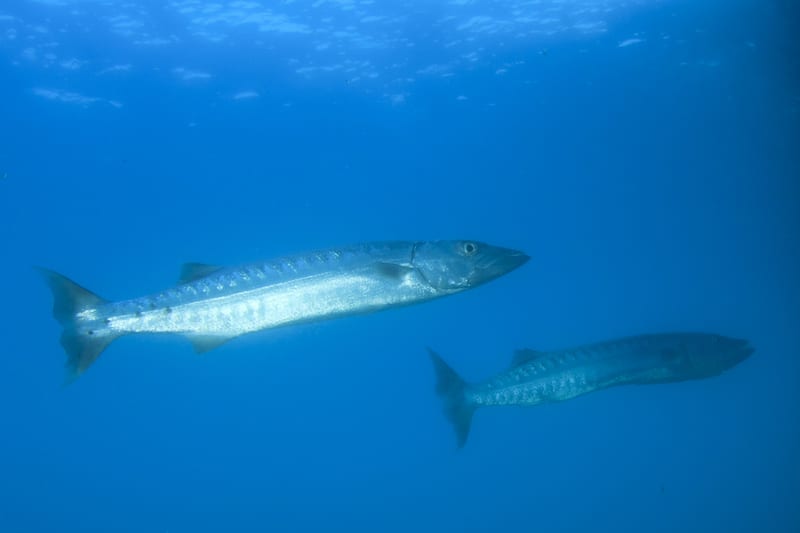
A ‘cuda will often hang under the boat like a suspended silver log, watching, before it commits. That stillness-then-explosion is the signature. Full biology is on the FWC barracuda page.
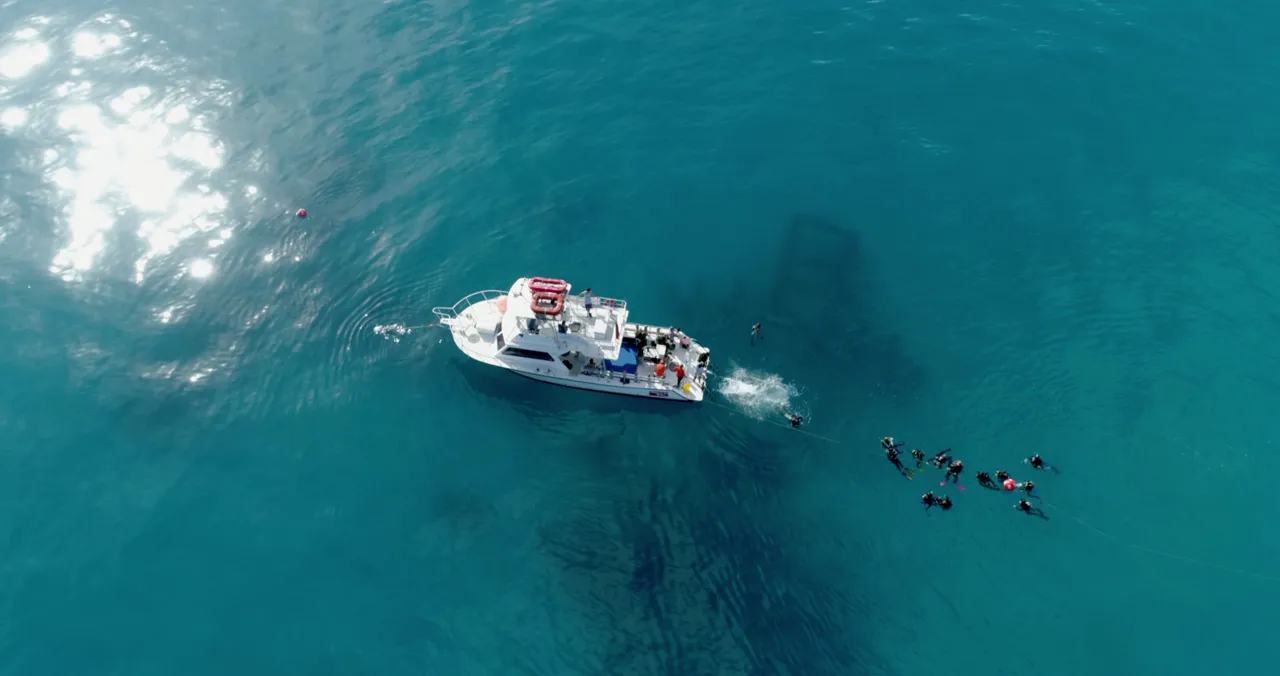
Over a nearshore wreck, barracuda own the top of the water column.
Where do you catch barracuda in Sarasota?
Structure and warm water. From roughly May through October, once the Gulf climbs past the mid-70s:
- Nearshore artificial reefs and wrecks in 20–70 ft off Sarasota and Venice — the classic barracuda address. They own the top of the water column over structure.
- The passes — Big Sarasota Pass, New Pass, and Boca Grande Pass hold big summer fish where current sweeps bait past structure.
- Nearshore hard bottom and ledges where mangrove snapper and baitfish concentrate — the barracuda are there for the same reason you are.
- Channel markers and bridge structure — smaller “‘cudas” haunt shaded structure inshore in summer.
They are a warm-water fish: as the Gulf cools in late fall they move offshore and the nearshore bite fades. Peak is the June–September heat. The artificial reef guide maps the structure that holds them.
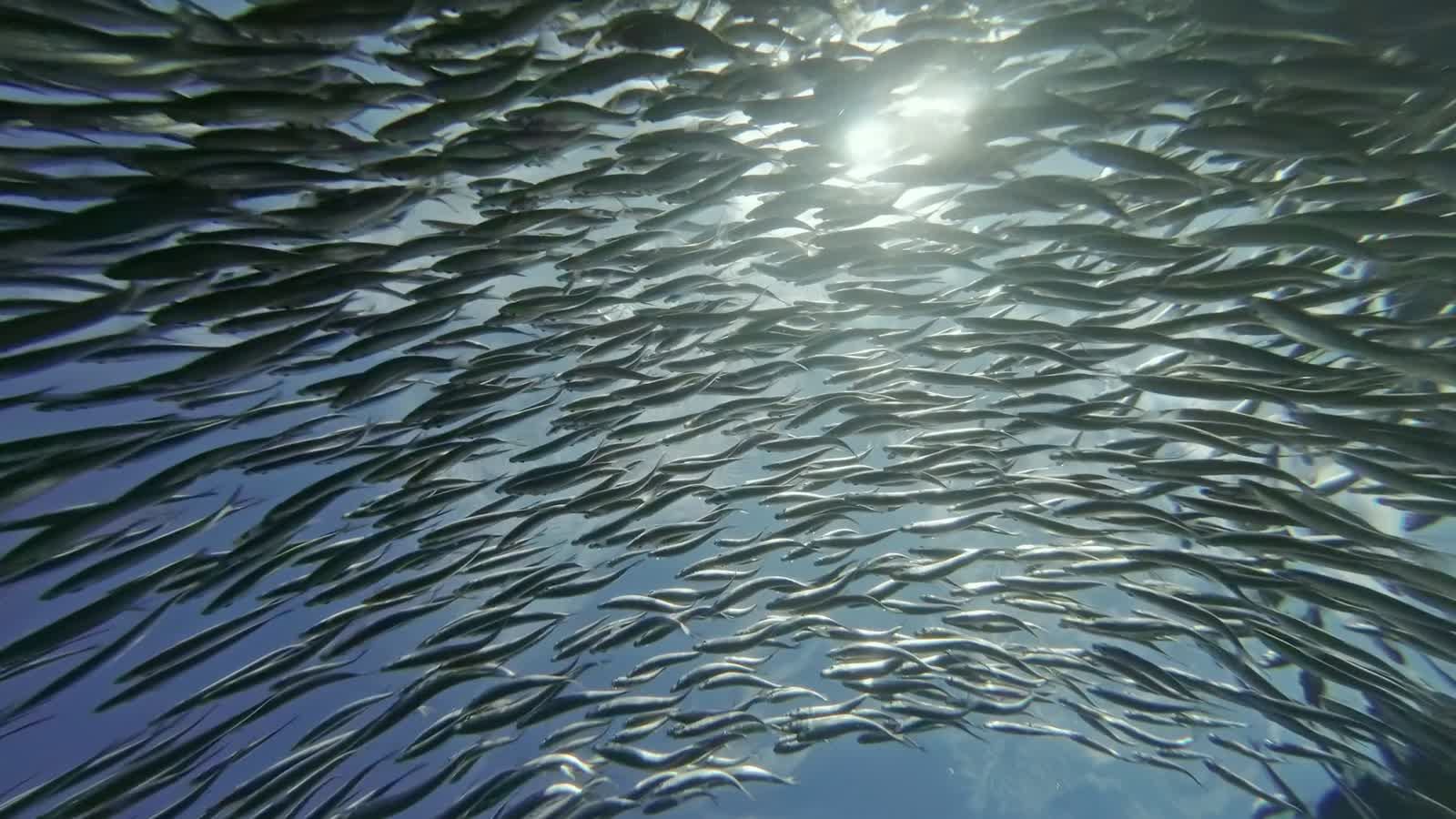
Where bait balls up over structure, the ambush is already set.
What’s the best lure for barracuda? (The tube-lure trick)
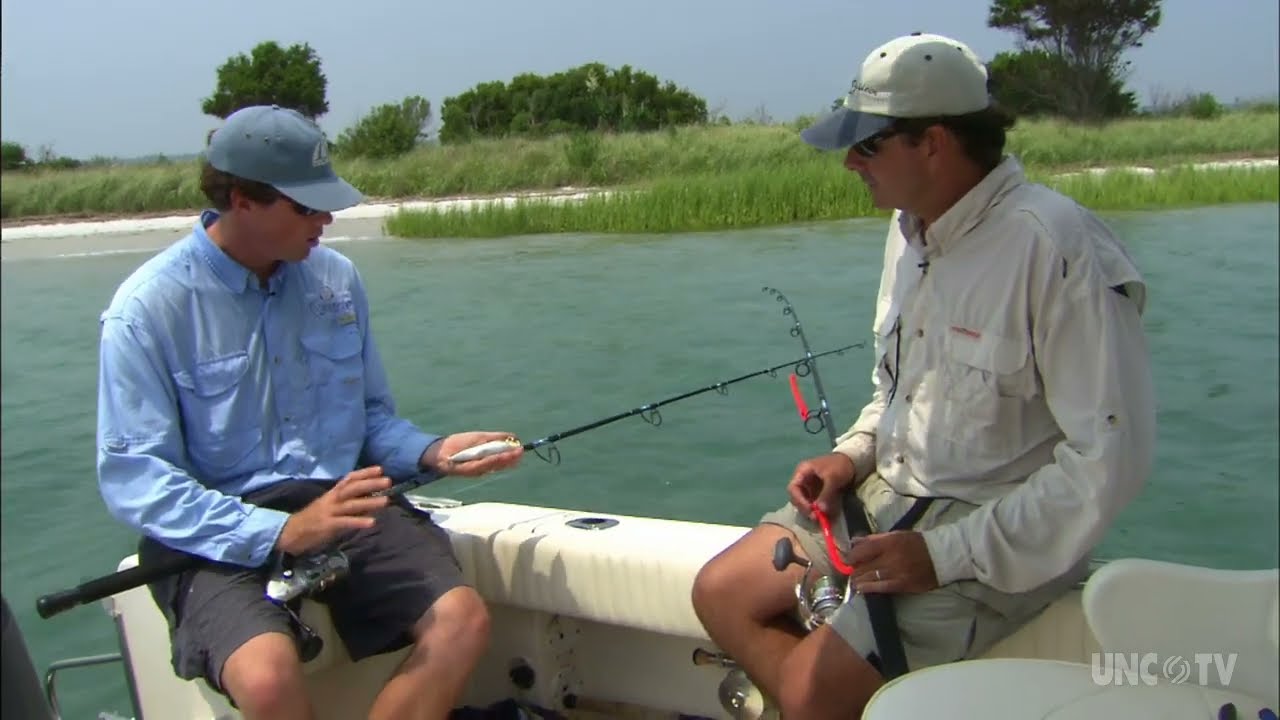
Barracuda are triggered by speed. The single most famous barracuda lure is the tube lure — a length of bright surgical tubing rigged over wire, retrieved as fast as you can physically reel:
| Offering | How to fish it |
|---|---|
| Tube lure (green/orange surgical tubing, 6–12”) | Cast past the fish, retrieve at full speed — the faster, the better |
| Fast-retrieved silver spoon or jig | Same principle: outrun their caution |
| Live bait (pinfish, blue runner, small snapper) on wire | The high-percentage meat bait — live bait with a wire trace |
| Trolled spoons / plugs on wire | Cover reef edges — see trolling |
Wire is non-negotiable. Those teeth shear straight through 60 lb fluorocarbon like thread — rig a foot of single-strand or knottable wire between leader and lure. Tackle is a 7’ medium-heavy spinning or conventional outfit, 4000–6000 reel, 20–40 lb braid, 40–60 lb leader to the wire trace. Set the hook hard; a barracuda’s bony mouth resists penetration.
Can you eat barracuda?
Legally, mostly yes in Sarasota waters — but think twice on the big ones. Great barracuda are a leading carrier of ciguatera, a toxin that accumulates in large reef predators and cannot be cooked, frozen, or cleaned out. There is no reliable home test. For that reason the widespread, sensible practice in Southwest Florida is:
- Release the big ones (roughly over 3 ft). This is where ciguatera risk concentrates.
- Small barracuda are eaten by some anglers, but the reward is low and the risk is real.
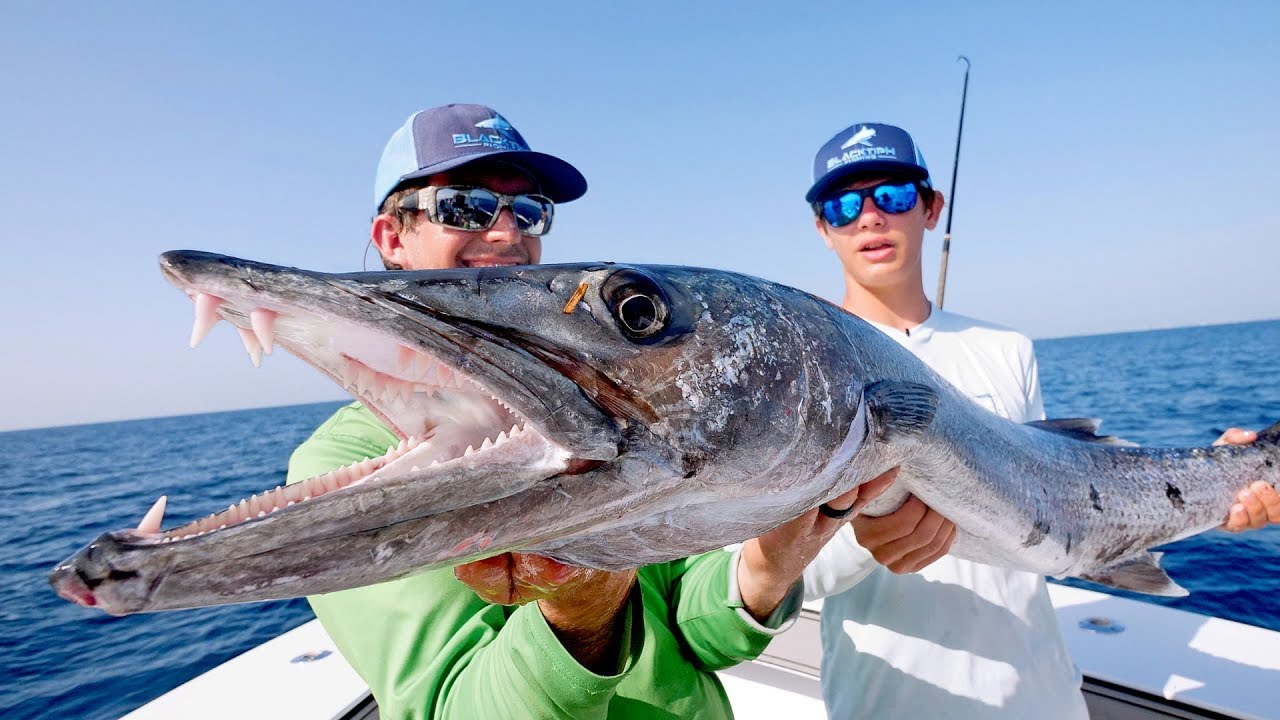
Most Sarasota anglers treat barracuda as a pure sport fish — photograph the toothy grin, revive it, and let it go to ambush another day. Handle with heavy gloves and long pliers; the teeth do damage boatside.
Photograph it, revive it, and run home in the last of the light.
What are the 2026 regulations for barracuda in Florida?
| Area | 2026 rule |
|---|---|
| Sarasota-area Gulf state waters | No minimum size; 2 fish or 100 lb per person per day, whichever is more — the unregulated-species default |
| Collier, Monroe, Miami-Dade, Broward, Palm Beach & Martin counties | 15–36” fork-length slot, plus 1 fish over 36” per person or vessel per day; 2 per person / 6 per vessel |
| Season | Open year-round statewide |
| License | Florida saltwater license required |
Great barracuda regulations are regional. Most of the state, including Sarasota, falls under the default unregulated-species limit; six South Florida counties from Collier around to Martin carry a specific slot and bag limit. Because the rules differ by county and can change, confirm on the FWC barracuda page and the FWC recreational regulations hub before you keep one; license info at FWC saltwater licenses. Verify current rules before you fish.
FAQ
Are barracuda dangerous to anglers? The teeth are the hazard, not the fish. Boatside, a thrashing barracuda can cause serious cuts — use long pliers, heavy gloves, and never lip one. Attacks on swimmers are extremely rare and usually tied to shiny objects mistaken for bait.
Why did a barracuda eat my hooked fish? Barracuda follow struggling, hooked fish — snapper, trout, and mackerel — and ambush them at the boat. Reef anglers lose fish to “‘cuda tax” constantly. Speed the fish to the boat or move off the structure.
Do I need wire for barracuda? Yes. Their teeth cut heavy fluorocarbon instantly. Rig a foot of single-strand or knottable wire ahead of any lure or bait.
Can you eat Sarasota barracuda? It’s generally legal here, but large great barracuda carry ciguatera toxin that can’t be removed by cooking. The safe, standard practice is to release the big ones.
Related reading
Barracuda share Sarasota’s reefs with mangrove snapper, red grouper, and cobia — a summer reef trip can put all four on the deck. The other toothy speedster worth wiring up for is the king mackerel, and the trolling guide covers working reef edges for both. Time your trip with the July and August calendars.