Dock Light Fishing in Sarasota: Night Snook on the ICW
How to fish Sarasota's dock lights at night: reading the light halo, jig and fly rigs for snook and trout, Snook Alley on the ICW, and the etiquette.
How We Fish It.
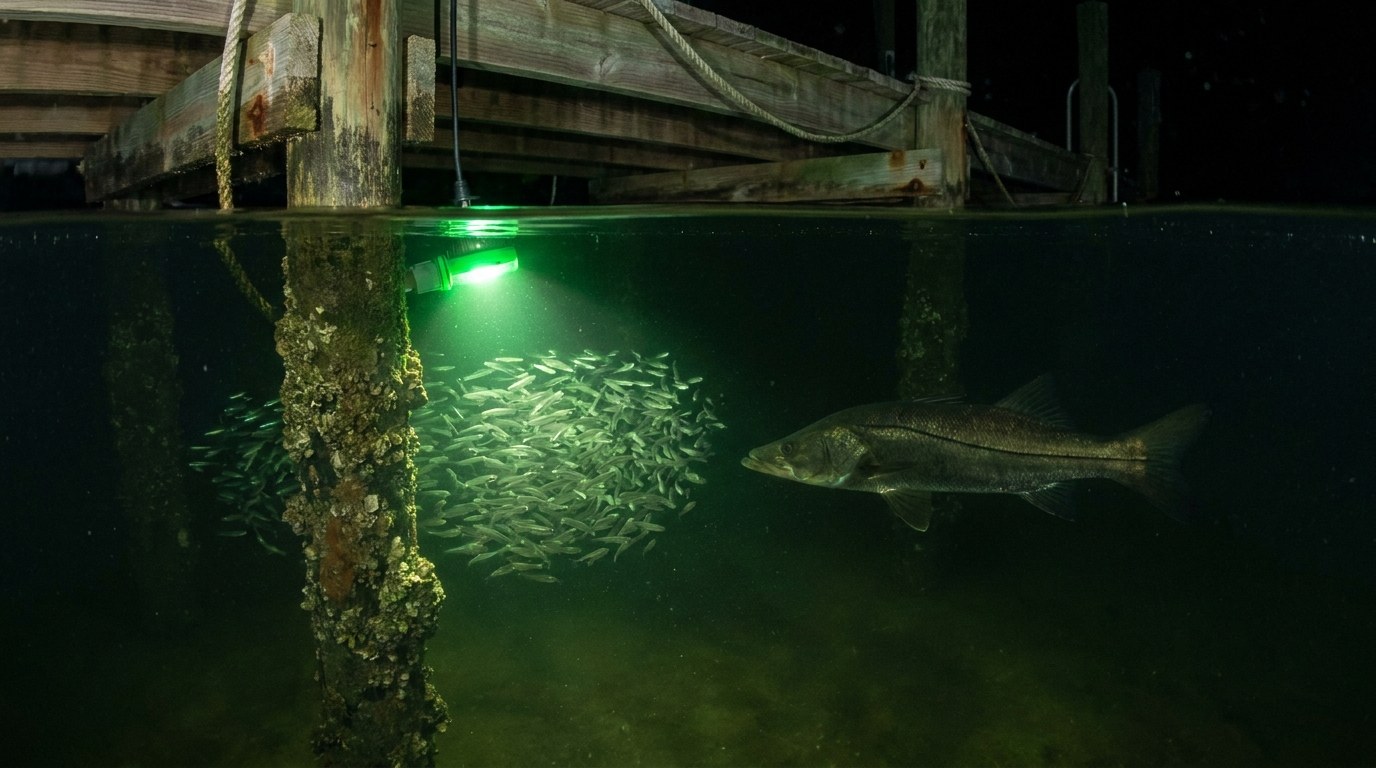
Dock light fishing is Sarasota’s marquee specialty: underwater and above-water lights on private docks concentrate glass minnows and shrimp after dark, and snook, seatrout, and juvenile tarpon stack on the shadow edges to feed. It is sight fishing at night with short, accurate casts — and the densest stretch of lit docks on this coast runs down the ICW from Sarasota to Venice, where the southern section is locally called “Snook Alley.”
Where are the dock lights?
The fishery follows the ICW dock lines, roughly north to south:
- Anna Maria canals and Longboat Key’s bayside
- South Sarasota Bay and Roberts Bay
- Little Sarasota Bay and Blackburn Bay
- The stretch approaching the Venice airport — “Snook Alley”
Bridge shadow lines fish the same way and are public structure: the Ringling, Stickney Point, and Siesta Drive bridges all hold fish on the up-light edge of the shadow. Local overviews worth reading: Quiet Waters Fishing’s dock light fishing report page and Capt. Rick Grassett’s Fly Fish Sarasota, whose night trips concentrate on the Sarasota-to-Venice stretch.
Conditions: year-round fishery. Incoming tide, dark (new-moon) nights, and calm wind are best. Summer nights are the snook game; winter nights stack seatrout in the same lights.
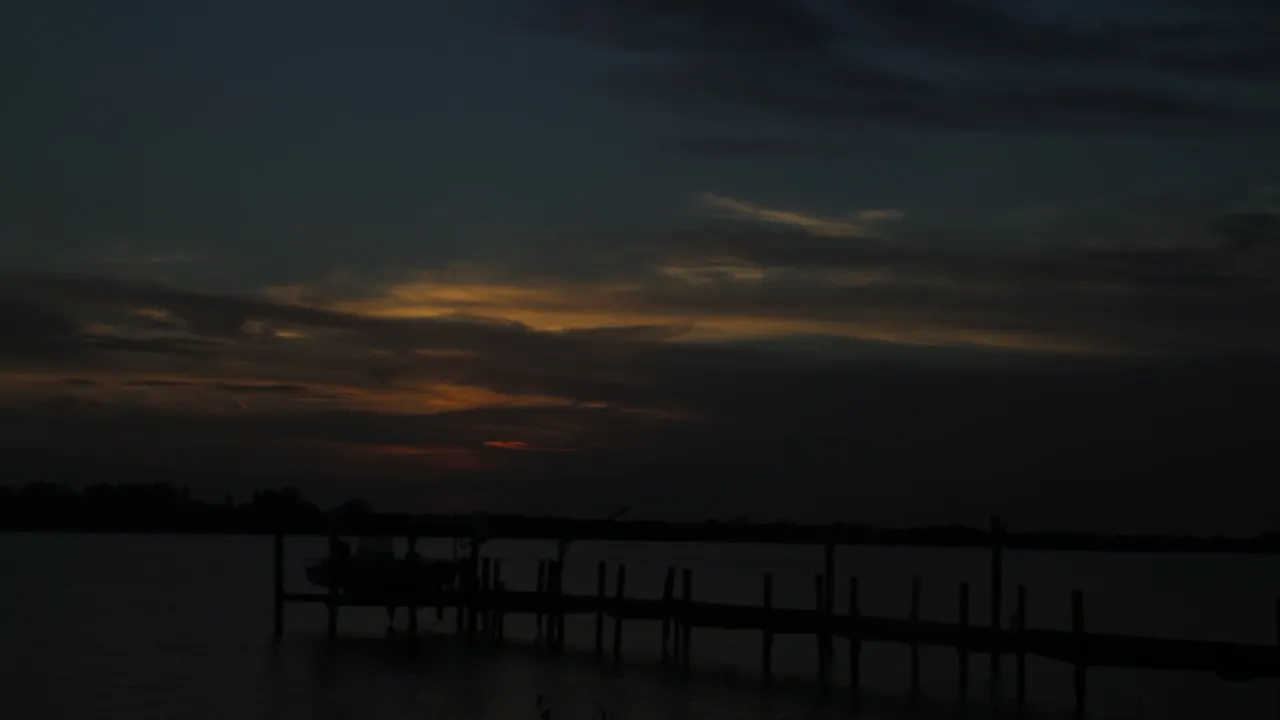
The densest lit dock line runs the ICW from Sarasota down to Venice.
How do you read a dock light?
The light is a food column: plankton to glass minnows to predators. The fish arrange themselves the same way on nearly every light:
| Position | What’s there |
|---|---|
| Bright center | Bait — glass minnows, shrimp |
| Shadow edge of the halo | Feeding snook and trout, facing into current |
| Deepest, darkest edge | The biggest snook on the light |
| Up and cross-current | Where your cast should land |
The cast that catches fish lands up-current of the light so the lure or fly swings naturally through the shadow edge — not into the bright center, which blows the school out and rests the light for an hour.
What’s the rig for night snook?
Spin (the default): 7’ medium-light to medium fast rod, 2500–3000 reel, 10 lb braid, 24” of 25–30 lb fluorocarbon. Lures stay small and pale: 1/16–1/8 oz jighead with a 2.5–3” white or glow paddletail, or a DOA shrimp in glow/near-clear dead-drifted with the current. The lighter jig matters — a heavy head sinks under the fish, which feed looking up.
Fly (the premier method): 7–8 wt, floating line, and a short 6–7 ft leader to 20–30 lb fluoro — a 9 ft leader is a liability at night; the short one turns over accurately at close range. Flies: #2–#6 white baitfish patterns — Grassett Snook Minnow (the local pattern), small Clousers, glass-minnow imitations. Dock lights are the most beginner-friendly saltwater fly fishery in the region: short casts, visible fish, obvious drift. CB’s Saltwater Outfitters (1249 Stickney Point Rd, (941) 349-4400) runs Orvis-endorsed casting lessons if you’re starting from zero, and the full daylight version lives on our fly fishing page.
Boat: trolling motor only near the lights — push pole is better. Red headlamp, and no spotlights on the water, ever.
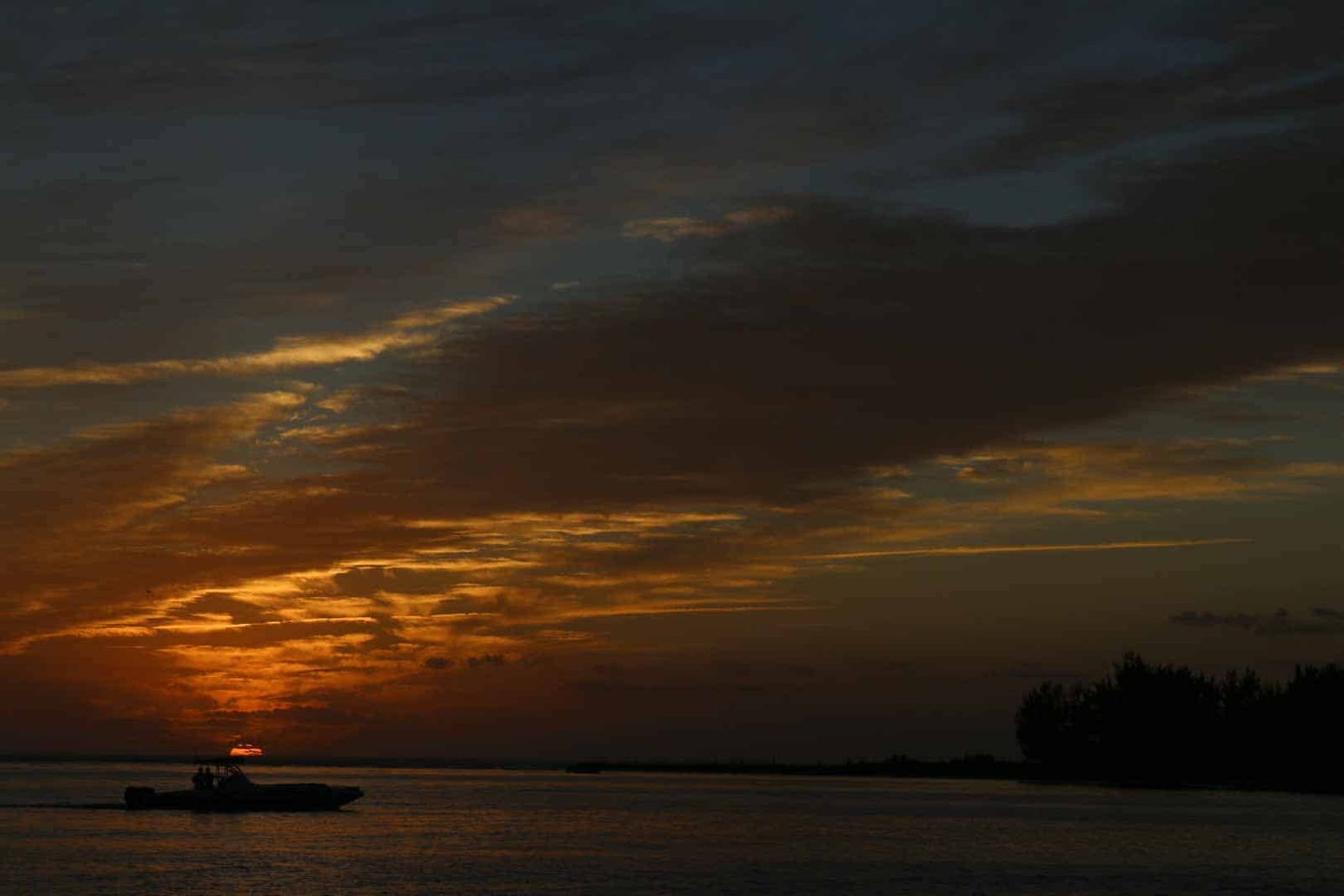
Kill the outboard 200 yards out and pole the last stretch in.
What’s the step-by-step?
- Kill the outboard 200+ yards out; trolling-motor or pole the last stretch. Set up up-current and just outside the light halo.
- Read the light before casting: find the shadow-edge fish and the current direction.
- Cast up-current so the offering swings through the shadow edge.
- Dead-drift or bare-minimum twitches. The take is a subtle tick on spin, a visible flash on fly.
- Strip-strike or reel-set — no trout-set — and immediately steer the fish away from the pilings. Lock the drag down and move the boat if a good snook is winning.
- Rest the light after a hookup or ~15 casts. Run a milk run of 6–10 docks and rotate.
What are the dock light rules and etiquette?
This fishery survives because it is low-impact. The lights are private property on private docks; the water is public. The local code:
- Fish from the boat. Never tie to, touch, or board a dock.
- One boat per light — if someone’s on it, keep moving.
- Idle and trolling-motor zones only; a wake at 11 p.m. gets lights turned off for everyone.
- Keep voices down. Homeowners are sleeping 40 ft away.
- Release fish quickly and quietly, in the water where possible.
On regulations: snook in the Sarasota Bay region are closed December 1 through end of February and May 1–August 31, so most of the summer dock light fishery is catch-and-release by rule — 28–33” slot, one fish, snook stamp required when open, hook-and-line only. Current rules at FWC’s snook page; trout slot and vessel limits at FWC’s spotted seatrout page. License via GoOutdoorsFlorida. Verify current rules before you fish.
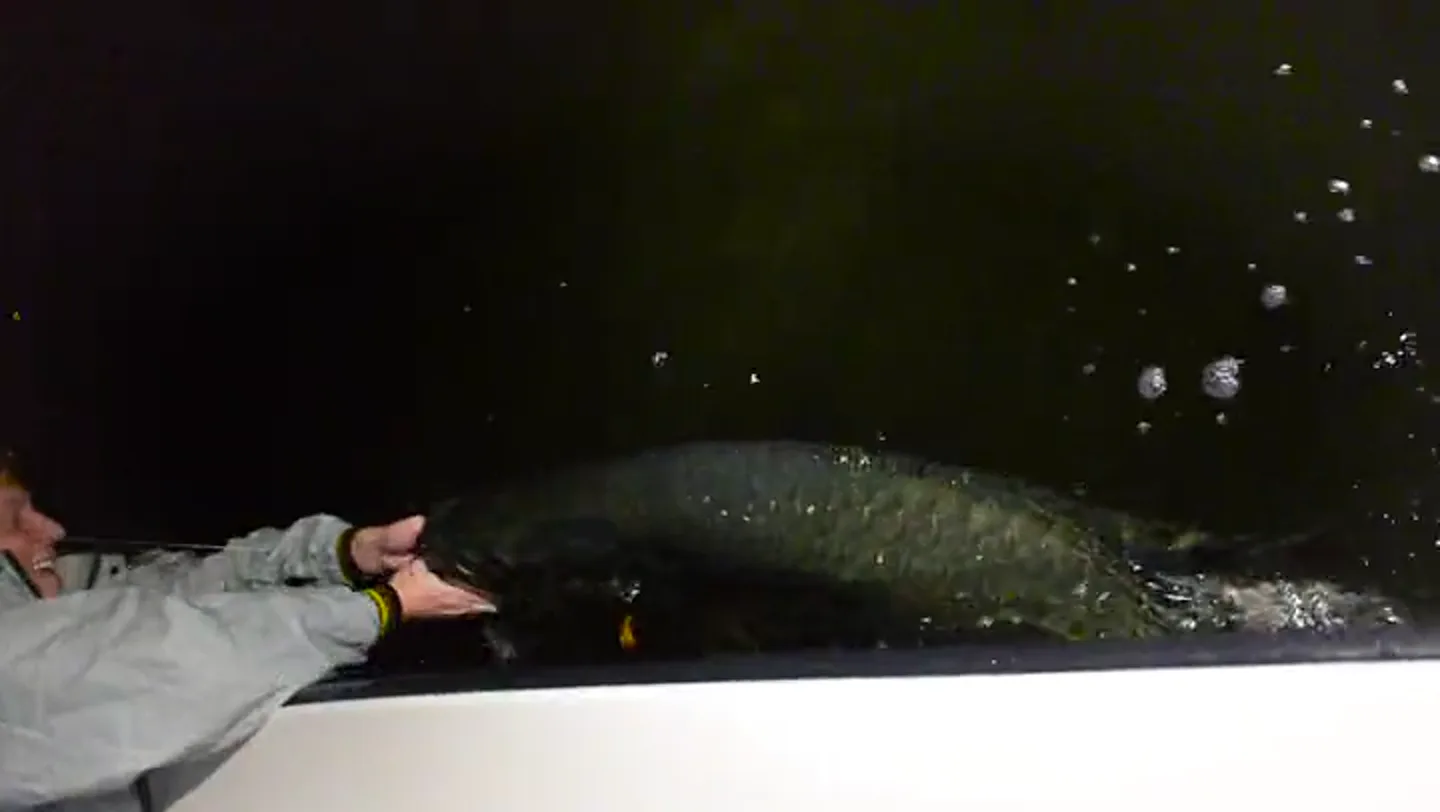
Tarpon roll into the light halo on summer nights.
What will you catch under the lights?
Snook first — that’s the fishery — then spotted seatrout (especially in winter), juvenile tarpon on summer nights, jack crevalle, ladyfish, and mangrove snapper tight to the pilings. The juvenile tarpon are the bonus round: 5–20 lb fish rolling in the halo, and every bit as hard to hook as their pass-running parents.
What are the classic dock light mistakes?
| Mistake | Result | Fix |
|---|---|---|
| Casting into the bright center | School scatters, light dies | Swing the shadow edge |
| Outboard down the dock line | Every light goes quiet | Troll-motor from 200+ yards |
| Jig too heavy | Sinks under fish feeding up | 1/16–1/8 oz max |
| Flashlight/spotlight on the water | Instant shutdown | Red headlamp, used sparingly |
| Light drag near pilings | Cut off on the first run | Lock down, steer, move the boat |
| Camping one light | Diminishing returns | 6–10 dock milk run |
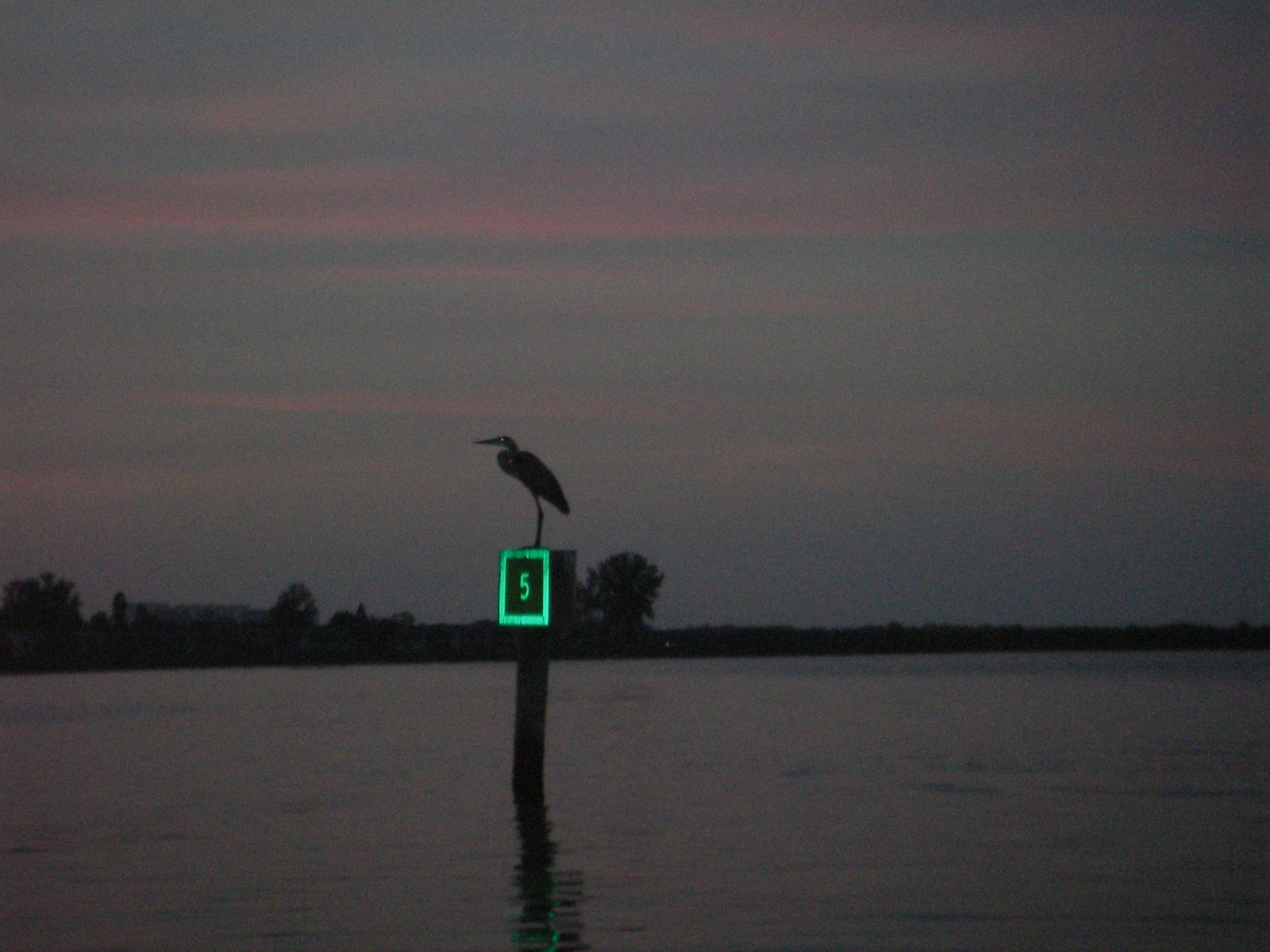
Rest a light after a hookup and rotate six to ten docks.
FAQ
Is dock light fishing legal? Yes. The water is public and you may fish it; the docks and lights are private property you may not touch, tie to, or board.
Do I need a boat? The dock lines effectively require one (or a kayak). Without a boat, fish the public bridge shadow lines — Ringling, Stickney Point, and Siesta Drive all produce the same shadow-edge bite.
When is the best time? An incoming tide on a dark, calm summer night for snook and juvenile tarpon; winter nights for trout. The darker the night, the better the lights fish.
Can I keep a snook I catch at night? Only in the open windows (Mar 1–Apr 30 and Sep 1–Nov 30 in the Sarasota Bay region), inside the 28–33” slot, with a snook stamp. Most of the summer fishery is closed-season catch-and-release — keep fish in the water for photos.
What’s the best first lure? A 1/16 oz jighead with a 3” white paddletail, dead-drifted. If that gets refused, a glow DOA shrimp on the same drift.
Related
Dock lights are the gateway to Sarasota’s other after-dark and light-tackle games: the same swing-the-edge cast powers jigging the passes at night, the fly fishing page covers the daylight version of the short game, and a well of pilchards from the live bait guide turns a slow light hot. Species detail: snook, spotted seatrout, and tarpon.
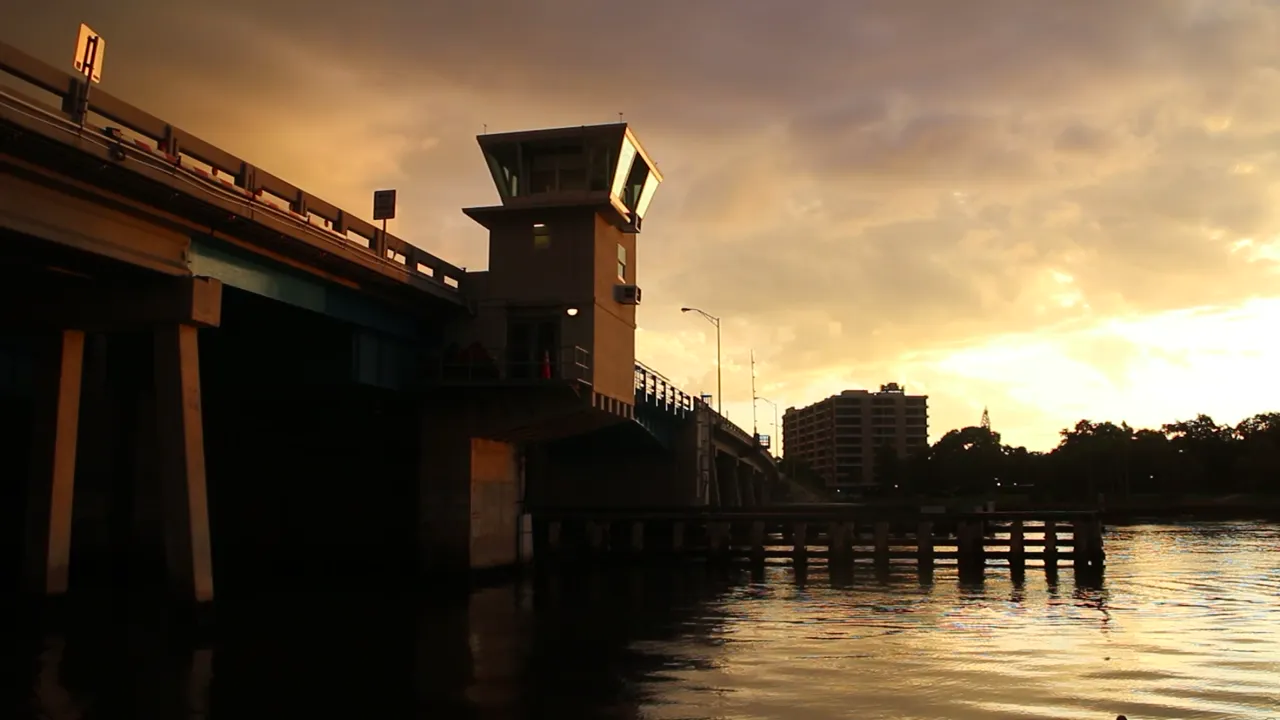
The biggest snook holds on the shadow edge, not the bright center.
Dock Light Fishing on Video
14 public videos from 10 channels, sorted by subject. Nothing plays until you click it.
Tips & How-To
5Where to cast and how to work a dock light for snook and trout after dark.

Fishing GREEN Dock Lights for Snook
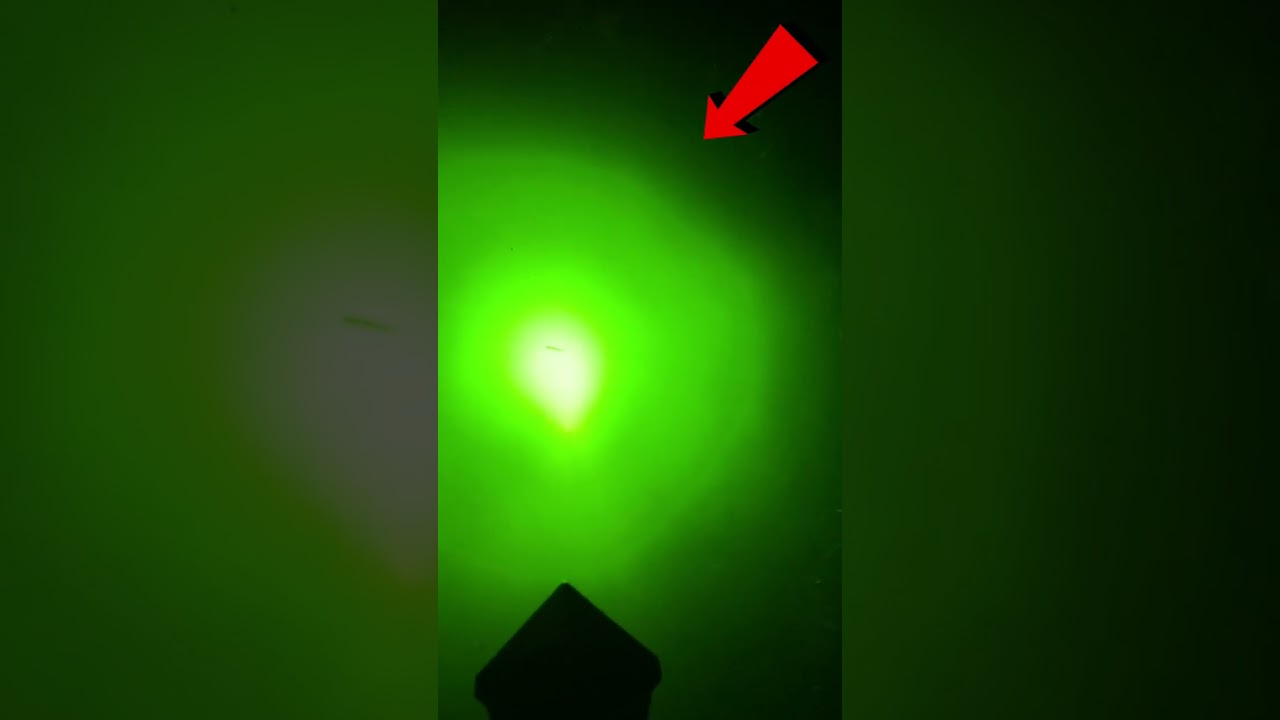
The Trick To Fish Dock Lights At Night (Fishing The Outer Edge)

Dock Light Snook Fishing Tips! - Flats Class

Pro Guide Explains Why This Dock Light Outfished All the Others

Tiny Lures for Stubborn fish on Dock Lights - Trout and Snook Fishing
Snook & Tarpon on Dock Lights
4Sight-casting snook and tarpon under the lights on fly and spin.
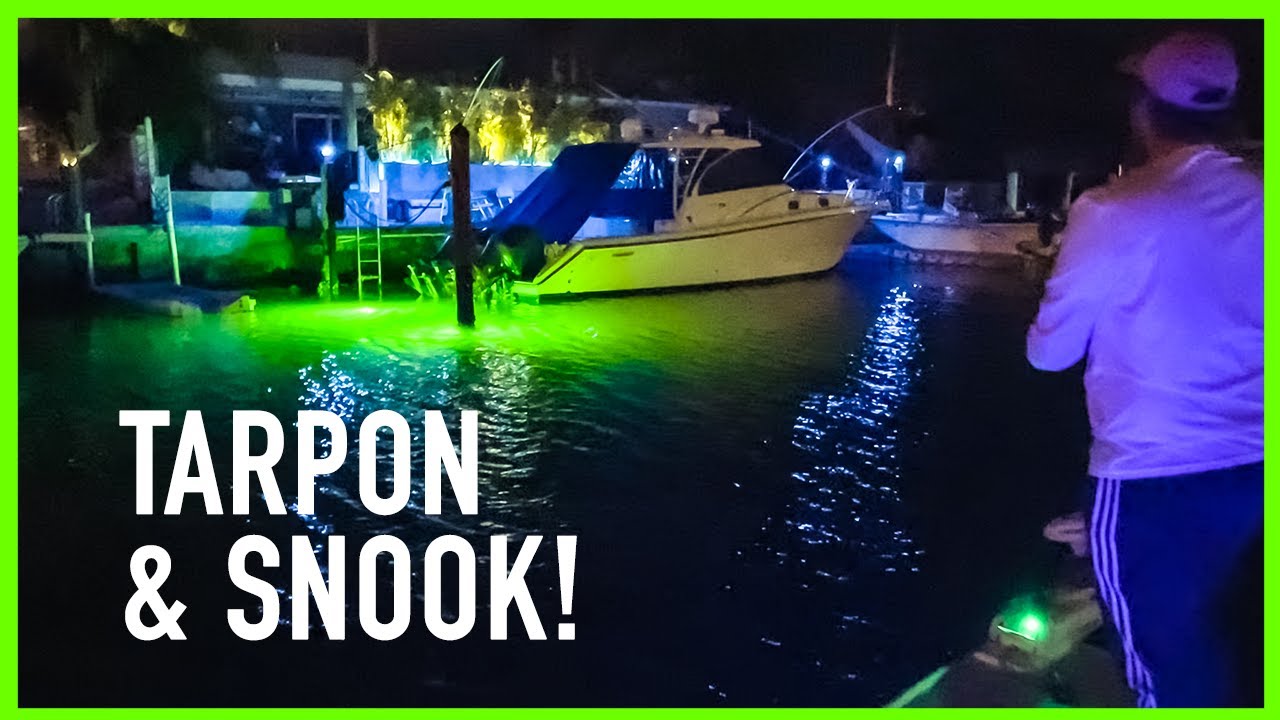
Night Fishing Snook And Tarpon On Dock Lights
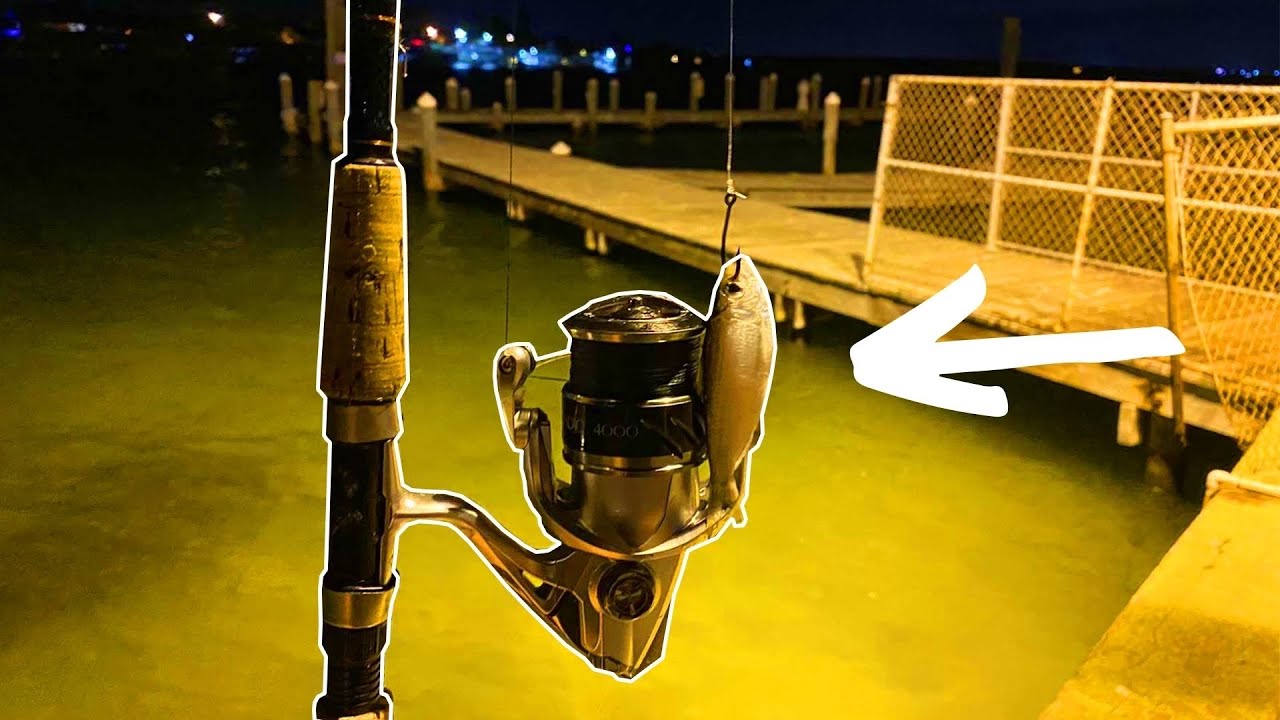
Dock Light Fishing with Live Whitebait (Insane Action!)

Dock Light Snook on Fly "Dock Light Chronicles v1.0"

Sight Fishing Dock Lights For Snook and Tarpon
On the Water
5Full nighttime dock-light trips showing the bite from cast to catch.
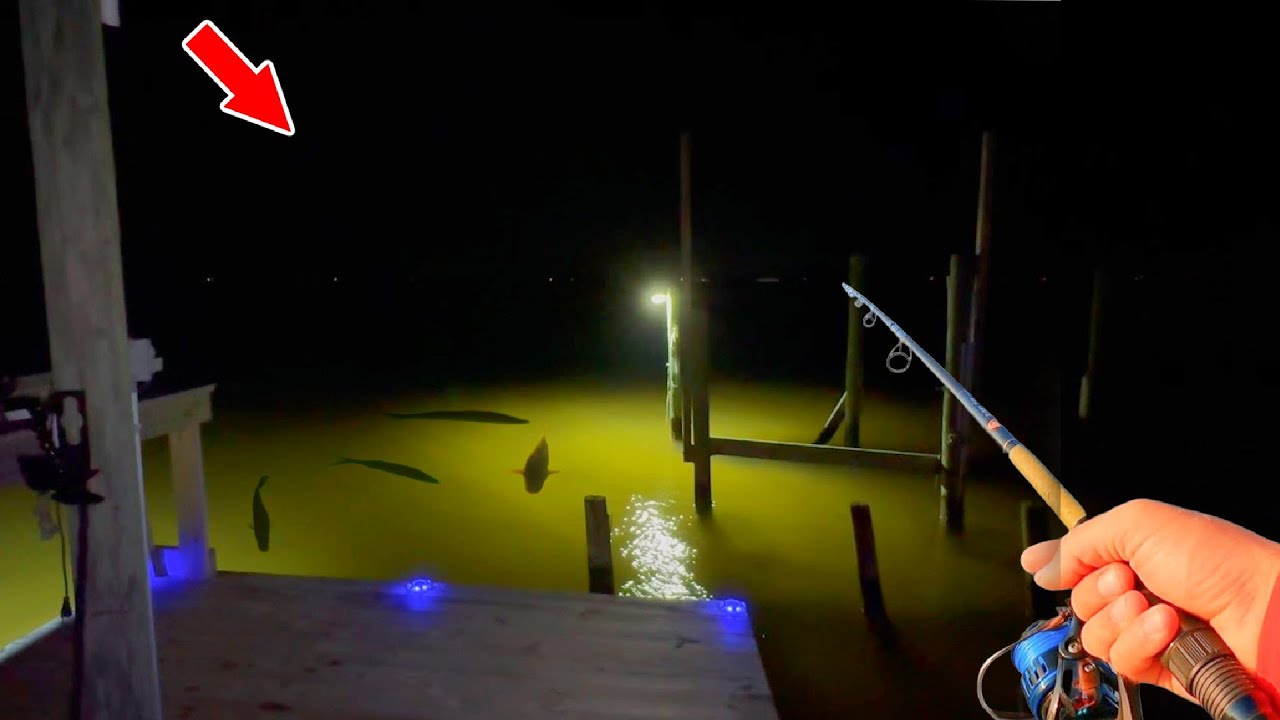
Fishing a Loaded Dock Light and Caught THIS!

I Went Night Time Dock Light Fishing

THIS is the Dock Light Fish I Wanted...[Catch, Clean, Cook]

Tossing Live Shrimp Under a Loaded Dock light! *Crazy Action*
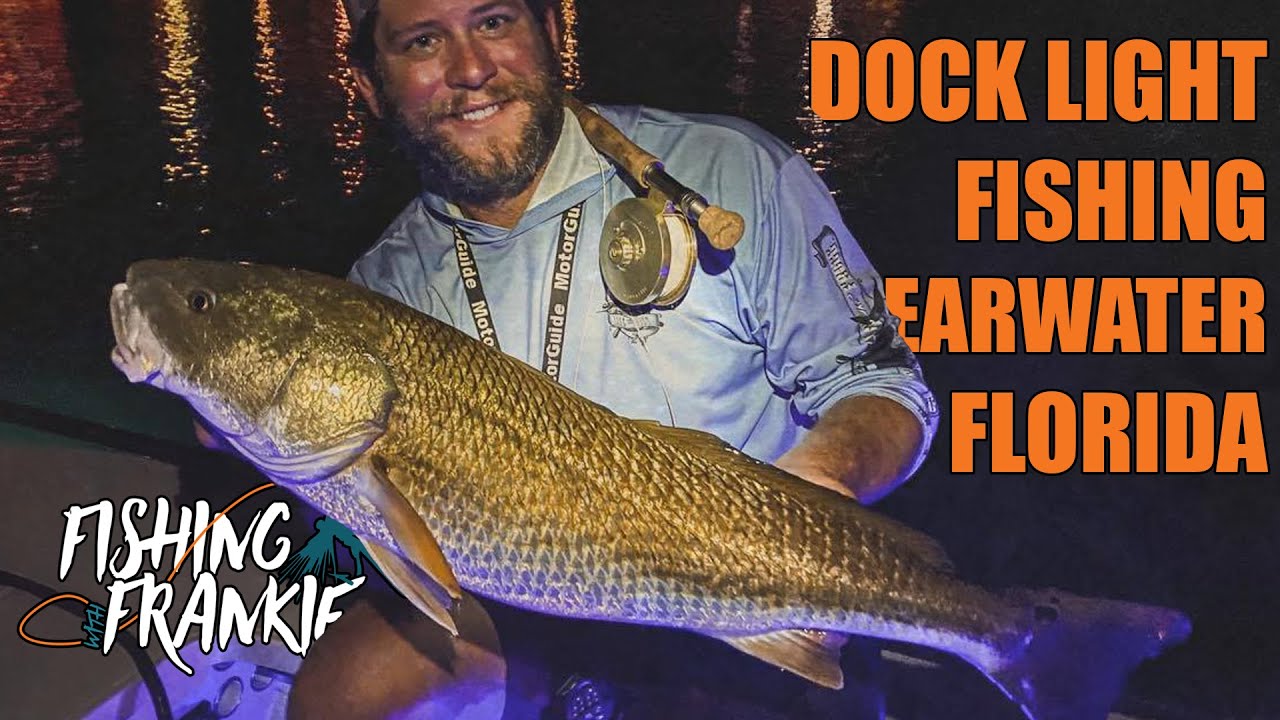
Dock Light Fishing Clearwater Florida - Inshore Slam Every Time
Gear Checklist.
- 7' medium-light/medium fast spinning rod
- 2500–3000 reel, 10 lb braid
- 24" of 25–30 lb fluorocarbon
- 1/16–1/8 oz jigheads + 2.5–3" white/glow paddletails
- DOA shrimp (glow or near-clear)
- 7–8 wt fly rod, floating line, #2–#6 white flies (optional)
- Trolling motor or push pole, red headlamp