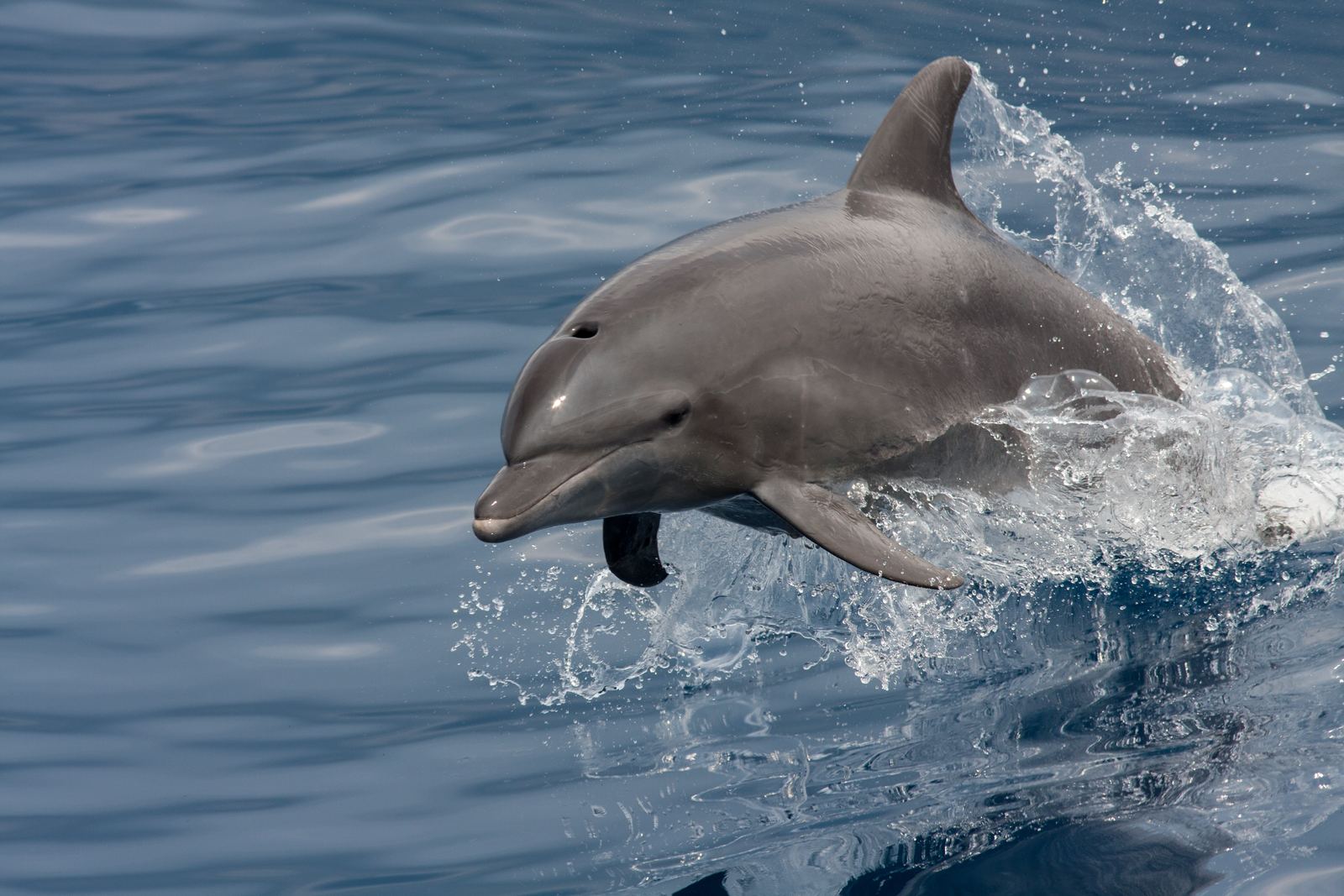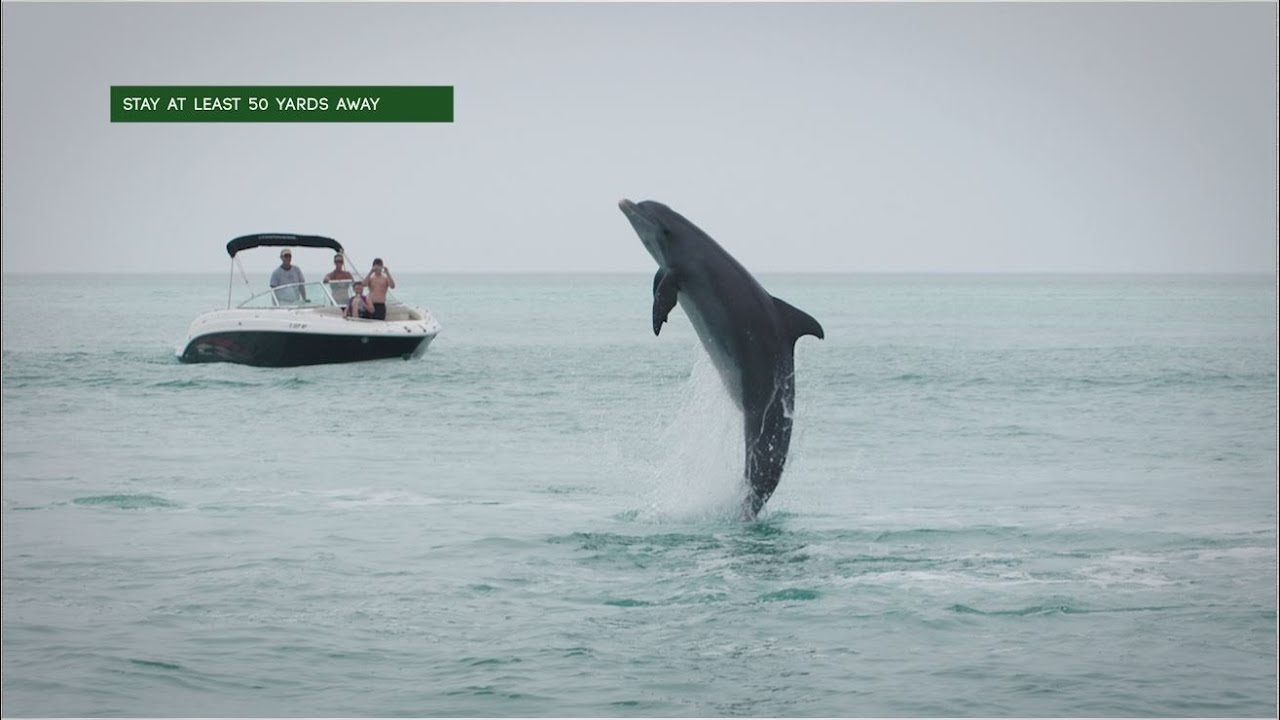
The dolphins you see rolling through Sarasota Bay are almost certainly locals. About 170 common bottlenose dolphins (Tursiops truncatus) live here year-round in a resident community that scientists have tracked individually since 1970 — the longest continuous study of any wild dolphin population on Earth. Many of these animals were born in the bay, live and die within a home range of roughly 40 square miles between southern Tampa Bay and Venice, and belong to family lines now five generations deep. You can watch them almost any morning from a Lido Key beach, a New Pass seawall, or a boat on the Intracoastal — and the single most important thing to know is that federal law requires you to stay 50 yards back and never, ever feed them.
Which dolphins live in Sarasota Bay?
Sarasota’s dolphins are common bottlenose dolphins — the same species from Flipper, and the animal most people picture when they hear “dolphin.” Across the western North Atlantic, science recognizes two ecotypes: a smaller coastal form that lives in bays, estuaries, and nearshore Gulf waters, and a larger, more robust offshore form that ranges over deep water (NOAA Fisheries). Sarasota Bay’s residents are the coastal ecotype. Florida coastal males run about 9 feet and 600 pounds; females about 8 feet and 400 pounds (Sarasota Dolphin Research Program).
Head offshore and you may meet a different animal entirely. Atlantic spotted dolphins (Stenella frontalis) — smaller, speckled, and fond of bow-riding — travel the deeper Gulf beyond the beaches and are not part of the bay community. Occasionally the offshore bottlenose ecotype shows up over deep water too. But inside the passes, on the flats, and along the ICW, the dolphins are residents you could, with a good photo catalog, name one by one.
| Sarasota resident bottlenose | |
|---|---|
| Species | Common bottlenose dolphin (Tursiops truncatus), coastal ecotype |
| Community size | ~170 individuals |
| Home range | ~southern Tampa Bay to Venice Inlet |
| Male size | ~9 ft, ~600 lb |
| Female size | ~8 ft, ~400 lb |
| Lifespan | 40+ years; females 60+; oldest documented here, 67 |
| Generations tracked | 5 concurrent |
| Diet | 15+ lb of fish per day (30+ for nursing females) |
What makes the Sarasota dolphins special?
They are the best-known wild dolphins in the world. The Sarasota Dolphin Research Program (SDRP) began in 1970 with a deceptively simple question: do these dolphins live in the bay year-round, or are they just passing through? The answer — that a stable, multi-generational community calls Sarasota Bay home — was the first documentation of long-term residency in any wild dolphin population, and it reshaped how the world studies these animals (SDRP).
The program is run today by Brookfield Zoo Chicago (formerly the Chicago Zoological Society), which has directed it since 1989, and has been based at Mote Marine Laboratory in Sarasota since 1992. Director Randy Wells has been on the water here since he was 16, helping tag dolphins in 1970 (Sarasota Magazine). Over five decades the program has identified more than 5,750 individual dolphins.
The catalog is built on dorsal-fin photo-identification. Every dolphin’s dorsal fin carries a unique pattern of nicks, notches, and scars — a fingerprint that lasts a lifetime. Researchers photograph fins, match them against the archive, and can follow a single animal from calf to juvenile to adult to grandparent across decades. That continuity is why Sarasota can say things no other place can: that as many as five generations swim the bay at once, and that the oldest resident ever documented reached 67 before she vanished in 2017. The oldest dolphin alive in the bay today is in her mid-50s — nearly as old as the study itself. Because these animals are so thoroughly known, the Sarasota community serves as the global reference population for studying at-risk dolphins elsewhere.
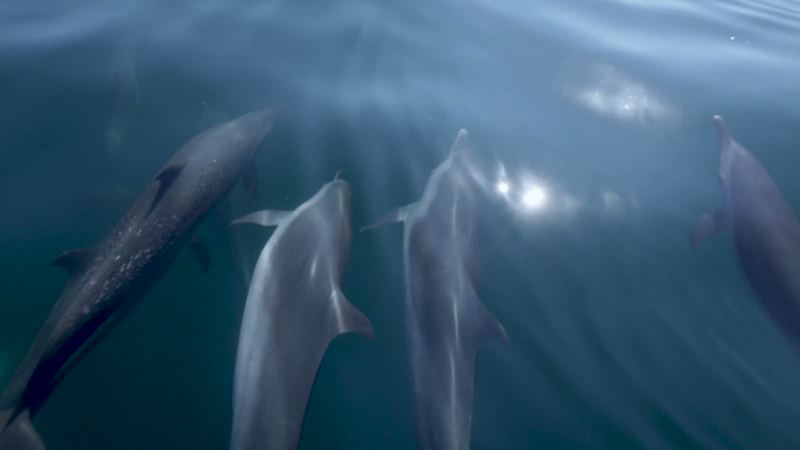
How big are bottlenose dolphins, and how long do they live?
Bottlenose dolphins are warm-blooded mammals that breathe air, give birth to live young, and nurse their calves. They surface to breathe through a single blowhole on top of the head, exhaling and inhaling in a fraction of a second; a resting dolphin may breathe a few times a minute, and can hold a breath for several minutes when diving.
They navigate and hunt with echolocation — a biological sonar. The dolphin produces streams of clicks in its nasal passages and focuses them forward through the fatty “melon” in its forehead. Echoes bounce back off fish, pilings, and the bottom, are received through the lower jaw, and travel to the brain, which reconstructs size, shape, distance, speed, and direction — even in the murky, tannin-stained water typical of the bay (SeaWorld). Bottlenose dolphins are among the most intelligent animals on the planet, with large, convoluted brains and individually distinctive “signature whistles” that function much like names.
Reproduction is slow, which is part of why every animal matters. Gestation runs about 12 months. A single calf is born (twins are extremely rare) and nurses for 18 to 24 months, though it may start catching its own fish around age one under its mother’s tutelage (Georgia Aquarium). Females typically begin reproducing between 5 and 15 years old and raise calves for years, so a mother produces only a handful of offspring in a lifetime.
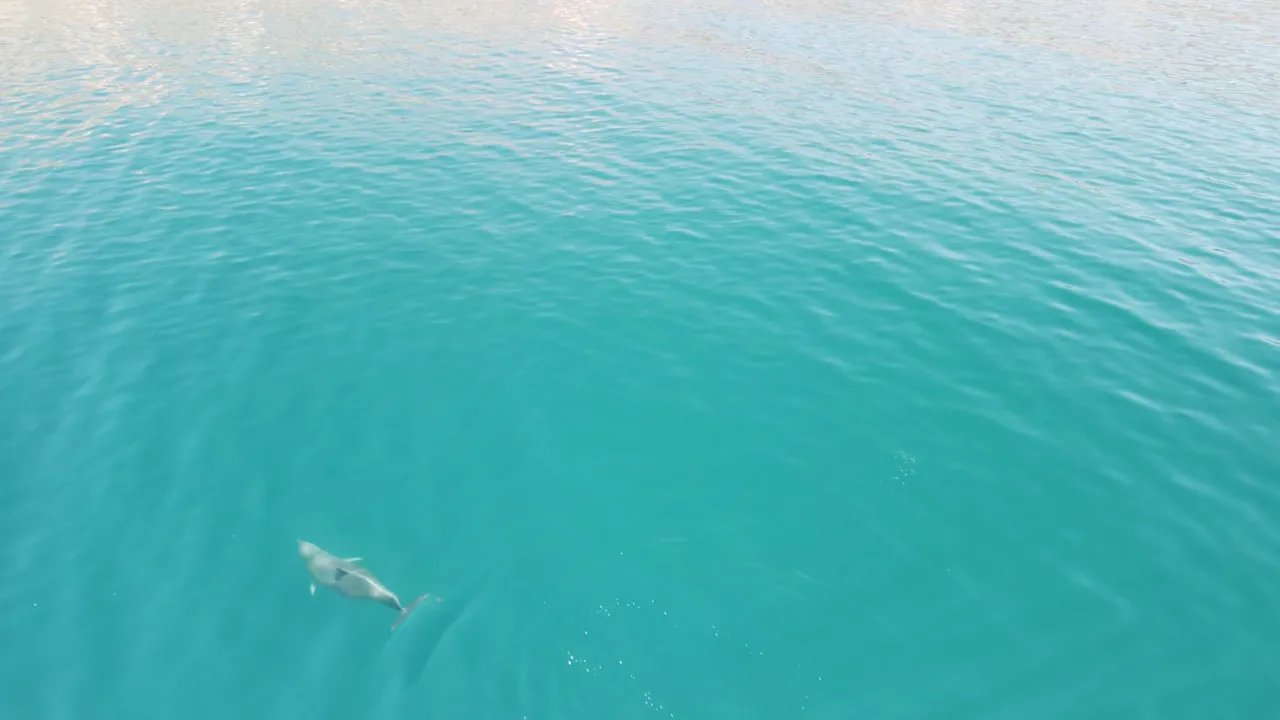
The same few hundred dolphins use this bay their whole lives.
Where do the dolphins live — bay, passes, or Gulf?
The resident community uses the full estuary and the nearshore Gulf: Sarasota Bay proper, Little Sarasota Bay, Roberts Bay, Blackburn Bay, the grass flats and mangrove shorelines, the deep passes, and the beachfront just outside the sand. Individual dolphins keep to consistent core areas within that range — one female may favor the flats off Longboat Key her whole life while another works the Siesta Key end of the bay. It is a demographically discrete community, but not a sealed one: residents interbreed with dolphins from neighboring communities where ranges overlap (SDRP population structure).
The passes — Big Sarasota Pass and New Pass — are prime dolphin water because moving tides funnel bait through narrow cuts, setting a table the dolphins return to daily. Note that “resident” is a community trait, not a leash: these are wide-ranging wild animals, and not every dolphin in the bay is a Sarasota resident. Visitors and neighbors pass through, which is exactly why the photo-ID catalog exists — to tell who’s who. For how these same tides and cuts shape the fishing, see our guide to Sarasota’s passes and inlets.
Where and when can I see dolphins in Sarasota?
Year-round, and most reliably in the calm of early morning before boat traffic and wind build. Dolphins are active all day, but flat morning water makes them far easier to spot, and low-angle light shows the fins. Some proven vantage points:
| Spot | Why it works | Access |
|---|---|---|
| New Pass (Lido/Longboat) | Tidal bait funnel; dolphins hunt the cut | Shore, bridge, boat |
| Big Sarasota Pass | Strong tides between Siesta and Lido | Boat; Ted Sperling Park shoreline |
| City Island / around Mote | Sheltered bay water, Mote’s home waters | Shore, kayak, boat |
| Lido Key beach & North Lido | Nearshore Gulf patrols | Beach |
| Intracoastal Waterway | Dolphins follow boat wakes and bait | Boat |
| Blackburn Bay / Little Sarasota Bay | Quiet backwater residents | Boat, kayak |
From land, the passes and the north end of Lido Key are your best bets. Ted Sperling Park at the south end of Lido puts you on Big Pass; the New Pass bridge and the seawalls around it overlook a daily dolphin highway. By water, a slow drift down the ICW almost guarantees an encounter — often the dolphins find you, surfing the pressure wave off the bow. Explore the shorelines they patrol on our area pages for Sarasota, Siesta Key, Lido Key, and Longboat Key.
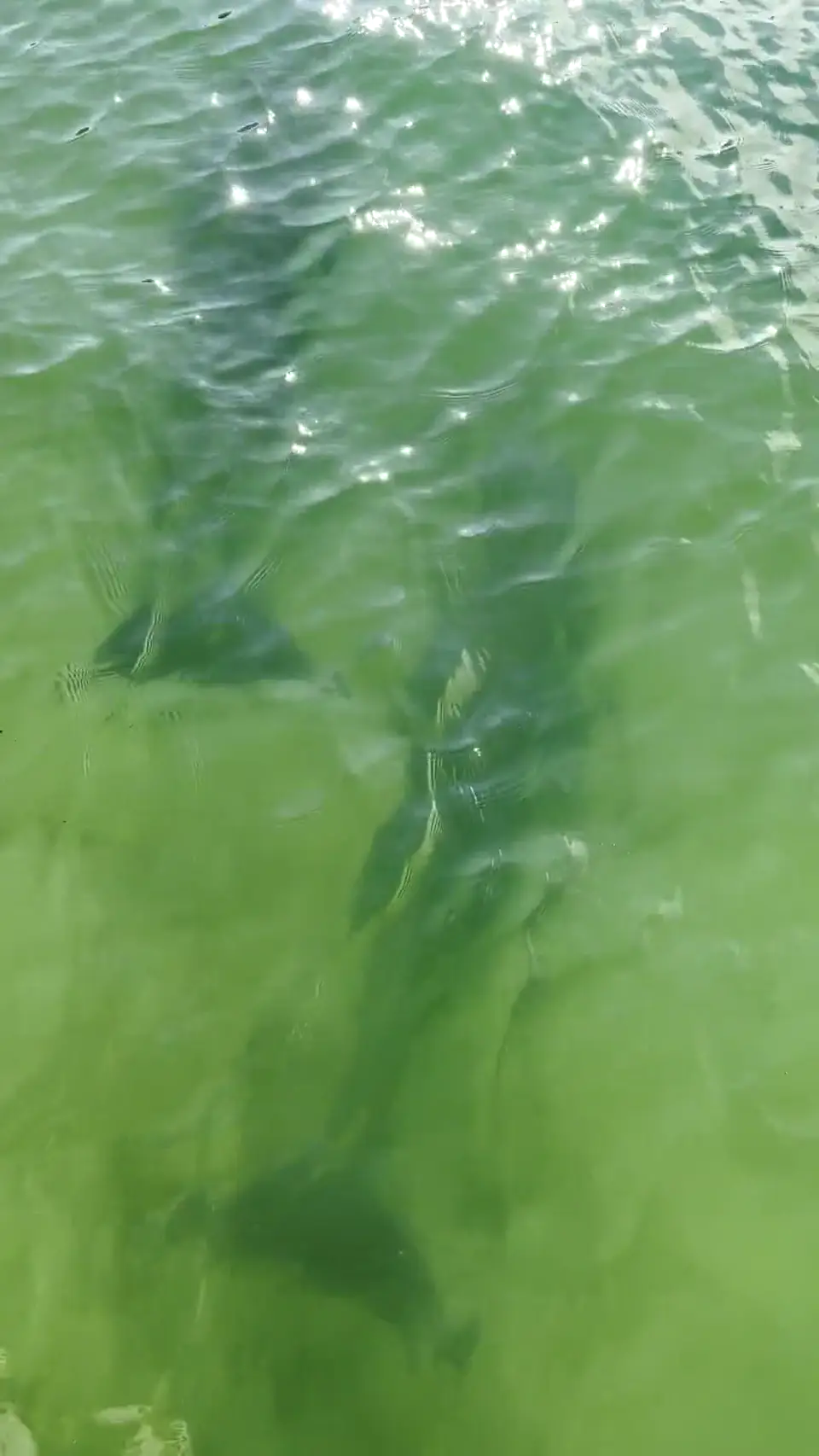
Dolphins work the passes on a moving tide, herding fish against the bars.
How do Sarasota dolphins hunt and feed?
This is where the Sarasota community earns its reputation. Because researchers know these animals individually, they’ve documented an extraordinary range of feeding tactics — many specialized to a habitat or prey type, and some passed from mother to calf like a cultural tradition. Watch long enough and you’ll see the behavior, not just the fin.
- Fish-whacking. The dolphin swats a fish with its powerful tail flukes, launching it into the air and stunning it, then circles back to eat the dazed prey. Fish sometimes fly several feet clear of the water (FOX 13).
- Kerplunking. Along seagrass edges, a dolphin drives its flukes through the surface to make a loud geyser and burst of bubbles, flushing hidden fish out of the grass and into the open.
- Barrier feeding. Sarasota dolphins pin prey against structure — seawalls, bridge pilings, dock edges — using the hard surface as a wall the fish can’t escape through.
- Mud-ring feeding. In shallow Gulf-side flats, a dolphin circles a school of mullet while beating the bottom with its flukes, stirring up a ring of mud that traps the fish; panicked, they leap out of the ring straight into waiting mouths (Marine Mammal Science).
- Strand feeding. Rarer here than in the Carolinas, this is cooperative herding taken to the extreme: dolphins push a school of fish onto a mud bank and lunge partly out of the water to grab them.
- Cooperative herding. Groups work together to ball up bait, taking turns feeding through the school.
- Following bait and boats. Dolphins shadow mullet schools, shrimp boats, and the churn behind moving vessels, picking off fish stirred up in the wake.
Their menu is whatever the bay is serving: striped mullet, pinfish, and other schooling fish top the list, along with the spotted seatrout, redfish, snook, and ladyfish that anglers chase. A typical adult eats more than 15 pounds of fish a day; a nursing mother more than 30 (SDRP). Living on wild-caught fish and hunting hard for every meal keeps these dolphins lean and healthy — one reason handouts are so damaging.
Is it legal to feed or approach wild dolphins?
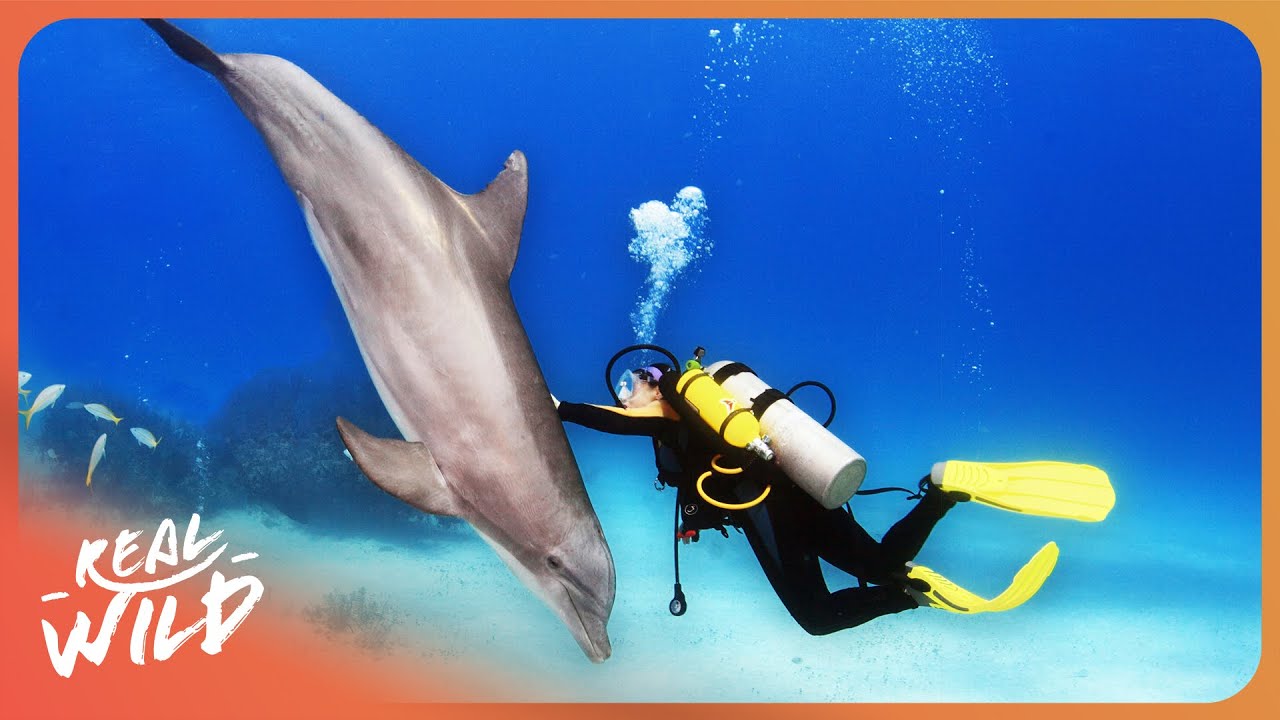
No. Feeding wild dolphins is illegal, and getting too close is harassment — both prohibited under the federal Marine Mammal Protection Act (MMPA). NOAA Fisheries asks everyone to stay at least 50 yards (150 feet) from wild dolphins, never feed them, and never try to touch or swim with them (NOAA: Protect Wild Dolphins). Violations can be prosecuted civilly or criminally, with fines up to $100,000 and up to a year in jail (NOAA feeding & harassment FAQ).
The rules aren’t red tape — they’re survival. Feeding teaches dolphins to beg from boats, which pulls them into propellers and fishing gear, breaks up their social groups, and stops mothers from teaching calves to hunt. Calves whose mothers beg often don’t survive.
The lesson of Beggar
Sarasota has a name for what feeding does: Beggar. For over 20 years a single male dolphin worked the Intracoastal near Nokomis, mooching from boaters. SDRP researcher Katie McHugh’s team documented roughly 3,600 human interactions — up to 70 an hour — including 169 attempts to feed him 520 different items: shrimp, squid, hot dogs, beer, fruit. He was touched, hooked, and bitten people back. When Beggar was found dead in September 2012, Mote’s necropsy told the story: fishing hooks and line in his stomach, squid beaks from bait feeding, ulcers, multiple healed boat-strike fractures (Sarasota Magazine; Your Observer). He had stopped hunting real fish. The people who loved him fed him to death.
On the water, the responsible playbook is simple: idle and keep 50 yards off, never feed or bait dolphins, don’t box them in with your boat, reel in if they’re near your line, and stow your catch and bait. Report harassment or a dolphin in distress to NOAA at 1-877-WHALE-HELP, or Mote’s Stranding Investigations Program at 888-345-2335. For Florida’s marine-wildlife rules, see the FWC and our catch-and-release best practices.
How can I see them the right way?
The best dolphin encounters are the ones the dolphins choose. From shore, the passes and Lido Key beach cost nothing and deliver almost daily. On the water, a knowledgeable local captain knows the tides and core areas where residents feed, keeps a legal distance, and can explain the behavior you’re watching — the difference between a fish-whack and a kerplunk. Our dolphin tours and nature tours pages list operators who run responsibly and narrate what you’re seeing. However you go, the goal is the same: watch a wild animal be wild, and leave it that way.
FAQ
How many dolphins live in Sarasota Bay? About 170 common bottlenose dolphins form the year-round resident community studied by the Sarasota Dolphin Research Program, ranging from southern Tampa Bay to Venice.
Are the dolphins in Sarasota Bay the same ones all year? Largely yes. The core community is resident and multi-generational — some individuals have lived here 50-plus years. Visitors and neighbors pass through too, which is why researchers photo-ID every fin.
What’s the best time and place to see dolphins in Sarasota? Early morning, on calm water, at New Pass, Big Sarasota Pass, around City Island/Mote, or along Lido Key beach and the Intracoastal. They’re active year-round.
Can I feed the dolphins? No. Feeding wild dolphins is illegal under the Marine Mammal Protection Act, carries fines up to $100,000, and kills dolphins — as Sarasota’s own Beggar showed. Stay 50 yards back and never offer food.
How long do bottlenose dolphins live? Commonly 40-plus years; females often reach 60 or more. Sarasota’s oldest documented resident lived to 67.
What do Sarasota dolphins eat? Mostly striped mullet, pinfish, and other schooling fish, plus seatrout, redfish, snook, and ladyfish — 15-plus pounds a day for an adult, over 30 for a nursing mother.
Related
Understand the water the dolphins hunt in our guides to Sarasota’s passes and inlets, tides and currents, and red tide and water quality. Meet the fish on their menu — spotted seatrout, redfish, snook — and find the shorelines they patrol on our Sarasota, Siesta Key, Lido Key, and Longboat Key area pages. To see the community responsibly, browse dolphin tours and nature tours. Learn more from the Sarasota Dolphin Research Program and Mote Marine Laboratory.