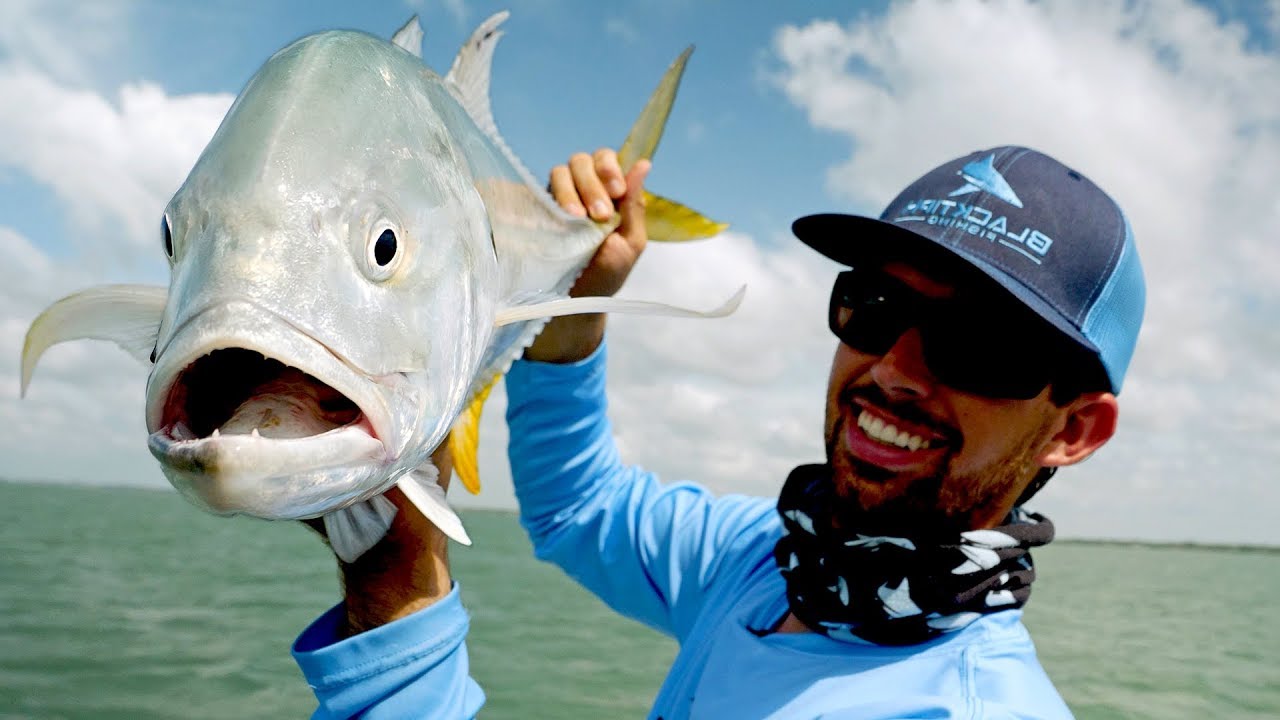
The jack crevalle (Caranx hippos) is the hardest-pulling fish per pound in Sarasota Bay, and it’s here all year — 2–8 lb school fish blitzing bait on the flats, and 15–30 lb bulls prowling the passes and beaches in late spring. If a fish flattened your rod, ran 80 yards, and never jumped, odds are it was a jack. They are unregulated in Florida (no size or bag limit beyond the statewide default), and they’re a catch-and-release fish for nearly everyone — dark, bloody flesh, magnificent fight.
How do I know the fish I caught is a jack crevalle?
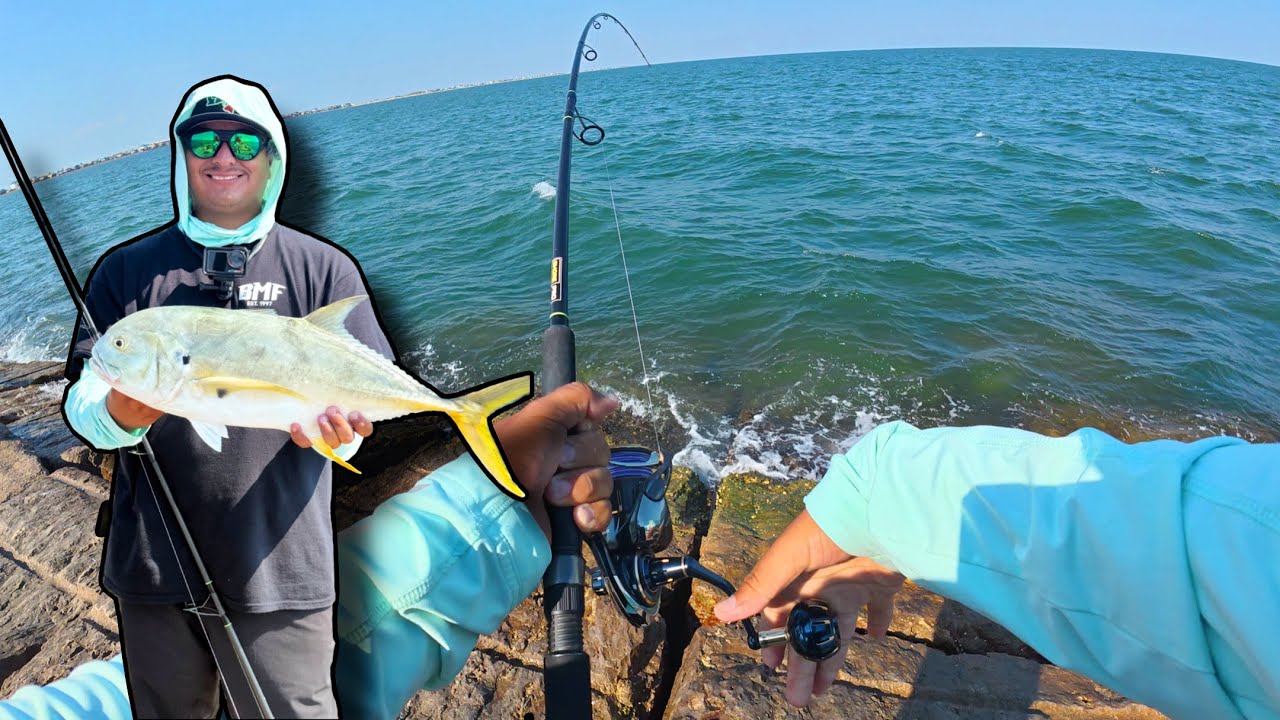
Jacks get misidentified constantly — as pompano, permit, or “some kind of tuna.” The marks are definitive:
| Feature | Jack crevalle |
|---|---|
| Head | Steep, blunt forehead — almost vertical profile |
| Black spots | One on the rear gill cover edge AND one at the base of each pectoral fin — no other local jack has the pectoral spot |
| Color | Greenish-bronze back, yellow-gold belly, yellow tail and fins |
| Tail | Deeply forked with a narrow wrist lined with bony scutes (sharp to the grip) |
| Chest | A small scaleless patch on the breast |
| Fight | Long, dogged, sideways runs; never jumps |
Pompano and permit have rounded, deeper bodies and no gill-cover spot; a pompano rarely tops 6 lb. The FWC crevalle jack profile has side-by-side detail. Florida’s state record is 57 lb (state records list), and the IGFA all-tackle world record is a fish few anglers would believe until the scale settles.
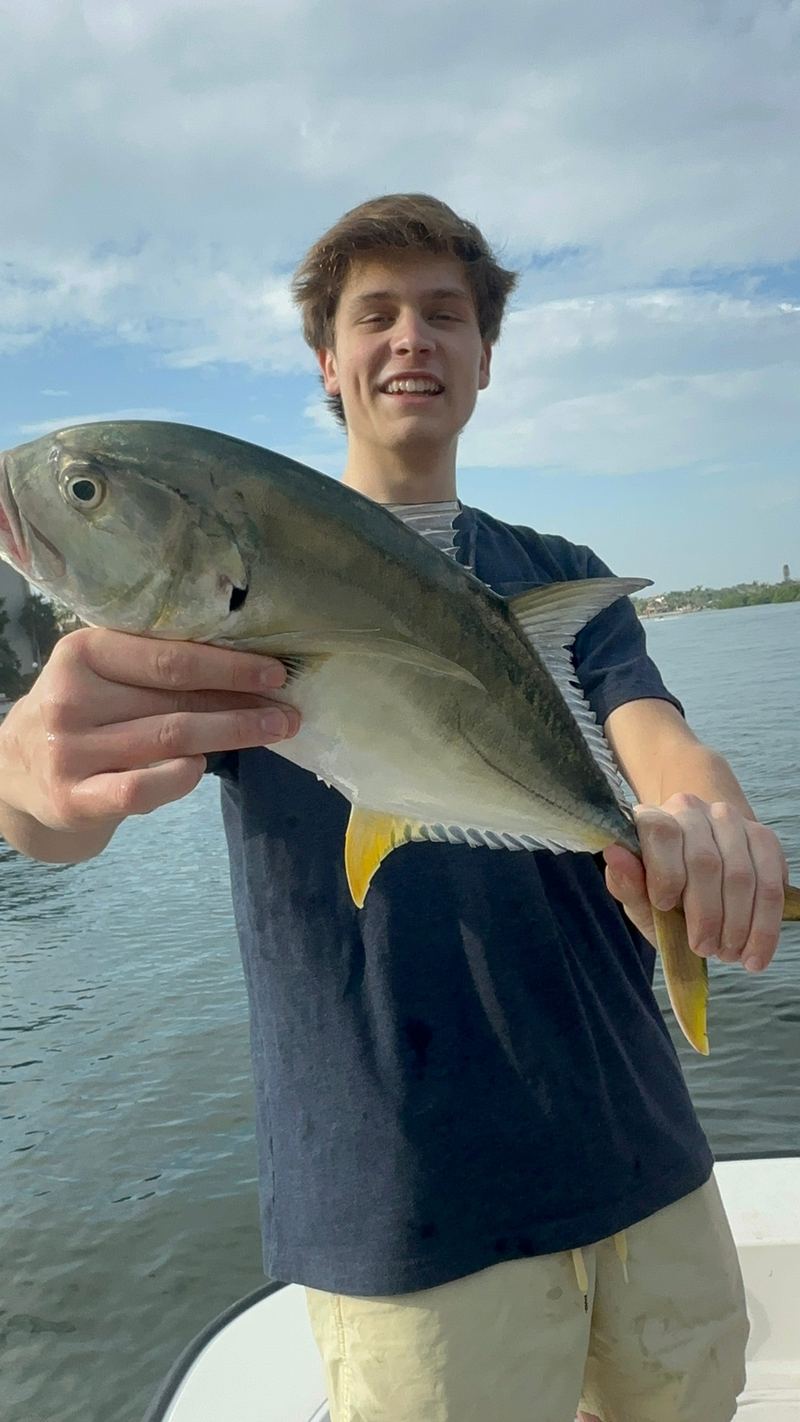
Where do you catch jack crevalle in Sarasota?
| Season | Pattern |
|---|---|
| Dec–Feb | Schools push far up creeks, canals, and bayous with the winter snook — Phillippi Creek, Hudson Bayou, Whitaker Bayou, and the residential canals off Roberts Bay. Warm afternoons fire the bite. |
| Mar–May | The big-fish window. 15–30 lb jacks patrol seawalls, the bayfront, and the passes in wolf packs, often pushing a visible wake. Sight-casting to cruising bulls along Bird Key and the Ringling Causeway is a Sarasota specialty. |
| Jun–Aug | Schools roam the whole bay; early-morning bait crashes on the deep grass and along the beaches with the tarpon crowds. |
| Sep–Nov | Fall mullet and glass-minnow run — daily blitzes on the flats, in the passes, and in the surf alongside Spanish mackerel, bluefish, and ladyfish. |
Reliable structure: Big Sarasota Pass and New Pass on moving tides, the Marina Jack bayfront, Longboat Pass bridge, the Venice jetties, and any shoreline where you see bait showering. Shore anglers do as well as boaters — jacks come within a rod-length of seawalls; see our surf and shore fishing guide and Venice jetty guide for access. Our fishing report flags the months they blitz.
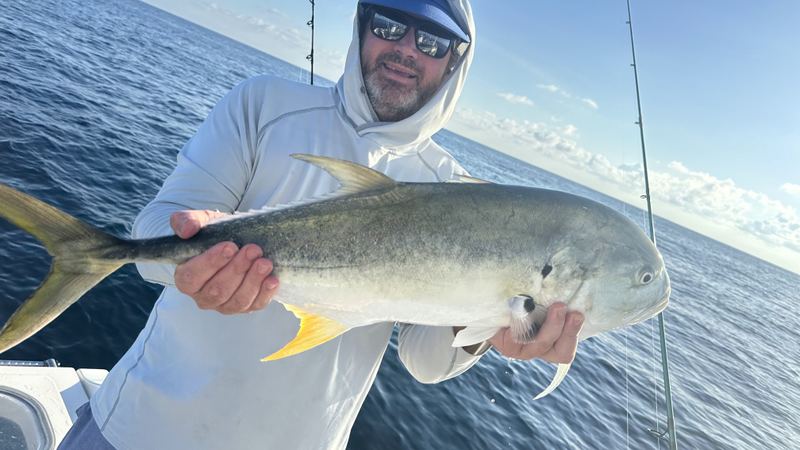
What’s the best lure for jack crevalle?
Whatever you can cast far and move fast. A feeding school will eat a bare spark plug; a cruising pack of bulls demands a fast, loud presentation before they change course:
- Full-size topwater plugs worked violently — the signature strike. Start with our topwater guide.
- Silver spoons and heavy jigs burned just under the surface.
- Live bait — a free-lined pilchard, threadfin, or small mullet never gets refused; a live-bait well opens every option.
- Cut ladyfish or mullet soaked in the passes for the biggest fish.
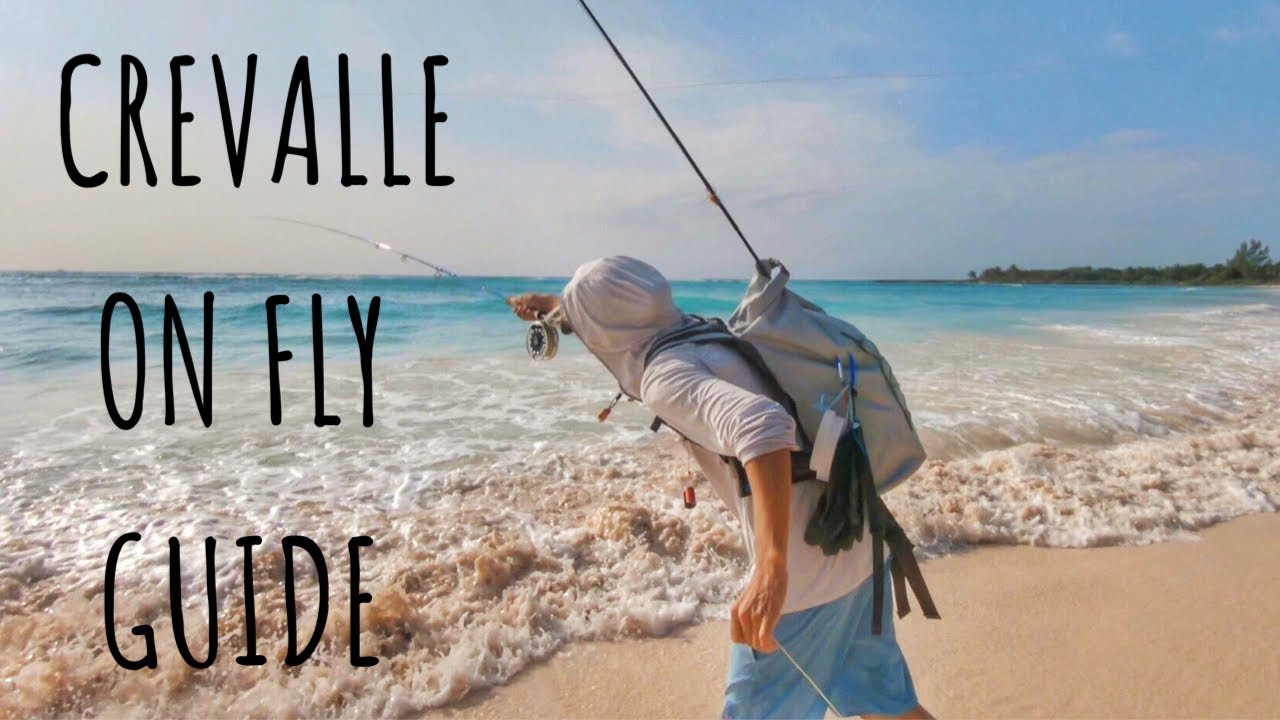
- Fly — any large white/chartreuse baitfish pattern stripped as fast as physically possible.
Tackle up: a 7’–7’6” medium-heavy spinning rod, 4000–5000 reel, 20–30 lb braid, and 40 lb fluorocarbon leader. A 20 lb jack on trout tackle is a 45-minute mistake that usually kills the fish. Set a heavy drag, keep the boat moving toward open water, and land the fish inside 10–15 minutes.
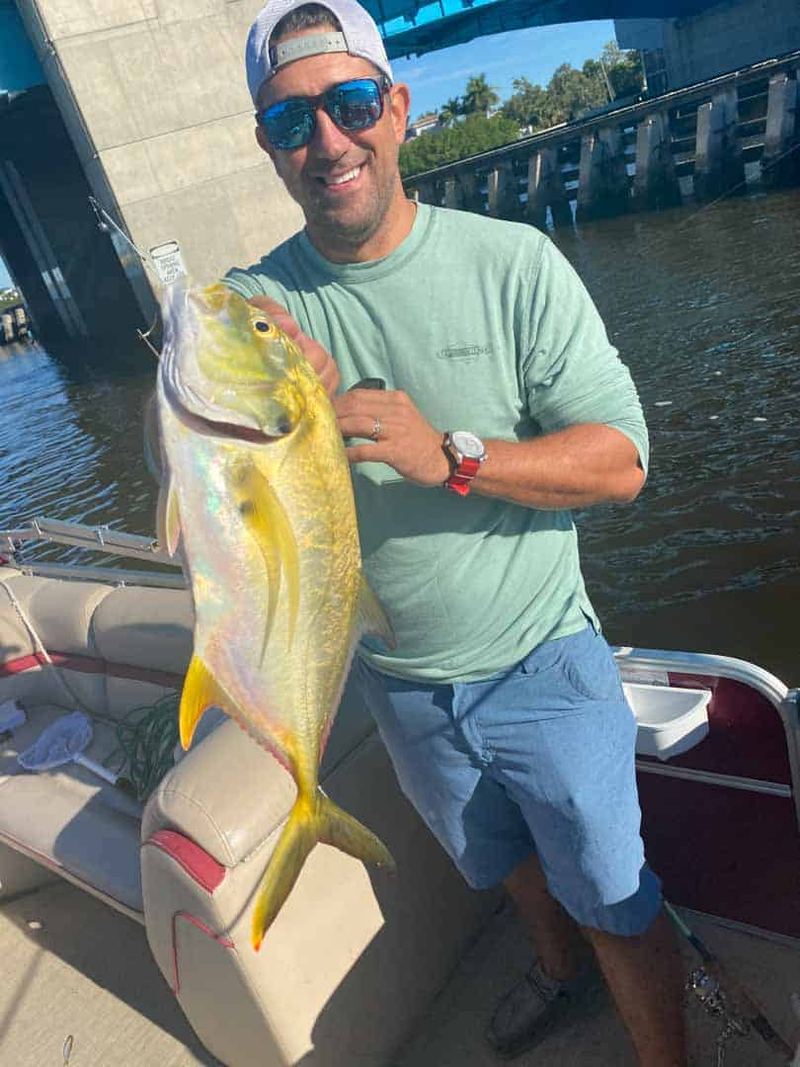
Are jack crevalle good to eat?
Not by local standards. The flesh is dark red, dense, and strong — closer to bonito than to snapper — because jacks are built entirely of swimming muscle. Bled immediately and iced, smaller fish are edible (smoked fish dip is the common use), but essentially every Sarasota jack goes back in the water. That ethic fits the fishery: an unregulated species with this growth rate and fight deserves the release.
Handle big fish for a fast release: support the belly, mind the tail scutes, keep it horizontal, and swim it boatside until it kicks. Our catch-and-release best practices apply doubly to a fish you just exhausted.
What are the 2026 regulations for jack crevalle in Florida?
| Item | 2026 rule |
|---|---|
| Size limit | None |
| Bag limit | Unregulated — default 100 lb or 2 fish per person per day, whichever is greater |
| Season | Open year-round |
| License | Florida saltwater license required (free shore-based license for residents fishing from land) |
The default-limit mechanics are explained on the FWC unregulated species page; the FWC quick chart is the pocket reference, and licenses are sold at GoOutdoorsFlorida.com. Verify current rules before you fish.
FAQ
What fish has a black spot on its gill cover and a yellow tail? Jack crevalle — the combination of the gill-cover spot, a second spot at the pectoral fin base, blunt forehead, and yellow tail is unique among Sarasota fish.
How big do jack crevalle get in Sarasota? Bay schoolies run 2–8 lb; spring bruisers around the passes and bayfront run 15–30 lb. The Florida record is 57 lb.
Are jack crevalle good to eat? Legal but poor — dark, bloody, strong-flavored meat. Nearly all are released; a few are smoked for dip.
Is there a limit on jack crevalle in Florida? No specific limit. The statewide unregulated-species default applies: 100 lb or 2 fish per day, whichever is greater.
Do jack crevalle jump? No. A long, unstoppable first run with no jumps is a jack signature; if it jumped, it was a ladyfish or tarpon.
Related reading
The blitzes jacks lead usually include Spanish mackerel, bluefish, and ladyfish — carry a spoon and you’re in the game with all of them. The spring bulls share the passes with staging tarpon, and the winter creek fish stack alongside snook in the same warm-water holes. For the eating-quality end of the spectrum they lack, drift the grass for spotted seatrout instead.