
Jigging in Sarasota: Pompano in the Passes & Bottom-Bounce Basics
Jig fishing Sarasota's passes and flats: 3/8 oz banana jigs for pompano at Big Pass, jig-and-paddletail trout drifts, and slow-pitch on the ledges.
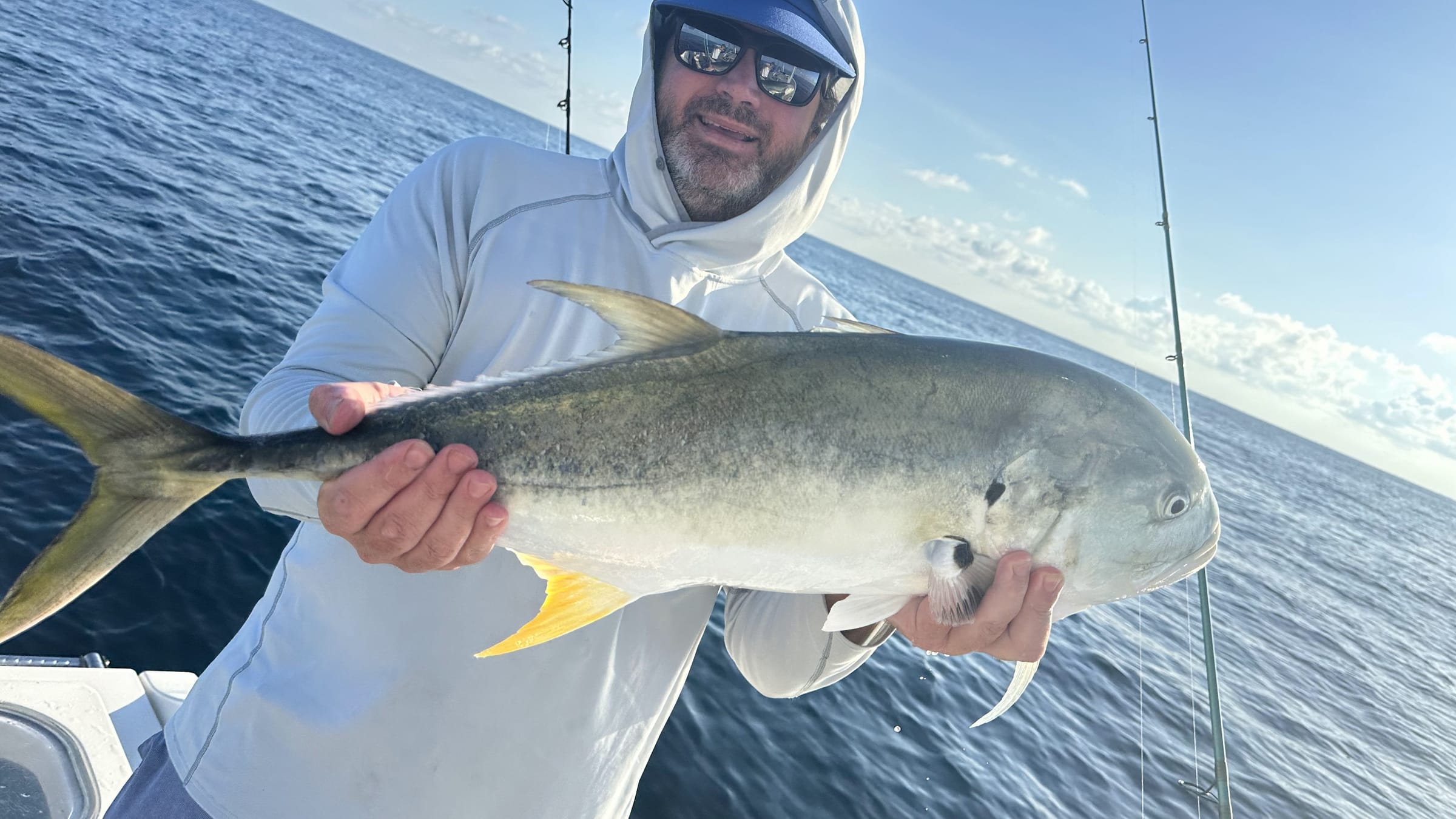
How We Fish It.
Jigging is the most versatile artificial technique on the Sarasota coast: the same bottom-contact skill catches pompano in Big Pass, seatrout on 4–8 ft grass drifts, snook in the passes at night, and grouper on 100 ft ledges. The core mechanics never change — jig hits bottom, short sharp hops, follow it back down with the rod tip — because roughly 90% of bites come on the fall.
Where do you jig around Sarasota?
| Water | Game | Jig |
|---|---|---|
| Big Sarasota Pass, New Pass, Longboat Pass | Pompano, ladyfish, mackerel, flounder, bluefish | 3/8–1/2 oz banana jig |
| Venice jetties, Stump Pass | Same pass mix, walk-on access | 3/8–1/2 oz |
| 4–8 ft grass flats, Sarasota Bay | Seatrout drifts, year-round | 1/8–1/4 oz jig + paddletail |
| Pass edges after dark | Snook | 1/4–3/8 oz, white |
| 60–140 ft ledges and reefs | Grouper, snapper, amberjack | 60–150 g slow-pitch |
The signature local version is pass pompano on the spring (March–May) and fall (October–December) runs. And the Siesta Key side of Big Pass is a genuine walk-in fishery — you can wade the bar and cast jigs into the channel edge without a boat, one of the best no-boat bites in Siesta Key.
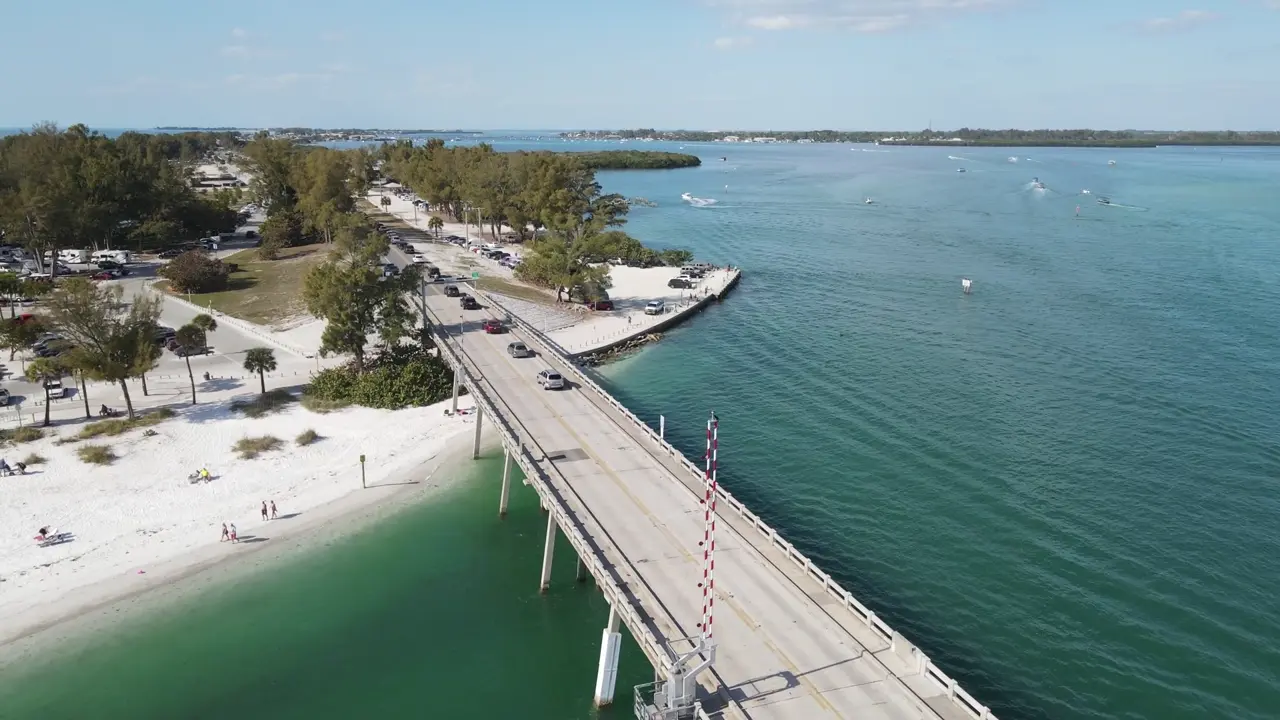
Fish the pass edges and bars in 6 to 15 feet, on the last of the outgoing.
What jigging tackle do you need inshore?
- Rod: 7’–7’6” medium-light to medium, extra-fast tip — the fast tip transmits the “tick” of a fish eating the jig on slack.
- Reel/line: 2500–3000 with 10 lb braid. Braid is why modern jigging works; mono stretch buried these bites for decades.
- Leader: 24” of 20–25 lb fluorocarbon.
- Jigheads: 1/8 oz for flats, 1/4 oz for edges, 3/8–1/2 oz for passes and current. Red and chartreuse heads are the local favorites.
- Plastics: 3–4” paddletails (Z-Man MinnowZ, DOA CAL shad) or shrimp tails.
- Pompano jigs: 3/8–1/2 oz “banana” jigs in yellow or white, with a teaser fly on a dropper 18” above — the two-fly rig regularly doubles up.
The rule that matters more than any lure choice: match jig weight to current. A jig that never touches bottom never gets bit. If you can’t feel the thump of bottom contact in the pass, go heavier.
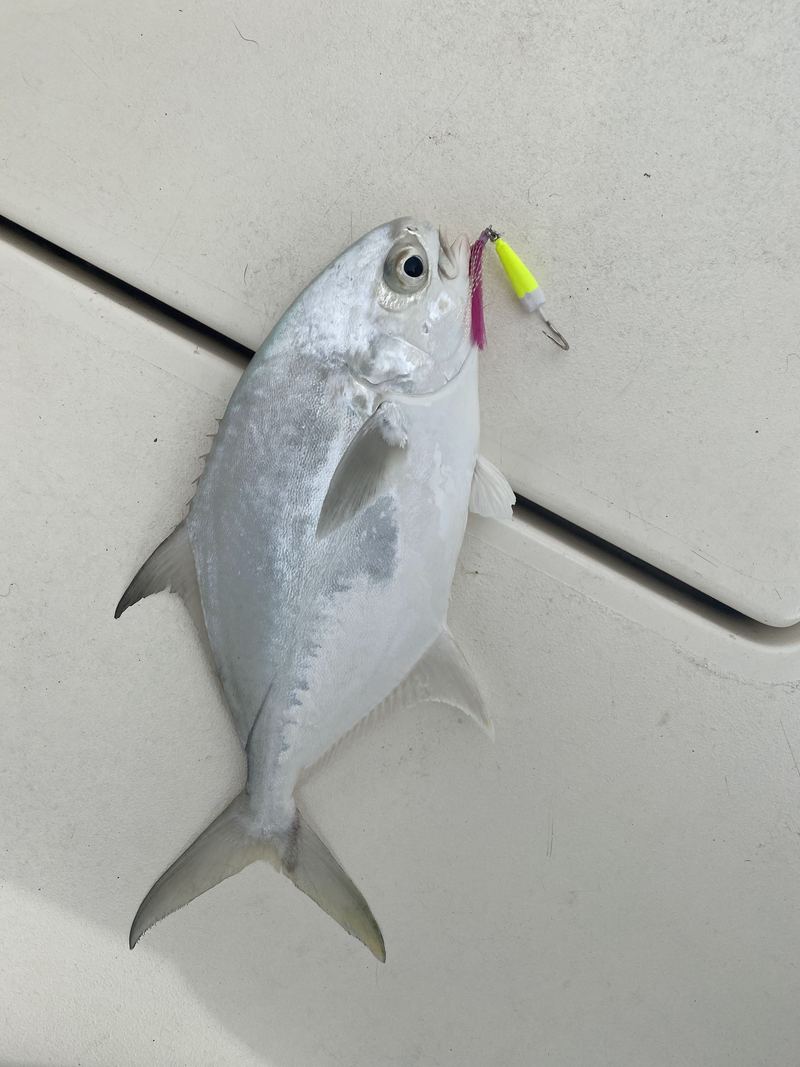
How do you catch pompano in Big Pass?
The step-by-step for the signature bite:
- Time the tide. Last two hours of outgoing or first of incoming. Fish the pass edges and bars in 6–15 ft — the Big Pass bar and the Longboat Pass swash channel are the two classic stretches.
- Cast up-current, let the jig reach bottom on a semi-slack line.
- Hop it: short, sharp 6–12” snaps, keeping bottom contact, and follow the jig down with the rod tip. Bites come on the fall as a “thump” or a sudden weightlessness.
- Reel-set. Pompano have soft mouths — steady pressure, no big hooksets, and keep them coming without pumping slack.
- Read the ladyfish. Ladyfish blitzing your jig means you’re in the right water column and place; pompano hold under them. Keep working.
Current pompano regulations (11” fork minimum, 6 per harvester per day) are listed with permit on FWC’s pompano/permit page — verify current rules before you fish.
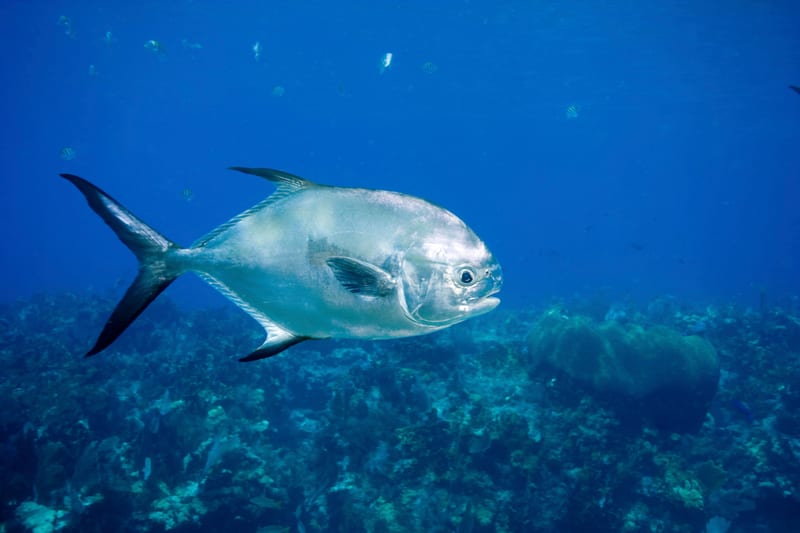
How do you jig the grass flats for trout?
The everyday Sarasota Bay program, and the fastest way to learn bottom contact without pass current: drift the 4–8 ft grass with a 1/8–1/4 oz jighead and paddletail, casting ahead of the drift, hopping the jig back with pauses. Spotted seatrout eat it year-round; the same drift produces bluefish, jacks, ladyfish, and Spanish mackerel in season. Under the 2026 regional framework, Sarasota Bay trout run a 15–19” slot, 3 fish per person, one over-slot per vessel — details at FWC’s spotted seatrout page.
At night, the same jig-and-paddletail in white or glow, swung through pass edges and lighted structure, is a snook staple — the full after-dark program is on the dock light night fishing page.
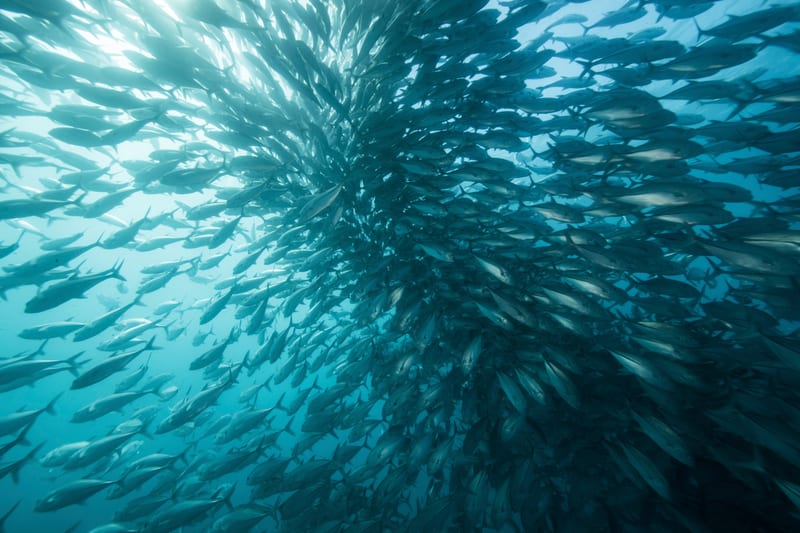
What about vertical and slow-pitch jigging offshore?
The growing sport-tackle scene: 60–150 g flat-fall and slow-pitch jigs dropped on ledges and reefs in 60–140 ft for grouper, snapper, and amberjack. Dedicated 6’–6’6” slow-pitch rod, small conventional reel (Shimano Torium/Ocea class), 20–30 lb braid, 40 lb leader. Two rules carry over from bait fishing the same spots: swap stainless hooks off jigs when targeting Gulf reef fish (non-stainless hook rule), and carry a rigged descending device per FWC’s descending device requirement. Reef coordinates are on the same county list used for bottom fishing.
One piece of local context, not a how-to: the famous Boca Grande Pass tarpon “jig” fishery ended in controversy — FWC banned bottom-weighted breakaway jigs in the pass under gear rules specific to Boca Grande. Details on FWC’s tarpon page.
Offshore jigging is a 60 to 140 foot game — you never jig it in three feet of water.
Can you jig without a boat?
Better than any other technique on this list. The walk-in options, north to south: the Big Pass bar off north Siesta (wade the bar, cast into the channel edge on the last of the outgoing), the beach troughs anywhere along Lido and Siesta for pompano and ladyfish after a front, and the Venice jetties — the most structure-rich walk-on jig water in the county, holding the full pass mix plus flounder tight to the rocks. Bring two jig weights (3/8 and 1/2 oz), a small spool of 25 lb fluoro, and pliers; travel light and cover water on foot the same way a boat covers a drift. Flounder are a deliberate target here: drag the jig slow across sand patches next to the rocks instead of hopping it, and set with a long sweep — regs for flounder and everything else above live on FWC’s recreational regulations pages.
What are the classic jigging mistakes?
| Mistake | Result | Fix |
|---|---|---|
| Jig too light for current | Never reaches bottom, zero bites | Step up to 3/8–1/2 oz |
| Lifting the rod too high | Jig leaves the strike zone | 6–12” hops, not sweeps |
| Slack line on the fall | 90% of bites go unfelt | Follow the jig down with the tip |
| Constant fast retrieve | Jig swims, doesn’t jig | Hop-fall-pause cadence |
| Stainless hooks over reefs | Gear-rule violation | Re-rig with non-stainless |
FAQ
Can I catch pompano at Siesta Key without a boat? Yes. The Big Pass bar on the north end of Siesta is a wade-and-cast jig fishery during the spring and fall runs — one of the best walk-in bites in the county.
What’s the single best all-around jig for Sarasota? A 1/4 oz chartreuse or red jighead with a 3–4” white or “new penny” paddletail. It catches trout, snook, mackerel, bluefish, jacks, and flounder on the same drift.
Why do I keep missing bites? Slack on the fall. Follow the jig down with your rod tip so the line stays just-tight; the bite is a tick, not a pull.
When is the pompano run? March–May and October–December in the passes, tide-dependent — last of the outgoing and first of the incoming are the windows.
Do jigs work at night? Very well — a 1/16–1/8 oz white or glow paddletail swung through dock lights and bridge shadow lines is the standard night snook lure. See the dock light guide.
Related
Jigging is the middle rung of the local skills ladder: easier than sight fishing, more active than bottom fishing or a popping cork. Species pages for the main jig targets: pompano, spotted seatrout, snook, and Spanish mackerel.
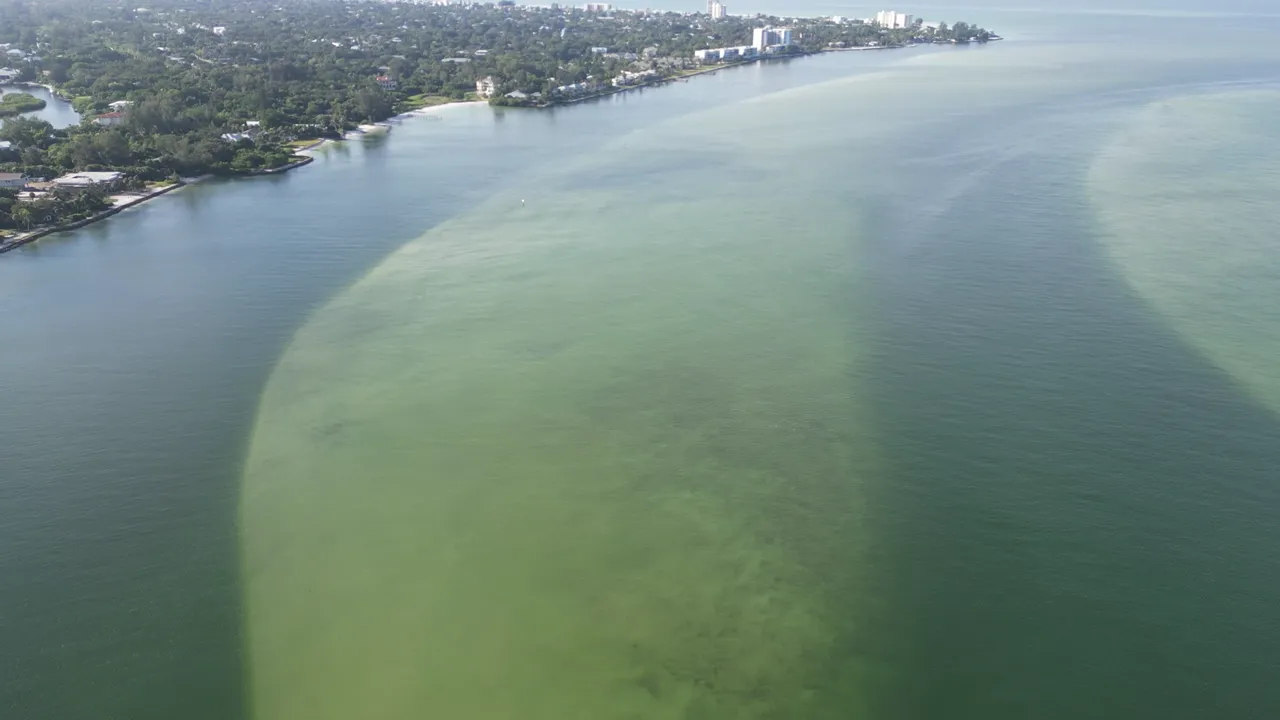
The strike comes on the fall.
Jigging on Video
14 public videos from 13 channels, sorted by subject. Nothing plays until you click it.
How-To & Technique
4The core motion, cadence, and jig selection to make metal work in saltwater.

How To Jig | Fast and Slow Jigging Tutorial

Slow Jigging Secrets | How to slow jig reef fish

How to Use Every Metal Jig Type Real Action & Underwater View 6type Mtal Jigs Shore Jigging
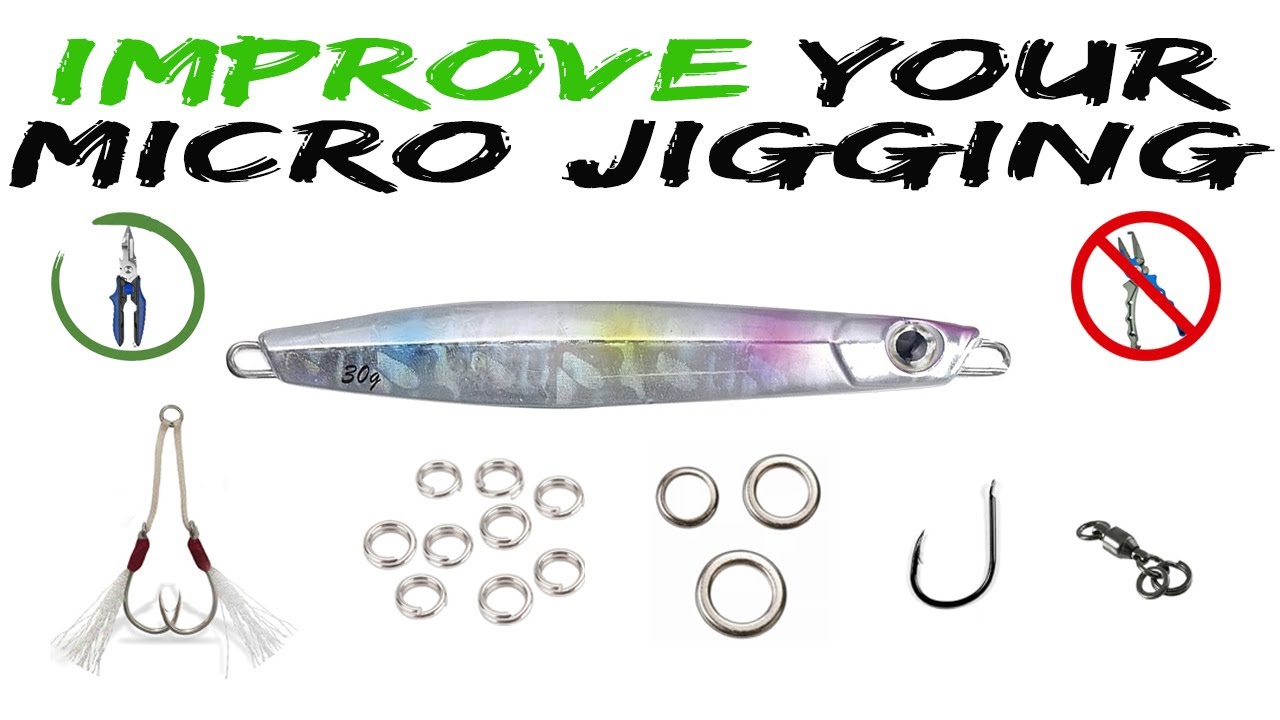
THE SECRETS TO MICRO JIGGING SUCCESS
Slow-Pitch & Vertical (Snapper & Grouper)
4Vertical and slow-pitch tactics for bottom and reef species offshore.

HIGH SPEED VERTICAL JIGGING Battling sharks and cudas - How to vertical jig | Gale Force Twins

A Beginner's Guide to Slow Pitch Jigging | Taught by @FishoDavo
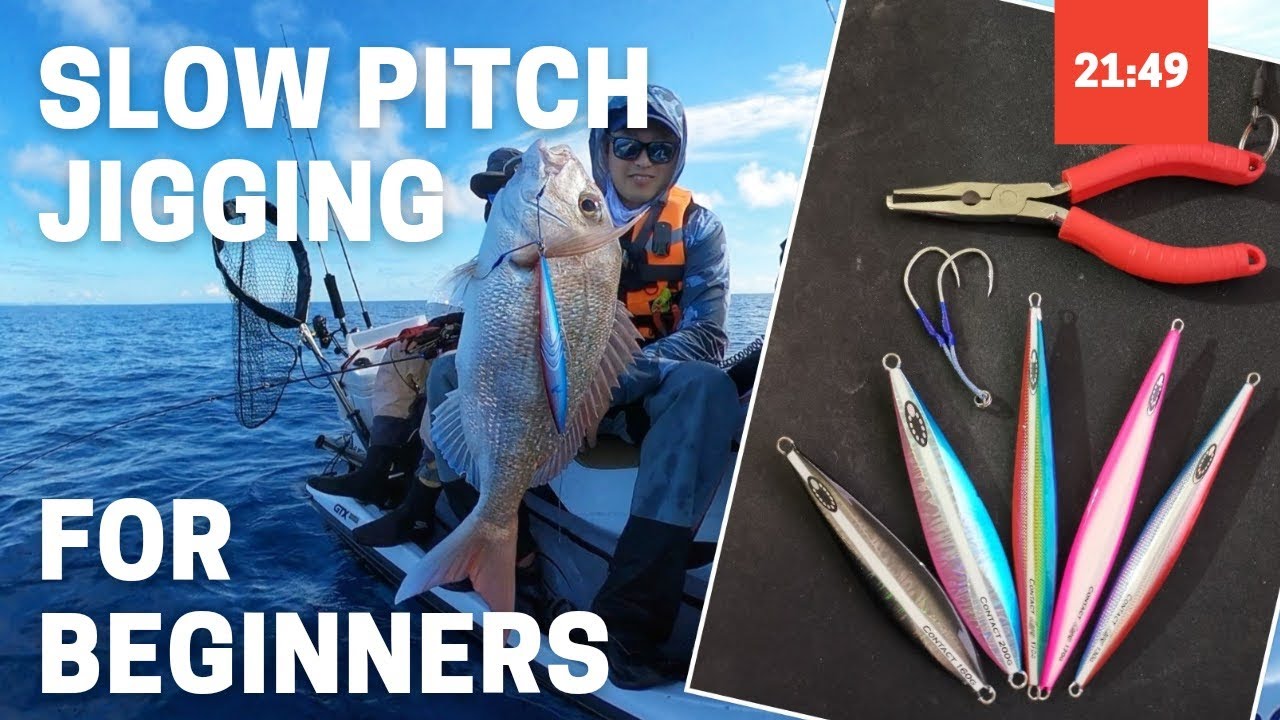
Slow Pitch Jigging Tutorial and Techniques for Beginners | SPJ Guide using Ocean's Legacy
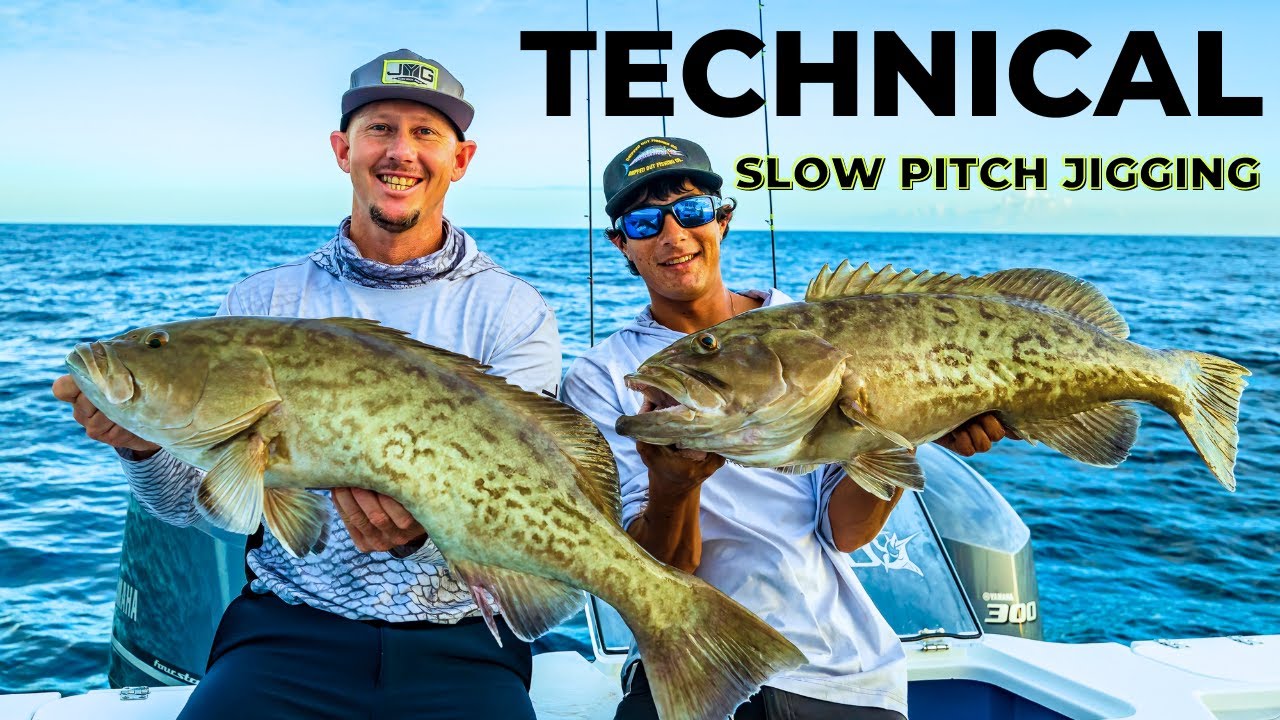
Technical Slow Pitch Jigging for Gag Grouper - JYG PROFISHING
Bucktail Jigs (Inshore & Surf)
3Rigging and working bucktails around inlets, jetties, and flats.
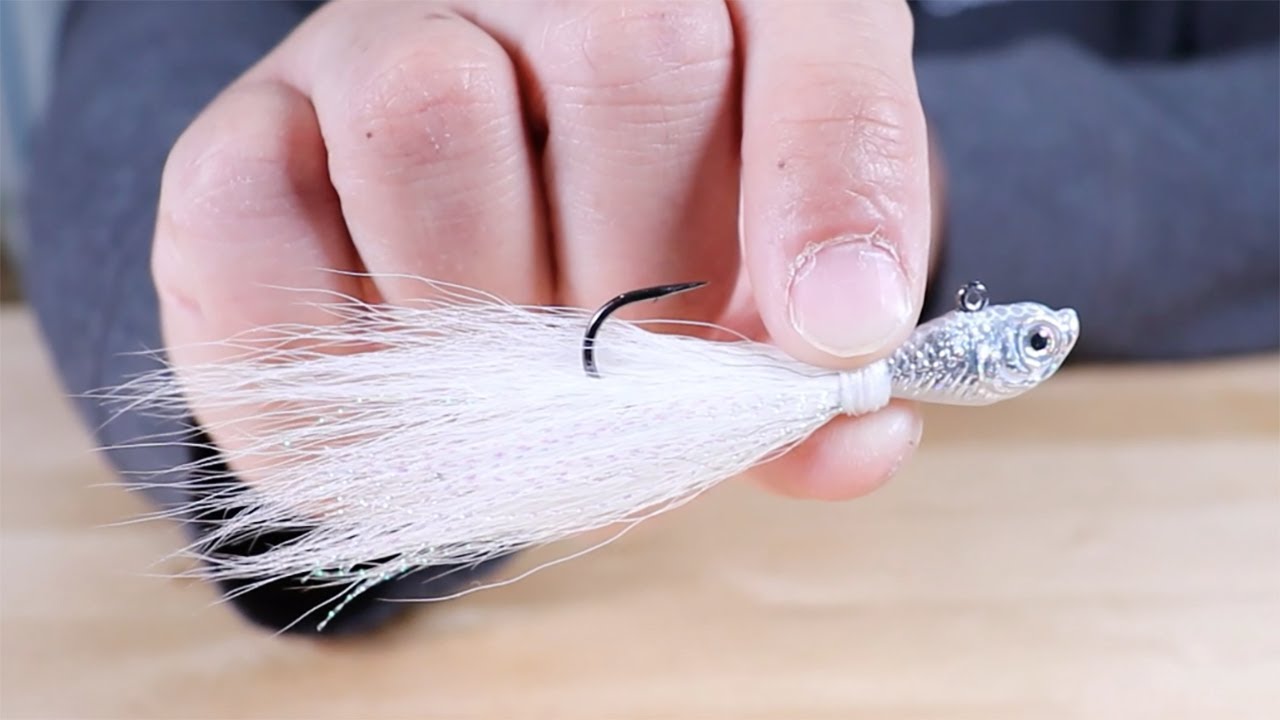
Spro Bucktail Jig Review (Where To Use Them & How To Rig Them)
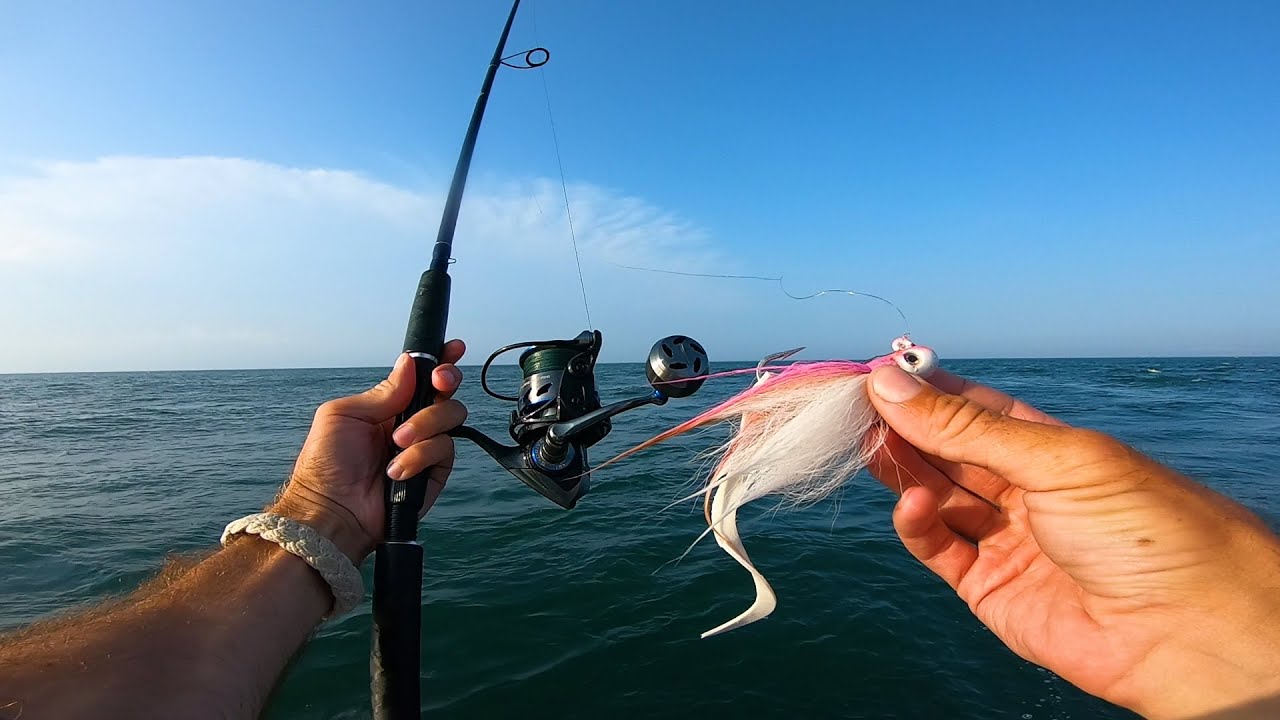
Light Tackle Jigging with the NEW Custom Bucktails!!
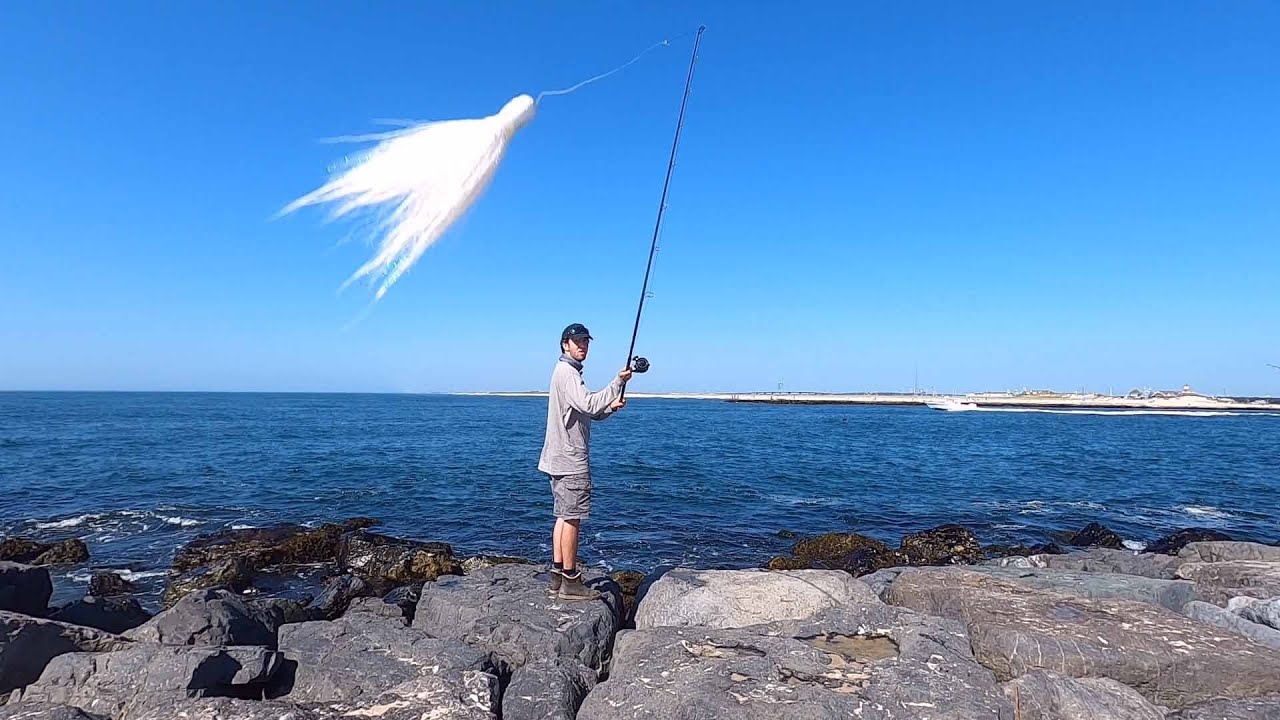
Fishing an inlet and jetty with Spro Power Bucktail Jigs
On the Water
3Jigging trips and catches from Florida piers, wrecks, and reefs.

Jigging Deep Wrecks (200-300 Ft) | Catch Clean Cook

JIG FISHING on this FLORIDA GULF PIER for SPANISH!!

GIANT Grouper Left me SPEECHLESS! Slow pitch Jigging (Catch Clean Cook)
Gear Checklist.
- 7'–7'6" medium-light/medium extra-fast spinning rod
- 2500–3000 reel, 10 lb braid
- 24" of 20–25 lb fluorocarbon
- 1/8–1/2 oz jigheads + 3–4" paddletails
- 3/8–1/2 oz pompano banana jigs with teaser dropper
- Slow-pitch outfit, 60–150 g jigs (offshore)