Sight Fishing in Sarasota: Tailing Redfish & Beach Snook
How to sight fish Sarasota: tailing redfish on Oct–Mar negative low tides, beach snook June–Sept on Siesta and Lido, plus gear, leaders and 2026 rules.
How We Fish It.
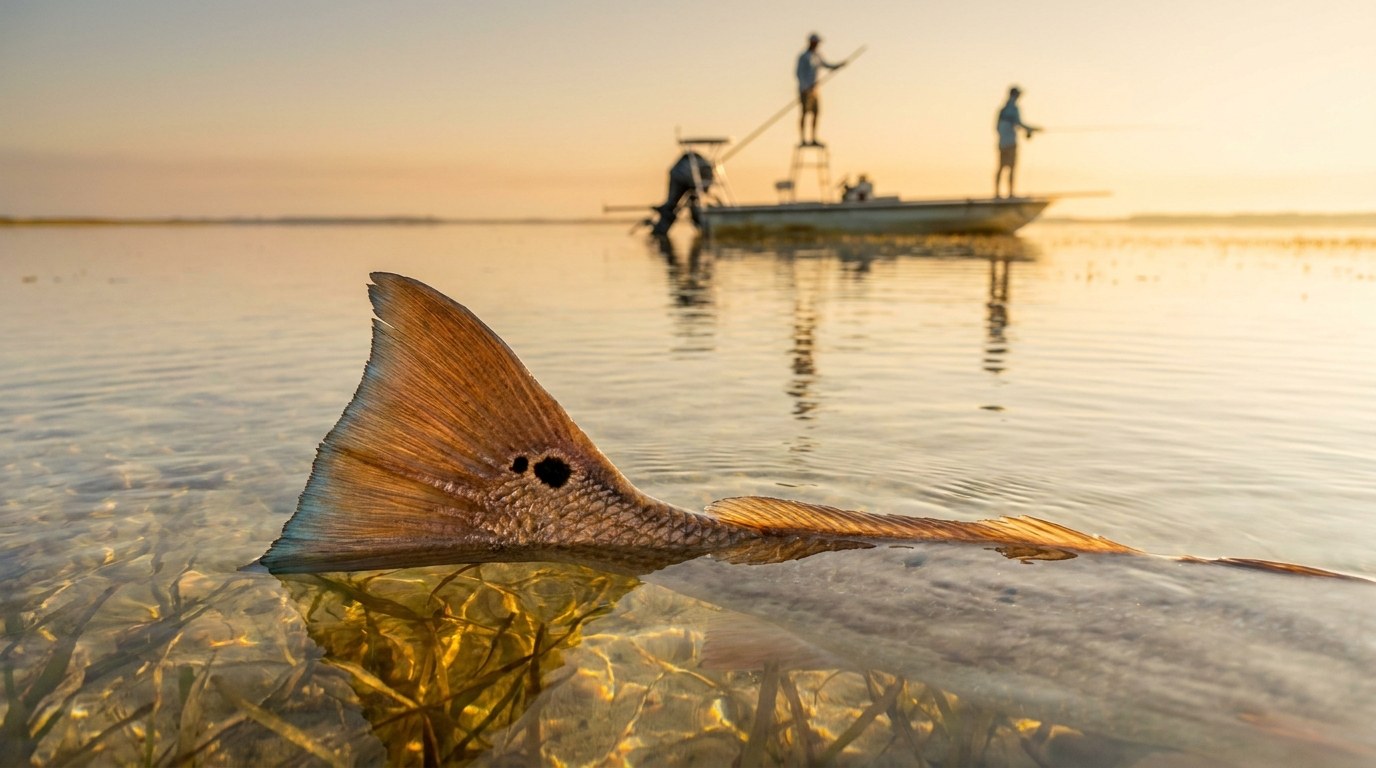
Sight fishing means finding the fish with your eyes before you make a cast: pole or wade a 1–3 ft flat, spot a tailing redfish or cruising snook, and land a lure 3–6 ft ahead of it. Around Sarasota the two prime windows are negative low tides October–March for redfish on the grass flats, and June–September for snook cruising the sand in inches of water along Siesta, Lido, Longboat, Casey Key and Manasota Key beaches. It is hunting first, casting second, and the hardest inshore fishing on this coast to do well.
What is sight fishing and why is it hard?
You are not blind-casting to likely water. You locate an individual fish or a school visually, read its direction and speed, and present a bait it hasn’t seen coming. That requires three separate skills: spotting fish through glare, approaching without spooking them in less than 3 ft of water, and dropping a soft cast on a moving target. Difficulty is 4 out of 5. If you want numbers instead of a challenge, start with a popping cork and come back to this page.
The payoff: you watch every eat. A redfish pinning a paddletail in 18 inches of water happens in full view, start to finish.
When is the best time to sight fish in Sarasota?
| Target | Window | Water | Where |
|---|---|---|---|
| Tailing/crawling redfish | Oct–Mar negative low tides | 1–2 ft exposed grass | North Sarasota Bay (Ringling flats), Palma Sola Bay, Terra Ceia, Bull/Turtle Bay (Charlotte Harbor) |
| Beach snook | Jun–Sep, first light | Inches, sand bottom | Siesta, Lido, Longboat, Casey Key, Manasota Key beaches |
| Big seatrout, black drum | Winter lows | 1–3 ft potholes | Same flats as redfish |
| Tarpon, cobia | May–Jul edges | Outside bars | Beach and pass edges — see tarpon |
Light matters as much as tide: 10 a.m.–3 p.m. with the sun high and behind you is prime spotting light. Polarized glasses are mandatory — copper or amber lenses over grass, gray over white beach sand. Check tide predictions at NOAA tides and currents before you commit to a flat; a negative low that floods mid-morning is the setup you want.
Where can I sight fish for redfish near Sarasota?
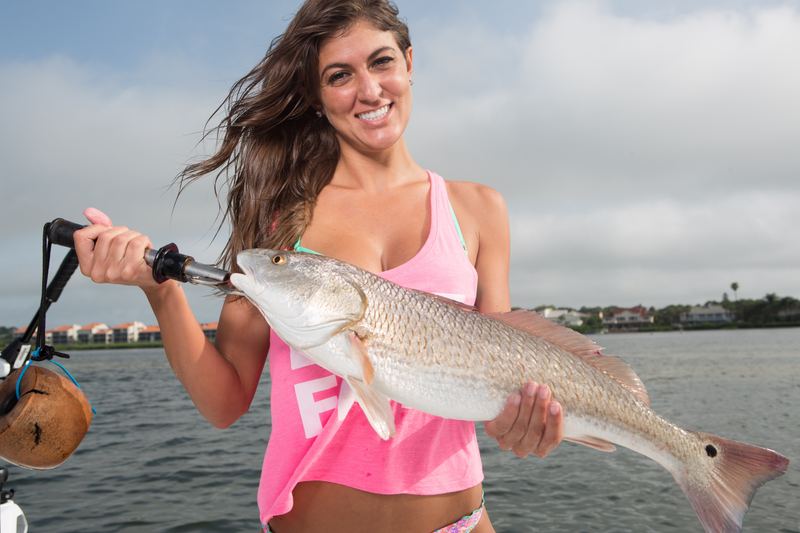
The negative winter lows expose the backs of redfish on shallow grass, and four areas produce consistently:
- Ringling flats, north Sarasota Bay — big grass expanse minutes from downtown ramps.
- Palma Sola Bay — protected, wadeable, good on a north wind.
- Terra Ceia — miles of skinny grass and mangrove edges at the top of the region.
- Bull Bay and Turtle Bay, Charlotte Harbor — the classic tailing-fish water near Boca Grande.
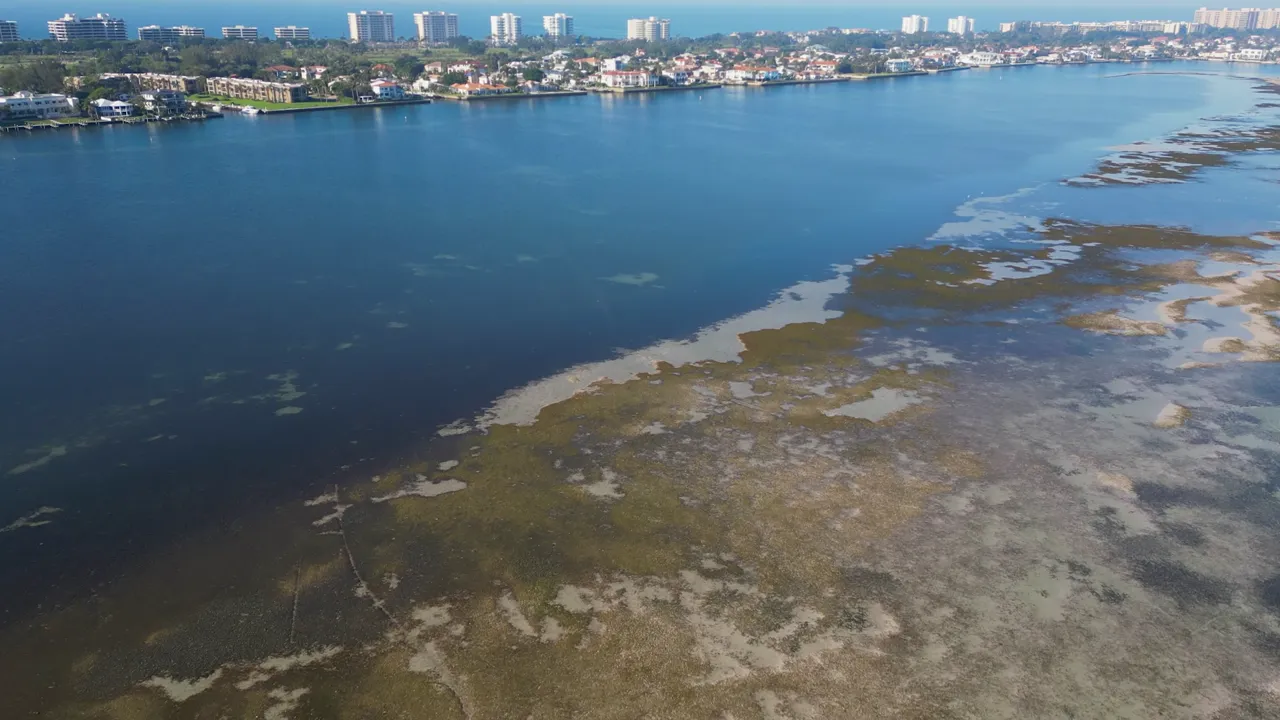
Look for pushes, wakes, nervous water and tails. Train your eyes to look through the water at the bottom, not at the surface. A redfish tail catching sun at 80 yards is what you are scanning for.
How do I sight fish beach snook?
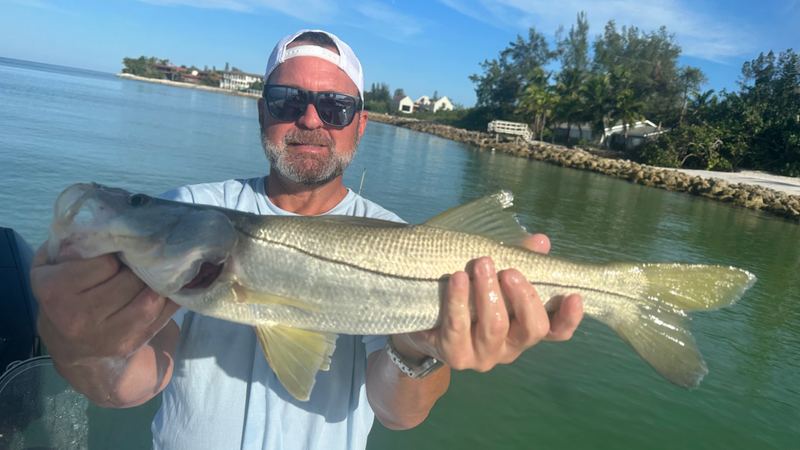
The summer beach-snook game is the easiest sight fishing in Florida: walk the dry sand on Siesta Key or Lido at first light, sun at your back, and snook show backlit against white sand in inches of water. Walk north-to-south in the morning for the sun angle. Cast parallel to the beach — the fish cruise the trough at your feet, not 50 yards out.
Two hard local rules:
- It is entirely catch-and-release. Snook season in the Sarasota Bay region is closed May 1–Aug 31 (and again Dec 1–end of February), which covers the whole beach-snook window. Slot is 28–33”, 1 per day, snook stamp required when open, hook-and-line only. Verify the current rule at the FWC snook regulations page before you fish, and keep fish in the water for photos.
- Drop your leader to 20 lb. Over clear sand these fish see 30 lb fluorocarbon. Lighter leader converts follows into eats.
Pressure beats tide on the beach: get there before the walkers and swimmers, not just on the right water. A small white flair hawk, flutter-style jig or DOA shrimp covers it.
What else can you sight fish around Sarasota?
Two more sight games run here, and both put the fish in plain view before you cast.
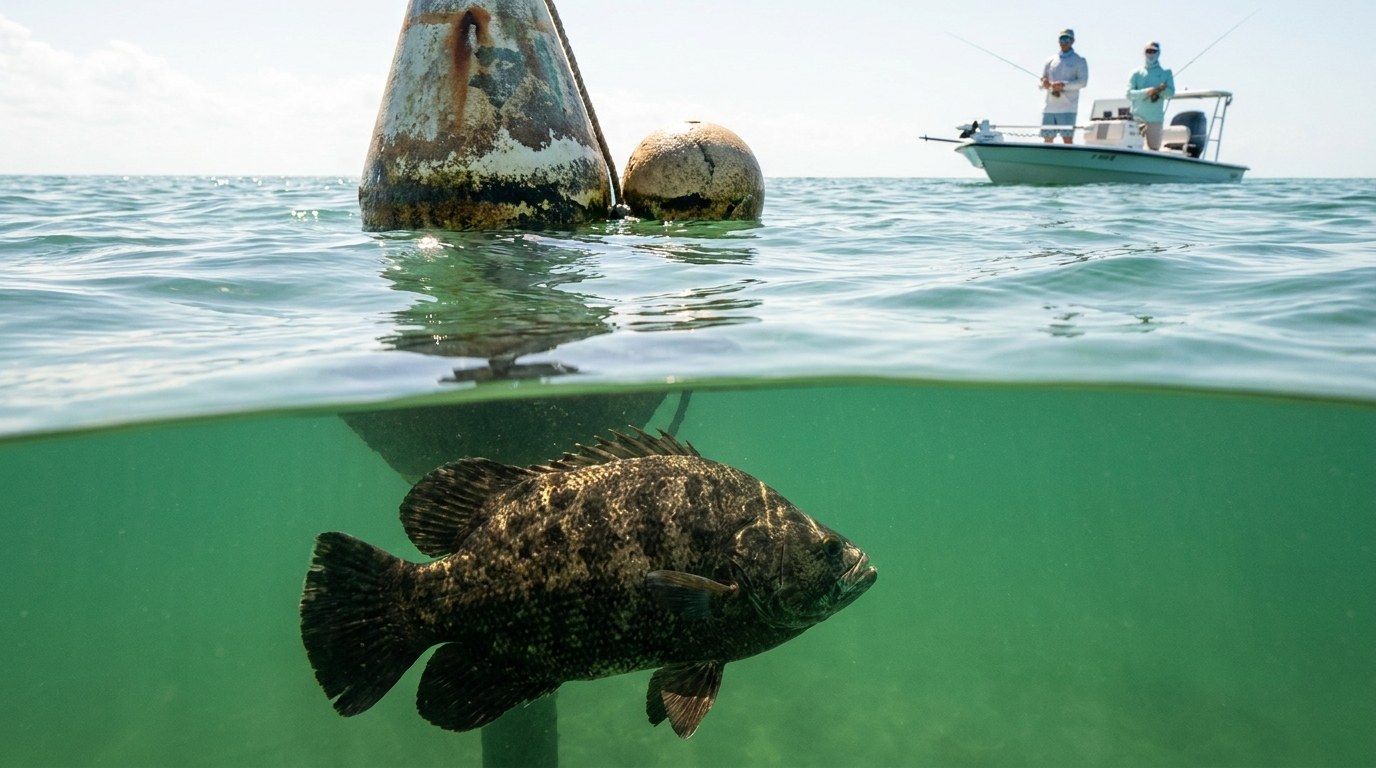
Tripletail on the buoys and crab floats. Tripletail lie flat on their side at the surface next to markers, mooring balls and stone-crab floats, imitating a drifting leaf until something edible washes past. That habit makes them one of the few true sight-fishing targets on this coast: you find the fish first, then make one good cast.
The fishery runs on the stone-crab calendar. Traps go in around October 15 and come out May 1, and while thousands of floats are in the water in 10–30 ft off Longboat, Siesta, Casey Key, Venice and Boca Grande, the nearshore Gulf turns into a tripletail neighborhood. April is the peak. Once the traps pull, the fish scatter to channel markers and floating debris and you hunt them one structure at a time.
Hunting a buoy line is its own skill. Run parallel to the floats on plane with one spotter on the bow, and look at the down-tide, downwind side of each float — the fish sits within a foot of it, in the shade. Same light rules as the flats: sun high from 10 a.m. to 3 p.m., polarized glasses, light wind. A chop hides them completely; a calm day after a front stacks them up. Pitch a live shrimp or a jig past the fish and swim it back into view rather than dropping it on the float.
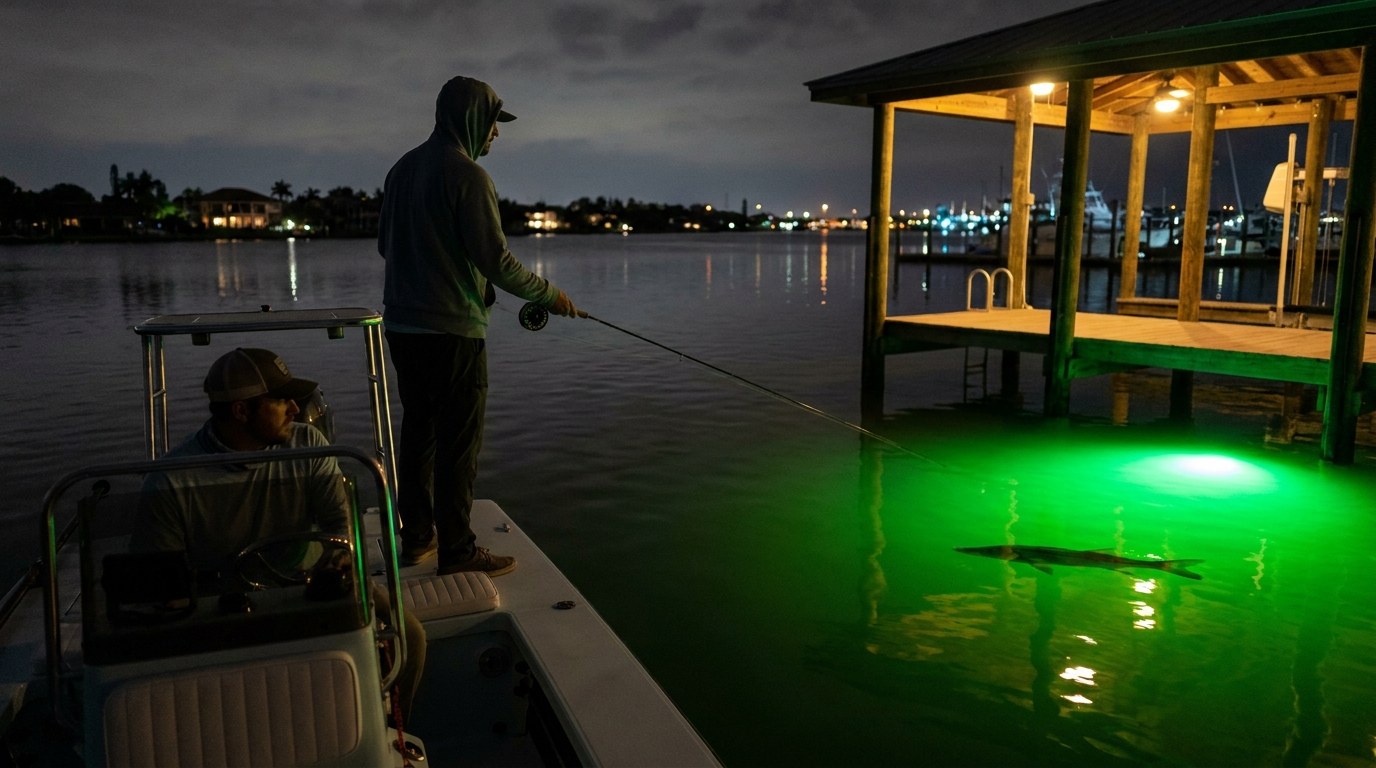
Snook in the dock lights at night. The same see-it-then-cast discipline after dark, and the reason dock lights are worth learning: the fish are visible, the range is short, and you watch the eat. Underwater and above-water lights on private docks concentrate glass minnows and shrimp, and snook stack on the edges to feed.
Read the halo before you cast. Bait swarms the bright center; the feeding fish sit on the shadow edge facing into the current, and the biggest snook on any light holds on the deepest, darkest edge of it. So the cast lands up-current and just outside the glow, and the lure or fly swings naturally through that shadow line. Drop it into the bright middle and you blow the school out and rest the light for an hour.
Approach the same way you’d approach a tailing fish in daylight: kill the outboard 200+ yards out and trolling-motor or pole the last stretch. Bridge shadow lines fish identically and are public structure — the Ringling, Stickney Point and Siesta Drive bridges all hold fish on the up-light edge. Full rig, fly selection and dock etiquette on the dock-light page.
What gear do I need for sight fishing?
| Item | Spec |
|---|---|
| Rod | 7’0”–7’6” fast-action spinning, medium (8–15 lb class) |
| Reel | 3000–4000 |
| Line | 10 lb braid (15 max) |
| Leader | 24–30” of 20–25 lb fluorocarbon; 30 lb around mangroves; 20 lb on the beach |
| Connection | FG or double-uni knot, braid to leader |
| Lures | 1/16–1/8 oz jighead + 3–4” paddletail (DOA CAL, Z-Man MinnowZ); weedless soft plastic on 3/0–4/0 weighted swimbait hook over grass; DOA shrimp; small white flies/jigs for beach snook |
| Bait option | Live shrimp or pilchard free-lined on 1/0–2/0 circle hook — see live bait for the castnet program |
Local shops carry all of it: CB’s Saltwater Outfitters at 1249 Stickney Point Rd on Siesta Key, (941) 349-4400, is the closest full-service stop to the beach-snook stretch.
How do you actually approach and cast to a fish?
- Check the tide. Pick a flat where a low incoming floods the grass mid-morning — fish push shallow with the water.
- Approach from downwind and down-sun. Shut the outboard 300+ yards off the flat. Pole, troll-motor on the lowest setting, or get out and wade.
- Scan. Pushes, wakes, nervous water, tails. Look through the water, not at it.
- Lead the fish 3–6 ft on its travel line. Feather the cast so the lure lands soft.
- Move the lure only when the fish can see it. Slow twitches. If the fish flushes, stop casting — find the next one instead of educating the school.
- On the beach: stay on dry sand, walk with the sun behind you, cast parallel to the shoreline.
What are the classic sight fishing mistakes?
- Casting at the fish instead of ahead of it. The lure should arrive in its path, not on its head.
- Trolling motor on high. In 2 ft of water, prop wash is an alarm bell.
- Fishing sight-fishing water on a cloudy day. No sun, no visibility — go fish topwater instead.
- Leader too heavy on the beach. 20 lb, not 30.
- Staring at the surface. Fish are under it; refocus your eyes on the bottom.
FAQ
Can I sight fish Sarasota without a boat? Yes. The summer beach-snook walk needs nothing but rod, glasses and dry sand, and Palma Sola Bay wades well on winter lows.
Do I need a license? Florida saltwater license, yes (residents fishing from shore qualify for the free shoreline license). Snook stamp required to harvest when the season is open. Both at GoOutdoorsFlorida.
What are the best polarized lens colors here? Copper or amber over grass flats, gray over beach sand. Cheap glasses without polarization do not work for this.
What months are best for tailing redfish? October through March, on negative low tides — the lower the low, the better the tailing.
Is sight fishing good for beginners? It is the hardest inshore technique short of tarpon on fly. Start on a popping cork or live bait, then graduate here.
Related
Sight fishing pairs naturally with the rest of the shallow-water program: throw a topwater at dawn before the light gets high enough to spot fish, switch to fly fishing when you want the same hunt with a harder delivery, and read the redfish and snook species pages for month-by-month movements on these same flats.
Lead a cruising fish by 3–6 feet — cast on top of it and it's gone.
Sight Fishing on Video
14 public videos from 8 channels, sorted by subject. Nothing plays until you click it.
Sight-Casting Skills & Setup
5Casting technique, lure choice, and approach for putting a bait in front of fish without spooking them.

Sight Fishing the Saltwater Flats - Casting Techniques

The #1 Rule for Sight Casting Success (Most Anglers Get This Wrong!)
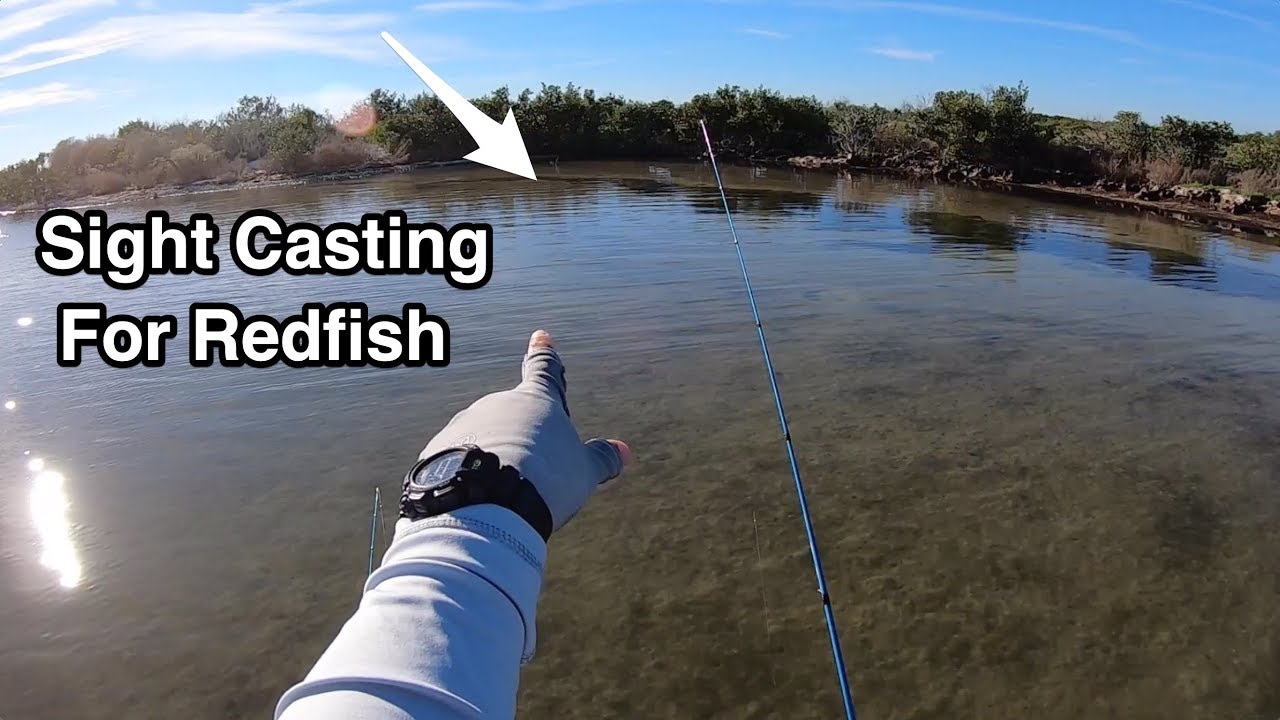
Sight Casting Redfish: Tips On Sight Fishing The Flats

Sight Fishing Redfish: Angles, Positioning & Gear That Catch More Fish | Flats Class YouTube
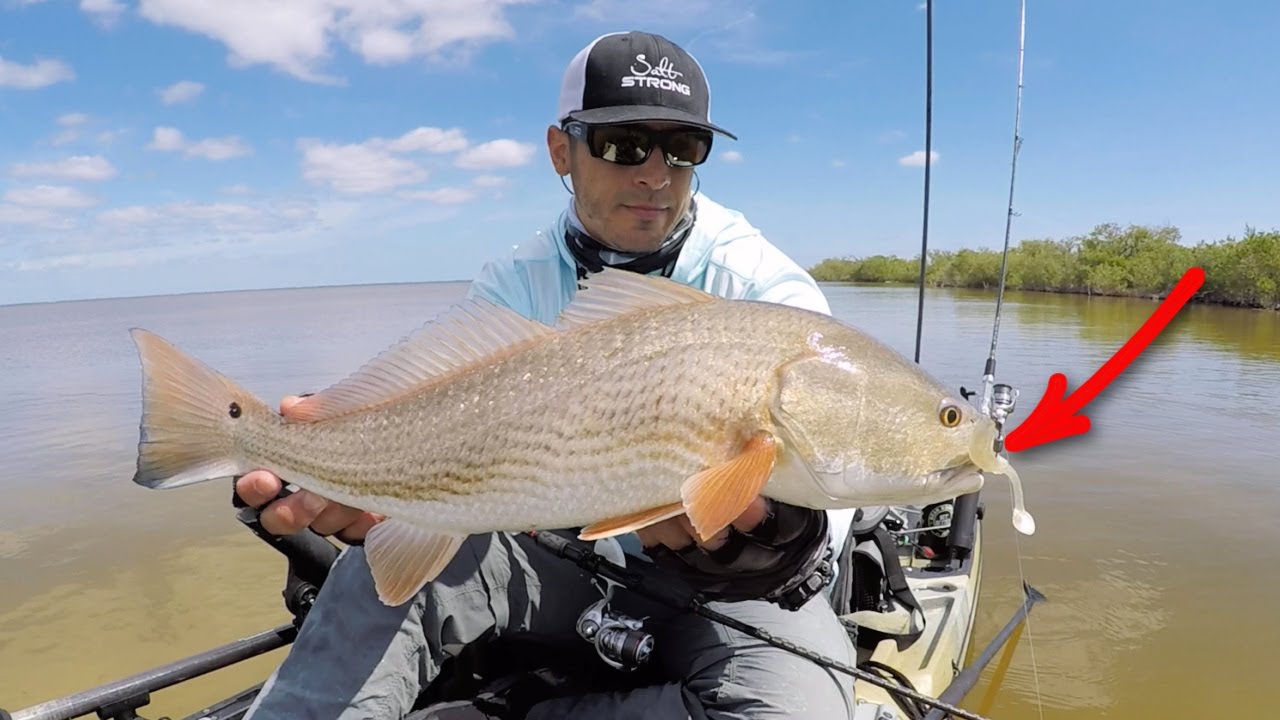
Sight Fishing For Redfish: How To Use A Paddletail When Sight Casting To Reds
Tailing & Cruising Redfish on the Flats
4Reading tails and wakes, and the do's and don'ts of approaching skittish shallow-water redfish.

All You Need To Know About Tailing Redfish - Flats Class

Why You Should NEVER Cast Into A School Of Tailing Redfish

Tips On Sight Fishing Spooky Redfish! - Flats Class
Sight Fishing BIG Tailing Redfish in Tampa Bay!
On the Water
5Full flats sight-fishing trips for redfish, snook, and tarpon in Florida and the Keys.

Sight Fishing for Ghosts of the Flats - Florida Keys Fishing Experience Day 3

Florida Everglades | Sight Fishing PARADISE! (Tarpon, Snook, Redfish)

Flats Class Sight Fishing Redfish in Pine Island

Sight fishing Tarpon, Snook and Tailing Redfish in Flamingo, Everglades National Park

Sight Fishing Shallow Redfish on the Nature Coast
Gear Checklist.
- 7'0"–7'6" fast-action spinning rod, 8–15 lb class
- 3000–4000 reel, 10 lb braid
- 24–30" of 20–25 lb fluorocarbon leader
- Polarized glasses (copper/amber for grass, gray for beach)
- 1/16–1/8 oz jigheads, 3–4" paddletails, DOA shrimp
Charters Featuring Sight Fishing.
Fly Fishing Charters in Sarasota: Snook, Redfish & Tarpon on Fly
Sarasota fly fishing charters, broadly $550–$1,500. Sight-casting snook, redfish and 100 lb tarpon on 8–12 weights, plus Orvis-endorsed casting schools on Siesta Key.
Inshore Fishing Charters in Sarasota: Snook, Redfish & Seatrout
Sarasota inshore charters, broadly $450–$1,200 by boat and captain. Snook, redfish, seatrout on the flats of Sarasota Bay — what a trip costs, includes, and catches by month.
Nearshore Charters in Sarasota: Reefs, Tripletail & Kingfish
Nearshore charters from $500 fish reefs 1–9 miles off Sarasota in 20–45 ft: tripletail on trap buoys Oct–May, kings, cobia, Spanish mackerel and sharks.
Tarpon Charters in Sarasota & Boca Grande: 2026 Season Guide
Tarpon charters May–July, roughly $800–$2,500 depending on boat, captain and where you fish. 80–150 lb fish off Sarasota beaches and Boca Grande Pass.
Sight Fishing for Specific Species.
Sight Fishing for Redfish in Sarasota Bay, FL
Sight fishing redfish in Sarasota Bay: winter negative lows, tailing fish on Palma Sola and the Bulkhead, gold spoons and 1/8 oz paddletails, 3-6 ft leads.
Sight Fishing Beach Snook in Sarasota, FL
Sight fishing beach snook in Sarasota, June-Sept: walk Siesta, Lido, and Casey Key at first light, 20 lb leader, small white jigs. All catch-and-release.