Charlotte Harbor Fishing
Including Cape Haze, Pirate Harbor, El Jobean, Port Charlotte.
Charlotte Harbor Fishing: Redfish Flats, Ramps & Seasons (2026)
At a Glance.
Cape Haze · Pirate Harbor · El Jobean · Port Charlotte
Notable Spots.
The named water our captains fish around Charlotte Harbor Fishing: Redfish Flats, Ramps & Seasons (2026) — passes, flats, reefs, and structure that hold fish season after season.
- Cape Haze flats
- Pirate Harbor
- Bull Bay
- Turtle Bay
- Peace River mouth
- Myakka River mouth
Boat Ramps.
Public ramps in and around Charlotte Harbor Fishing: Redfish Flats, Ramps & Seasons (2026). Most charters meet you at a dock — but if you're trailering, these are the launches to know.
Boca Grande Causeway at Gasparilla Rd, Placida
3 lanes, ~75 trailer spots; the west-side access point toward Gasparilla Sound and Bull Bay
4224 El Jobean Rd, Port Charlotte 33953
1 lane, courtesy docks, 17 paved trailer spots, Myakka River access via a short canal; pay-and-display kiosk; 941-625-7529
Signature Species.
The fish Charlotte Harbor Fishing: Redfish Flats, Ramps & Seasons (2026) is known for. Tap a species for the full guide — season, tackle, technique, and regulations.
Fishing Charlotte Harbor Fishing: Redfish Flats, Ramps & Seasons (2026),
Explained.
Charlotte Harbor is roughly 270 square miles of open estuary — Florida’s second largest — fed by the Peace and Myakka rivers, and most of its shoreline is state-owned preserve. That’s why the flats here still fish like the 1970s: schooling redfish off Cape Haze and Pirate Harbor from November through February, resident tarpon in the deep harbor channel, and mangrove shorelines with nobody on them.
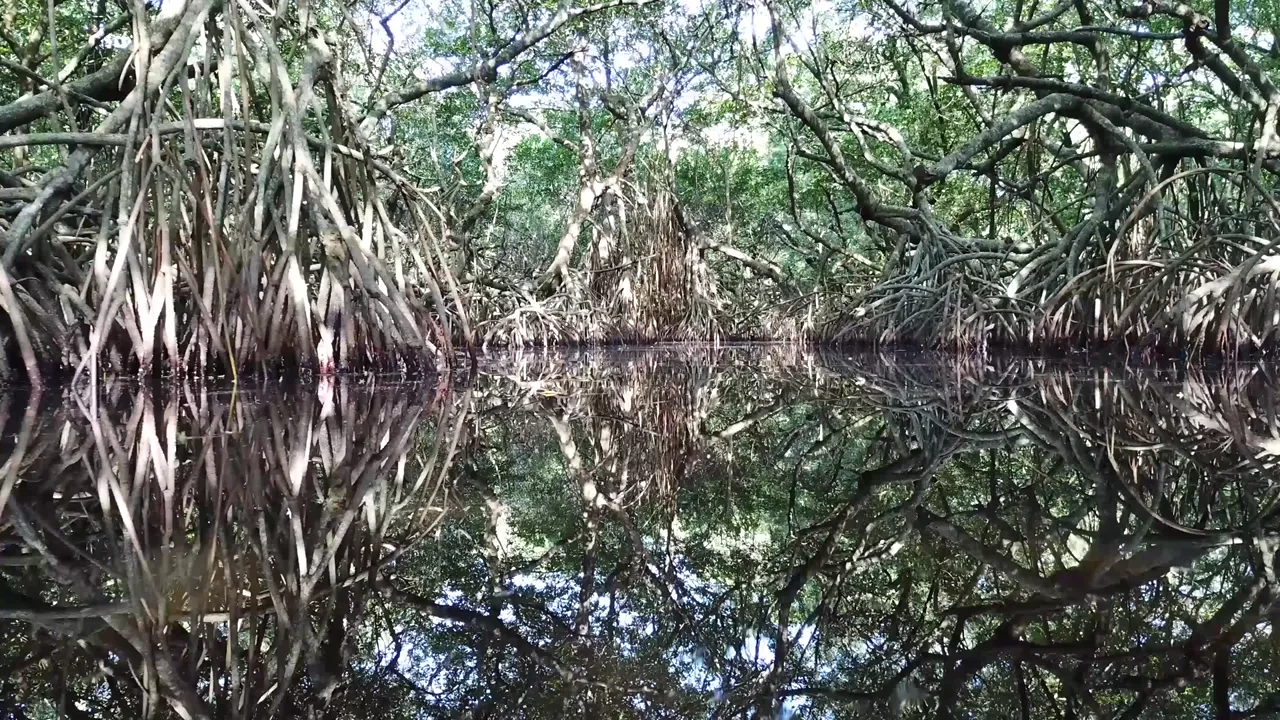
Roughly 45,000 acres of preserve keep the mangrove fringe intact.
Why does Charlotte Harbor fish so well?
Protection, at scale. Charlotte Harbor Preserve State Park wraps roughly 45,000 acres around the harbor’s edges, so the mangrove fringe, grass flats, and oyster bars that make an estuary work are still intact. Two rivers pour fresh water in from the north, the Gulf pushes salt in through Boca Grande Pass, and everything that swims uses the gradient in between. The result is a year-round inshore fishery with three anchor species — redfish, snook, and tarpon — plus trout on every grass flat and sharks behind all of it.
Where do redfish school in Charlotte Harbor?
The winter show is schooling reds — sometimes dozens of fish pushing water together — on the harbor’s shallow edges:
| Spot | Side | Pattern |
|---|---|---|
| Cape Haze flats | West wall | Winter schools on the bars, tailing fish on low water |
| Pirate Harbor | East wall | The classic November–February schooling area |
| Bull Bay | Southwest, boat only | Big-red country: mangrove bays, oyster bars |
| Turtle Bay | Southwest, boat only | Same program as Bull Bay, even quieter |
November through February is prime; fish the low stages of the tide and look for pushed water and tails. Gold spoons, cut mullet, and weedless soft plastics all work — long casts matter more than lure choice once a school is up shallow. Redfish slot and bag rules have shifted repeatedly; verify the current Charlotte Harbor zone rules at FWC before you keep anything.
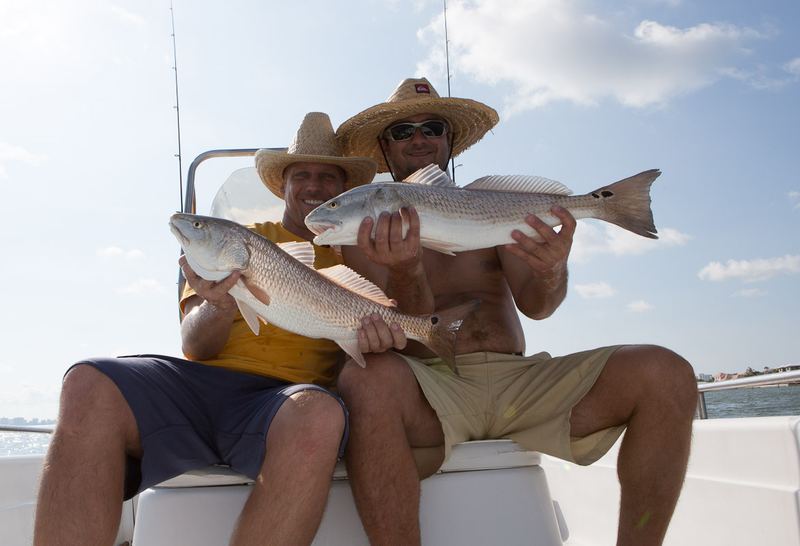
Does Charlotte Harbor hold tarpon outside Boca Grande season?
Yes — that’s the harbor’s quiet advantage. Beyond the May–June circus at the pass, resident and staging tarpon use the deep channel that runs up the harbor, the upper harbor holes, and the Myakka’s “tarpon hole” stretch. Laid-up fish in the river mouths eat on warm winter afternoons when the pass fleet is a memory. It’s technical, low-numbers fishing — and completely uncrowded.
Where are the boat ramps on Charlotte Harbor?
| Ramp | Address | Details |
|---|---|---|
| El Jobean Ramp | 4224 El Jobean Rd, Port Charlotte 33953 | 1 lane, courtesy docks, 17 paved trailer spots, pay-and-display kiosk; short canal to the Myakka River |
| Placida Park | Boca Grande Cswy & Gasparilla Rd, Placida | 3 lanes, ~75 trailer spots; west-side access toward Gasparilla Sound, Bull Bay, and the pass |
| Laishley Park | 120 Laishley Ct, Punta Gorda | 2 lanes, 46 trailer spots; the Peace River / upper-harbor option |
El Jobean puts you on the Myakka side; Placida covers the west wall and Bull Bay; Laishley (see the Punta Gorda guide) covers the Peace River mouth. The FWC Charlotte Harbor boating guide maps every ramp on the system, and the Charlotte County parks fishing page lists county facilities, piers, and kayak launches. Coast-wide list: our boat ramp guide.
Resident tarpon hold the deep channel long after the pass fleet leaves.
What can I catch in Charlotte Harbor by season?
| Season | Best bets |
|---|---|
| Spring (Mar–May) | Snook staging toward the passes, trout on the flats, tarpon arriving in the channel |
| Summer (Jun–Sep) | Mangrove snook, juvenile tarpon in the creeks, sharks on every flat |
| Fall (Oct–Nov) | Redfish schools forming, snook feeding down the harbor, big trout returning shallow |
| Winter (Dec–Feb) | Peak schooling reds at Pirate Harbor and Cape Haze, sheepshead on structure, river-mouth snook |
How do I approach a school of redfish without blowing it?
The harbor’s winter schools are famously spooky in skinny, clear water, and the difference between a 40-fish morning and a mud-boil exodus is the approach:
- Stake off and wait when possible. Schools on the Cape Haze and Pirate Harbor flats move in loose, repeating circuits. If you can read the direction of the push, kill the motor 150+ yards ahead, pole or drift into the lane, and let them come to you.
- Trolling motors on constant low. Surging a trolling motor on and off spooks reds worse than a steady hum; better yet, pole or drift the last stretch.
- Long casts, small splashes. A 1/8-oz weedless soft plastic or a gold spoon thrown past the school and worked back through the edge beats a direct hit every time. Cut mullet soaked on the travel lane works when the wind chops up your sight-fishing.
- One fish, then reassess. A hooked red that stays connected often pulls the school with it briefly — land it fast, and watch where the school resettled before firing again.
Negative winter low tides — common on north-wind mornings after fronts — concentrate fish in the troughs and potholes and make the whole east wall readable. That’s the day to burn a vacation morning on Pirate Harbor.
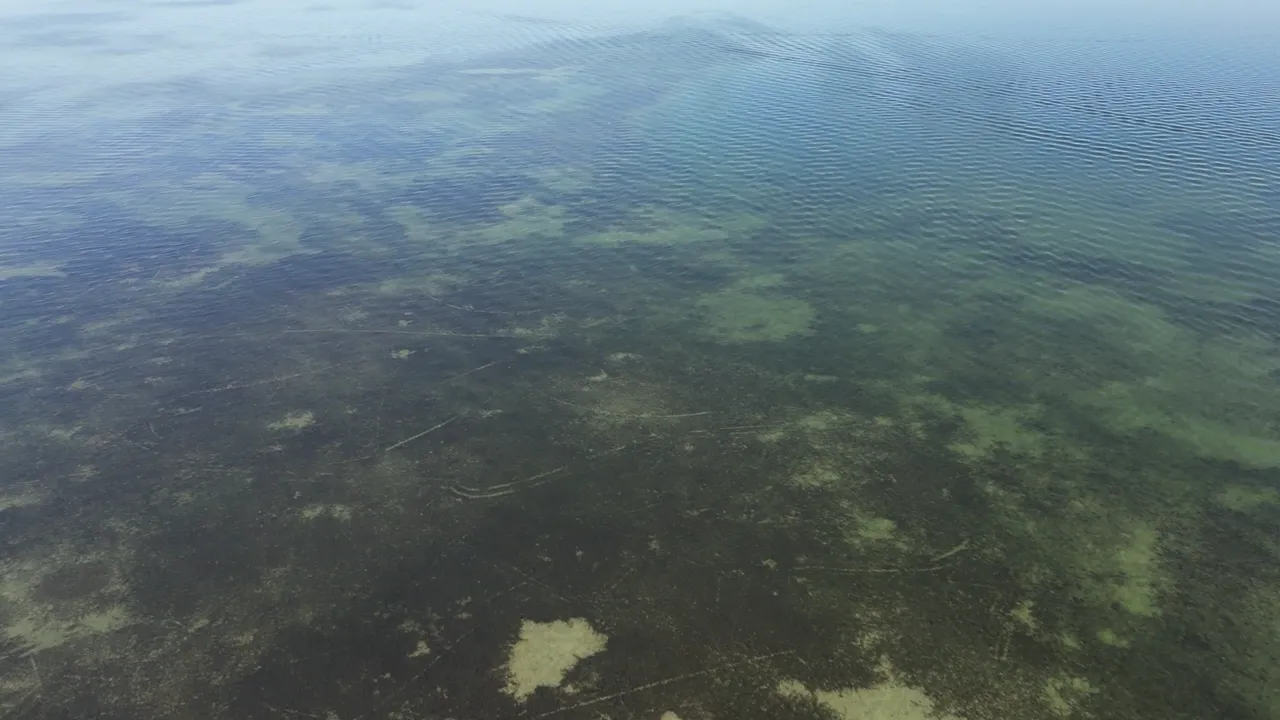
Kill the motor 150 yards out and let the school come to you.
Is Charlotte Harbor beginner-friendly?
Very — with one caveat. The fishing itself is forgiving: protected water, huge target areas, and a trout-on-grass fishery (drift 2–6 ft grass with a popping cork and shrimp) that produces for total novices. The caveat is navigation: the harbor is big, shallow at its margins, and unforgiving of straight-line running near the bars. Study the FWC Charlotte Harbor boating guide charts, run marked channels until you’ve built local knowledge, and treat afternoon summer storms — which build over the mainland and roll across the open harbor fast — as the region’s only real hazard.
Where do I get bait on Charlotte Harbor?
Fishin’ Frank’s, 4200 Tamiami Trl in Port Charlotte, is the region’s institution — live bait, honest advice, and fishing reports that function as the harbor’s newspaper of record. Fisherman’s Edge covers the west side from Grove City. In summer, netting pilchards on the harbor bars is the standard live-well program.
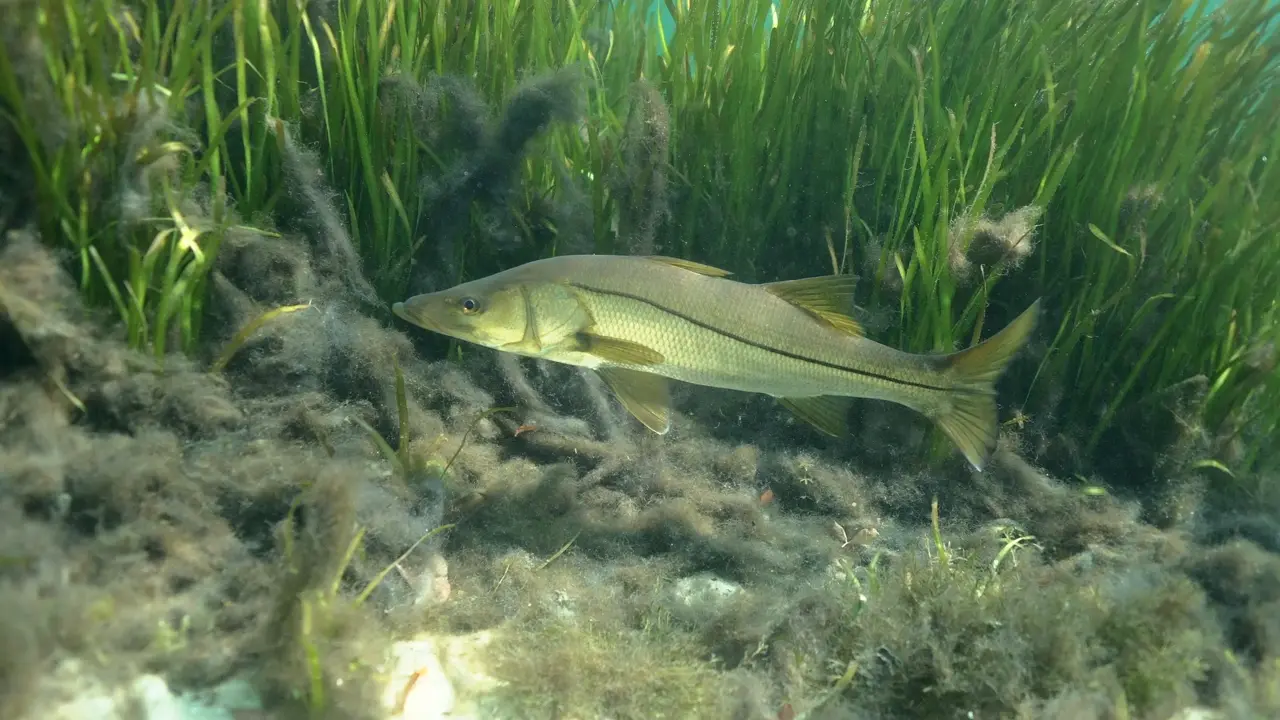
Mangrove shorelines in summer, river mouths in the winter.
Where do you tie up to eat and refuel on Charlotte Harbor?
Cass Cay Restaurant & Bar at Burnt Store Marina overlooks the harbor with covered-deck seating, fuel, and one of the biggest slip basins on this coast. Across the harbor, Fishermen’s Village in Punta Gorda offers boat slips plus multiple restaurants — the whole estuary is a short run from either.
FAQ
When is the best time to fish Charlotte Harbor? For the signature fishery — schooling redfish — November through February. For variety, October and November are hard to beat: reds schooling, snook feeding, trout back on the flats.
Can you wade fish Charlotte Harbor? Yes; firm sand-and-grass edges along Cape Haze and the east wall wade well. Watch for stingrays — do the shuffle — and mind summer thunderheads on the open harbor.
Is Charlotte Harbor good for kayak fishing? Excellent. Preserve shorelines, launch options at El Jobean and the county parks, and winter reds in water too shallow for most boats. Check the Charlotte County kayak launch list.
How big is Charlotte Harbor? About 270 square miles of open water — second in Florida only to Tampa Bay — fed by the Peace and Myakka rivers.
Related
The harbor connects to everything south of Sarasota: Boca Grande Pass is its mouth, Punta Gorda sits at its head where the rivers meet, Englewood borders it to the west, and Bokeelia / Pine Island Sound extends the same estuary south. Species detail: redfish, snook, tarpon.
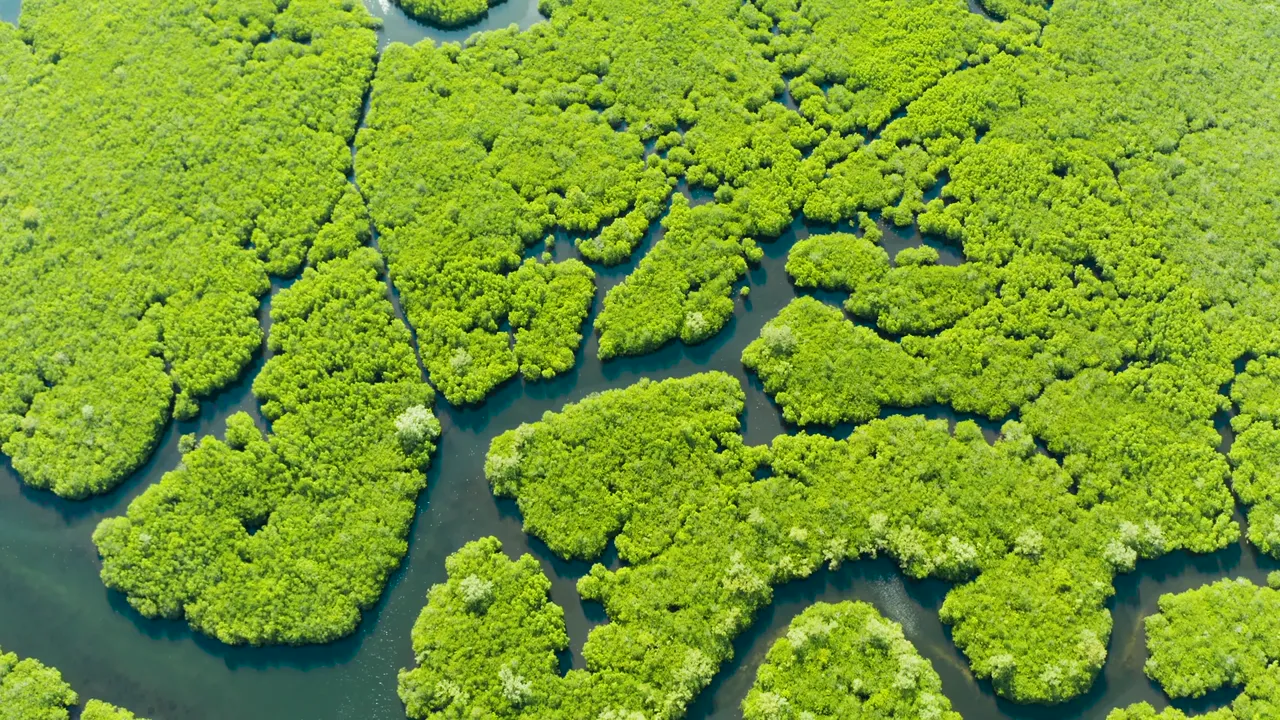
Winter schooling redfish across Florida's second-largest estuary.
Charlotte Harbor on Video
14 public videos from 10 channels, sorted by subject. Nothing plays until you click it.
Fishing Charlotte Harbor
5Redfish, snook, and trout across the big estuary's grass flats and mangrove shorelines.
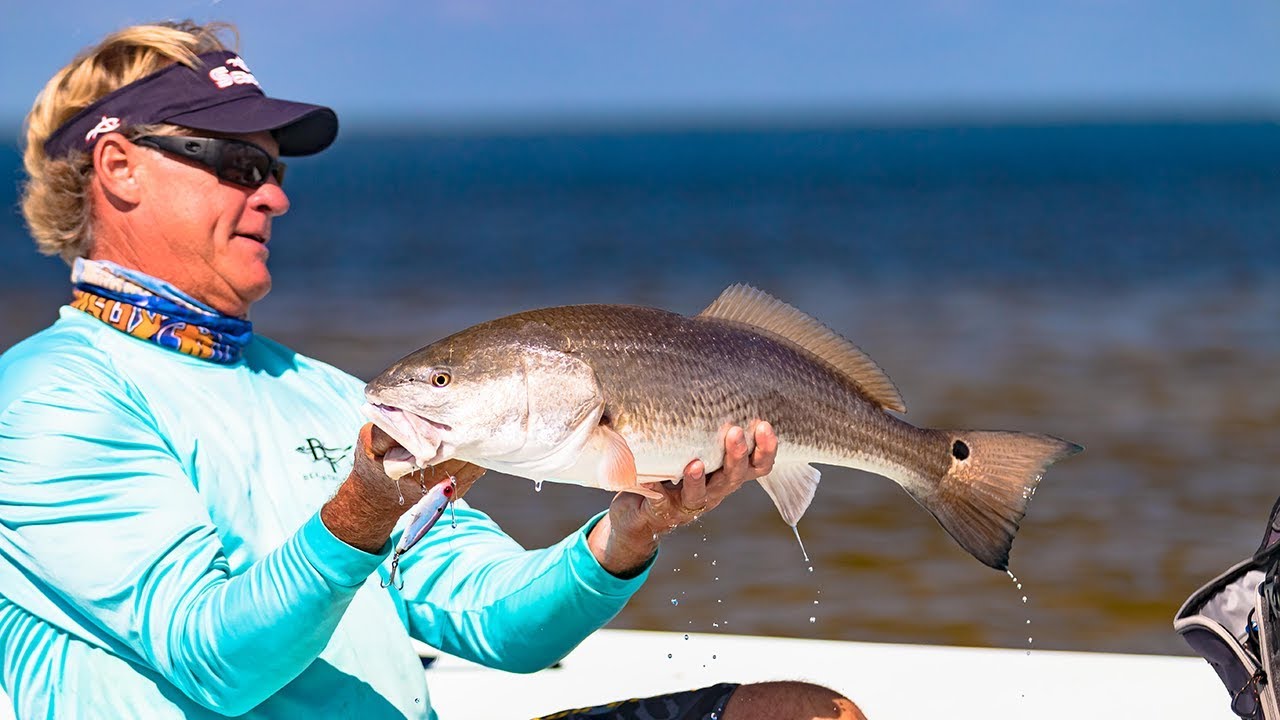
Charlotte Harbor Florida Fishing for Inshore Slam Redfish Snook Trout

Simple way to get a Redfish | Charlotte Harbor Fisherman
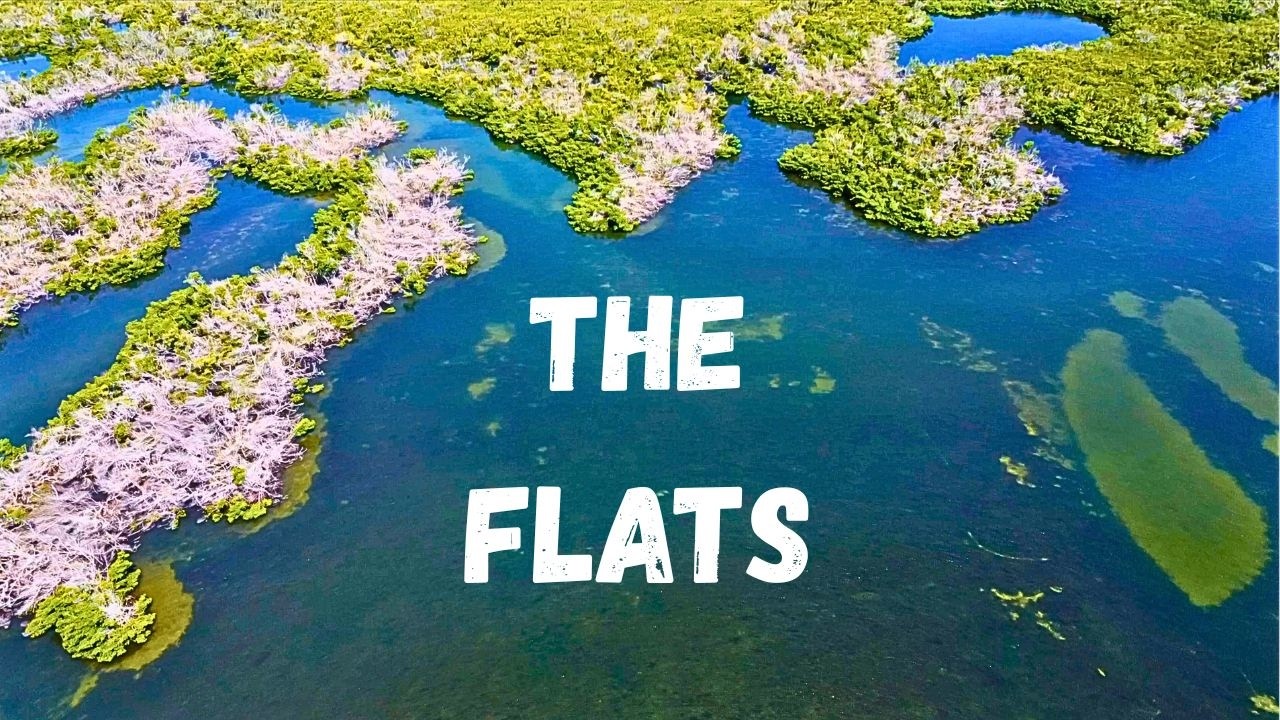
2 Hours Fishing the Flats | Charlotte Harbor Fisherman
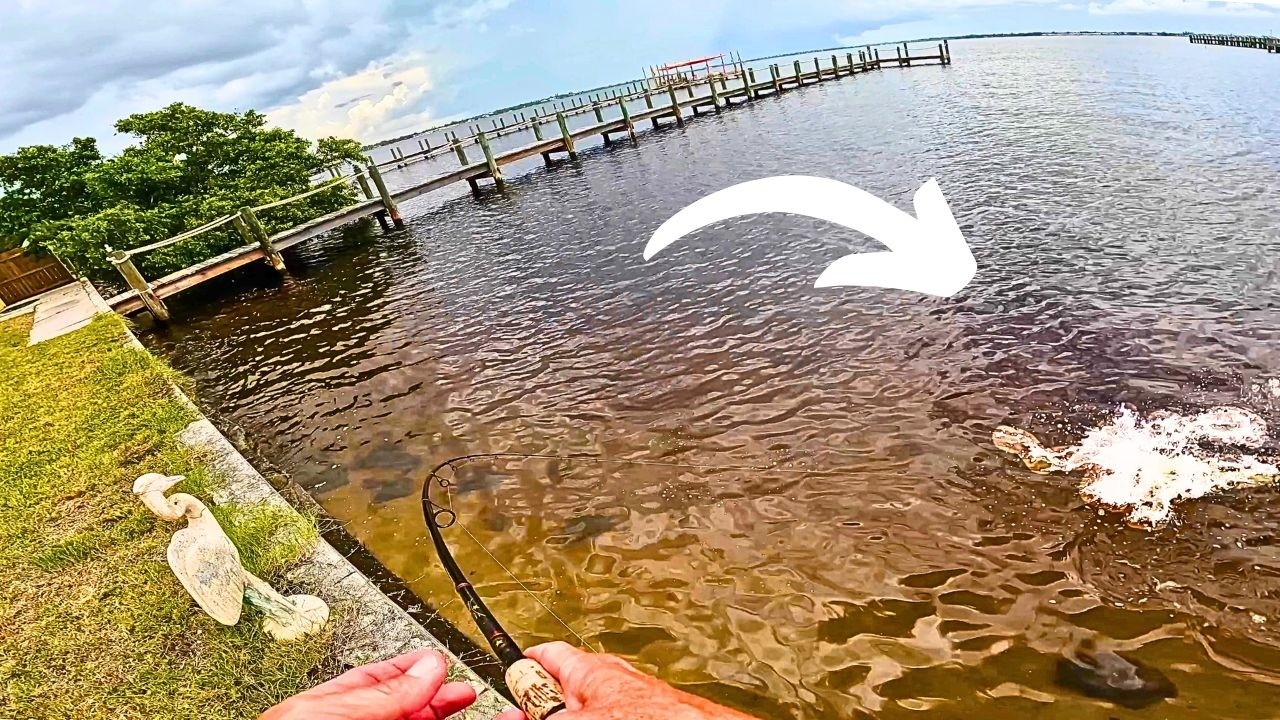
2 Hours of Land Based Fishing Charlotte Harbor

Best of Charlotte Harbor Fishing 2026 | 2 Hours of Snook, Redfish, Trout & Fishing Action
Guides & Charters
4Local captains on the harbor — spin and fly, from redfish to tarpon and tripletail.

Fishing Charlotte Harbor's Comeback | Big Inshore Action!

Guidelines - Charlotte Harbor Snook and Redfish

Guidelines - Fly Fishing in Charlotte Harbor (Snook, Redfish & Trout)

Charlotte Harbor Fishing Madness!! -Tarpon, Cobia, Tripletail
The Harbor & Its History
5Aerials, a local guide's map of the estuary, boating routes, and the harbor's ancient past.

Charlotte Harbor Gulf Coast - Port Charlotte - North Port - Manasota - Boca Grande

Charlotte Harbor Explained
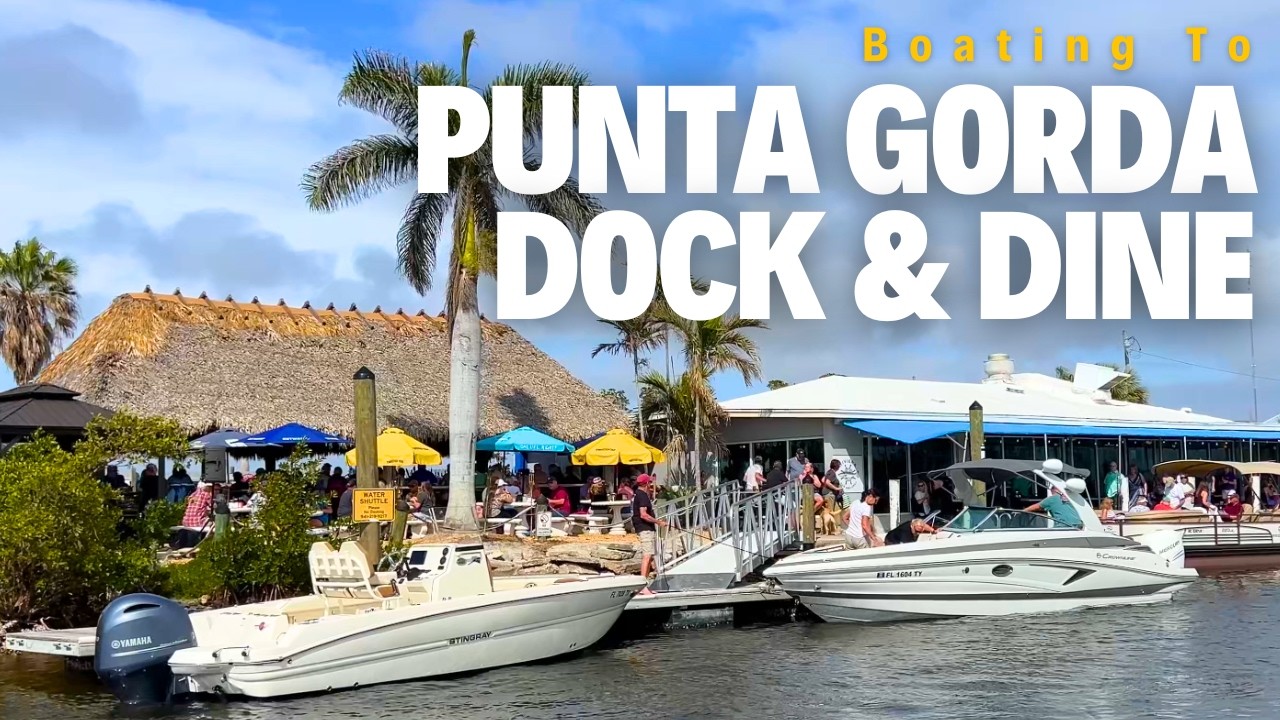
Boating Through Charlotte Harbor To Punta Gorda
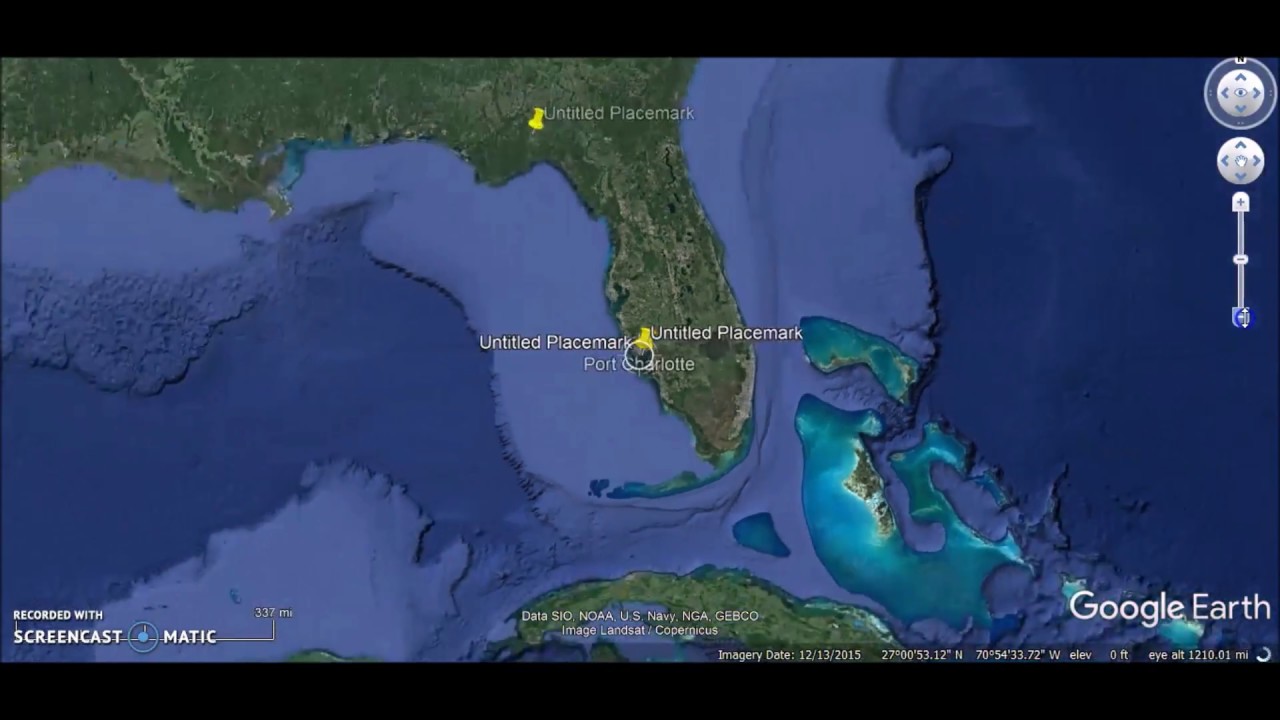
The Lost Ancient Trade Ports(?) Of Charlotte Harbor, Florida
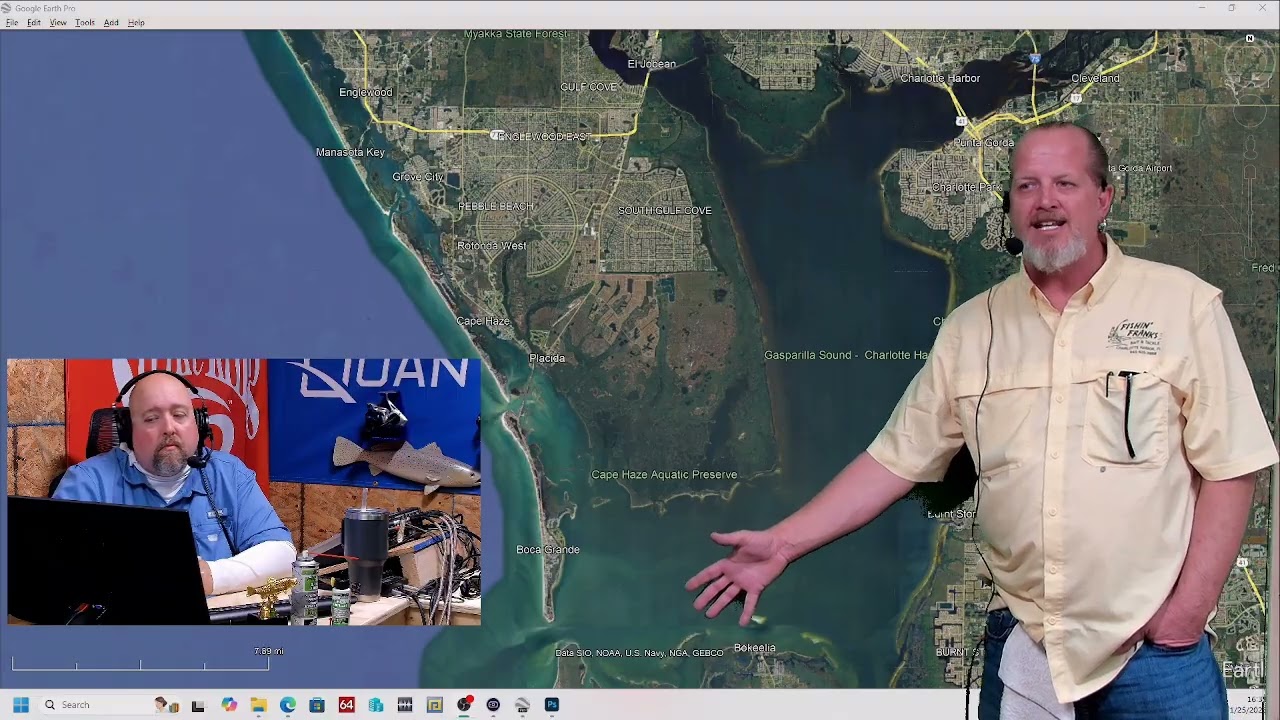
Charlotte Harbor 101: Robert Shows You the Basics