
Anyone 16 or older needs a Florida saltwater fishing license to fish salt water in Sarasota — including from the beach — unless they fall under an exemption or are covered by a charter, pier, or vessel license. A resident annual license costs $17.00 in 2026, a nonresident annual costs $47.00, and Florida residents can fish from shore free with a no-cost shoreline license. Buy any of them in minutes at GoOutdoorsFlorida.com, the official FWC licensing portal.
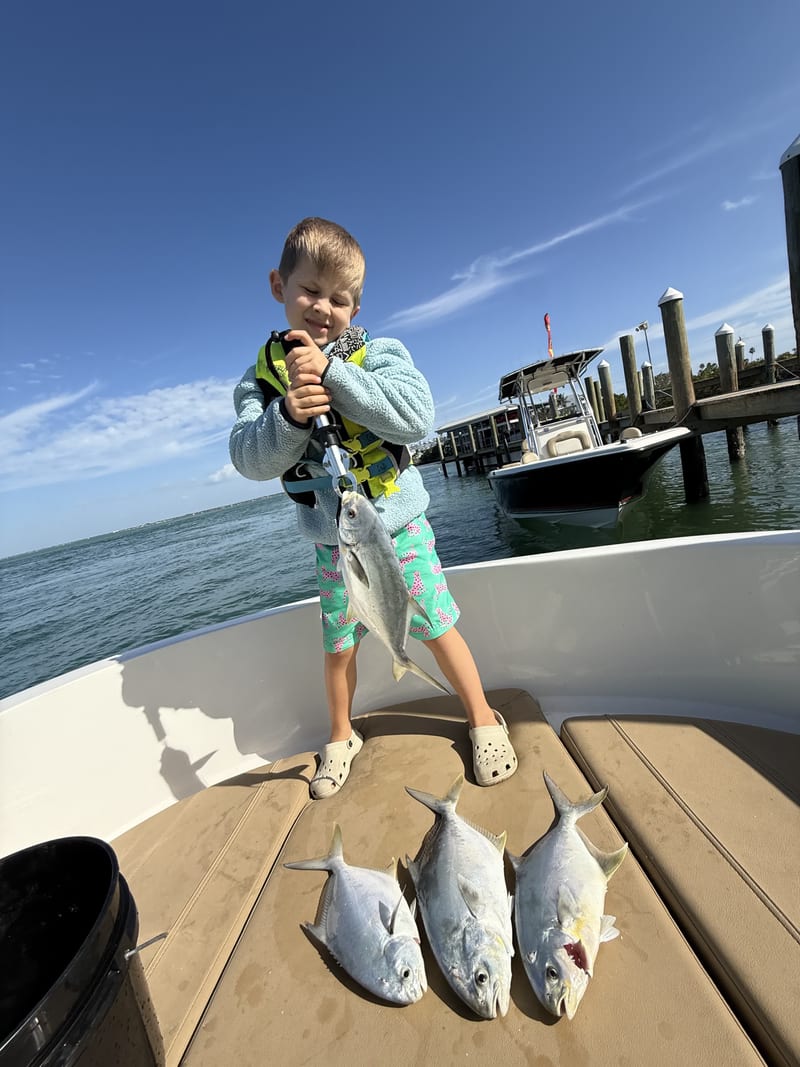
Who needs a Florida fishing license?
Everyone 16 and older fishing in salt water, from a boat or from land. The requirement covers every method — rod and reel, cast net for bait, spearfishing. It applies to visitors on day one; there is no grace period for out-of-state anglers.
You do NOT need your own license if you are:
- Under 16 (resident or visitor)
- A Florida resident 65 or older carrying a Florida ID or driver license
- Fishing from a pier that carries its own pier license
- A paying client on a licensed charter (see below)
- A Florida resident who is a member of the U.S. Armed Forces, home on leave for 30 days or less, with orders
- A Florida resident certified as totally and permanently disabled, holding the FWC disability license
Full exemption list: FWC saltwater fishing license page.
How much does a Florida saltwater fishing license cost in 2026?
| License / permit | 2026 cost | Notes |
|---|---|---|
| Resident annual saltwater | $17.00 | Covers shore and boat |
| Resident annual freshwater + saltwater combo | $32.50 | Both licenses, one purchase |
| Resident shoreline-only | $0 | Free registration; shore fishing only |
| Resident 5-year saltwater | $79.00 | Verify current price at checkout |
| Nonresident 3-day | $17.00 | Required even for beach fishing |
| Nonresident 7-day | $30.00 | |
| Nonresident annual | $47.00 | |
| Snook stamp | $10.00/year | Required to harvest (keep) a snook; resident 5-year $50 |
| Spiny lobster permit | $5.00/year | Resident 5-year $25 |
| Tarpon tag | $51.50 | Only for possessing a tarpon in pursuit of an IGFA record; tax collector offices only |
Fees cross-checked July 2026 against FWC and the official Florida saltwater regulations summary. Small processing fees apply online. Verify current prices before you buy — the legislature adjusts fees occasionally.

Verify current prices before you buy — the legislature adjusts fees.
Do I need a license to fish from shore in Florida?
Yes — but for Florida residents it’s free. The resident shoreline-only license costs $0 and covers fishing from land or from structures attached to land: beaches, seawalls, bridges without pier licenses, docks. It does not cover fishing from any vessel, or from an island you reached by boat. You still have to register for it — being a resident isn’t enough by itself. Details: FWC shoreline license FAQ.
Nonresidents get no free shoreline option. A visitor casting from Siesta Key beach needs at minimum the $17.00 3-day nonresident license.
Where this matters locally: wade fishers on the Siesta Key flats, beach snook anglers on Casey Key, anyone working the Venice jetties from the rocks.
Do I need a license on a charter boat or fishing pier?
No, in both cases — someone else’s license covers you.
- Charters: FWC-licensed charter captains and charter boats cover every paying customer aboard. Book a trip, bring sunscreen, fish legally. License structure: FWC charter captain and boat licenses.
- Licensed piers: piers can buy a pier license that covers everyone fishing from them. Ask at the bait counter or look for the posted license.
- Private boats: a boat owner can buy a recreational vessel license that covers everyone aboard the vessel — useful if you host guests often. Details: FWC vessel and pier licenses.
If you’re on a friend’s boat and the boat has no vessel license, every angler 16+ aboard needs their own license.
A licensed charter captain's license covers every paying customer aboard.
What extra permits do I need for snook, tarpon, and lobster?
Three species on this coast carry add-on requirements beyond the base license:
- Snook: a $10.00 annual snook stamp is required to keep a snook — not to catch and release one. Snook also carry a tight slot limit and seasonal closures in the Gulf region; most Sarasota snook go back in the water regardless. Current rules on our snook page and the live FWC snook page.
- Tarpon: catch-and-release only statewide. The $51.50 tarpon tag exists solely for anglers pursuing an IGFA world record, and it’s sold only at county tax collector offices — not online. Everyone else releases every tarpon, and fish over 40 inches must stay in the water by law. Handling rules: our catch-and-release best practices guide.
- Spiny lobster: $5.00 annual permit on top of the saltwater license for the July mini-season and August–March regular season.
Where do I buy a Florida fishing license?
Four ways, fastest first:
- Online — GoOutdoorsFlorida.com. The official FWC portal. Buy, auto-renew, and store licenses digitally. 10 minutes, done before you leave the house.
- Fish|Hunt FL app. FWC’s official mobile app (iOS/Android, linked from GoOutdoorsFlorida). Carries your license on your phone — a digital license on your phone satisfies the requirement to have it while fishing.
- In person: county tax collector offices and license agents — most tackle shops and Walmart sporting goods counters sell licenses. Tax collector offices are the only place to buy a tarpon tag.
- Phone: 888-FISH-FLORIDA (888-347-4356).
Buy before you fish, not at the ramp with an officer walking over. FWC officers patrol Sarasota Bay, the passes, and the beaches regularly, and fishing without a license is a noncriminal infraction with a fine plus the license cost.

Buy before you fish, not at the ramp with an officer walking over.
What license does a snowbird or part-time resident need?
Residency for licensing means Florida is your primary residence (declared domicile, FL driver license). Six-months-and-a-day snowbirds who keep a northern domicile are nonresidents — $47.00 annual. Once you hold a Florida ID as your primary residence, resident rates apply, and at 65+ the license itself becomes free (carry proof of age and residency; an actual license document is optional but handy).
Military stationed in Florida count as residents for licensing.
FAQ
Do kids need a fishing license in Florida? No. Anyone under 16 fishes free, resident or visitor. Kids keeping snook still count against the adult bag rules — see our FWC regulations guide.
Does my Florida license cover freshwater too? No. Salt and fresh are separate licenses; the $32.50 resident combo covers both. The dividing line matters in the Myakka River — brackish stretches can require either depending on where you are and what you’re targeting.
Is a license required for catch-and-release? Yes. Licensing hinges on the attempt to take fish, not on keeping them. Release everything and you still need the license — though not the snook stamp, which only covers harvest.
Can I show my license on my phone? Yes. A digital license in the Fish|Hunt FL app or a photo of it satisfies FWC. Screenshots work; no signal at the sandbar is not a defense, so download it before you run out.
Do I need a license to cast-net bait? Yes — netting whitebait or pinfish is “taking” saltwater species. Shore-based residents are covered by the free shoreline license; from a boat you need the regular license.
Related
Once you’re licensed, learn what you can actually keep: our FWC regulations guide explains slots, bag limits, and seasons in plain English, and the catch-and-release best practices guide covers handling for the fish going back. Species-specific rules live on our snook, redfish, and tarpon pages, and if you’d rather skip the license entirely, a licensed charter out of Sarasota covers you the moment you step aboard.