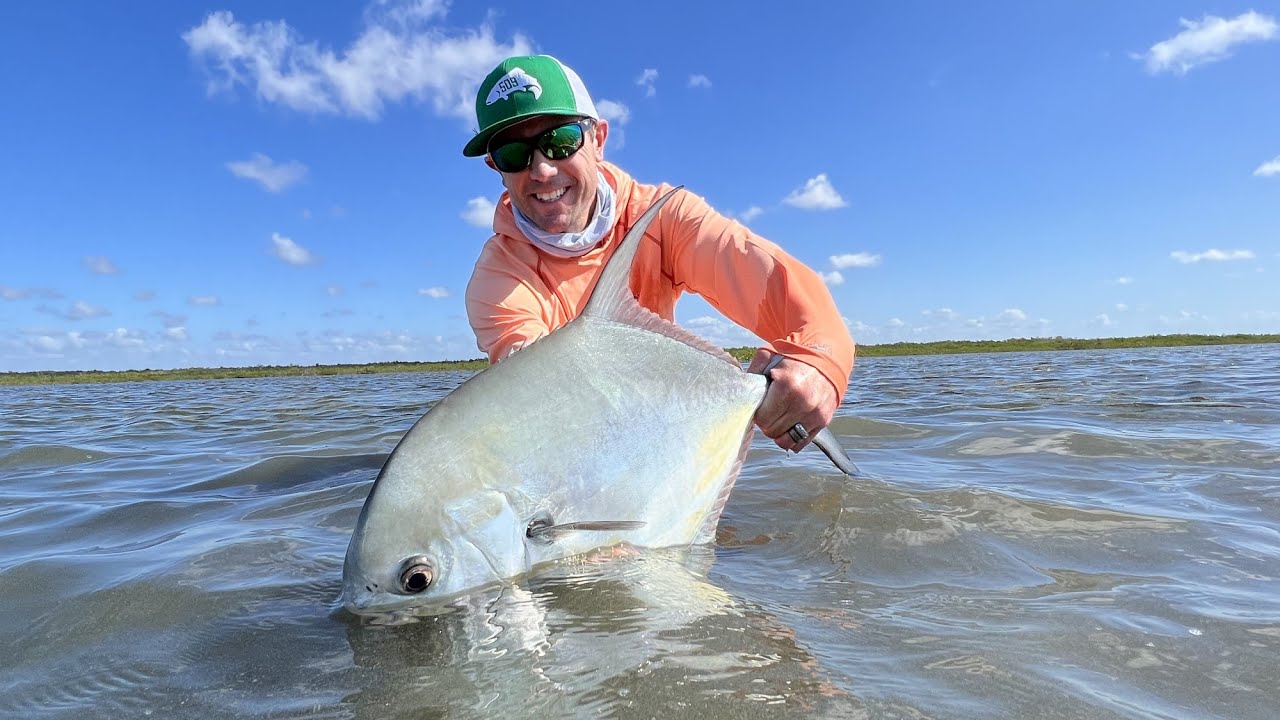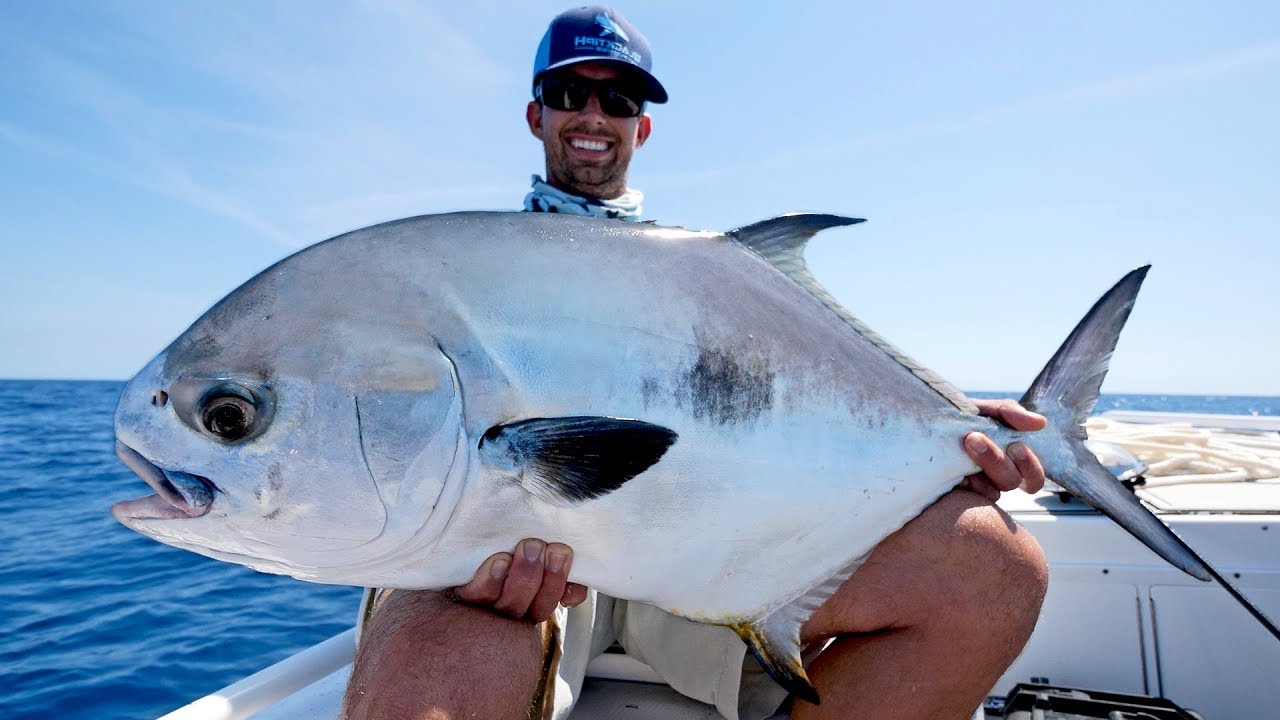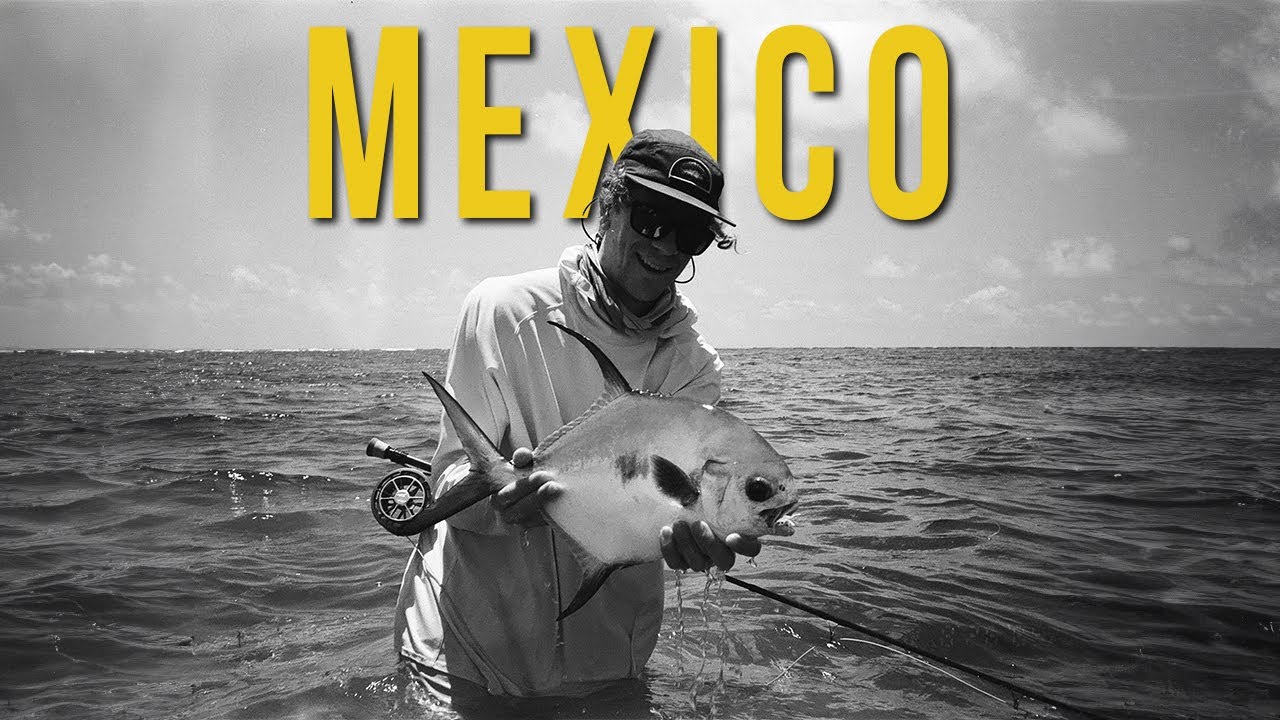
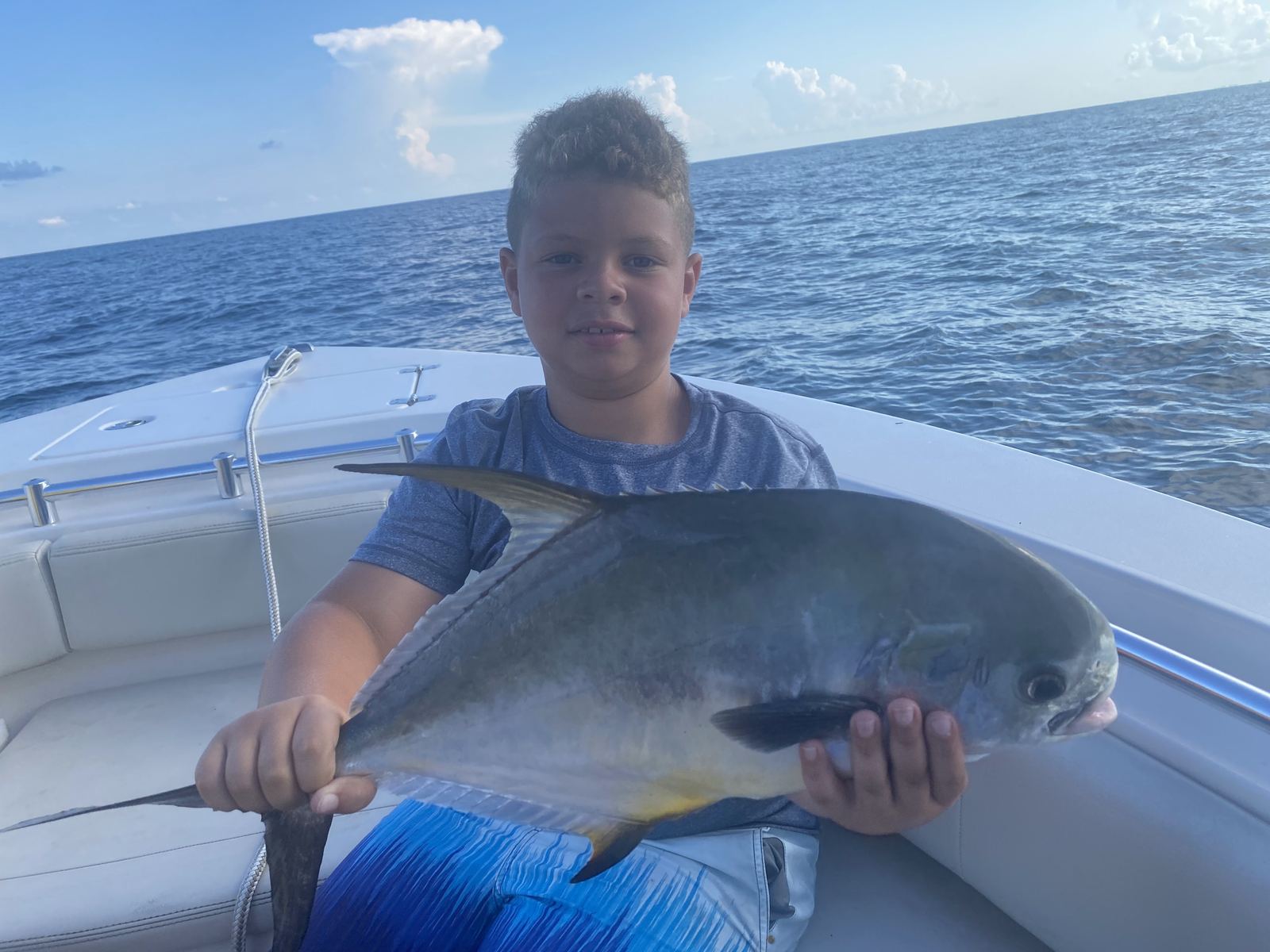
Sarasota has a real permit fishery and most anglers never notice it: from April into September, permit (Trachinotus falcatus) from 5 to 30 lb stack over the nearshore artificial reefs and hard bottom in 20–50 ft, and singles cruise the passes and surf bars all year. The 2026 rule for our coast is a slot — 11–22” fork length, two fish per person, one over 22” allowed — and the famous South Florida spawning closure does not apply here. The identification question matters more than the harvest question, because a “giant pompano” is usually a permit under completely different rules.
Is my fish a permit or a pompano?
The single most consequential fish-ID call on the Suncoast, because both swim the same passes and surf, and the cooler math differs. Work through the checks:
| Feature | Permit | Florida pompano |
|---|---|---|
| Adult size | Routinely 10–40 lb | Rarely over 6–7 lb |
| Body | Deep, slab-sided — nearly round in profile | Shallower, more elongated |
| Dorsal fin origin | Begins over the anal fin | Begins ahead of the anal fin |
| Dorsal lobe | Long, dark, sickle-shaped | Short, pale |
| Anal fin | Often orange-yellow at the front with a dusky edge; orange patch frequently shows under the pectoral area | Yellow wash, no orange patch |
| Tail | Large, deeply forked, dark edges | Forked, yellowish |
| At hand size (1–3 lb) | Dorsal lobe still long; body still round as a dinner plate | Shorter fins, torpedo lean |
The dorsal-origin tell and the size gap both come straight from the FWC Florida pompano profile.
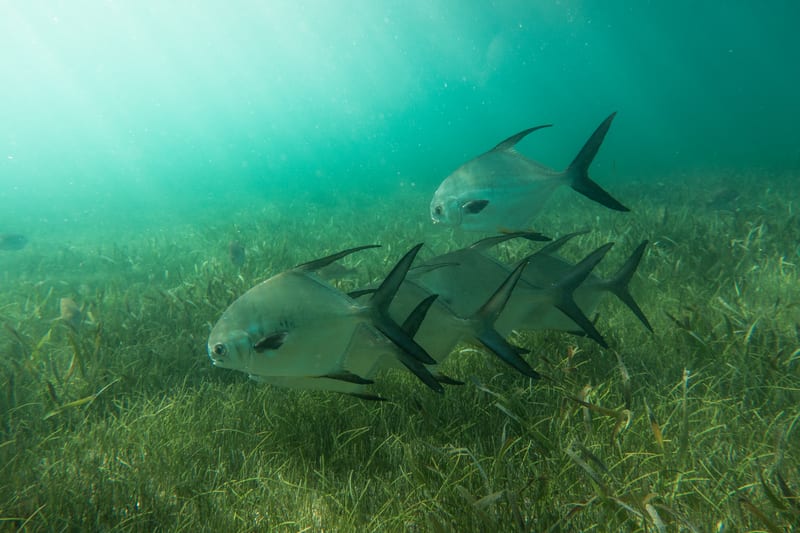
There is a number that settles the argument. The Florida record for Florida pompano is 8.25 lb — Barry Huston, Port St. Joe, October 16, 1999. The record for permit is 56.13 lb — Thomas Sebestyen, Ft. Lauderdale, June 30, 1997 (Catch a Florida Memory saltwater records). A “pompano” heavier than about 8 lb is not a pompano. Treat anything that looks too deep-bodied or too big as a permit until proven otherwise, because pompano carry an 11” fork-length minimum and a six-fish bag while permit carry the slot below. Our pompano page covers the smaller cousin’s entire program.
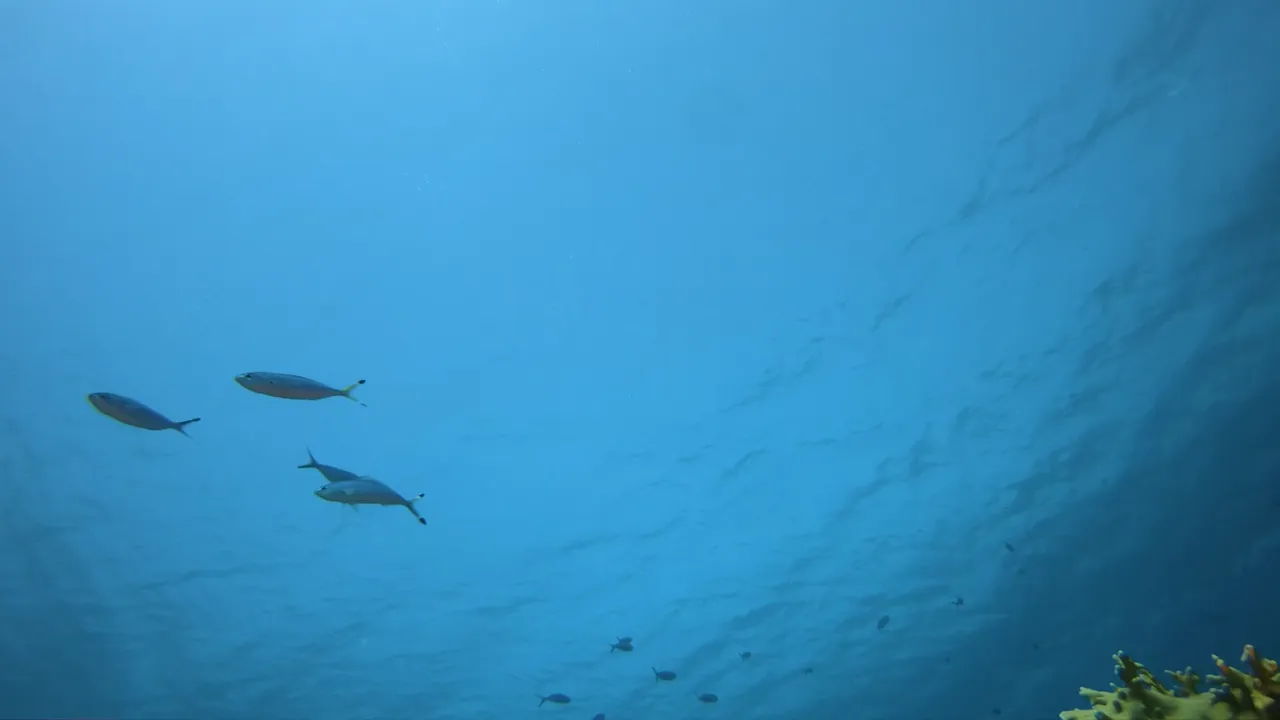
On the reefs, permit show as nervous, flashing shapes high in the water column.
Where do you catch permit in Sarasota?
This is not the Keys: Sarasota permit are mostly a structure fishery, not a tailing-flats fishery.
- Nearshore artificial reefs and wrecks in 20–50 ft — the county reef sites off Lido, Siesta, and Venice hold schools from late April into September, often finning at the surface on slick-calm mornings. Numbers and GPS are in our artificial reef database.
- The passes — Big Sarasota Pass and New Pass bars hold singles and small pods, usually mixed in with the pompano run in spring and fall.
- The surf — an occasional bonus fish for pompano anglers off Siesta, Casey Key, and Manasota Key; almost always a fish that looked “way too big” for the rig it ate. Access points are in the surf and shore fishing guide.
The tell on the reefs is nervous, flashing shapes high in the water column over the structure. Idle upwind, cut the motor, and drift in — permit are the spookiest fish on the coast for their size, and a sight-fishing approach beats anchoring on top of them every time. Sun overhead and clean blue water make the difference; a green, wind-blown day turns a sight fishery into guesswork.
What’s the best bait for permit?
One answer dominates: a live crab. A silver-dollar-size blue or pass crab, free-lined or under a small split shot on a 2/0 circle hook, drifted to fish you can see, is the Sarasota permit method. Everything else is a distant second:
| Offering | Notes |
|---|---|
| Live pass crab / small blue crab | The bait. Hook through a point of the shell, drift it naturally |
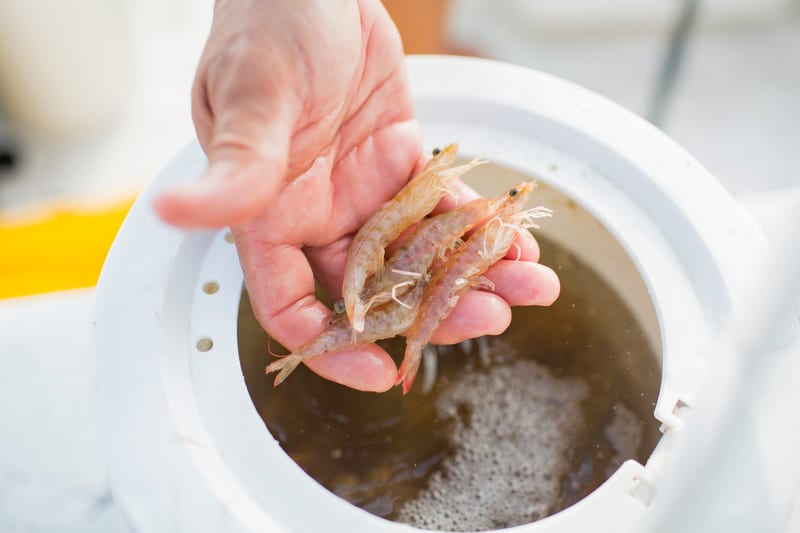
| Live shrimp | Takes reef fish and pass singles, plus everything else that swims |
| Jigs (skimmer/pompano style) | Bounced on pass bars; how most “accidental” permit meet a hook — see jigging |
| Crab-pattern flies | For the dedicated; a floating crab thrown at surface fish on the reefs |
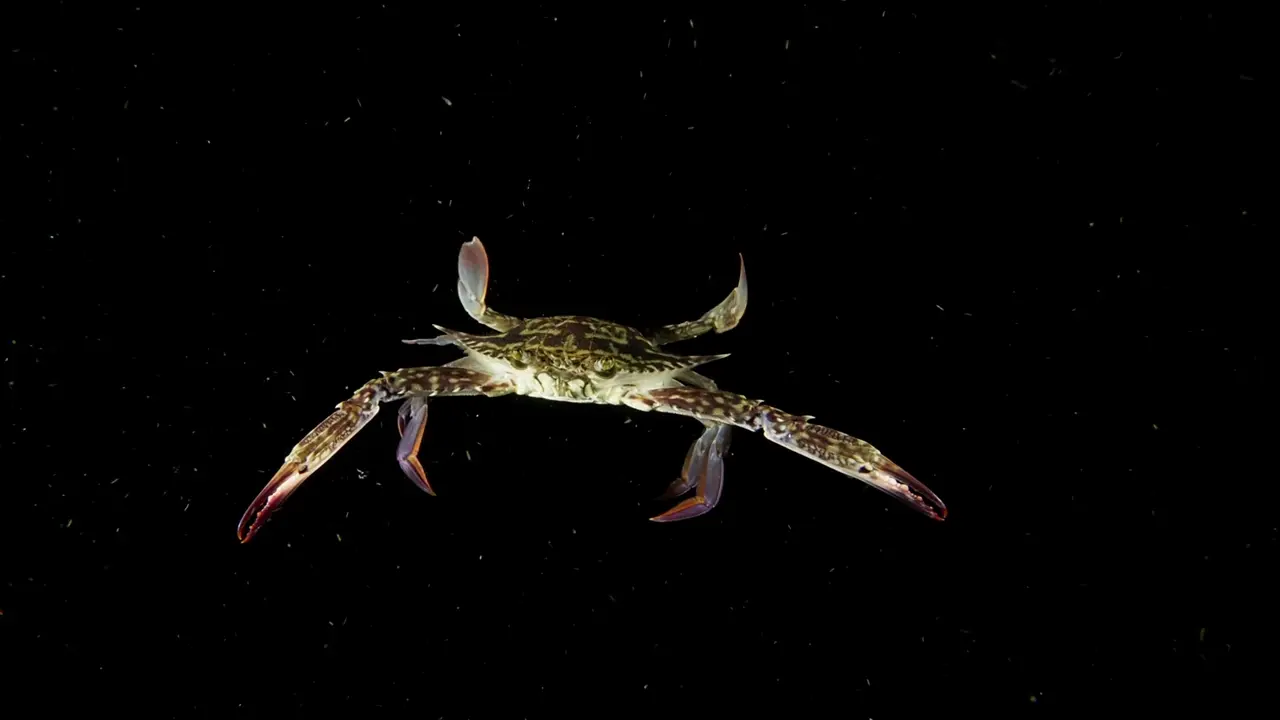
A live pass crab, free-lined to a fish you can see, is the permit bait.
Tackle: 7’6” medium spinning rod, 4000–5000 reel, 15–20 lb braid, 25–30 lb fluorocarbon leader, and a rod’s-length of patience. First runs go 100 yards; around wrecks, that run is the whole fight — turn the fish early or get rocked. A live-bait well with a dozen crabs is the difference between a shot and a story, and a backup dozen shrimp keeps the rods bent when the permit won’t play.
Are permit good to eat?
Legal in the slot, and the smaller fish are decent — firm white meat, broadly comparable to pompano but coarser with size. That said, Sarasota’s permit culture leans heavily to release: the reef schools are spawning-size adults, the fishery is small and local, and a 20 lb permit is a far greater trophy swimming than filleted. If you keep one, keep a slot fish, ice it immediately, and treat it like the eat your catch guide treats any premium fillet. Release the big ones in the water where possible — our catch-and-release best practices cover handling a deep-bodied fish that size.
What are the 2026 permit regulations in Sarasota?
Sarasota sits outside the Special Permit Zone (SPZ), so the general Florida rule applies here:
| Item | 2026 rule — Sarasota (outside SPZ) |
|---|---|
| Slot | Not less than 11” or more than 22” fork length |
| Over-slot allowance | 1 fish over 22” may be kept, counted inside the 2-fish bag |
| Bag limit | 2 per harvester per day |
| Vessel limit | No more than 2 fish over 22” per vessel |
| Season | Open year-round |
| Gear | Hook and line only in state waters; hook and line or spear in federal waters |
| Prohibited | Multiple hooks used with live or dead natural bait; snatching |
The SPZ runs tighter rules on all three counts: a 22” fork-length minimum, 1 per harvester, no more than 2 per vessel, and a full closure April 1 – July 31 over the spawning aggregations. Its boundary is south of a line running due east from Cape Florida at 25°40’ N on the Atlantic side, Biscayne Bay south of the Rickenbacker Causeway, and south of a line just below Cape Sable running due west at 25°09’ N on the Gulf side. Sarasota sits near 27°20’ N — roughly 150 miles north of that Gulf-side line. The spring closure is the rule everyone reads about; it does not apply off Sarasota.
Source: FWC permit regulations — checked July 2026; verify current rules before you fish. A saltwater license is required (FWC license info); state records live at Catch a Florida Memory.

FAQ
How do you tell a permit from a pompano? Size and fins. Permit run deep-bodied with a long dark sickle of a dorsal lobe that starts over the anal fin, and often an orange tint near the anal fin; pompano stay under ~7 lb with short pale fins. The Florida pompano record is 8.25 lb — anything heavier is a permit.
Can you keep permit in Sarasota? Yes — two per harvester in an 11–22” fork-length slot, one of which may be over 22”, open year-round. Sarasota is outside the Special Permit Zone and its April–July closure.
When do permit show up on Sarasota reefs? Late April through September, with May–July the most consistent surface-schooling window on the nearshore reefs in 20–50 ft.
What is the best bait for permit? A live pass crab or small blue crab, free-lined to visible fish. Live shrimp and pompano jigs take the incidental fish.
Are there tailing permit on Sarasota flats like the Keys? Rarely. Our fishery is nearshore structure and pass bars; flats shots happen but aren’t a pattern worth planning a day around.
Related reading
The pass bars where permit surprise anglers are the same bars covered on our pompano page, and the nearshore reefs that hold summer schools also hold cobia, king mackerel, and mangrove snapper — one reef morning covers all of them. Reef locations, tides, and seasons roll up in the artificial reef database and the fishing report.