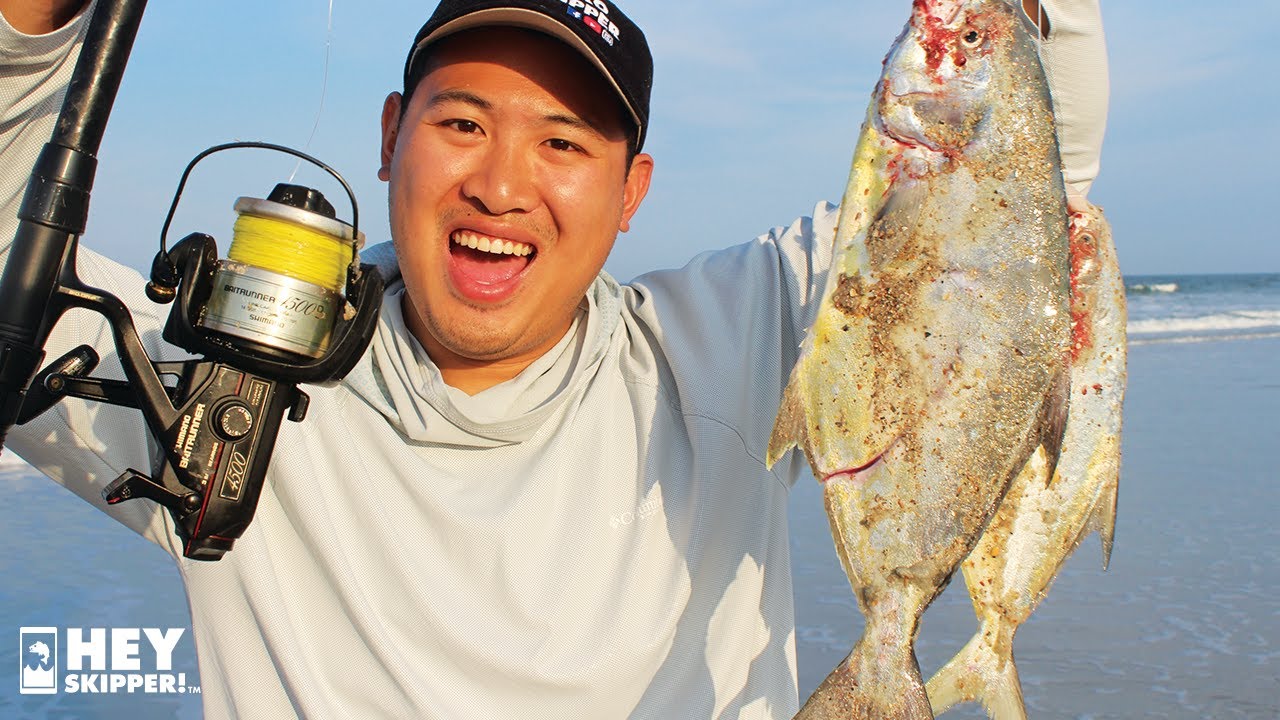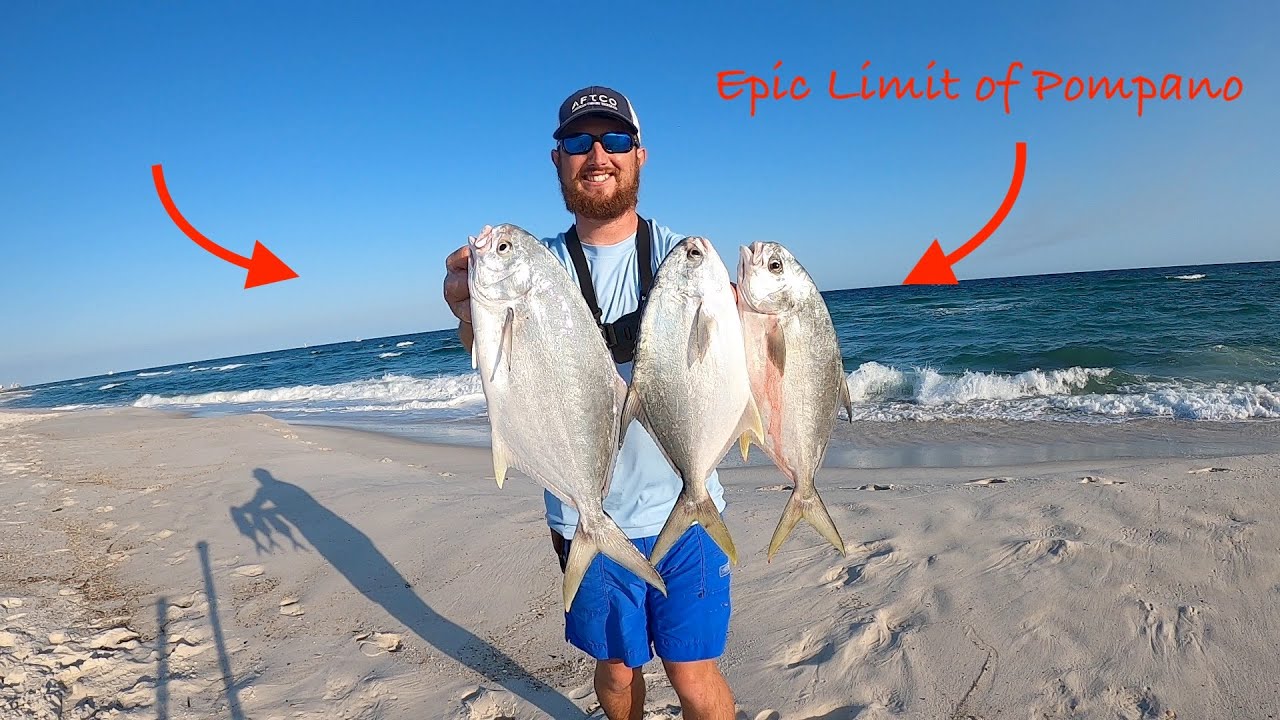
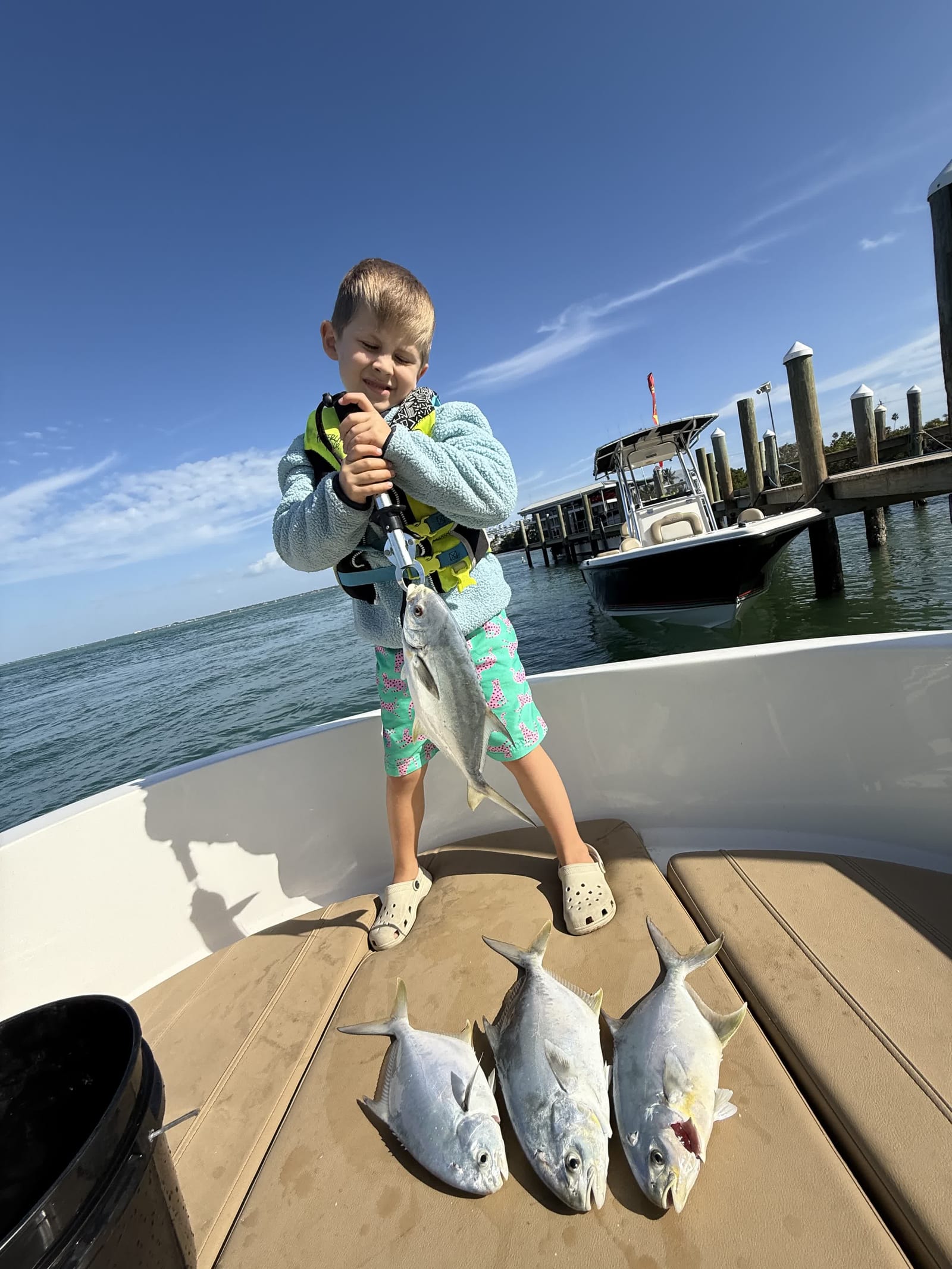
Pompano run through Sarasota twice a year — March through May and again October through December — and the two most reliable spots in the region are Big Sarasota Pass and New Pass on a moving tide. In the surf, they feed in the first trough, often 10–30 yards off dry sand, on sand fleas and small crustaceans. A 3/8–1/2 oz banana jig hopped along the bottom is the whole local method.
When do pompano run in Sarasota?
Ideal water is roughly 65–78°F, which is why the fishery peaks in spring and fall and slows in the July heat.
| Month | What to expect |
|---|---|
| January | Deep grass flats and passes in mild winters; surf bite on warm afternoons |
| February | Deep flats with trout and bluefish; passes on strong tides |
| March | Spring surf run begins — beach troughs and passes |
| April | Peak — Big Pass, New Pass, Venice jetties, beaches |
| May | Good early, tapering as water passes ~80°F |
| June–July | Slow; scattered fish in the passes at first light |
| August | Deep grass flats mixed with Spanish mackerel and bluefish |
| September | Improving as water cools |
| October | Fall run — surf and passes reload |
| November | Strong — passes and beach troughs |
| December | Good in mild years; sheepshead-pompano mix at the Venice jetties |
The Visit Sarasota monthly fishing reports track this cycle month by month. One counterintuitive local pattern: a slight chop with mildly stirred (not muddy) surf out-fishes flat-calm clear water, because stirred sand exposes the sand fleas pompano root for. Two or three days after a cold front settles is prime.
Where can I catch pompano in Sarasota?
- Big Sarasota Pass and New Pass — the most reliable spots in the area. Drift the channel edges and bars, jigging bottom on a moving tide. Incoming through the first hours of outgoing is favored.
- Venice North and South Jetties, Venice Fishing Pier — the region’s top shore-access pompano spots. Info at Venice Jetty fishing.
- Surf beaches — Siesta Key (first trough, 10–30 yards out), Turtle Beach, Lido, Casey Key, Nokomis, Manasota Key, and the Anna Maria Island beaches at Coquina and Cortez. Shore-bound anglers should start with the Siesta Key surf fishing guide and our Siesta Key area page.
- Longboat Pass and the sand bars inside it.
- Deep grass flats of Sarasota Bay in 8–10 ft — the under-the-radar winter pattern. Pompano skip on the surface when a boat runs the flat; when you see skippers, stop and fish.
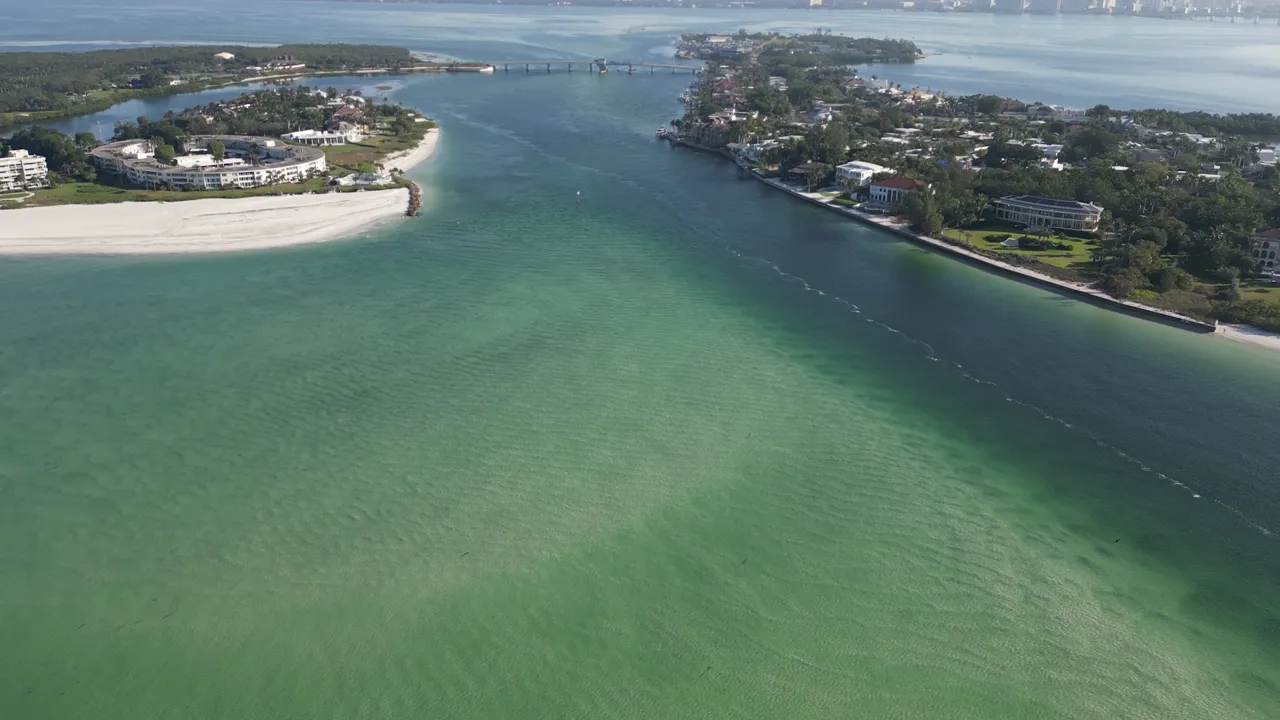
The passes turn on hard through a falling tide.
What’s the best rig and jig for pompano?
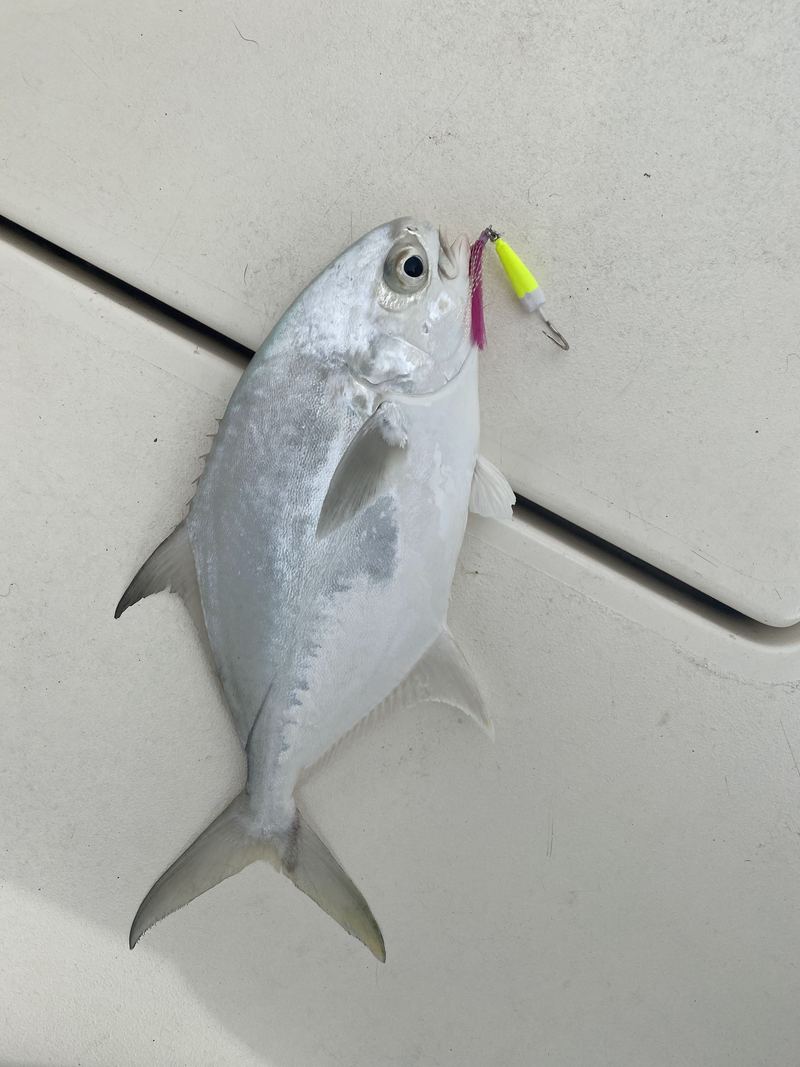
In the passes: jig. 3/8–1/2 oz banana-style jigs — Doc’s Goofy Jig is the local standard — in yellow, pink, chartreuse or white. Tie a teaser fly 18 inches above the jig. Hop it along the bottom and stay in contact; the bite comes on the fall. Tackle: a 3000 spinning reel, 10 lb braid, 20 lb fluorocarbon leader.
In the surf: bottom rig. The classic two-hook pompano rig with a 2–4 oz Sputnik or pyramid sinker, #1–1/0 circle hooks, and the orange/yellow floats and beads that lift baits off the bottom. Baits, in order:
| Bait | Notes |
|---|---|
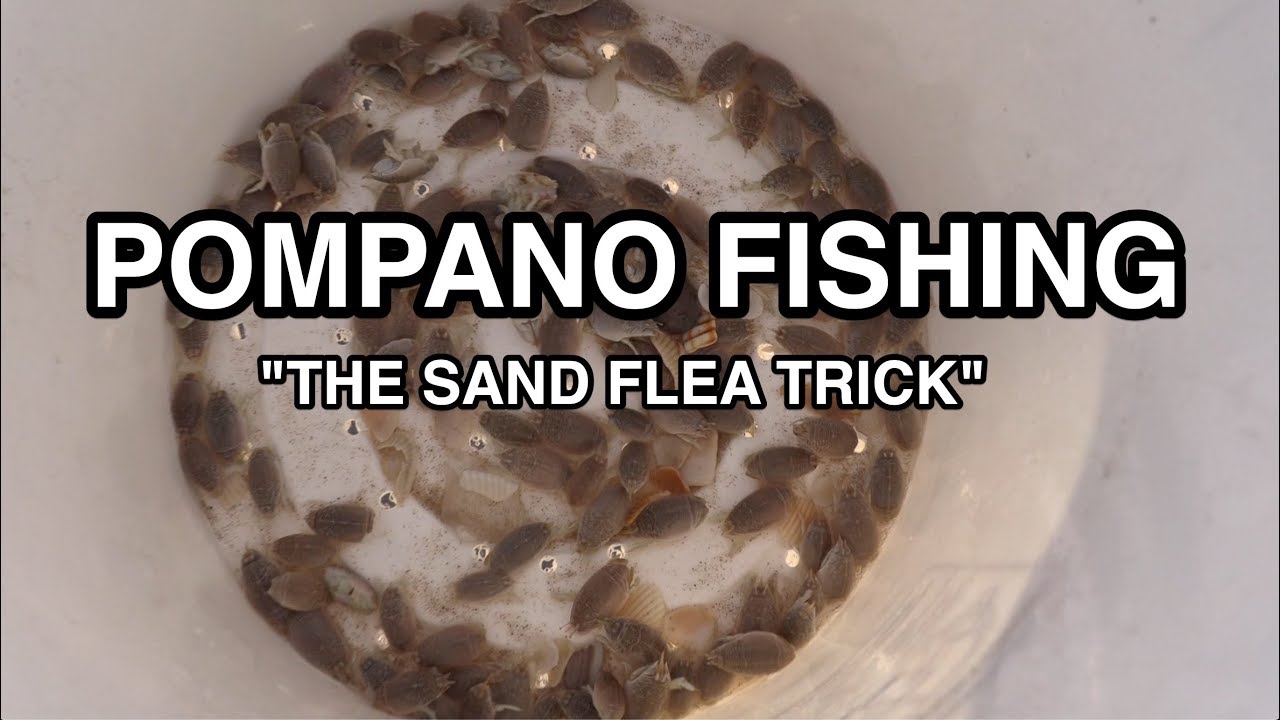
| Live sand fleas | Rake them from the swash zone at your feet — the #1 natural bait |
| Fresh-cut shrimp | Always works; re-bait often |
| Fishbites (EZ Flea, Crab) | Synthetic strips that now rival natural bait among serious surf anglers; stay on the hook through catfish |
Use a 9–12 ft surf rod to hold bottom past the bar. And read the beach before you cast: fish the troughs and holes — the darker water between the sand and the outer bar — and cast to their edges, not for maximum distance. Most surf pompano are caught embarrassingly close to shore.
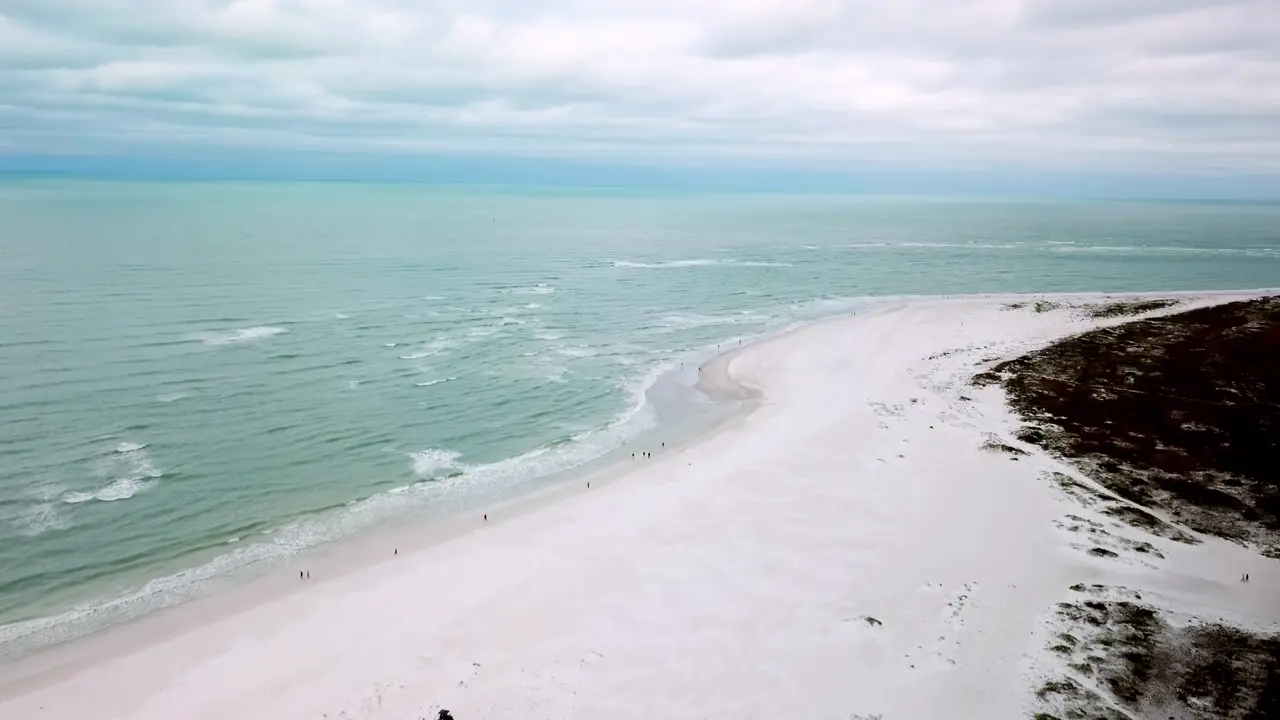
Most surf pompano eat in the first trough, feet from the sand.
What’s the difference between a pompano and a permit?
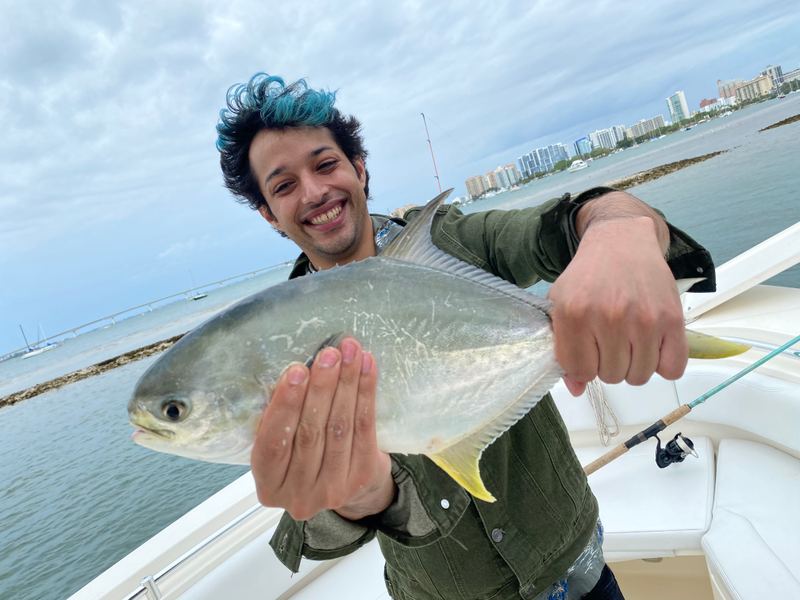
They share water and look alike at hand size, and the rules are different, so this matters before anything goes in the cooler. FWC’s species profiles give the marks that hold up in hand:
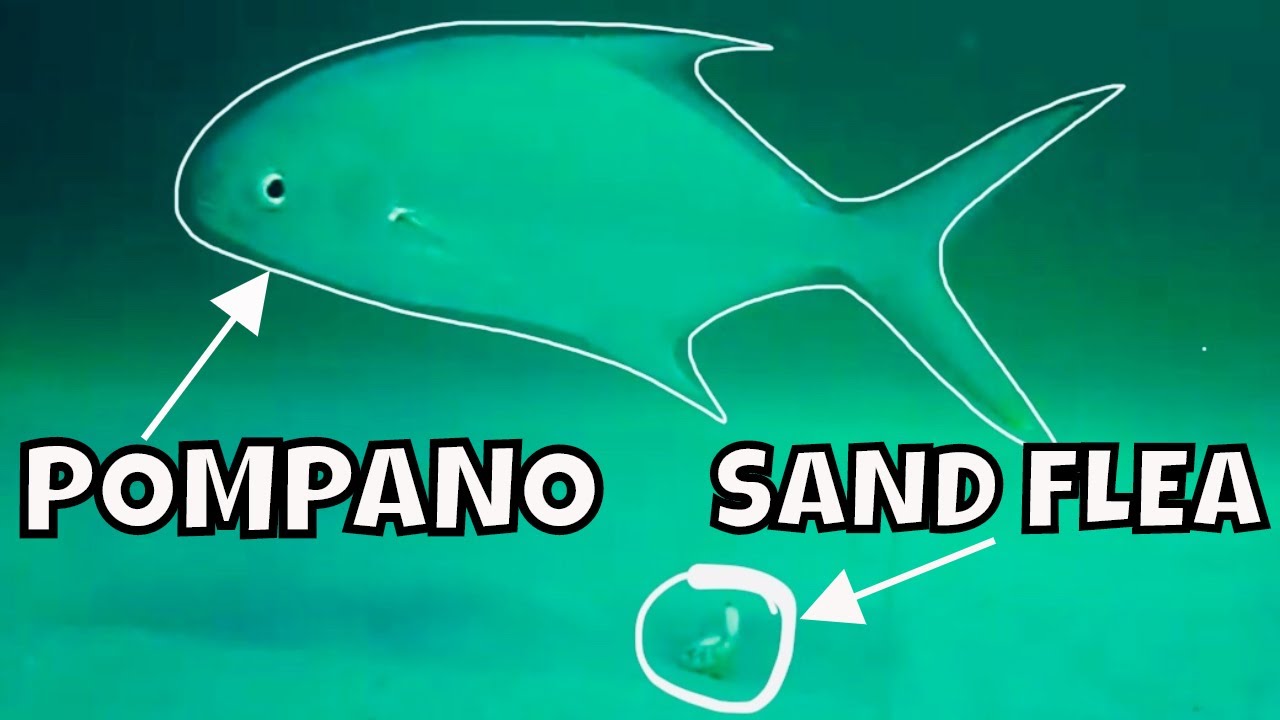
- Pompano — the dorsal fin starts in front of the anal fin, the tail fork is wide, and there are no teeth on the tongue. FWC lists the species to 24 inches and 8 lb.
- Permit — the dorsal fin starts over the anal fin, the body is deeper, the forehead humps before it slopes back, the tail fork is narrow, and small permit have teeth on the tongue. Common to 50 lb.
The limits differ too. In Sarasota — outside FWC’s Special Permit Zone, which covers south Florida below Cape Florida and Cape Sable — permit run on a slot: not less than 11” or more than 22” fork length, 2 per harvester, with one fish over 22” allowed inside that two. Pompano is an 11” minimum and 6 per harvester. If a “big pompano” looks too deep-bodied, treat it as a permit until proven otherwise. Side-by-side ID is on the FWC Florida pompano profile and the FWC permit profile.
What are the 2026 pompano regulations in Florida?
| Item | 2026 rule |
|---|---|
| Minimum size | 11” fork length |
| Bag limit | 6 per harvester per day |
| Season | Open year-round |
| Allowed gear | Hook and line, cast net, beach or haul seine only |
| Prohibited gear | Multiple hooks with live or dead natural bait; snatching |
Pompano regulations are published on the FWC permit and pompano page; the FWC quick chart PDF is a handy pocket reference. A saltwater license is required — shore-bound residents can get the free shoreline license (FWC license info). Verify current rules before you fish.
Florida record: 8.25 lb, Port St. Joe, 1999 (state records). Typical Sarasota fish run 1–3 lb — and they’re among the highest-priced fillets in Florida for a reason.
Are pompano good to eat?
Among the best in Florida — sweet, firm, mild fillets that command some of the highest per-pound prices of any state fish. The classic preparation is whole fish or skin-on fillets broiled with butter and lemon; the fillets are thin, so 3–4 minutes a side covers it. A six-fish limit of 1–3 lb pompano cleans up into a legitimate dinner for four. Ice fish immediately in the surf — a stringer in 80°F water ruins them fast.
FAQ
When do pompano run on the Gulf coast near Sarasota? March–May and October–December, with April and the late-fall weeks the most consistent. Water between 65 and 78°F is the window.
Can you catch pompano from the Venice jetty or pier? Yes — the Venice jetties and Venice Fishing Pier are the best shore-access pompano spots in the region during both runs.
How do you catch sand fleas? Rake the swash zone where waves recede on any Sarasota beach. A $30 sand flea rake fills a bait bucket in 20 minutes during the run.
How many pompano can you keep in Florida? Six per person per day, 11” fork length minimum, open year-round.
Are Fishbites really as good as live bait? For surf pompano, close enough that many regulars fish one natural bait and one Fishbite per rig. They stay on the hook far longer.
Related reading
The pass jigging that produces pompano runs right alongside Spanish mackerel blitzing bait on the same tides, and the fall reload coincides with tripletail showing on the trap buoys and cobia moving down the coast. Bay-side, the deep flats that hold winter pompano also hold redfish and trout — one January tide can cover all of it.