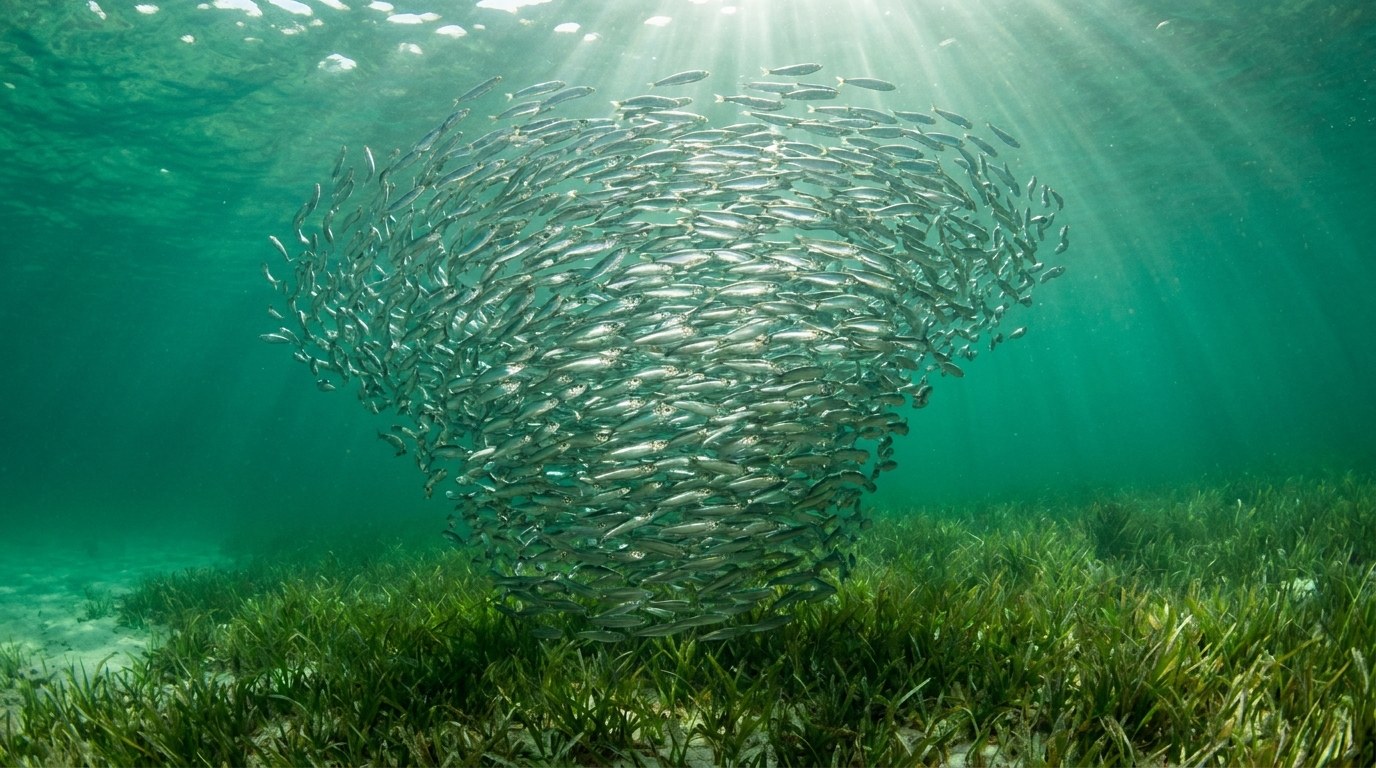
A livewell of whitebait is what most inshore trips here are built on. Get it right and you start the day with a few hundred scaled sardines; get it wrong and you spend the first two hours of good light throwing at bait that has already sunk. Below: net spec, the throw, chum recipes, named local flats, and keeping the bait alive.
The short version: an 8–10 foot net with the right mesh, thrown over a chummed grass flat, emptied straight into a round high-flow livewell with the water turning over hard. Everything below is the detail that makes that sentence work.
What net do you need for whitebait?
The net is where beginners overspend on radius and underthink mesh. Mesh matters more.
| Spec | Whitebait / scaled sardine | Greenbacks / threadfin |
|---|---|---|
| Mesh | 3/8 in | 1/4 in |
| Radius | 8 ft minimum, 10 ft experienced | 8–10 ft |
| Lead | ~1–1.5 lb per radius ft; go lighter (1–1.3) on grass | Same |
Run 1/4 inch mesh if you’re in doubt — greenbacks and threadfins gill-stick and die in larger mesh, and a 1/4 inch net still handles scaled sardines. Radius is a trade: bigger nets load more bait per throw but are harder to throw all day. Eight feet is the working minimum; ten is the experienced choice. On the shallow grass flats go lighter on the lead (about 1–1.3 lb per radius foot) — it pulls less grass, sinks fast enough in 2–4 feet of water, and lets you make repeat throws without wearing out. Panel and sizing detail: gfreports cast-net guide and Florida Sportsman on cast nets.
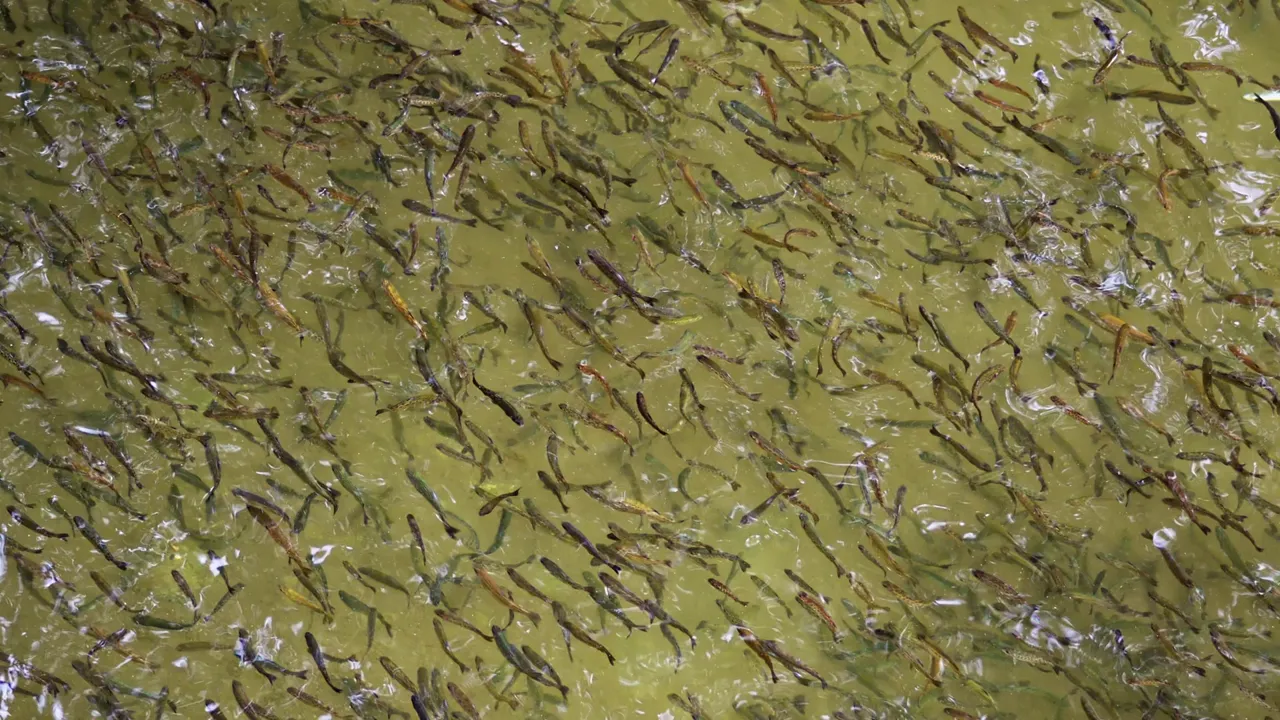
Look for a dark cloud over light sand, or a nervous shimmer on top.
How do you find whitebait?
You can net whitebait all day. Most people do it at first light for the obvious reason — that is when they are leaving the dock — not because the bait goes anywhere. What gathers a school is chum, not the hour. So the skill is reading the water and setting a slick, at whatever time you are on it. Learn to read the water (what is whitebait):
- Flicking — nervous flashes and shimmer on the surface, sometimes called “the shine.”
- A dark cloud suspended over light sand.
- Subtle surface dimpling as the school works.
- Diving, wheeling birds — terns and gulls hammering a school from above.
- A “push” — a wake of fish just under the surface — or surface “showers” when a predator drives the school up (reading the water).
Get the ID right: the true “greenback” to purists is the Atlantic thread herring — greener back, a long trailing dorsal ray, oilier and more fragile — while the deep-silver single-spot fish is the scaled sardine. Locally the names blur; both are whitebait. Side-by-side: threadfin vs whitebait ID and the FWC scaled sardine profile.
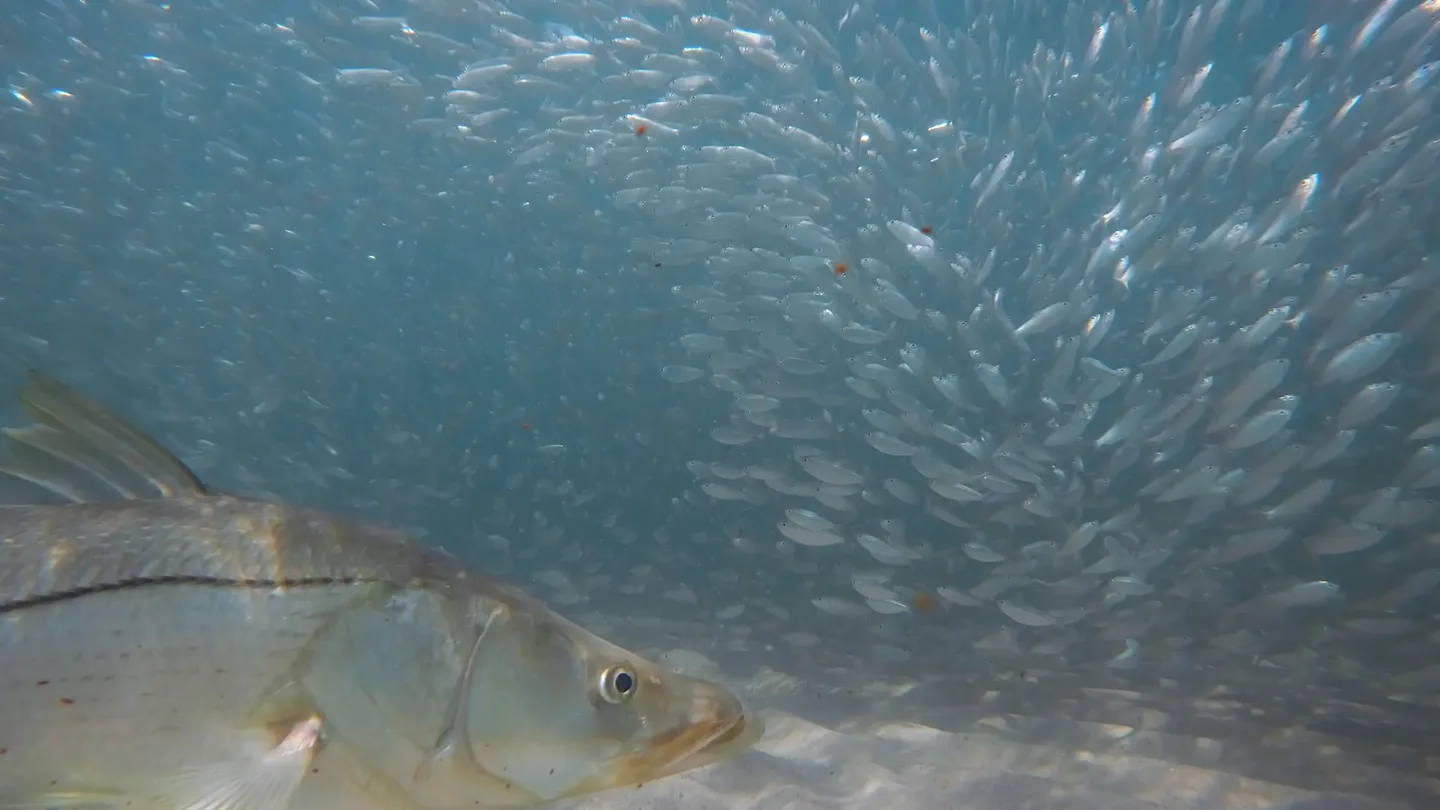
A shower on the surface means a predator has driven the school up.
Chumming — the whole game on the flats
Chum is not optional. It does two jobs: it holds and concentrates the school inside your casting circle, and it separates whitebait from pinfish — whitebait rises and suspends to the chum while pinfish stay glued to the bottom. That’s how you throw on a clean load of bait instead of a net full of pinfish.
Recipe A (Purina): Purina Tropical Fish Food powder mixed with saltwater in a bucket, plus menhaden (“pogie”) oil. Purina comes in 33% or 45% grades (the percentage of menhaden oil in the powder). Optional add-ins: stale bread, oats, canned cat food, chunks of jack mackerel, even glitter for flash.
Recipe B (fish-meal mix): roughly 8 cups fish meal to 2 cups menhaden oil in a half-gallon bucket, thinned with saltwater to a workable slurry — about the same as the “25% menhaden oil / 75% water” clumping mixes guides run. Recipe comparison: bocacoast bait chum.
Cadence: toss two handfuls to start, then a golf-ball clump every 15–20 seconds off the boat while anchored or on the Power-Pole. Sprinkle a handful about 5 feet up-current, let the school stack, then throw. The clumps should sink and rise, pulling whitebait up into the column where your net can cover them.

The load-and-throw
The throw is a “giant Frisbee” — whole arm plus a sharp wrist twist. The rotation and the lead do the work, not muscle. Detail: Marlin on choosing and using cast nets.
- Load over the shoulder (bite the lead line or yoke it on your shoulder) or use the mouthless “no-teeth” load. Whichever you learned, keep it consistent.
- Approach slow and quiet. Kneel low on the flat — whitebait spooks off a wake or a shadow. Ease in with the trolling motor or Power-Pole down, not the big engine.
- Throw for a full flat circle that lands 10–15 feet out, so every lead sinks before the horn line closes. A net that opens half-moon leaves half your bait an escape route.
- Let it sink fully, then a hard hand-line pull to purse the leads before you haul. A soft pull lets the whole school slip out under the net — the most common mistake after a good throw.
- Empty straight into the well. Don’t dump bait on the deck to sort — every second out of water costs you baits.
Practice the throw in the yard before you need it at 6 a.m. A clean flat circle is worth more than an expensive net thrown badly.
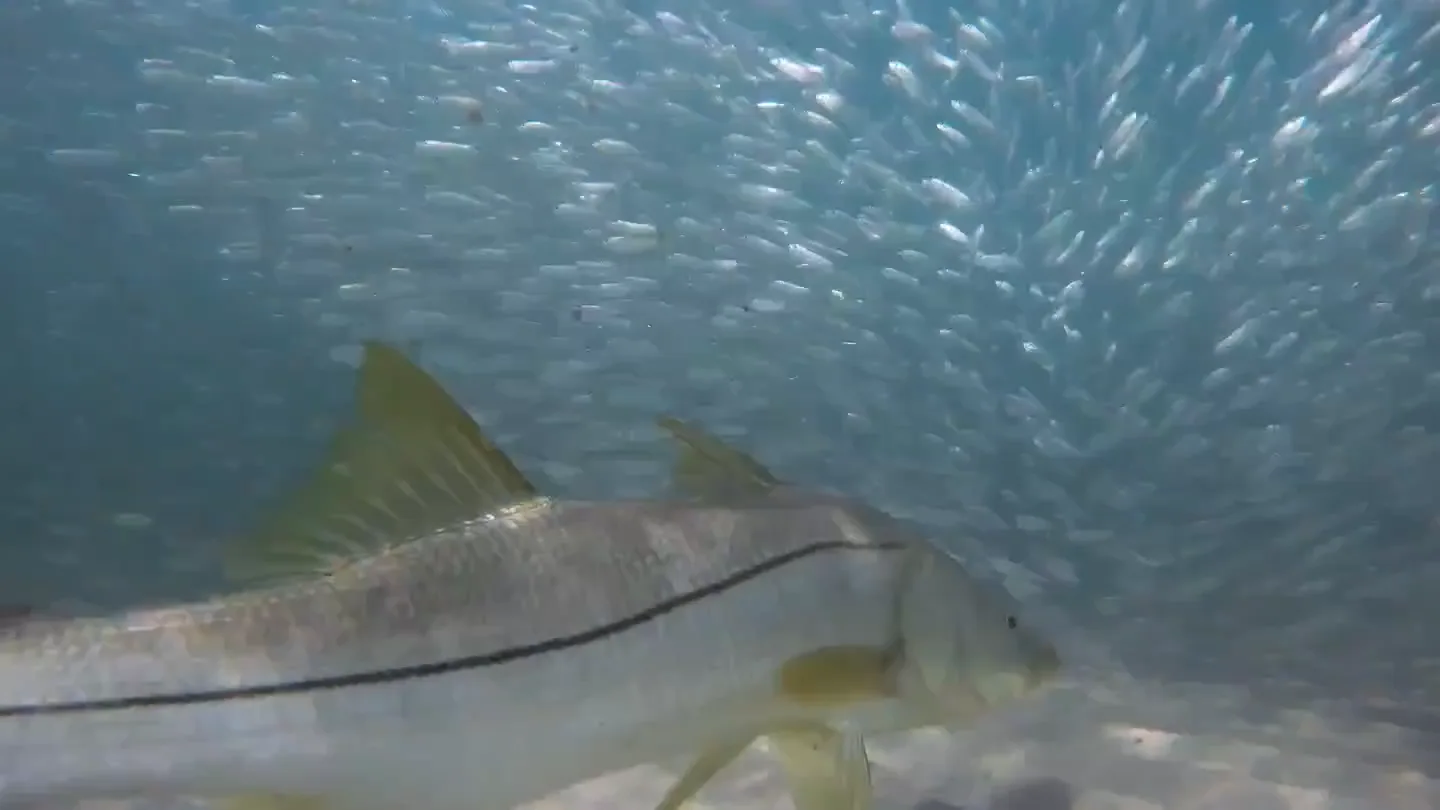
Bait moves onto the two to four foot grass flats as the water warms.
Where do you catch whitebait in Sarasota?
Bait shows first around bridges and channel markers/buoys in early spring, then moves onto the shallow grass flats (2–4 ft) as the water warms. Greenbacks are most productive in summer. Named local spots:
| Spot | Notes |
|---|---|
| Zwicks Channel | Long-standing “great place to catch whitebait.” |
| South of Marker #5 | The bar/flat holds bait in summer. |
| Middle Grounds | Grass flats north of the New Pass sandbar. |
| Big Pass edges | North tip of Siesta Key. |
| New Pass | Lido side, on the flats and bar. |
| Gulf beach troughs | Lido/Siesta/Longboat wash — sight-cast flicking schools in the wash. |
Spot detail: Sarasota GPS locations and best fishing spots in Sarasota. For current bait intel, CB’s Saltwater Outfitters on Siesta and New Pass Grill & Bait Shop on Lido both track where bait is showing. More water in Sarasota’s best fishing spots and the passes and inlets guide.
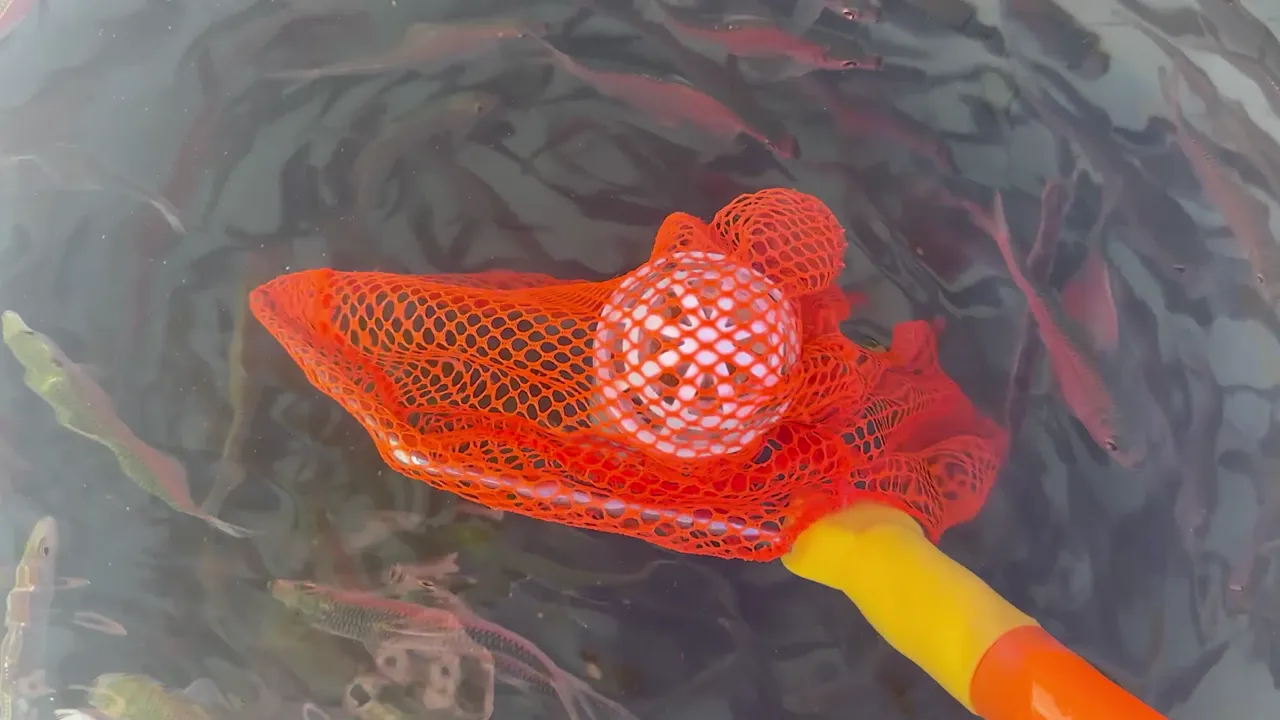
A 30-gallon well wants around 1,260 GPH to stay prime.
Keeping whitebait alive
Scaled baits are oxygen hogs — more demanding than any other bait you’ll catch here. The livewell setup is as important as the net.
- Round or oval tank, no square corners. Water should enter at an angle so the well spins and baits swim into the current like they do in the wild (Marlin livewell 101).
- Open-loop, high-flow — not a bubbler. Pilchards, herring, and sardines need far more dissolved oxygen than pinfish. Run 750+ GPH; a 30-gallon well wants around 1,260 GPH to stay prime (boattest livewells).
- It’s flow, not a headcount. Outrun the pump and you crash oxygen and spike ammonia — a full well turns over dead in an hour. A strong pump on a round well carries a lot of bait; a weak one kills a handful.
- Fine bubbles beat big bubbles; keep the water clean and cool; net dead baits out fast; never put bare (sunscreen or oil) hands in the well (picking the right livewell).
The Florida cast-net rules that apply
Whitebait, greenbacks, and threadfin are unregulated bait species — legal to cast-net with no size or bag limit. But the gear and license rules still bind you: max 14 ft stretched net, two nets per vessel, and a recreational saltwater fishing license required the moment you throw (exemptions for under-16 and residents 65+). Cast-net restrictions apply in some aquatic preserves and near artificial reefs — check the specific water. Full detail: FL recreational gear rules, the FWC regulations guide, and fishing licenses. Verify current rules at myfwc.com before you fish.
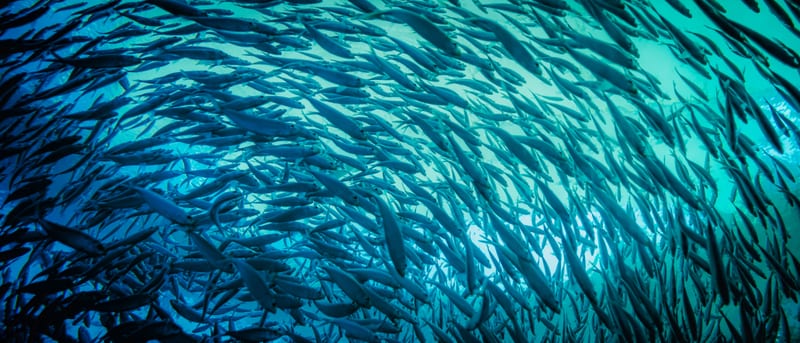
How to Throw a Cast Net
Throwing a net is a physical skill, and reading about it only gets you so far. These are the clearest demonstrations we could find, grouped by what you are actually trying to learn. Nothing plays until you click it.
The Throw
7The whole skill is one motion, and the goal is always the same: the net opens into a flat circle — a pancake — before it hits the water. These are the most-watched demonstrations on the internet, and none of them require putting lead line in your mouth.

How To Throw A Cast Net Step by Step - Captain Mike / ReelReports

Easy Way to Throw a Cast Net! Throwing The Easy Way!

How to Throw A Cast Net - Easiest and Best Way!!

How To Throw A Cast Net, Perfectly, Every time!

Best Way to Throw a 5+ ft. Cast Net Consistently (Not Using Your Mouth!!)

How to throw a cast net - BEST WAY - Any size, No Teeth, Stay Clean! (By Captain Cody)

How To Throw A Cast Net (with or without using your mouth)
From a Boat, Dock, Kayak or the Beach
5The throw changes with what you are standing on. Less room, less height, and an unstable platform each want a different setup than an open boat deck.
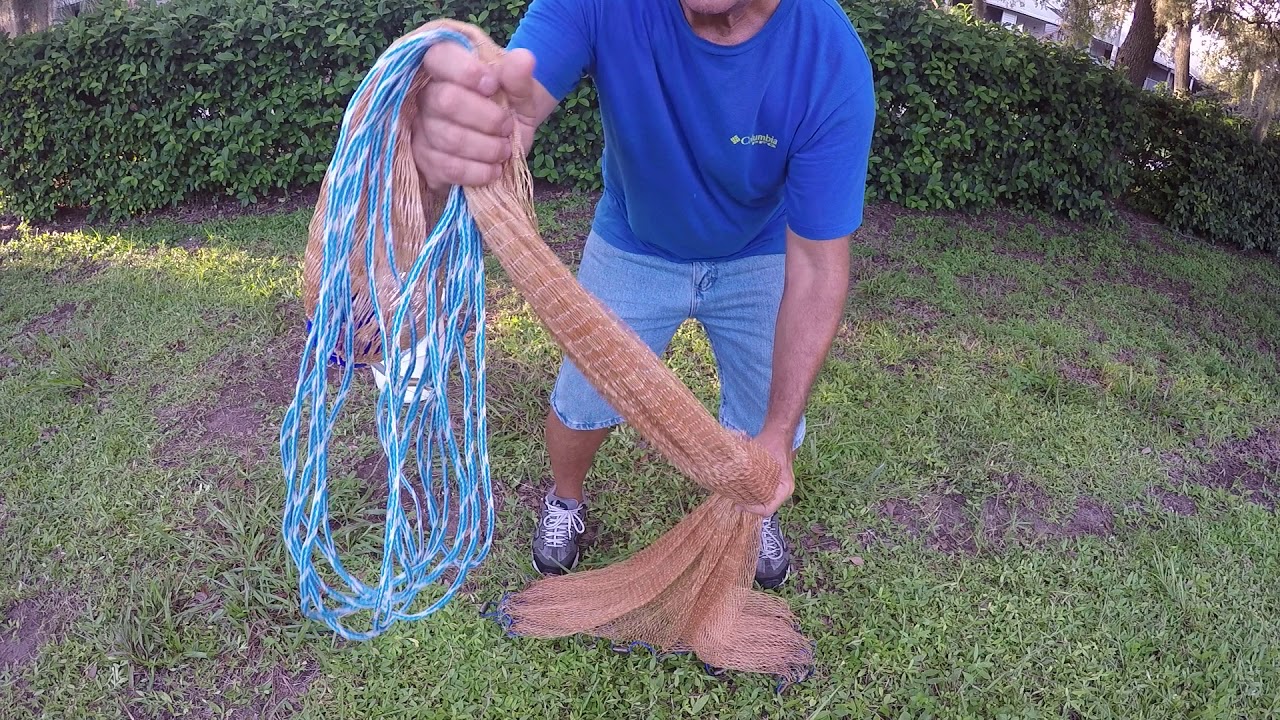
How To Easily Throw a Six or Eight Foot Cast Net From Shore, Boat or Kayak

Mastering the Mullet Run: Cast Net Techniques from the Dock for Live Bait Mullet

How to throw a 12' Calusa Castnet from a dock

How To Throw A Cast Net From A Kayak Without Falling Over

HOW TO CAST A 6 FOOT CAST NET - CATCHING YOUR OWN BAIT ON THE BEACH (FF Episode 19, season 1)
Finding & Chumming the Bait
5A perfect throw over empty water catches nothing. Reading a flat, mixing chum that pulls whitebait into range, and knowing what you are looking at before the net leaves your hand.

Fish Chumming DIY: How To Make The Best Saltwater Fish Chum

"How To" cast net video - pilchards in Biscayne Bay, Florida | Peter Miller Fishing

HOW TO CATCH MULLET: QUICK, Cheap & Easy

How to Locate & Cast net Greenbacks/Bait with the Perfect Chum
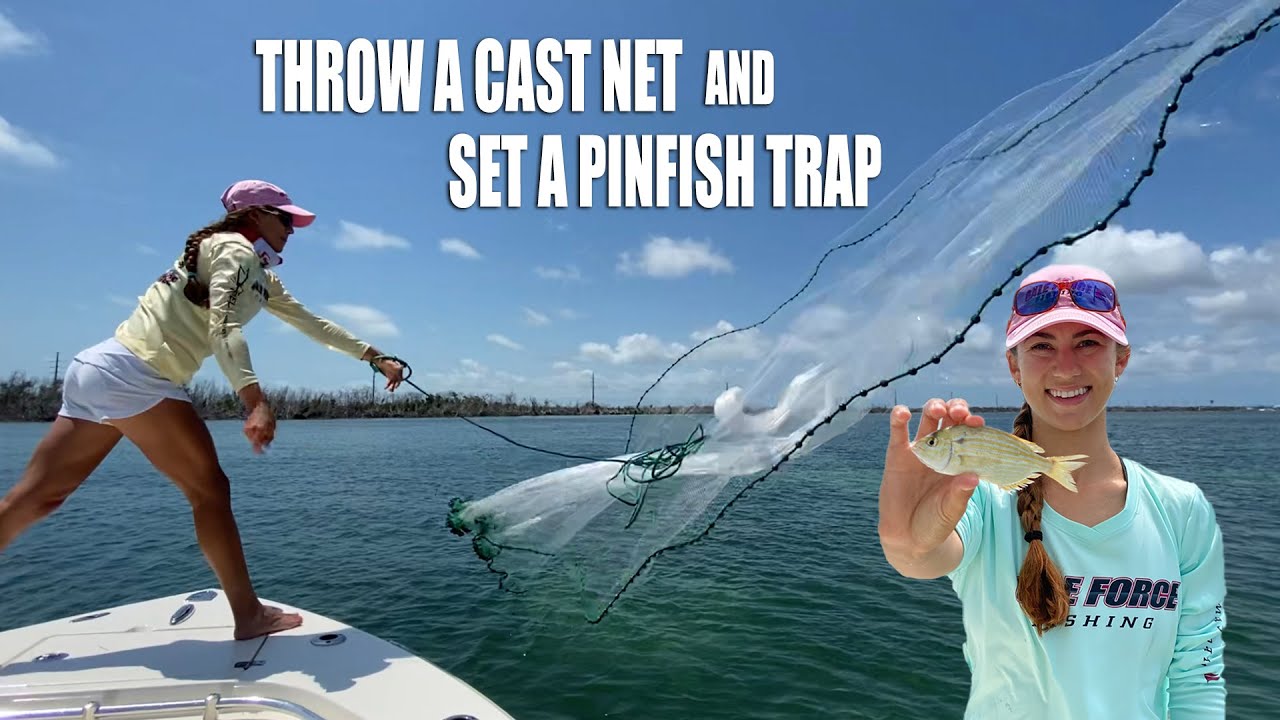
HOW TO THROW A CAST NET & SET A PINFISH TRAP 🥞🐟 Catch bait in the Florida Keys | Gale Force Twins
Choosing the Net
3Radius, mesh and lead weight decide what you can catch and whether you can throw it all morning. The thinnest subject on this page for video, and the one most people get wrong when buying.
HOW TO Choose a Cast Net for Live Bait CASTNET BASICS

What Makes A Good Cast Net & How To Choose The Right Cast Net [Quality, Lead Line Size]

8 Secrets for How to Choose a Cast Net
Repair & Care
3A net is a consumable that does not have to be. Mending a hole takes a needle and a few minutes; rinsing and drying it properly is the difference between two seasons and ten.

How To Repair A Cast Net Quickly and Easily

How to repair your cast net

How to Repair and Fix a Cast Net : Holes and Braille Line Repair
FAQ
What size cast net is best for whitebait? An 8 to 10 foot radius net. Use 1/4 inch mesh for greenbacks and threadfin (they gill-stick in bigger mesh) or 3/8 inch for scaled sardines. Run 1/4 inch if unsure.
Why do I keep netting pinfish instead of whitebait? You’re throwing without chum, or throwing too soon. Chum lifts whitebait off the bottom while pinfish stay down — let the clumps work for a minute and throw when you see whitebait suspended near the surface.
Do I need chum to catch whitebait? On the flats, effectively yes. Chum concentrates the school in your casting circle and sorts whitebait from pinfish. Off bridges and markers in spring you can sometimes throw on a visible school without it.
Why does my bait keep dying? Almost always the well — too small a pump, square corners, overcrowding, or oil/sunscreen from bare hands. Run a round high-flow well, keep the water turning hard, and net dead ones out immediately.
Related
Now fish it: the live bait technique guide covers circle-hook rigs, free-lining, and live-chumming a flat for snook, redfish, and seatrout. For other baits, see catching shrimp and crabs and catching pinfish and baitfish. Start at the complete live bait guide for the overview, and check bait and tackle shops for the days you’d rather buy it.