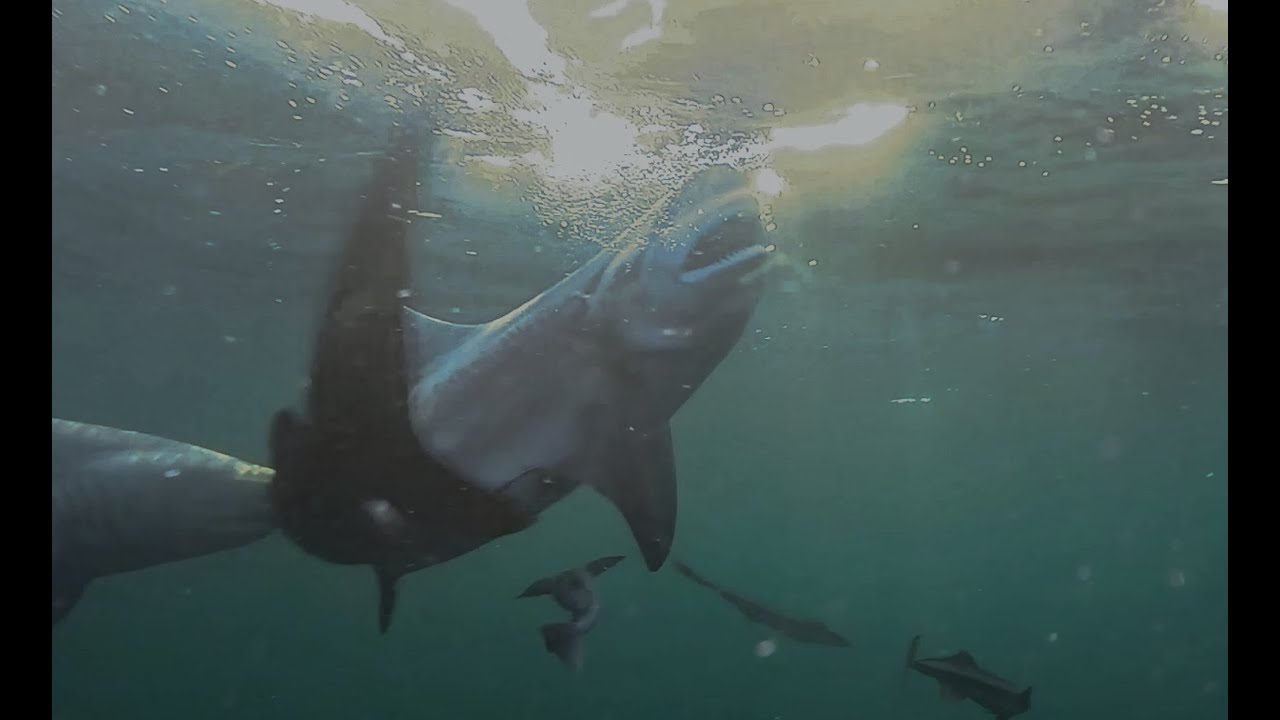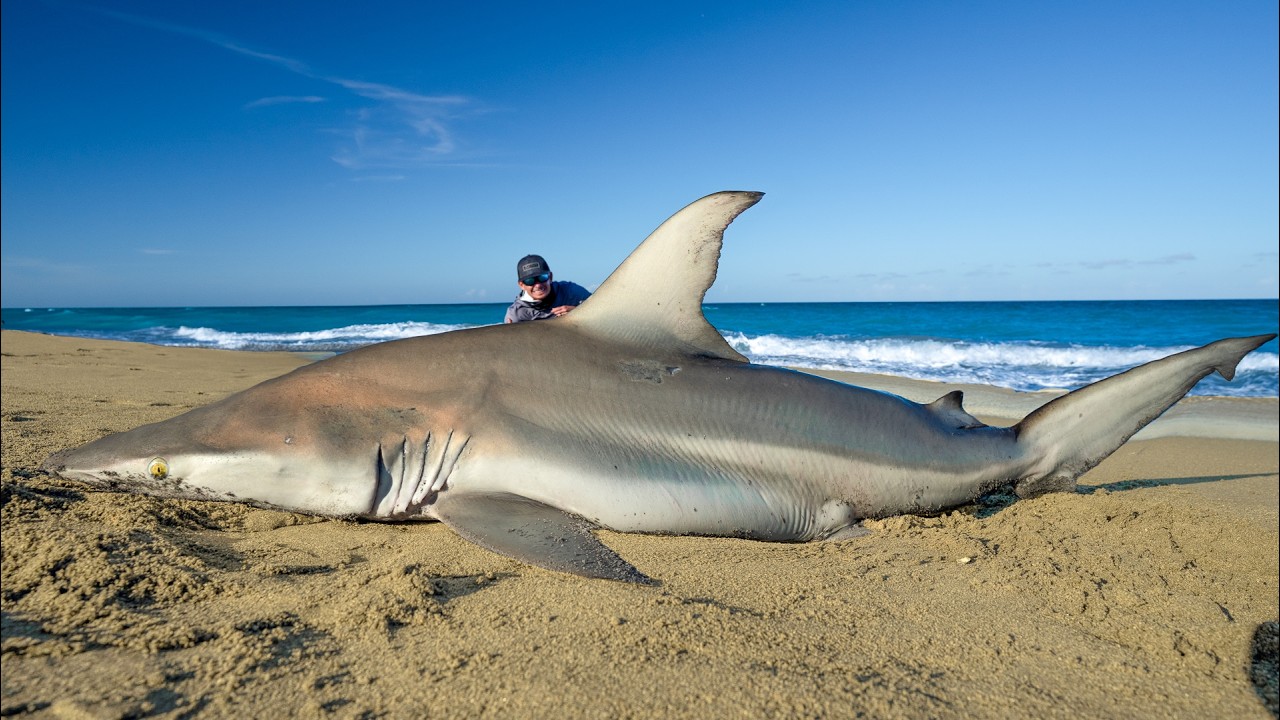
Blacktip sharks are Sarasota’s bread-and-butter big fish: 3–5 ft, 20–60 lb, in the passes, off the beaches, and behind every summer bait school from April through October. Fresh-cut ladyfish or mullet on a 7/0 circle hook with a short wire trace, soaked on a pass edge on outgoing tide, is the standard play. They jump, they run 100 yards at a time, and they’re one of the few sharks you can legally keep.
When is blacktip shark season in Sarasota?
There’s no closed season — the limiting factor is water temperature. Blacktips push inshore when the coastal gulf climbs past roughly 70°F and stay through October. Sarasota Bay itself is documented shark habitat: researchers tagging here have handled blacktips, bonnetheads, and blacknose sharks, including newborns — nursery water (Sarasota Magazine, tagging sharks in Sarasota Bay).
| Month | What to expect |
|---|---|
| January–March | Slow inshore; scattered fish in the gulf on warm stretches |
| April | Arrival — passes and beaches wake up past ~70°F |
| May–July | Peak — bait schools, tarpon crab flushes, pass edges; sharks everywhere |
| August–September | Strong — juveniles thick in the bay, adults on beach bait pods |
| October | Fall bait flush keeps them fed until the first fronts |
| November–December | Most fish move offshore or south |
May through July, anyone soaking a bait near tarpon water will meet blacktips — often uninvited.
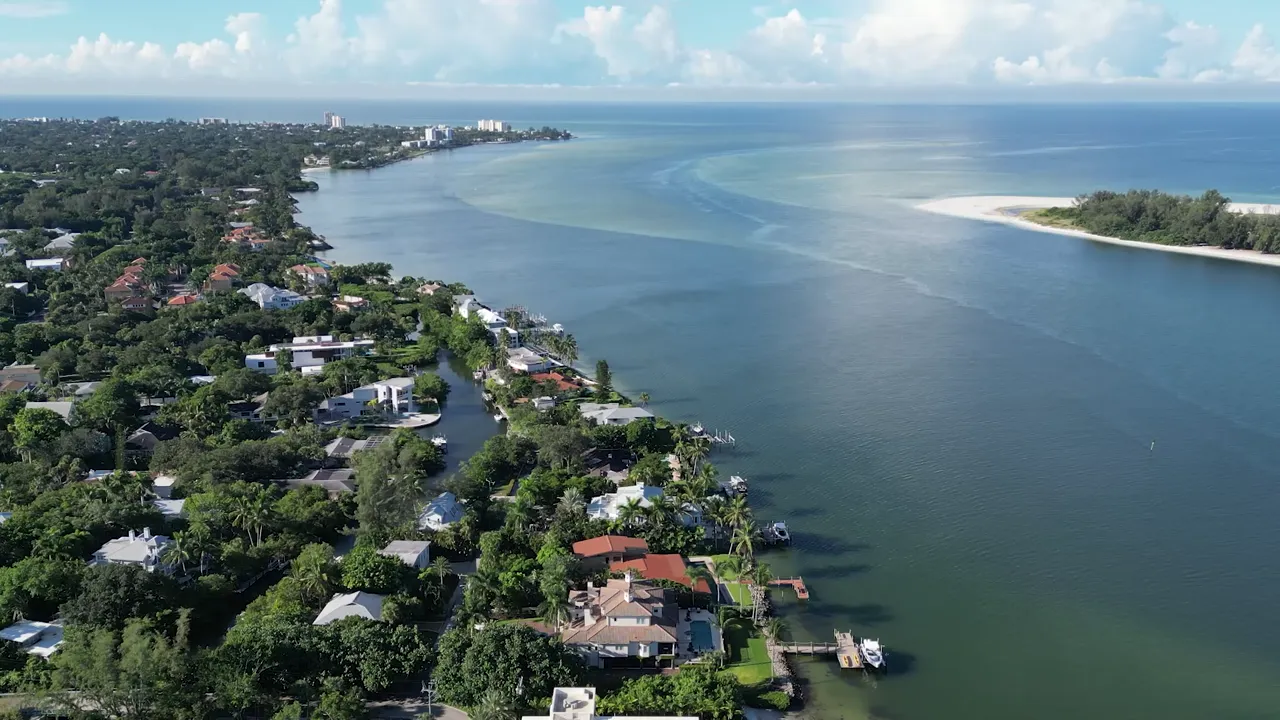
On an outgoing tide the pass flushes bait, and blacktips wait on the channel edge.
Where can I catch blacktip sharks in Sarasota?
- The passes — Big Sarasota Pass, New Pass, and Longboat Pass on outgoing tide, when the bay flushes bait, ladyfish, and crab past waiting predators. Anchor the channel edge, soak cut bait down-current.
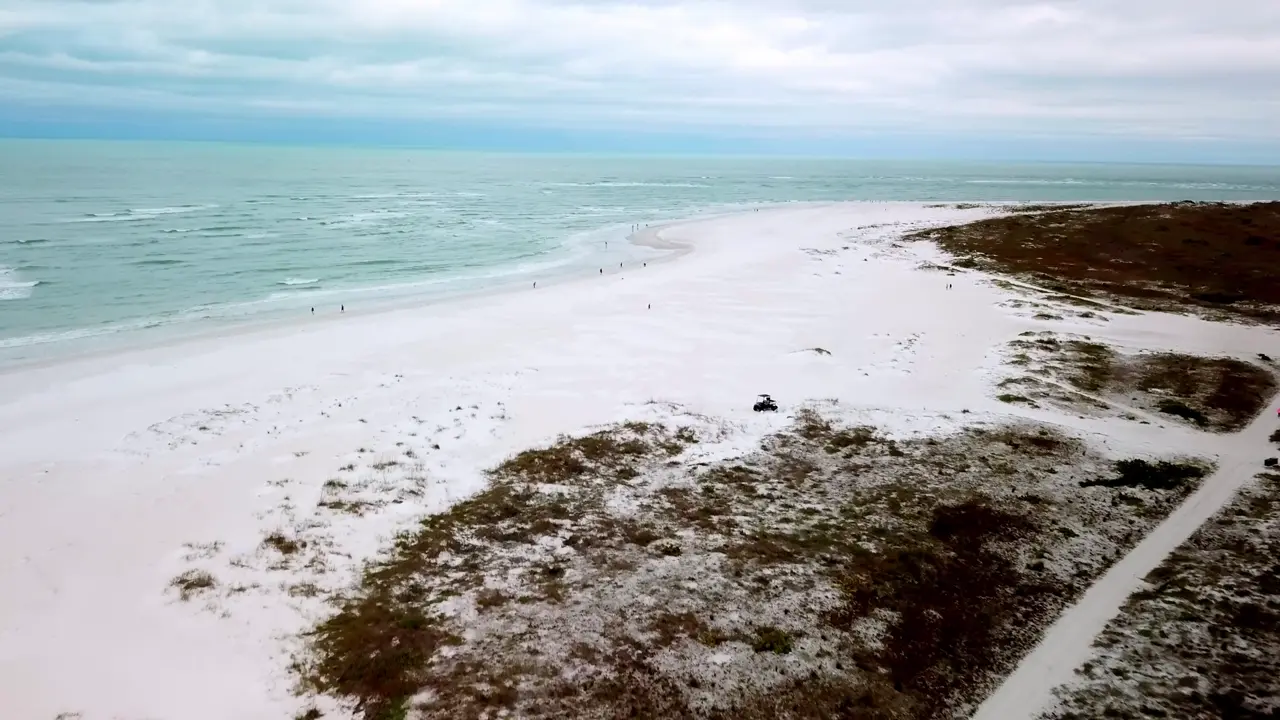
- Beach troughs — Lido, Siesta, Turtle Beach, Casey Key. Summer blacktips run the first drop-off, sometimes visible from the sand at first light.
- Sarasota Bay — channel edges off the grass flats, the deep water off Long Bar, and anywhere ladyfish and Spanish mackerel schools concentrate. Hook a ladyfish and something eats half of it? Blacktips.
- Nearshore reefs — the M-reef line in 40–60 ft holds sharks behind the same bait that stacks kings; official coordinates at the Sarasota County artificial reef page, local list at our artificial reefs reference.
- From shore — legal with the FWC shore permit (below). The Venice jetty area and quieter stretches of beach after dark are the classic land-based zones; use the surf and shore fishing guide for access.
What’s the best rig and bait for blacktip sharks?
- Bait: fresh beats everything. Cut ladyfish is the local number one — catch them on the spot and use them within the hour. Fresh mullet, jack, threadfin, and live pinfish all work. Half a false albacore is premium shark bait when you have one.
- Rig: 5/0–8/0 non-offset, non-stainless circle hook (required with natural bait), 12–18” of #7–#9 single-strand wire or 480 lb cable, then 4–6 ft of 60–80 lb mono top shot as rub leader. Blacktip teeth cut fluorocarbon; their skin wrecks light leader.
- Presentation: dead bait on bottom with just enough lead to hold, or a live bait under a float drifted down a pass edge — basic bottom fishing with heavier hardware.
- Tackle: 5000–8000 spinning, 40–65 lb braid, or a 20–30 lb class conventional. First run goes 100+ yards; set the drag before the bait goes out.
- Fight fast: long fights on light gear kill sharks that were meant for release. FWC’s own shark-smart guidance is to minimize fight time and handling; heavy-enough tackle is how you do that.
Nearshore, blacktips hold behind the bait on the reef line in 40–60 ft.
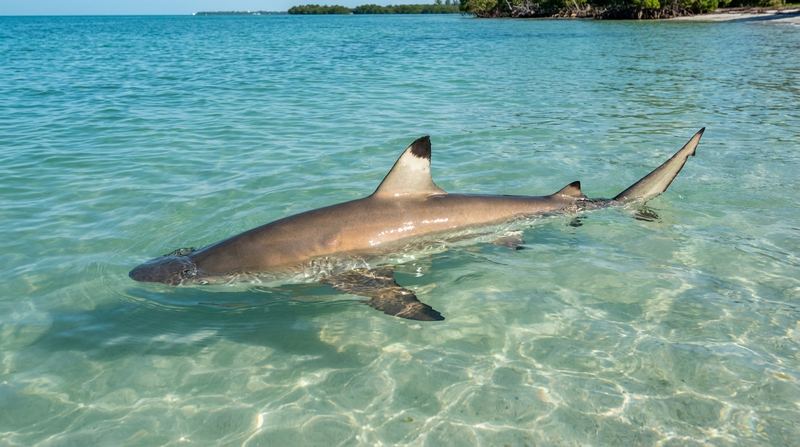
Blacktip or spinner shark — how do you tell?
Both species blitz Sarasota bait schools, both leap and spin on the hookup, and they look nearly identical. The regulations don’t treat them the same, so the ID matters.
| Feature | Blacktip | Spinner |
|---|---|---|
| Anal fin | Plain — no black tip | Black-tipped like the rest |
| Snout | Shorter, stouter | Longer, more pointed |
| Legal minimum | None (Group 1) | 54” fork length (Group 2) |
Check the anal fin first. A “blacktip” with a black-tipped anal fin is a spinner, and a spinner under 54” fork goes back. Full species lists at the FWC shark regulations page.
What are the 2026 shark fishing regulations in Florida?
| Item | 2026 rule |
|---|---|
| Blacktip minimum size | None — Group 1 carries no minimum |
| Bag limit | 1 shark per person per day |
| Vessel limit | 2 sharks per vessel per day, even with more than two anglers aboard |
| Season | Open year-round |
| Hooks | Non-offset, non-stainless-steel circle hooks required when targeting or harvesting sharks with live or dead natural bait; treble and multiple hooks prohibited with natural bait |
| Required gear | A device capable of quickly cutting the leader or hook, fishing from shore or a vessel |
| Condition | Whole until landed — heads, tails and fins attached |
| Prohibited species | 29 species, including great, scalloped and smooth hammerhead, tiger, lemon, sandbar and dusky — keep them in the water with the gills submerged and release without delay |
Source: FWC shark regulations, read 22 July 2026. Rules change — verify before you fish.
Two more FWC items sit under shark-smart tackle as guidance rather than law, and both are worth following: use heavy tackle, a minimum of 80 lb test, and flatten or file down your hook barbs.
Shore-based rules are stricter. Anglers 16 and older targeting sharks from any beach, pier, jetty, bridge, or causeway need the free annual Shore-based Shark Fishing Permit, issued after passing the online course at MyFWC.com/SharkCourse. Anglers under 16 do not need the permit, but they do need the course unless they are fishing with someone who holds one. Chumming is prohibited when fishing from the beach — it stays legal from a pier or a boat. Prohibited species must stay in the water with the gills submerged; never drag one up the sand for a photo. A saltwater license is required on top; see the licenses guide.
Are blacktip sharks good to eat?
Blacktip is the most commonly eaten shark in Florida — firm, mild, and good grilled if, and only if, it’s bled and iced the minute it hits the deck. Shark tissue carries urea; slow handling means ammonia-flavored meat. It’s also a high-mercury category — an occasional meal for adults, off the menu for kids and pregnant women. One per person, two per boat is the legal ceiling regardless. Most Sarasota charter fish are released; if that’s your plan, our catch and release best practices page covers dehooking and in-water release, and Mote Marine Laboratory explains why mature coastal sharks are worth more swimming.
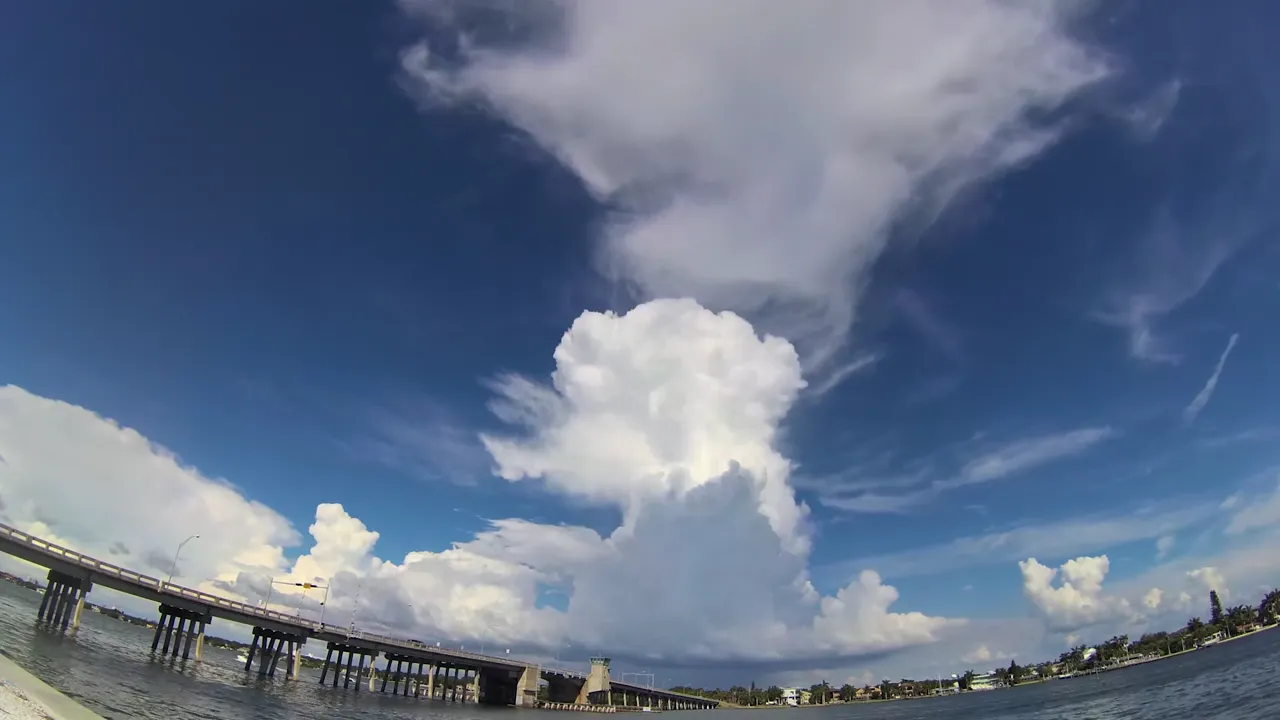
Thunderheads stack up inshore while the beach bite is still on.
FAQ
When do blacktip sharks arrive in Sarasota? April, once the coastal gulf passes ~70°F. Peak action runs May through September.
Can you keep a blacktip shark in Florida? Yes — no minimum size, 1 per person per day, 2 per vessel. It must stay whole until landed.
Can you shark fish from the beach in Sarasota? Yes, with FWC’s free Shore-based Shark Fishing Permit (16 and older), circle hooks, a cutting device, and no chum. Night sessions after the beach crowds leave are the local pattern.
What’s the best bait for blacktips? Fresh-cut ladyfish, caught the same day. Mullet, jack, and bonito chunks are close behind.
Do blacktip sharks jump? Constantly — vertical, spinning leaps on the strike and during the fight. Bow to a jumping shark like you would a tarpon to keep the hook pinned.
How big do blacktip sharks get? The Florida state record is 152.13 lb, taken at Sebastian on 29 October 1987 (Florida Saltwater Records). A Sarasota charter fish is a small fraction of that — 3–5 ft and 20–60 lb is the everyday size.
Related reading
Blacktips shadow the same bait as everything else worth catching here: tarpon in the passes May–July, Spanish mackerel schools spring and fall, and false albacore blitzes in the coastal gulf. The small shovel-headed shark on the flats is a bonnethead — a different, lighter-tackle game. For where to fish when a boat isn’t an option, start with the surf and shore fishing guide.