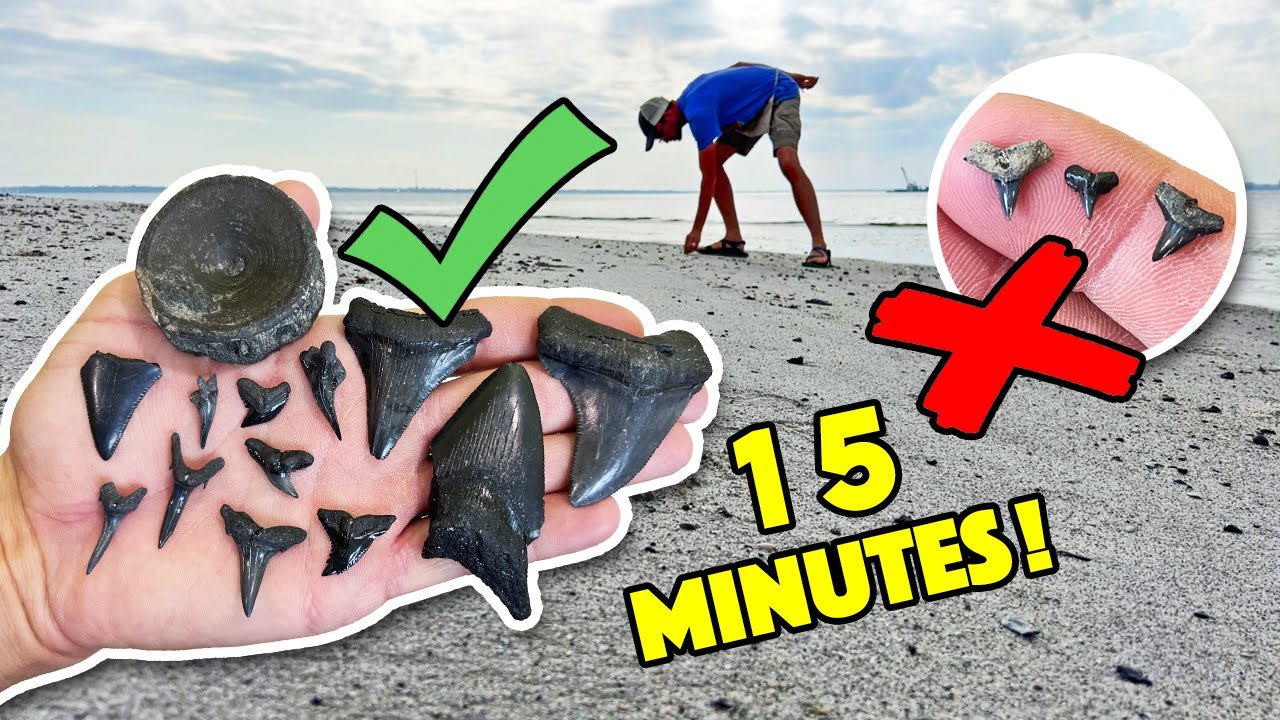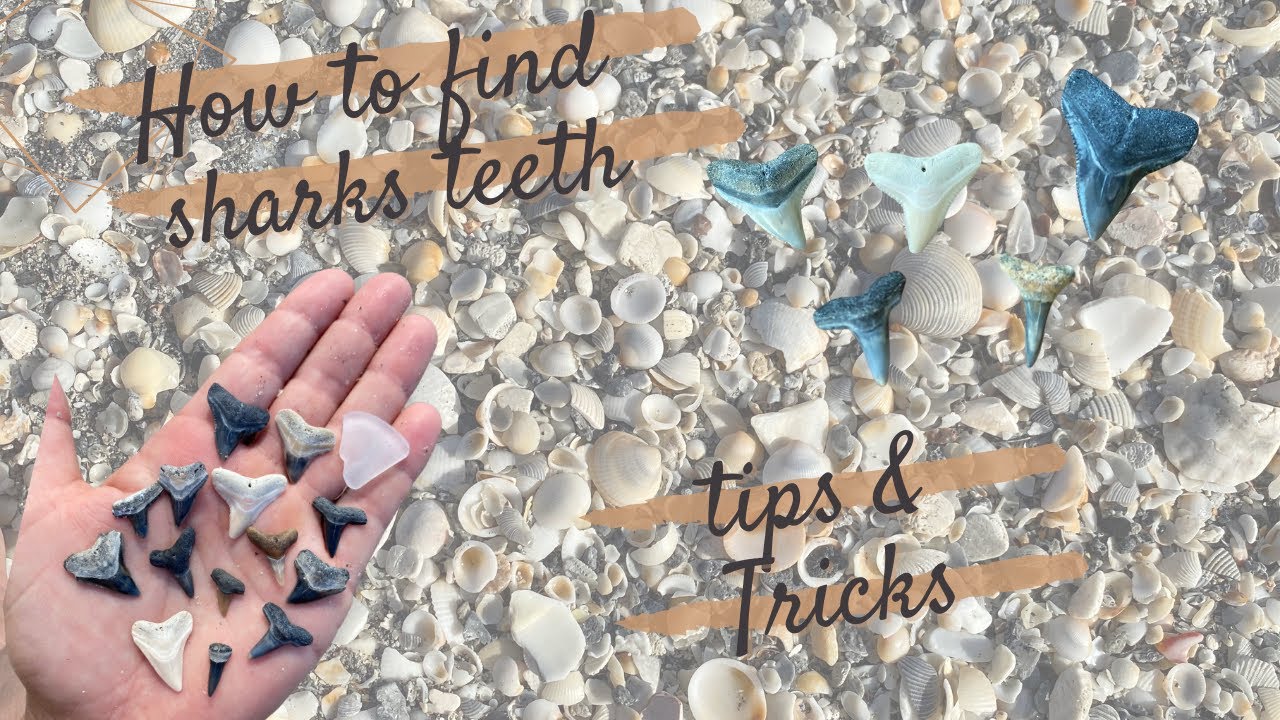
Venice, Florida is the “Shark Tooth Capital of the World” because a phosphate-rich fossil layer 18–35 feet deep offshore is constantly eroding, spilling black fossilized shark teeth onto the beach and seafloor. You can hunt them three ways: sift the wet-sand shell line at Caspersen Beach for free, snorkel or scuba the offshore “Boneyard” on a dive charter, or wade and dig gravel bars on the Peace River near Arcadia for the biggest teeth. Shark teeth need no permit; Ice Age mammal fossils require a $5 Florida fossil permit.
What follows is the geology that put the teeth here, the species you’ll actually find, where to go, and how to work each spot.
Why is Venice the Shark Tooth Capital of the World?
Venice sits directly on top of a fossil-bearing formation that runs roughly 18–35 feet deep in the Gulf, starting about a half-mile off the beach. For millions of years, when peninsular Florida was submerged, sharks fed in these warm shallow seas and shed teeth by the thousands — a single shark drops tens of thousands of teeth in a lifetime. Those teeth sank into the seabed and mineralized into rock-hard fossils.
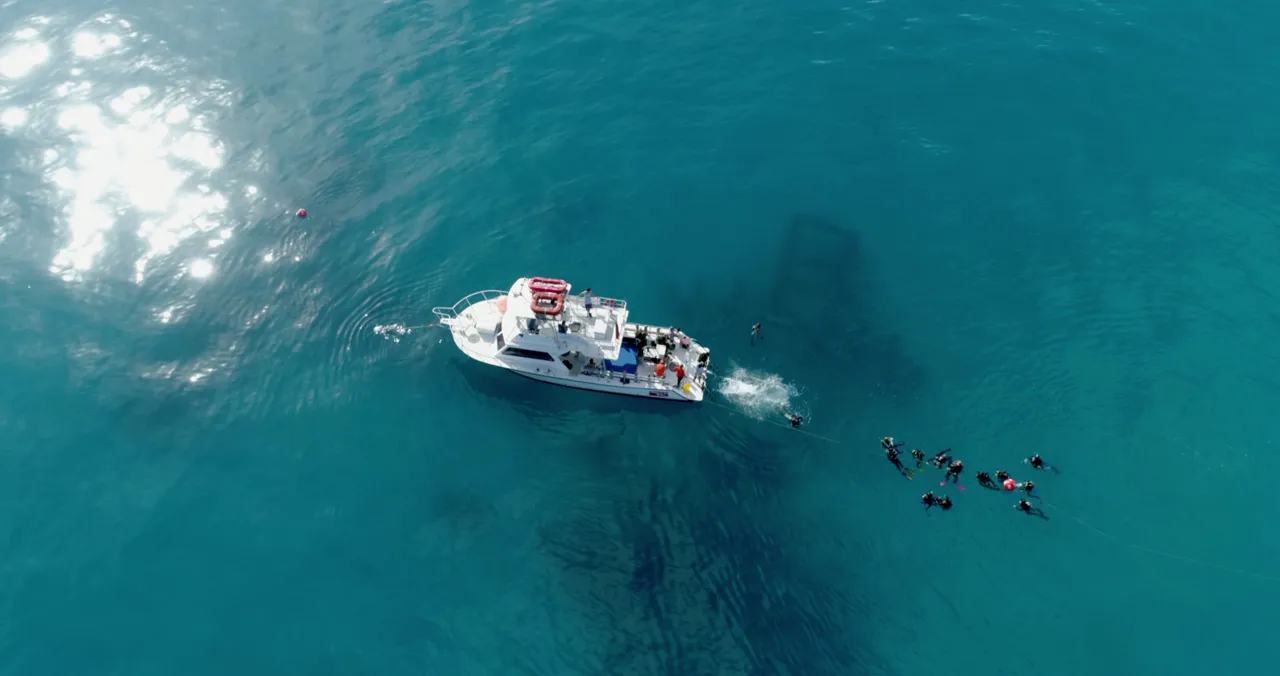
Today, wave and storm energy chews at that submerged formation and drives the heavy teeth toward shore. The richest offshore concentration is a zone called the Boneyard, stretching about five miles south from South Venice, reachable only by boat. What washes ashore is the overflow: small black teeth mixed into the shell lines at the waterline, free for anyone willing to look.
No other stretch of American coastline delivers fossil shark teeth this reliably to a public beach. The city leans into it — Venice hosts an annual Shark’s Tooth Festival, and local shops sell the sifting shovels. For the tourism-board version, see Visit Venice’s Shark Tooth Capital page and the Visit Sarasota County hunting guide.
Why are the shark teeth here? The geology
The teeth come out of the Hawthorn Group, a Miocene marine rock unit that is the source of most of Florida’s phosphate. Two sub-units matter to fossil hunters:
| Formation | Age | What it is | Why it matters |
|---|---|---|---|
| Hawthorn Group | Miocene (~23–5 Mya) | Regional phosphate-rich marine unit | The parent formation; source of Florida phosphorite |
| Peace River Formation | ~23–5 Mya (Miocene–Early Pliocene) | Fossil-bearing member of the Hawthorn Group | The layer eroding offshore of Venice |
| Bone Valley Member | Pliocene | Phosphate grains in quartz sand, silt, clay | Reworks older marine + younger land fossils; mined for phosphate inland |
Here’s the sequence that stocked the seabed. During the Miocene, around 20 million years ago, sediment eroding off the ancient Appalachian Mountains washed south and settled over a submerged Florida, creating heavy, nutrient-laden water. As marine animals died — sharks, rays, dugongs, whales — the sediment buried them. Deposition continued into the Early Pliocene, about 5 million years ago, stacking up the phosphate-rich formations we see today. Teeth on Venice beaches are dated at roughly 2 to 35 million years old.
Sea level did the rest. Over millions of years the Gulf rose and fell repeatedly; Florida’s land area swelled and shrank. The old marine seabed that was once deep water is now exposed just offshore and, inland, in the banks of rivers like the Peace. Where the formation is exposed, erosion frees the fossils.
Two details make hunting possible. First, fossil teeth are far denser than shells — surf and current sort them like a sieve, dropping the heavy teeth into coarse, dark shell lenses while lighter sand and shell wash away. Second, the phosphate that mineralized the teeth turned them black, gray, or brown, and shows up as tiny black granules in the sand. A black-speckled shell line at the waterline is your treasure map. For a deeper dive on the formations, see the USGS Bone Valley Member entry and the Fossilguy Venice geology guide.
What fossils will you actually find?
Megalodon — the trophy
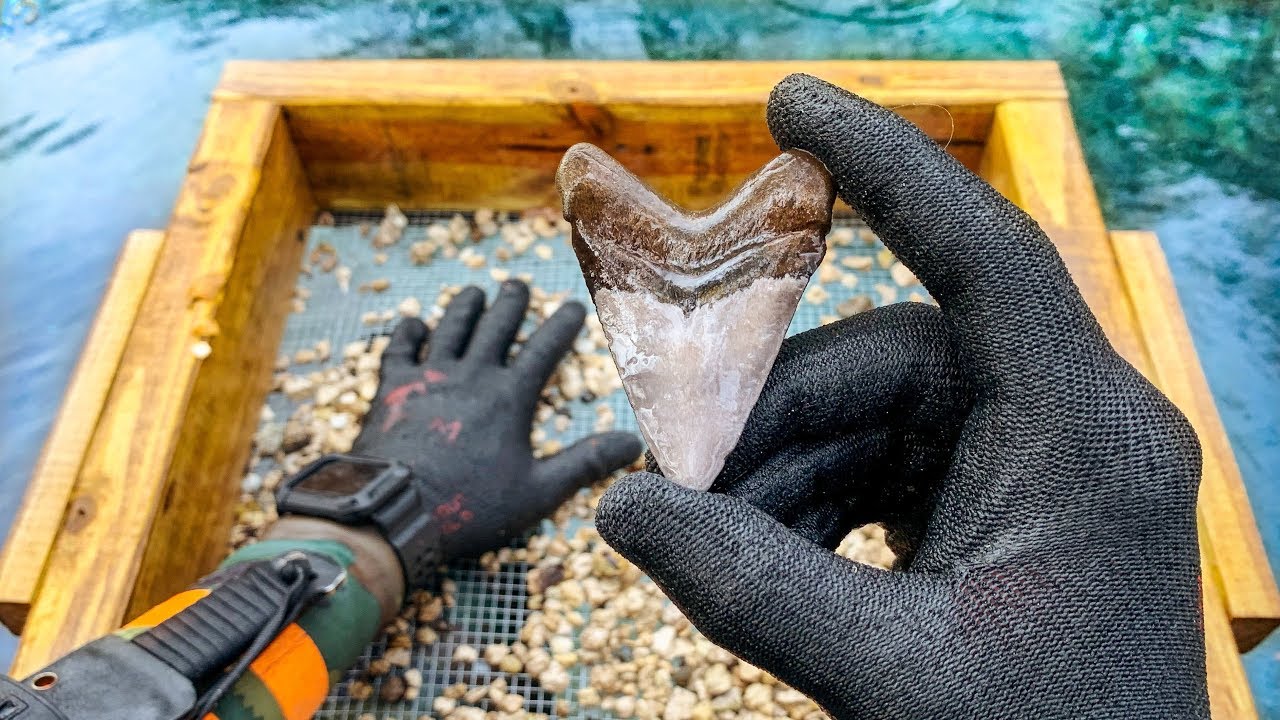
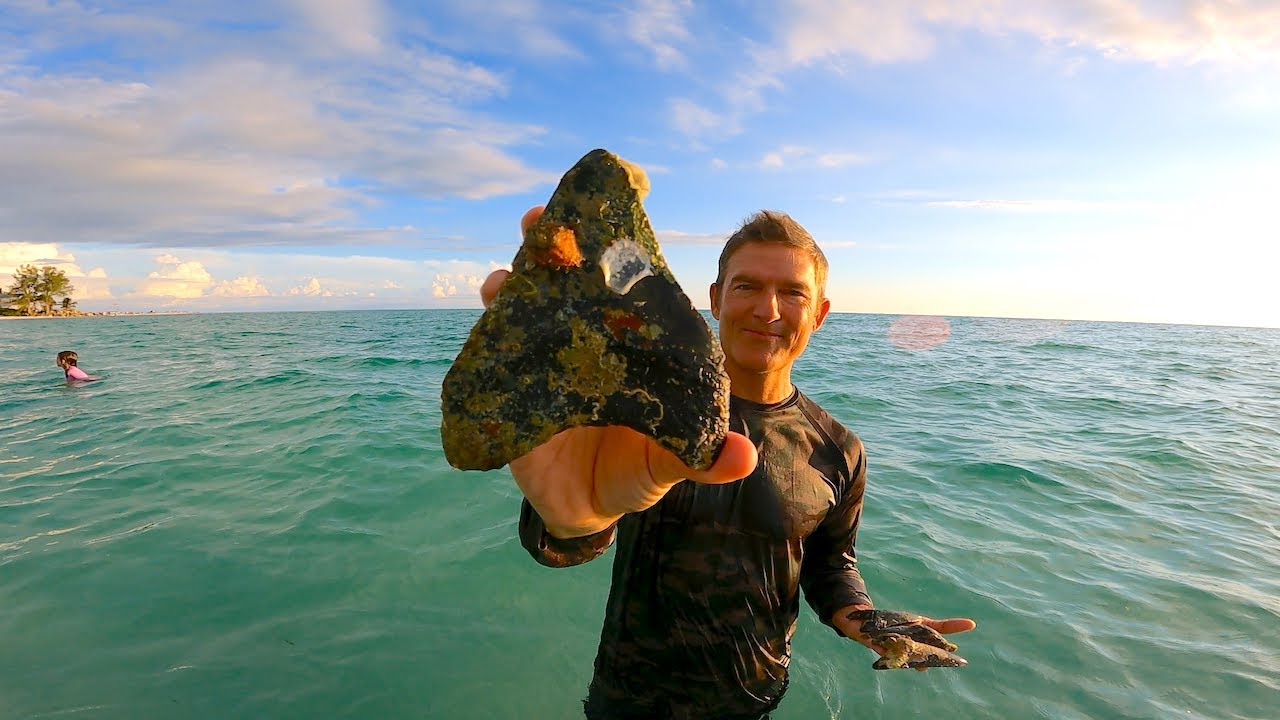
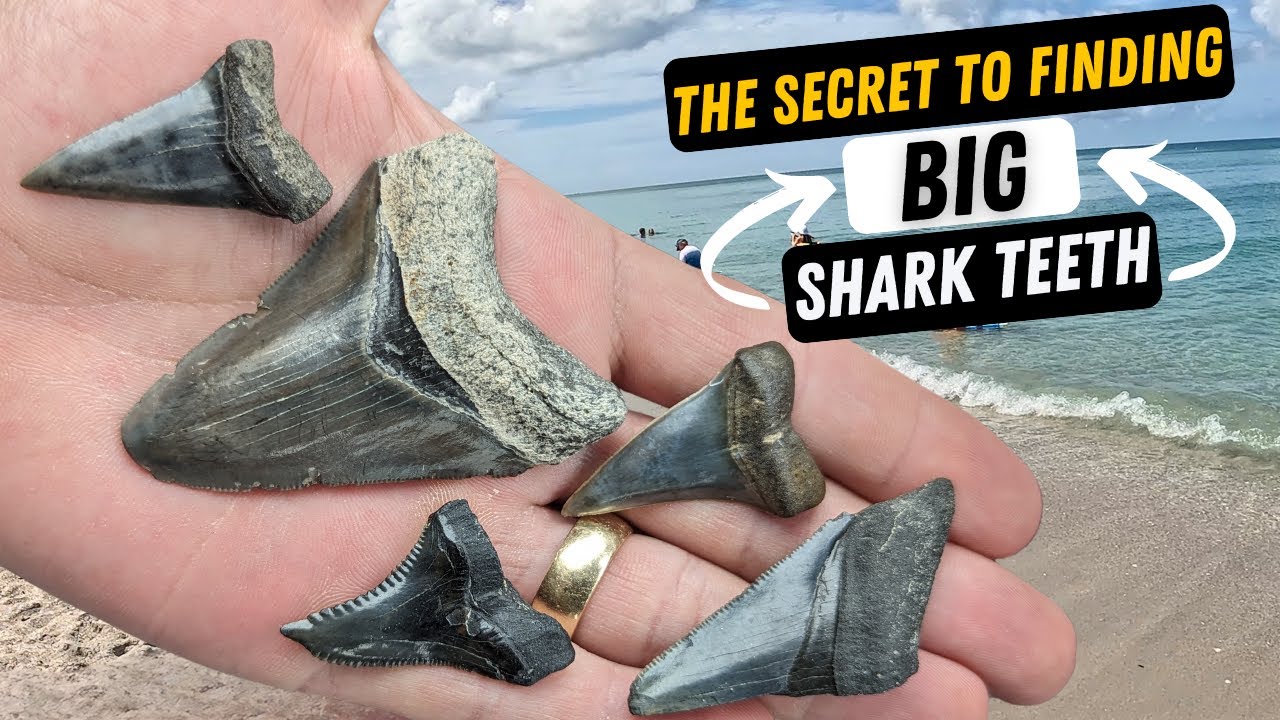
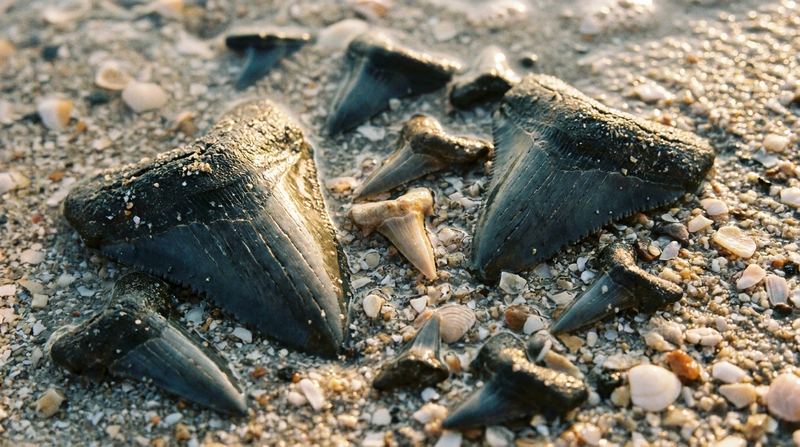
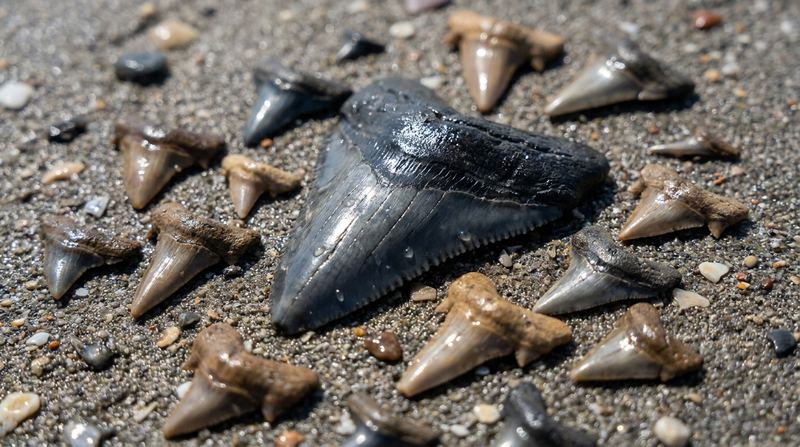
Otodus megalodon is the prize: an extinct giant that dwarfed the great white. Beach teeth run small, but complete megalodon teeth commonly measure 3 inches or more, and exceptional specimens top 7 inches — a palm-sized black tooth is the legitimate find-of-a-lifetime. Collectors grade megs on completeness, serration, tip, and color; a big tooth with intact serrations, an unbroken tip, and no chips is worth many times a worn one.
The other sharks
Most teeth you pocket will be under an inch. Species you’ll find include mako (extinct and modern), great white, tiger, bull, lemon, dusky, hammerhead, sand tiger (long, narrow, cusped), and snaggletooth (Hemipristis). A good tooth is glossy black, gray, or brown, noticeably heavier than a shell of the same size, with a defined root, an enamel crown, and — on species that have them — intact serrations.
The sharks that shed these teeth still cruise the same water. We catch their modern relatives — blacktip and bonnethead sharks — on the nearshore flats today.
Beyond sharks
The formation also gives up non-shark fossils: ray dental plates and stingray barbs, dense dugong ribs, whale jaw and bone sections, and — especially in the Peace River — Ice Age land mammals: horse teeth, mammoth teeth, glyptodont scutes, giant ground sloth, dire wolf, even occasional rhino. These vertebrate fossils are the ones the state permit covers (below). For identification help, the Fossilguy Peace River fossil ID page and the Florida Museum’s Palmetto Fauna site are the best free references. A 2025 Palaeo-Electronica survey of Venice fossil sharks and rays catalogs the full local assemblage.
Beach, snorkel, scuba, or river — which method?
Four ways to hunt, each with a different payoff. Beach is free and easy but yields mostly small teeth; the Peace River is the most work but produces the biggest megs and land-mammal fossils.
| Method | Access | Depth / effort | What you find | Cost |
|---|---|---|---|---|
| Beach sifting | Free, walk-on | Ankle-deep surf | Mostly small teeth (<1”) | Free (rent/buy a sifter) |
| Snorkeling | Boat or swim from shore | Nearshore troughs, 3–10 ft | Small–medium teeth | Guided trips priced per person |
| Scuba charter | Boat only | The Boneyard, ~15–35 ft | Medium–large teeth, megs | Guided trips priced per person |
| Peace River wading | Canoe/kayak launch | Shallow gravel bars, dry season | Largest megs + Ice Age mammals | Boat/canoe rental |
Beach sifting works the wet-sand shell line at the surf’s edge — scoop, shake out the sand, pick the black teeth. Snorkeling the shallow nearshore troughs lets you fan the sandy bottom by hand the same way divers do. Scuba charters put you on the offshore fossil layer, where the shallow 15–35-foot depth makes it genuinely entry-level friendly. The Peace River is a different animal entirely — you paddle to a gravel bar, dig the gravel, and sift it in shallow water.
Where to hunt
The beaches (free, no permit for shark teeth)
- Venice Beach — the namesake, central and busy. Convenient, but heavily picked.
- Caspersen Beach — just south of Venice and the unofficial Mecca of shark-tooth hunting. Undeveloped natural shoreline with thick, concentrated black-sand and shell lines. This is where serious beach hunters go.
- Manasota Key — south of Caspersen toward Englewood; quieter, more secluded, and less picked over. Good for both teeth and shells.
- Casey Key — the quieter barrier island just north of Venice; a productive, low-traffic option. See our Casey Key area guide for beach access.
The same low-energy Gulf that makes these beaches good for surf and shore fishing is what lets the surf gently sort teeth into the shell lines.
Offshore — the Boneyard
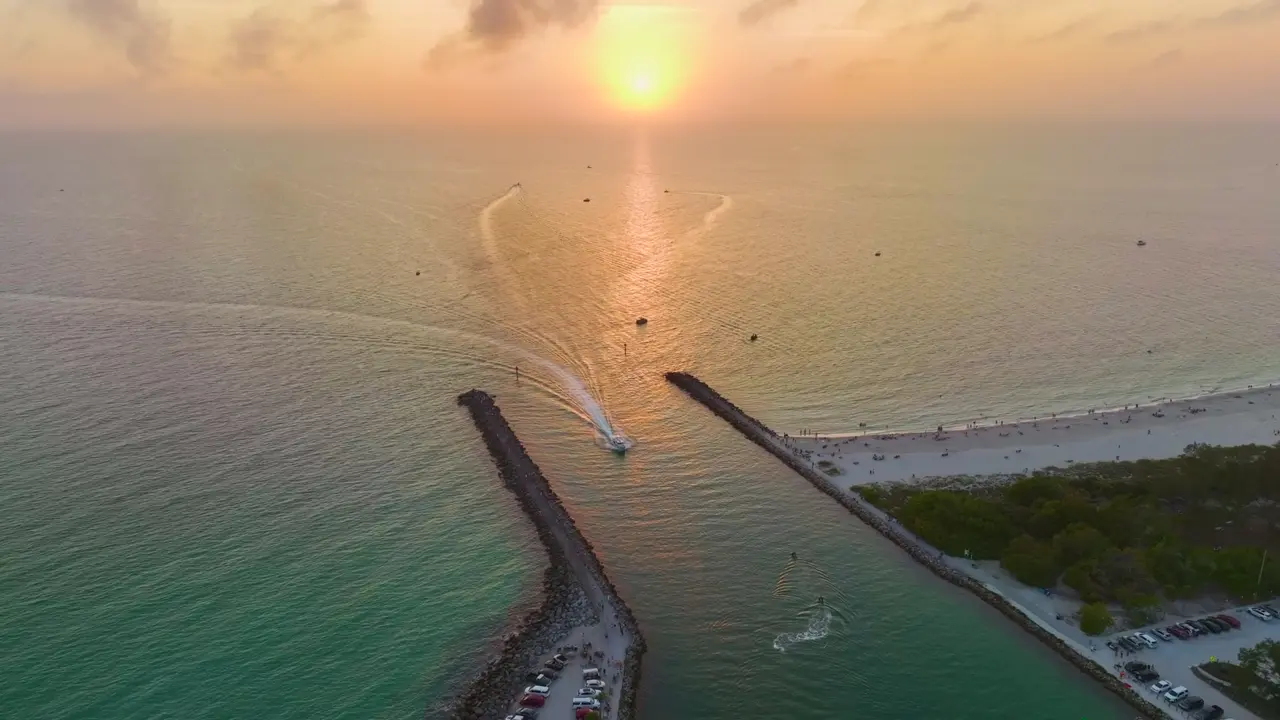
The Boneyard and other known sites off South Venice sit in roughly 15–35 feet of water, boat-access only. This is where you find the medium-to-large teeth that never survive the trip to the beach intact. Charter operators run 2-tank and 3-tank fossil dives and guided snorkel trips, putting divers straight on productive bottom — see our shark tooth dive charters. Fossilguy’s Venice site guide covers the offshore sites in detail.
Our own shark-tooth dive charters and scuba dive charters run these sites out of Venice. Guided snorkel and dive trips typically run $85–$275 per person depending on tank count, group size, and whether it’s a snorkel or full scuba trip. Prices swing with season, fuel, and conditions — contact us for an exact quote before you book.
The Peace River (Arcadia) — the big-tooth destination
Inland, the Peace River cuts down through the Bone Valley and Peace River formations, concentrating fossils in gravel bars. It is one of the few places that produces large megalodon teeth and Ice Age mammal fossils. The Canoe Outpost, on the river banks about two miles west of Arcadia off SR 70, is a common launch for canoe and kayak fossil trips. You paddle to a gravel bar, dig the gravel, and sift it in the shallows. Note that the river work overlaps with our rivers and backcountry water. The Fossilguy Peace River guide is the definitive how-to for the river.
Do you need a permit?
This trips up newcomers, so get it straight:
- Shark and ray teeth, invertebrate fossils, and plant fossils: NO permit needed. Anyone can collect and keep them from beaches and rivers. This covers the vast majority of what beach hunters find.
- All vertebrate fossils collected on state land — Ice Age mammals, dugong, whale, horse, and the like — require the Florida Fossil Permit.
The permit is issued by the Florida Museum of Natural History (FLMNH) in Gainesville and costs $5 per year. Vertebrate finds must be reported to FLMNH; scientifically significant specimens can be claimed by the State within a 60-day window, after which they become the collector’s property. Apply at the FLMNH Florida Fossil Permit page (fossilpermits@floridamuseum.ufl.edu, 352-273-1821). The permit covers state lands including public beaches and river stretches outside managed areas; state parks and historic sites have their own rules and often prohibit collecting entirely. For the regulatory overview, see Florida DEP’s fossil collecting page.
Verify the current rules before you collect — permit terms and protected-area boundaries change.
Gear: the Florida snow shovel
The signature tool is the “Venice snow shovel” (a.k.a. Florida snow shovel): a screened basket mounted on a long handle. You scoop the wet-sand and shell line at the surf’s edge, dip it in the wash, and shake the sand through the screen — teeth and heavy shell stay in the basket. Rules of thumb:
- Screen mesh 1/4 inch or smaller so small teeth don’t fall through.
- A simple handheld sifter or sieve works for shallow scooping if you don’t want the long-handled shovel.
- Old-school works too: hands-and-knees scanning of the black shell lines right at the waterline, no tools at all.
- Rent or buy shovels at Venice-area shops and beach vendors — no need to fly one in.
For snorkeling and diving, add a small hand tool for fanning the bottom and a mesh goody bag for your finds.
When is the best time to hunt shark teeth?
Counterintuitively, the ugly days hunt best. A churned, post-storm surf acts as a giant sieve, pulling heavy fossils off the offshore seabed and stacking them in fresh shell lines.
| Condition | Why it works |
|---|---|
| After storms / cold fronts | Churned surf drags fossils shoreward and re-sorts the shell lines |
| Low tide, early morning (~6–9 am) | More exposed beach, freshly sorted lines, first pick before the crowds |
| Winter low-energy season | Repositioned sand exposes new material |
| Peace River dry season (winter–spring) | Low water makes gravel bars wadeable |
“Not-postcard-perfect” beach days are the ones to target. Check the NOAA tide predictions and time the bottom of the tide. For the Peace River, wait for the winter–spring dry season when the river drops and the gravel bars come out of the water.
Is shark tooth hunting safe?
Mostly, yes — but respect a few things. On the beach, mind your footing on shell lines and watch for stingrays in the shallow wash (shuffle your feet). Offshore diving carries all the normal scuba risks; the shallow depth is forgiving, but go with a licensed charter and follow your guide. On the Peace River, watch for alligators, sun exposure, and current on the paddle; go with an outfitter your first time. And don’t hand-fan blindly into crevices offshore — the same water still holds live sharks and the occasional stingray.
Oceanographic Magazine’s how to find a megalodon tooth guide is a solid outside read once you’ve got the basics here.
FAQ
Where is the best beach to find shark teeth in Venice? Caspersen Beach, just south of Venice. It’s undeveloped, with thick concentrated shell and black-sand lines. Venice Beach is more convenient but more heavily picked. Manasota Key near Englewood and Casey Key to the north are quieter, less-picked alternatives.
Can you find megalodon teeth on the beach? Occasionally, but they’re rare and usually small or worn. Most beach teeth are under an inch. For large, intact megalodon teeth, dive the offshore Boneyard or dig gravel bars on the Peace River near Arcadia.
Do you need a permit to collect shark teeth in Florida? No. Shark teeth, ray teeth, and invertebrate and plant fossils need no permit. You only need the $5-per-year Florida Fossil Permit for vertebrate fossils — Ice Age mammals, dugong, whale, horse — collected on state land.
What’s the best time of day and season to hunt? Low tide in the early morning, ideally after a storm or cold front when the churned surf has re-sorted the shell lines. Winter is the productive season on the beaches; winter–spring dry season is best on the Peace River.
How deep do you dive for shark teeth off Venice? The offshore fossil layer runs about 15–35 feet, commonly cited at 18–35 feet, with some spots at 20–25 feet. The shallow depth makes charter dives genuinely entry-level friendly.
What tool do I use to sift for teeth? The “Venice snow shovel” — a screened basket on a long handle, mesh 1/4 inch or smaller. Rent or buy one at Venice-area shops. Hands-and-knees scanning of the waterline shell lines also works with no tools.
Related
Pair a fossil hunt with a day on the water: our Venice, Casey Key, and Englewood area guides cover the same beaches and passes, and the surf and shore fishing guide and passes and inlets guide explain the water that sorts the teeth. To get on the offshore Boneyard, see our shark-tooth dive charters and scuba dive charters. Bringing kids? The beach hunt pairs naturally with kids and family fishing.