Venice FL Fishing
Including Venice Island, Nokomis, South Venice, Caspersen Beach.
Venice FL Fishing: Jetties, Pier, Sharks & Boat Ramps (2026)
At a Glance.
Venice Island · Nokomis · South Venice · Caspersen Beach
Notable Spots.
The named water our captains fish around Venice FL Fishing: Jetties, Pier, Sharks & Boat Ramps (2026) — passes, flats, reefs, and structure that hold fish season after season.
- Venice Inlet North Jetty
- Venice Inlet South Jetty
- Venice Fishing Pier
- Caspersen Beach surf
- Snake Island
- Roberts Bay (Venice)
- The Boneyard (offshore fossil layer)
Boat Ramps.
Public ramps in and around Venice FL Fishing: Jetties, Pier, Sharks & Boat Ramps (2026). Most charters meet you at a dock — but if you're trailering, these are the launches to know.
1330 Tarpon Center Dr, Venice
1 double lane, non-floating docks, kayak hand-launch, restrooms; closest public ramp to Venice Inlet
E Venice Ave at the Intracoastal, Venice
City ramp on the ICW near downtown; confirm lane count and parking before a weekend launch
Signature Species.
The fish Venice FL Fishing: Jetties, Pier, Sharks & Boat Ramps (2026) is known for. Tap a species for the full guide — season, tackle, technique, and regulations.
Fishing Venice FL Fishing: Jetties, Pier, Sharks & Boat Ramps (2026),
Explained.
The Venice jetties are the most productive single piece of shore-fishing structure between Sarasota and Boca Grande: snook hold on the rocks 12 months a year, and the best bite is first light on a moving tide, April through October. Add a free 700-foot pier that’s open 24/7 and a summer surf shark fishery, and Venice is the strongest shore-fishing town on this coast.
Venice is also the dive town. The fossil layer that earned it the title Shark Tooth Capital of the World sits 18 to 35 feet down, starting about a half-mile off the beach, and the shark-tooth dive over it is the one trip you can book here and nowhere else on this coast.
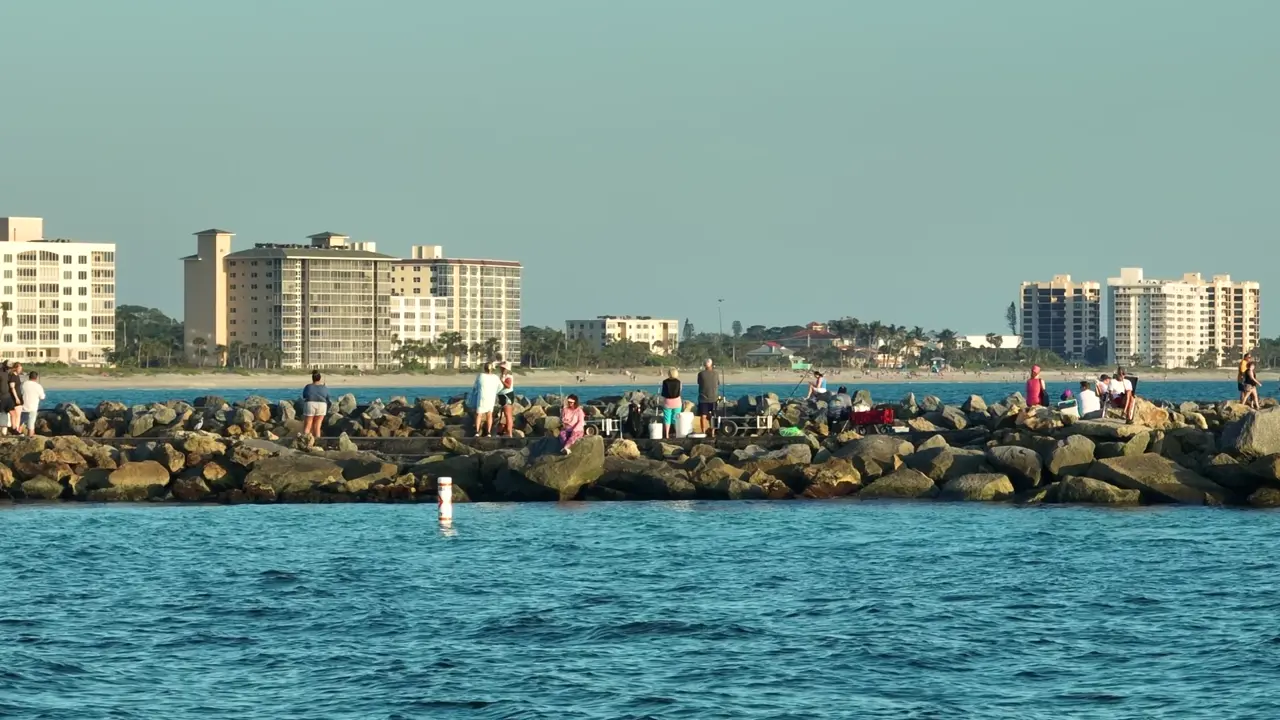
Free to fish, and the rocks hold snook every month of the year.
Where can I fish in Venice without a boat?
Three places do most of the work, and none of them costs a dime to fish.
| Spot | Location | What it produces |
|---|---|---|
| North Jetty | North Jetty Park, 1000 N Casey Key Rd, Nokomis | Snook (May–Sept peak on rising tide), redfish, sheepshead, seasonal tarpon |
| South Jetty | Humphris Park, south side of Venice Inlet | Snook year-round; winter sheepshead and grouper in the deep hole off the rocks |
| Venice Fishing Pier | Brohard Park, 1600 Harbor Dr S | 700 ft, open 24/7, free, no license needed on the pier; Spanish mackerel, snook, sharks at night |
The two jetties frame Venice Inlet, the pass connecting Roberts Bay and the ICW to the Gulf. North Jetty Park has free parking, restrooms, and fish-cleaning stations; North Jetty Fish Camp at 1000 S Casey Key Rd sells bait, tackle, and beer a cast away from the rocks. Local conditions and jetty reports run at venicejetty.com.
When do snook bite at the Venice jetties?
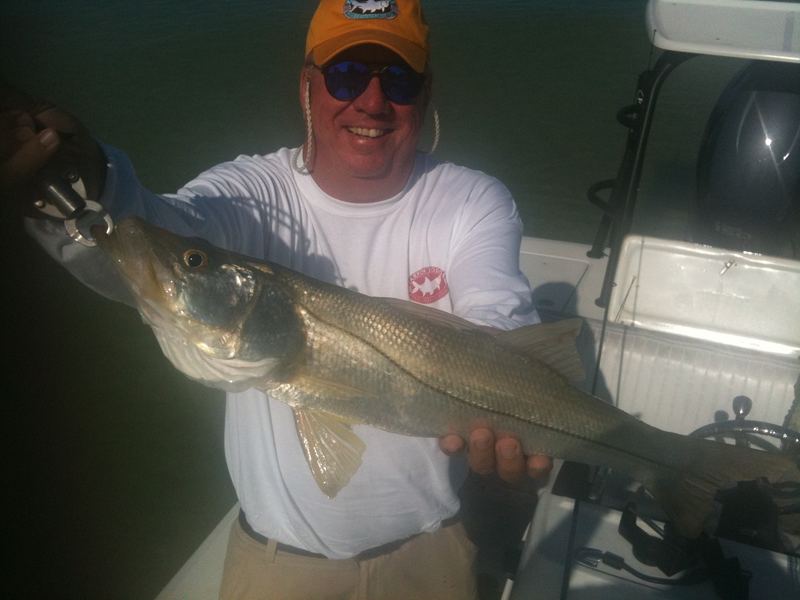
Year-round, but the window that matters is April through October, first light, on a moving tide — rising tide is the classic North Jetty pattern. Freeline a live pilchard or pinfish along the rock edge, or throw a white paddletail parallel to the rocks before the sun gets high. Winter pushes snook into the inlet and the ICW; the south-jetty hole then turns into a sheepshead and gag grouper spot on shrimp and crabs.
Position beats lure choice here. Fish sit tight to the granite facing into the current, so the cast that gets bit is the one that lands up-tide and swims back along the rock line rather than away from it — a bait working three feet off the rocks is a bait nothing has to move for. Fish the last of the dark and the first hour of light, and expect the bite to fall off as the sun gets on the water.
Snook are a regulated gamefish — check the current season and slot on the FWC snook page and verify current rules before you fish. Full species breakdown on our snook page, and the rigging details are on the live bait technique guide.
What is the Venice Fishing Pier like?
The Venice Fishing Pier at Brohard Park is 700 feet of city-owned pier, free to fish, open 24 hours, and covered by the pier’s license — you don’t need your own saltwater license to fish from it. Papa’s Bait Shop sits mid-pier with live and frozen bait, and Sharky’s on the Pier anchors the beach end.
Daytime is Spanish mackerel, whiting, and pompano in season; night is the shark show — blacktips and blacknose sharks on cut bait are a genuine summer fishery here. The mackerel run twice, spring and fall, and a silver spoon or a small white jig covers them; a short length of wire in front of the lure saves it from their teeth. Whiting and pompano work the sandbars in front of the pier rather than the pilings under it, so the cast that matters is the long one over the first bar.
Bring a drop net for anything heavy. Seven hundred feet of pier is a long walk to the beach with a fish on the line.
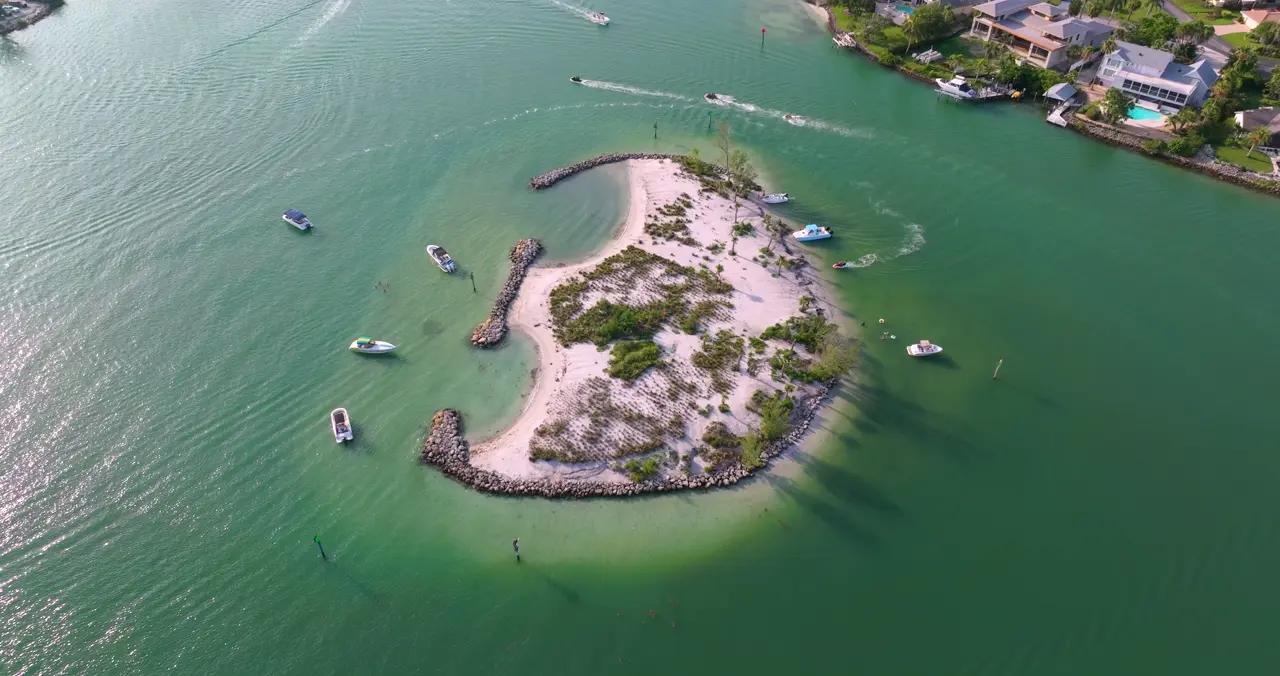
Snake Island sits in Roberts Bay — boat and kayak access only.
What is Snake Island?
Snake Island is the low, rock-rimmed sand island in Roberts Bay just inside Venice Inlet — the first piece of protected water you reach after clearing the jetties. There is no bridge and no parking lot. You get there by boat, kayak, or paddleboard, and on a summer weekend its sandy rim is lined with boats anchored bow-in.
Two things make it worth a stop with a rod. The rim is riprap, which is the same rock-and-current combination that makes the jetties work — at a smaller scale and out of the swell, which matters on a west blow when the outside is stacked up. And it sits between the pass and the bay, so bait moves past it on both halves of the tide.
Fish it the way you fish the jetty rocks: hold the boat off, cast tight to the rock line, and work with the current rather than across it. The shallow grass and sand between the island and the Intracoastal is worth a look for redfish in the fall, which is when Roberts Bay is at its best.
Higel Marine Park has a kayak hand-launch and is the closest public access to the inlet, which makes Snake Island a short, sheltered paddle rather than an expedition.
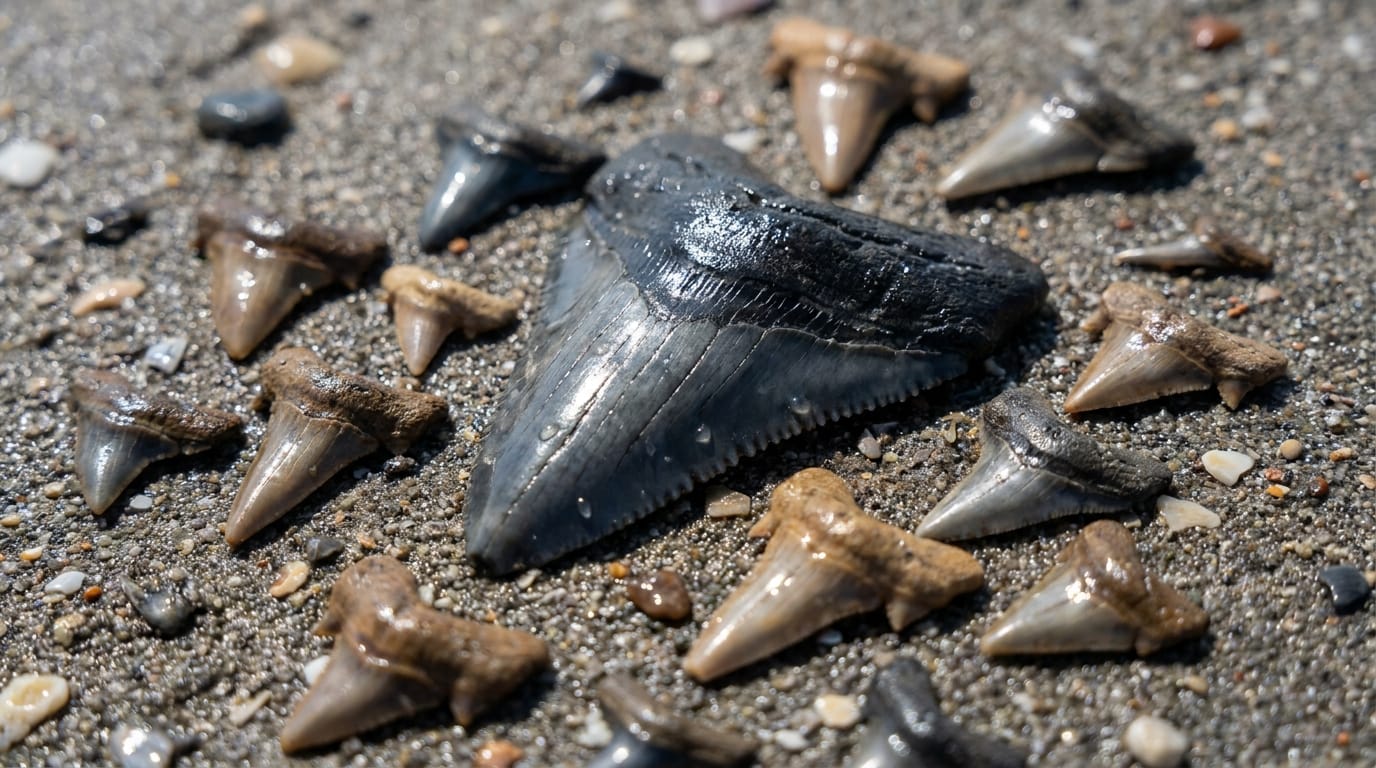
Most teeth you pocket are under an inch. A big meg is a season, not a day.
Why is Venice called the Shark Tooth Capital of the World?
Because a phosphate-rich fossil layer sits just offshore and never stops eroding. Fossilized shark teeth weather out of it and wave energy drives the heavy ones toward shore — Caspersen and Brohard are the classic hunting grounds, and the city throws an annual Shark’s Tooth Festival.
Set expectations at the right size. Almost everything you pocket off the beach is under an inch: sand tiger, lemon, bull, the odd mako. Megalodon teeth are real and they do come out of this water, but a palm-sized one is a find-of-a-lifetime, and the big ones come off the offshore layer or the Peace River far more often than off the sand. Beach hunting is a numbers game with a screened scoop, not a treasure hunt.
The ugly days hunt best. A churned, post-storm surf works like a sieve, dragging heavy fossils shoreward and stacking fresh shell lines at the waterline. Low tide in the first hours of daylight is the window, and a black-speckled shell line is the thing you are looking for. Permits are simple: shark and ray teeth need none; vertebrate fossils — Ice Age mammal teeth, dugong rib, whale bone — need the $5-a-year Florida fossil permit. The Explore Suncoast shark tooth guide covers where and how to sift.
Note: Caspersen Beach’s own access road and lots took hurricane damage in 2024–25; check Visit Venice beach status and plan to walk in from the Brohard lots (1600 and 1400 Harbor Dr S) if Caspersen’s lot is still closed.
The teeth are fossils. The sharks are not — live blacktips cruise this same surf every summer, which is why the pier’s night bite works.
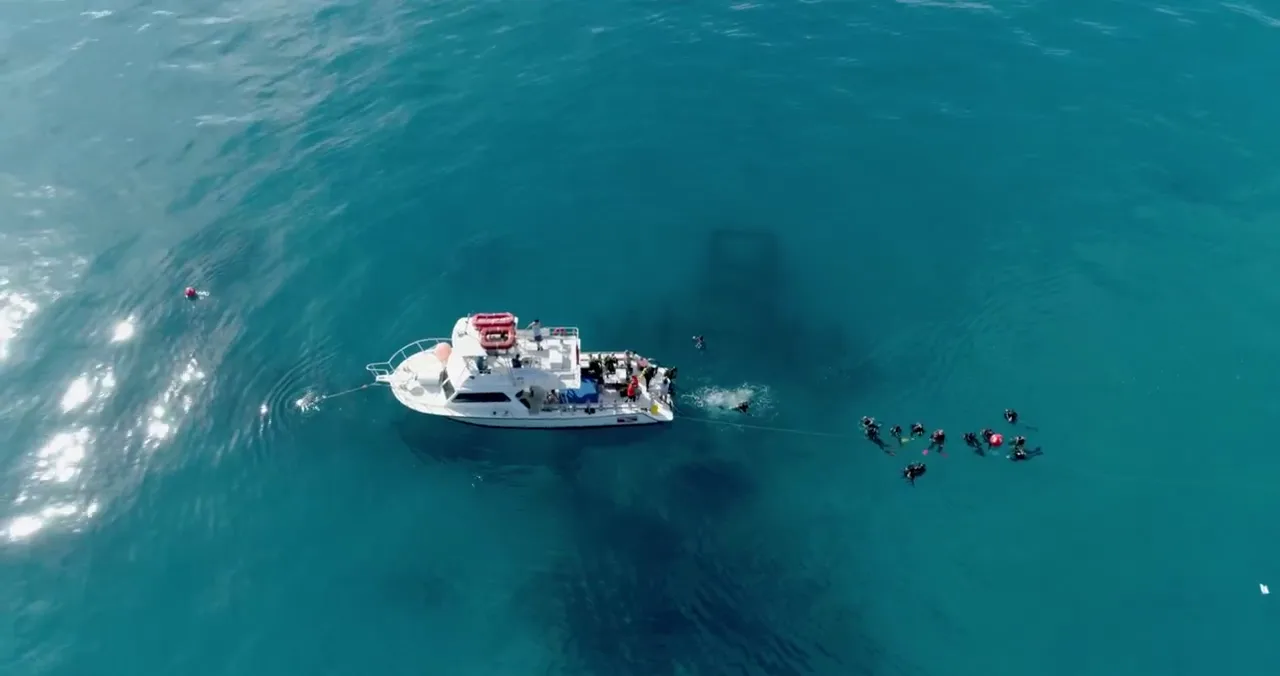
The fossil layer runs 18 to 35 feet down, a half-mile off the beach.
Can you dive for shark teeth off Venice?
Yes, and it is why Venice is the dive destination on this coast. The fossil layer runs roughly 18 to 35 feet deep and starts about a half-mile off the beach. The richest stretch of it — divers call it the Boneyard — runs about five miles south from South Venice and is boat-access only.
The shallow depth is what makes the trip work. Eighteen to thirty-five feet is forgiving enough that a newly certified diver is comfortable on it, and on a flat day a snorkeler with a decent breath-hold can work the same bottom. What’s down there is not scenic: grey gravel, broken shell, scattered rock. You are not hunting so much as sorting — fan the gravel with a hand and pick the black out of the grey.
A trip is two or three tanks, so it is two or three drops, with the boat repositioning over fresh gravel between them. Honest expectations help: most of what comes up is still thumbnail-sized, and a three-inch meg is a season rather than a day. What the offshore layer gives you that the beach cannot is teeth that never had to survive the surf — better edges, intact serrations, unbroken tips.
Visibility decides the day. A few flat mornings with no blow behind them is what you want; a stirred-up Gulf turns the dive into a swim. Book it on our shark-tooth dive charters page — and the full field guide, from the geology to the species to the permits to the Peace River alternative, is on our shark tooth diving reference.
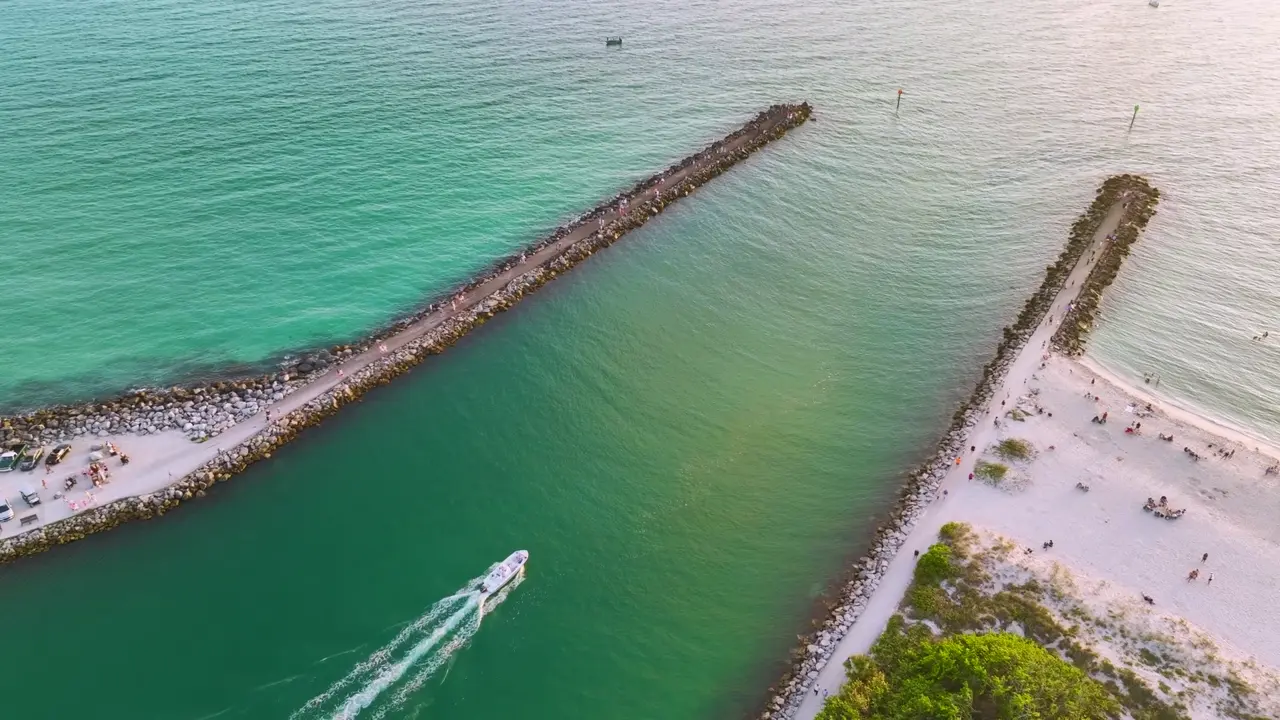
Higel Marine Park is minutes from the inlet — the ramp to use if you're running it.
Where are the boat ramps in Venice?
| Ramp | Address | Details |
|---|---|---|
| Higel Marine Park | 1330 Tarpon Center Dr | 1 double lane, non-floating docks, kayak hand-launch, restrooms; 3 acres on Roberts Bay, closest ramp to the inlet |
| Marina Boat Ramp | E Venice Ave at the ICW | City ramp near downtown; verify lanes/parking before a weekend |
| Nokomis Beach Ramp | 901 Casey Key Rd, Nokomis | 2 lanes, courtesy docks, 25–30 trailer spots; direct shot to Venice Inlet from the north |
Higel is the play if you’re running the inlet — it’s minutes from the jetties. The county-wide list lives on Visit Sarasota’s boat ramp directory, and our own boat ramp guide covers the full Sarasota-to-Boca-Grande run.
What can I catch in Venice by season?
| Season | Best bets |
|---|---|
| Spring (Mar–May) | Snook waking up on the jetties, Spanish mackerel on the beach, pompano in the surf |
| Summer (Jun–Sep) | Peak jetty snook, tarpon rolling the inlet on outgoing tides, blacktip sharks in the surf |
| Fall (Oct–Nov) | Second mackerel run, redfish in Roberts Bay, snook still on the rocks |
| Winter (Dec–Feb) | Sheepshead and gag grouper in the south-jetty hole, trout in the ICW |
Tarpon use Venice Inlet as a rest stop on the migration between Boca Grande and the Sarasota passes — outgoing tide, dawn, May through July. Details on the tarpon page.
Where do I get bait in Venice?
Papa’s Bait Shop on the pier handles live and frozen bait without leaving the sand. North Jetty Fish Camp covers the jetty crowd. For a serious tackle run, Fisherman’s Edge in Englewood is 20 minutes south on Placida Rd — worth the drive if you’re headed toward Englewood or Boca Grande anyway.
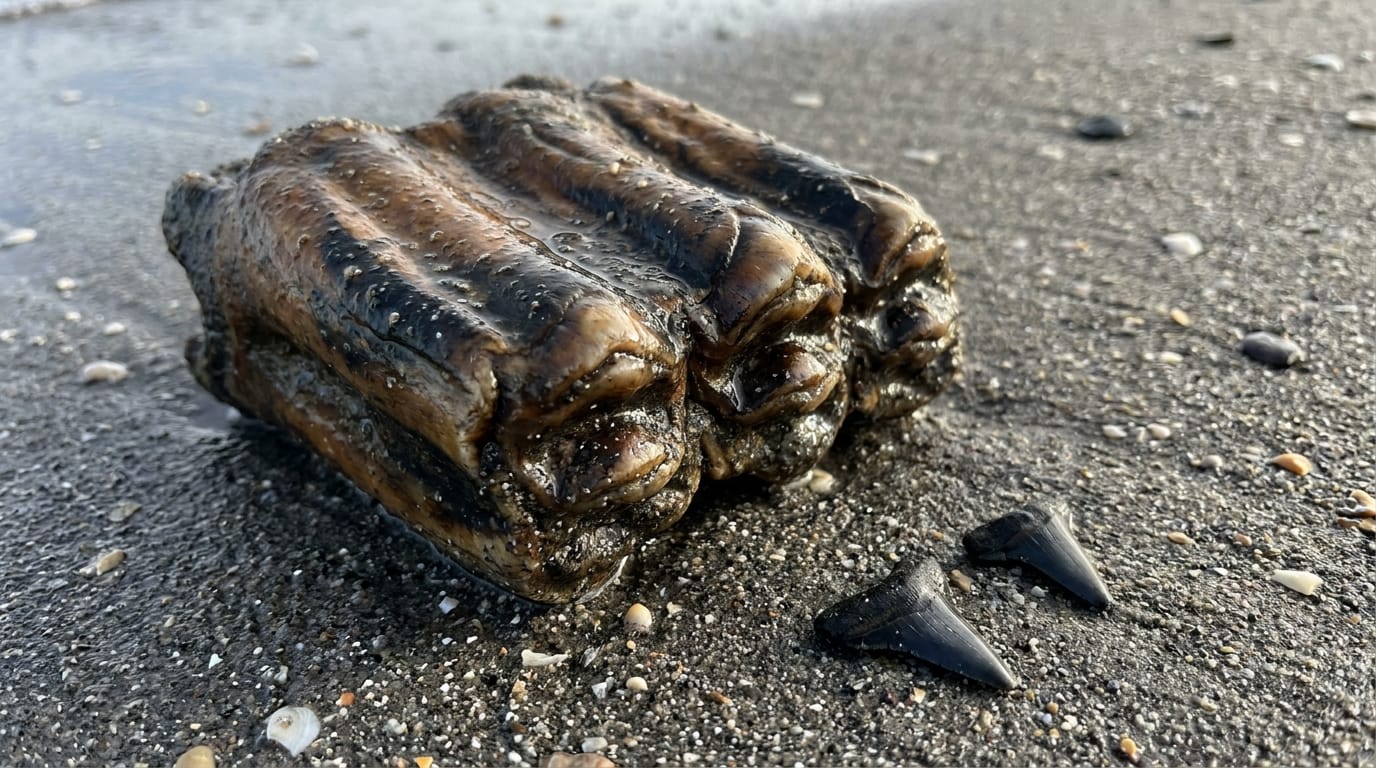
A $10 sifting scoop turns a slow tide into a fossil hunt.
Is Venice good for family and kids’ fishing?
It might be the best family fishing town on this coast, because the two easiest venues are free and stroller-flat. The pier gives kids rail-height fishing over productive water with a bait shop 50 feet away and restaurant food at the walk-off; a sabiki rig or a shrimp-tipped jig keeps rods bending on whiting, mackerel, and snapper even when nothing glamorous is around. North Jetty Park adds restrooms, picnic shelters, and a protected inlet shoreline where small kids can throw at jacks and ladyfish without dodging surf. And when attention spans expire, shark-tooth sifting on the same beach is the built-in backup activity — a $10 sifting scoop from any local shop turns a slow tide into a fossil hunt.
Two cautions: the jetty rocks themselves are slick and uneven — keep small kids on the paved walkway, not the granite — and summer afternoon storms build fast, so fish mornings.
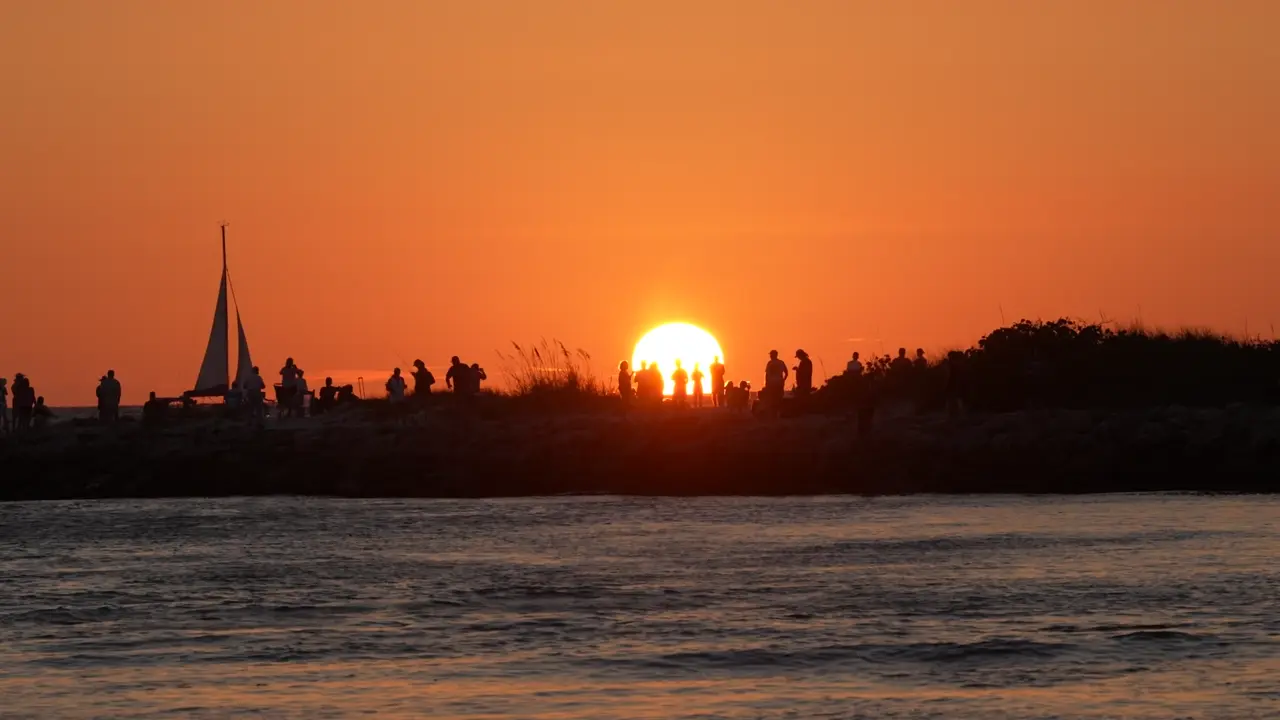
Fish dawn, take cover by 2 p.m., then fish again after dark.
What tides and conditions should I plan around in Venice?
The inlet is a current machine, and the fishing follows the water speed. Plan with a NOAA tide prediction for Venice Inlet rather than a generic app: the difference between slack and mid-tide at the jetties is the difference between casting practice and a bent rod. General rules that hold here:
- Jetty snook: moving water, low light. First 90 minutes of daylight on a building tide is the A-window, April–October.
- Pier pompano and whiting: incoming tide over the sandbars, water still green after a front is fine.
- Night sharks: outgoing tide sweeps scent off the beach; fish the pier’s mid-length, not the tip, and bring a pier net or expect to walk fish to the beach.
- Wind: the pier fishes in almost anything; the jetties get sporty in a west blow when swell stacks against the rocks.
- Dive days: flat beats fishy. A few calm mornings with no blow behind them is what puts visibility on the fossil layer.
Summer pattern is simple — fish dawn, be off the water or under cover by 2 p.m. when the sea-breeze storms fire, then fish the pier again at dark.
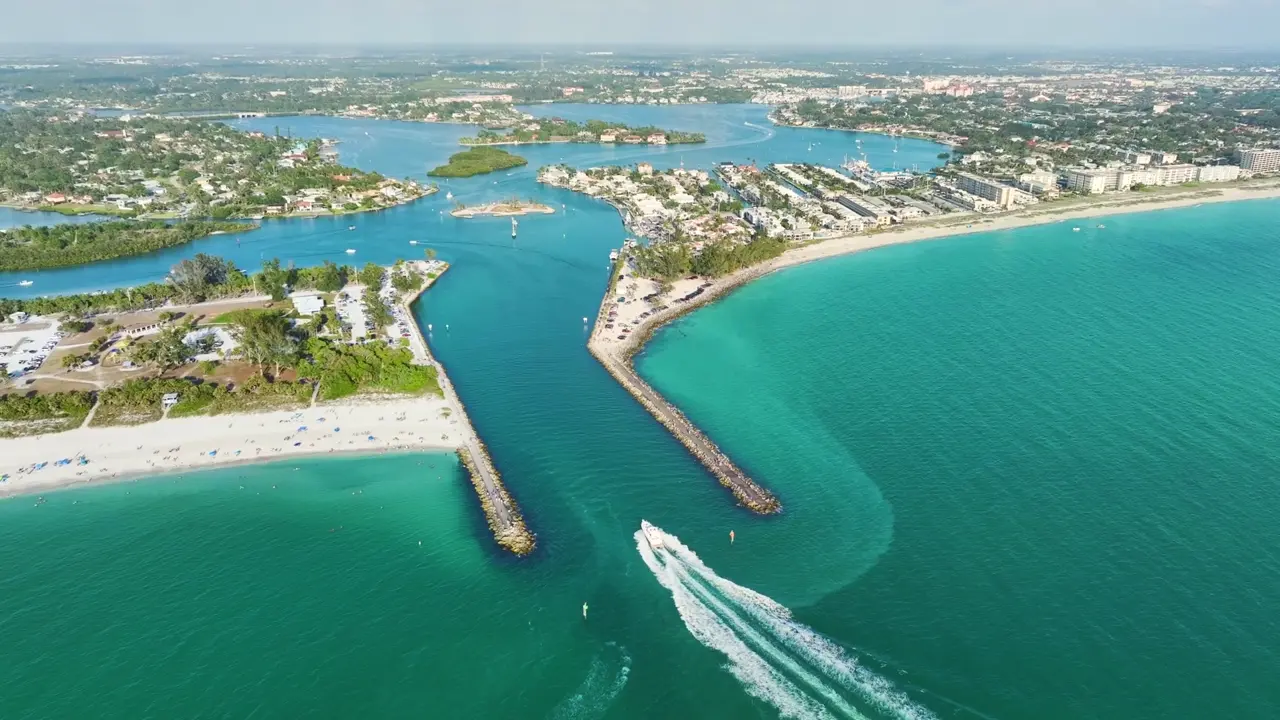
The Crow's Nest sits on the inlet — tie up and eat over the pass you fished.
Where do you tie up to eat and refuel in Venice?
The Crow’s Nest sits right on the Venice Inlet at the jetties — tie up at its marina, then eat upstairs over the pass you just fished. Fisherman’s Wharf Marina, a Venice staple since 1950, adds fuel, slips, and dockside dining on the Intracoastal. Higel Marine and the inlet-area yards round out the fuel-and-repair options.
FAQ
Do I need a fishing license on the Venice Pier? No — the pier’s license covers you while you’re on it. Fishing the jetties, beach, or a boat requires a regular Florida saltwater license (free for FL residents fishing from shore, but you still must register). Check FWC licensing.
When is the best tide for the Venice jetties? A moving tide beats a slack one every time. North Jetty fishes best on the rise; the inlet’s outgoing tide is the tarpon window in early summer.
Can you get to Snake Island without a boat? No. It sits in Roberts Bay inside the inlet with no bridge — boat, kayak, or paddleboard only. Higel Marine Park has the closest hand-launch.
How deep is the shark-tooth dive off Venice? The fossil layer runs about 18 to 35 feet, starting roughly a half-mile off the beach. It’s shallow enough for newly certified divers, and snorkelers work the same bottom on flat days.
Can kids fish in Venice? The pier is the easy answer — rail-height fishing, no license, bait shop on site, restrooms at Brohard Park. Sheepshead and mackerel keep the rod bent.
Is night fishing allowed on the Venice Pier? Yes — it’s open 24/7, and night is when the shark fishing happens. Bring cut mullet or ladyfish and heavy leader.
Related
Working south from Sarasota? Start with the Casey Key / Nokomis guide — the North Jetty is technically on Casey Key’s south tip. Keep going and you hit Englewood and Lemon Bay, then Boca Grande. Species-level breakdowns: snook, tarpon, and redfish. For the fossil side of Venice: shark-tooth dive charters and the shark tooth diving field guide.
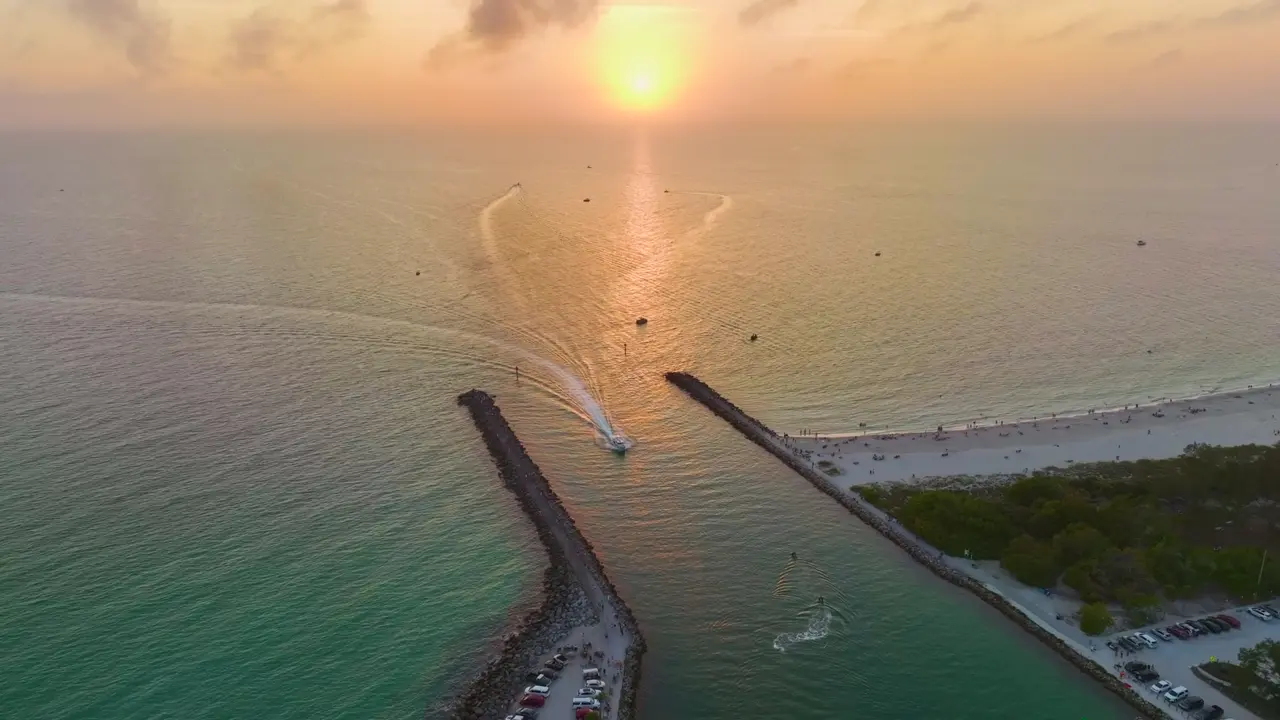
The strongest shore-fishing town on the coast — jetties, pier, and surf.
Venice FL on Video
13 public videos from 13 channels, sorted by subject. Nothing plays until you click it.
Fishing the Venice Jetty & Gulf
5Snook, snapper and non-stop jetty action plus an offshore run out of Venice inlet.

I Dropped A Big Pinfish by The Rocks! (Venice Jetty Snook Fishing Challenge)

Kayak Fishing the Venice Florida Jetty (Snake Island); Drone Footage

Fishing Venice Jetty For Non-Stop Action

Solo 54-Mile Offshore Fishing | 30" Red Grouper, Red Snapper, Shark | Venice FL (WorldCat 280 DCX)

First Time Fishing VENICE JETTY (Non-Stop ACTION)
Fossil Dive Charters
3Captains running megalodon and fossil-tooth dive charters off Venice.

Fossil Junkies - Venice Florida Megalodon Fossil Shark Tooth Dive Charter

Venice charter captain finds 6-inch Megalodon shark tooth

Venice, FL Shark Tooth Diving. Lots of teeth and a MEG!!!
Shark Teeth, Beaches & the Town
5Venice is the Shark Tooth Capital — how and where to hunt teeth, plus a town tour.

How to find SHARK TEETH in Venice Florida!
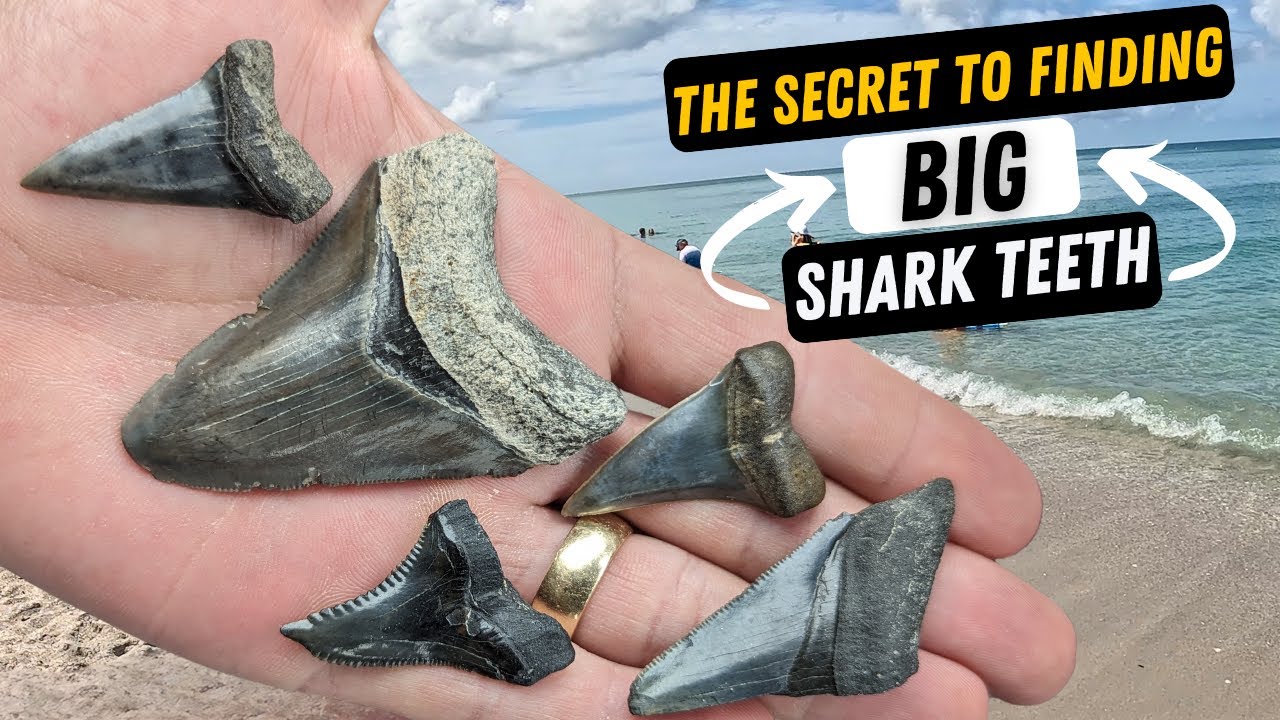
HOW TO FIND BIG SHARK TEETH!! Shark Tooth Hunting Techniques for Venice Beach + Caspersen Beach FL

This is the Worlds BEST Shark Tooth Hunting Spot (Venice, Florida)

Venice FL: The Video

Caspersen Beach Venice, Florida: The BEST Natural Florida Beach? (and Shark Teeth!)