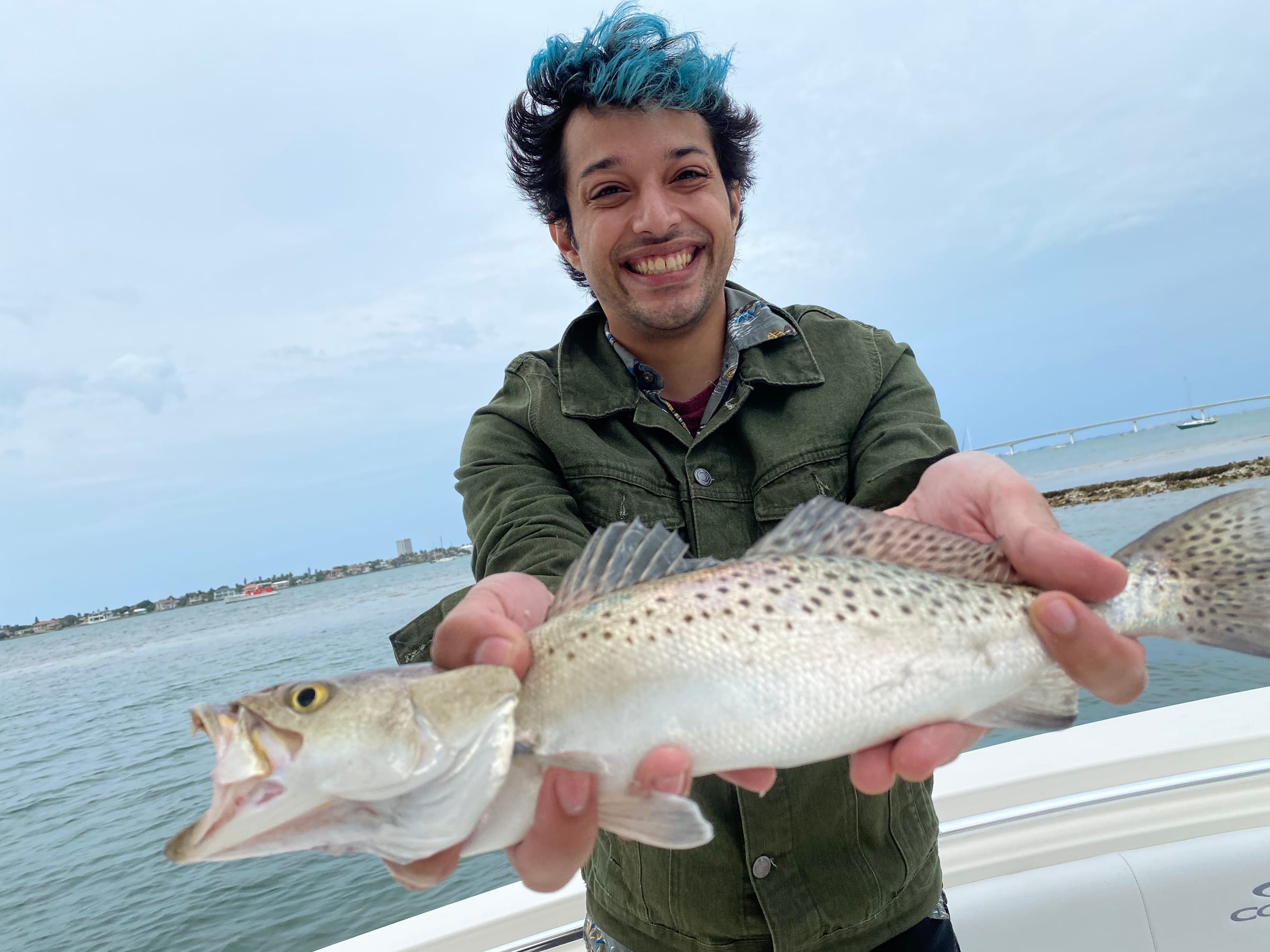
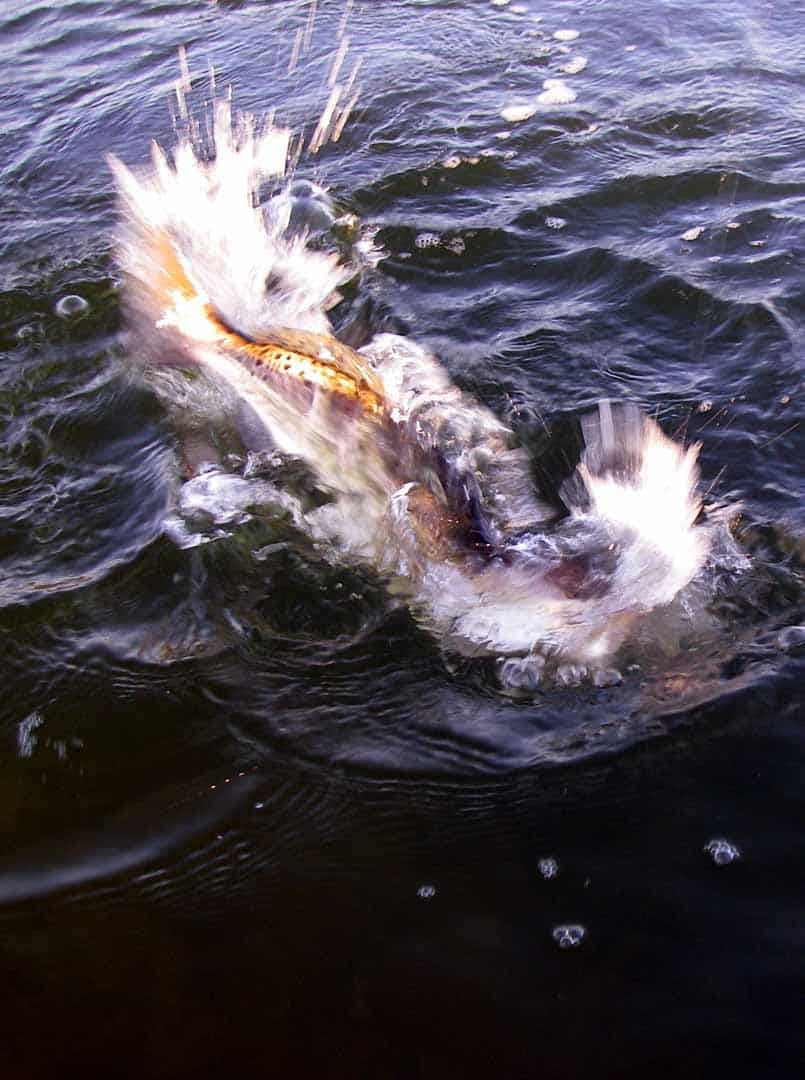
Spotted seatrout are open year-round in Sarasota Bay under new rules that took effect April 1, 2026: a 15–19 inch slot, 3 fish per person per day, and one fish over 19 inches allowed per vessel. They are the most numerous gamefish in the bay, the best beginner and kids target on this coast, and the reason the drift-and-jig grass flat is the default Sarasota fishing trip.
What are the new seatrout regulations for 2026?
FWC moved seatrout to regional management effective April 1, 2026 (FWC announcement). The Sarasota Bay Region — State Road 64 in Bradenton south to 27°04.727’ N near the Venice airport — fishes under these numbers, per the FWC spotted seatrout page:
| Rule | Sarasota Bay Region, 2026 |
|---|---|
| Slot | 15–19” total length |
| Bag limit | 3 per person per day |
| Over-slot allowance | 1 fish over 19” per vessel (or per shore angler), counted in the bag |
| Season | Open year-round |
| Commercial (for context) | Jun 1 – Oct 31 only, 15–24” slot |
The same recreational numbers apply in the Southwest Region to the south, so a Venice-to-Boca-Grande run doesn’t change your trout rules the way it changes your snook rules. Regulations change — verify current rules before you fish. The full statewide book is in the 2026 Florida saltwater regulations PDF.
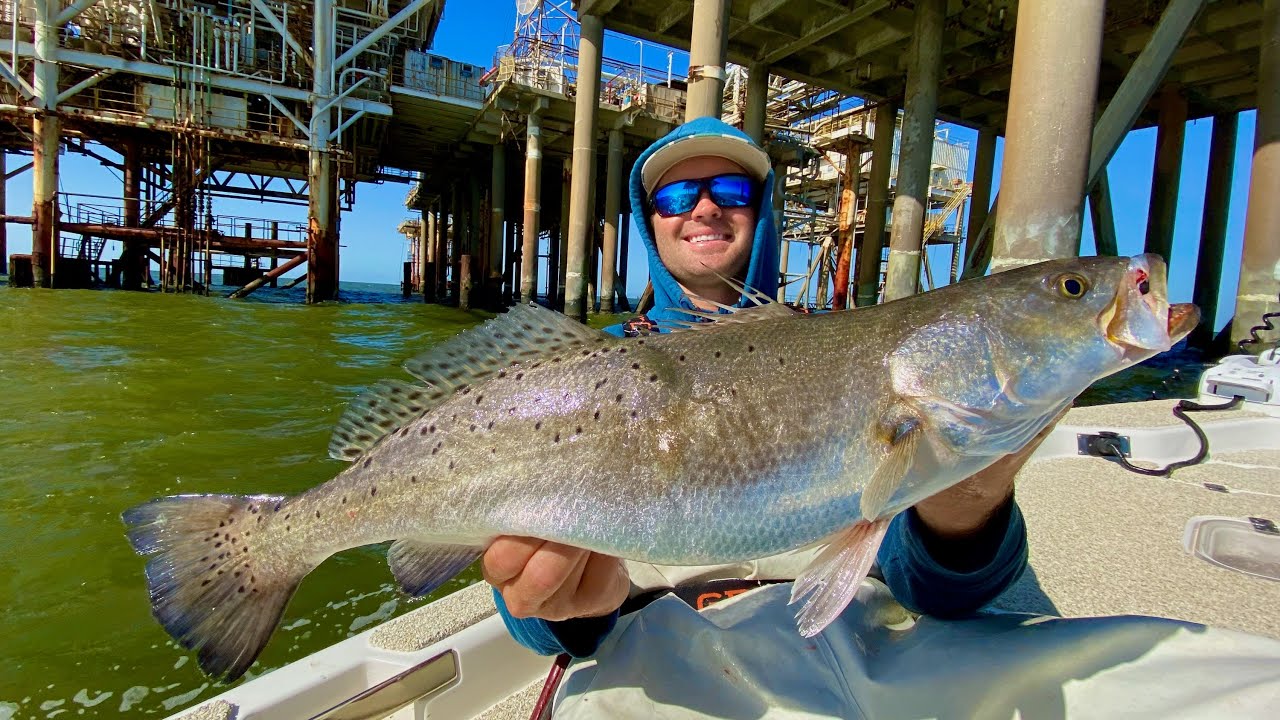
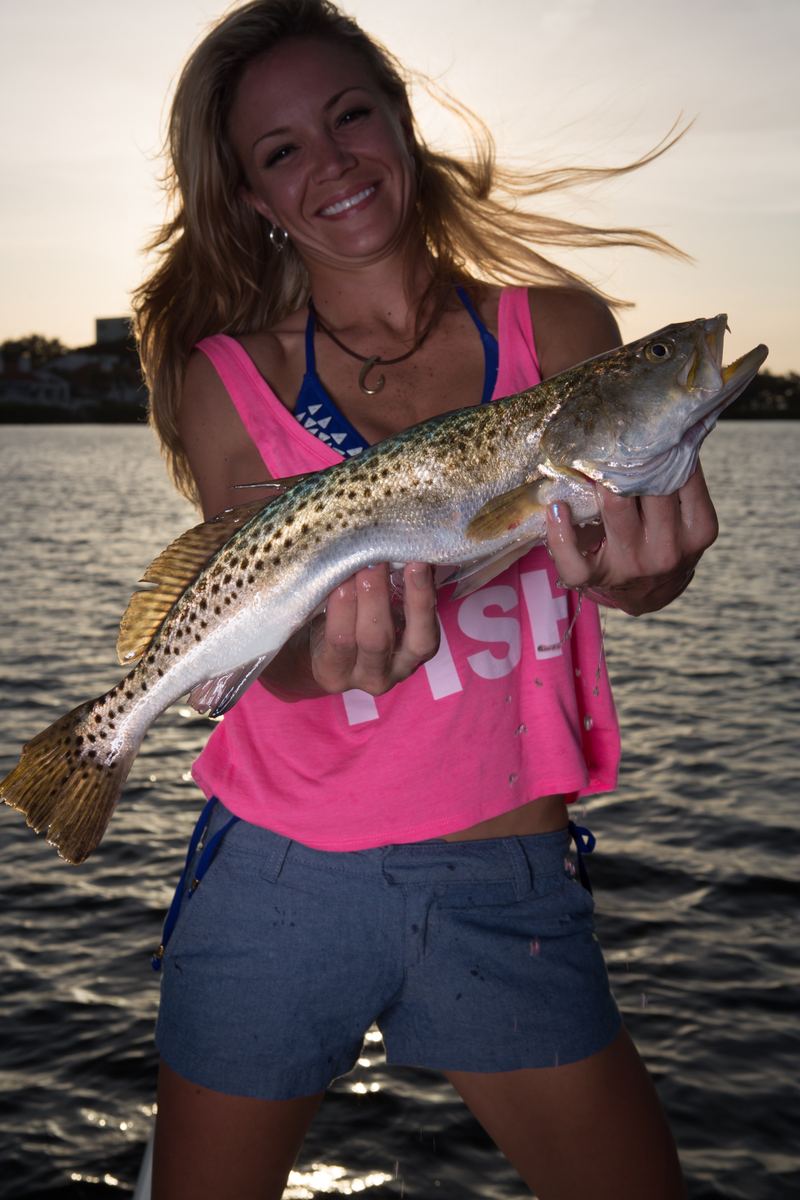
Editorial note built into that over-slot rule: trout over 24 inches — “gators” — are almost all females and heavy repeat spawners. The Florida record, 17.44 lb from Ft. Pierce in 1995, is also the all-tackle world record (Florida state records). Sarasota reality: 14–18 inch fish are the staple, 20-plus is a quality fish, and a 24-plus gator is a trophy that should swim away.
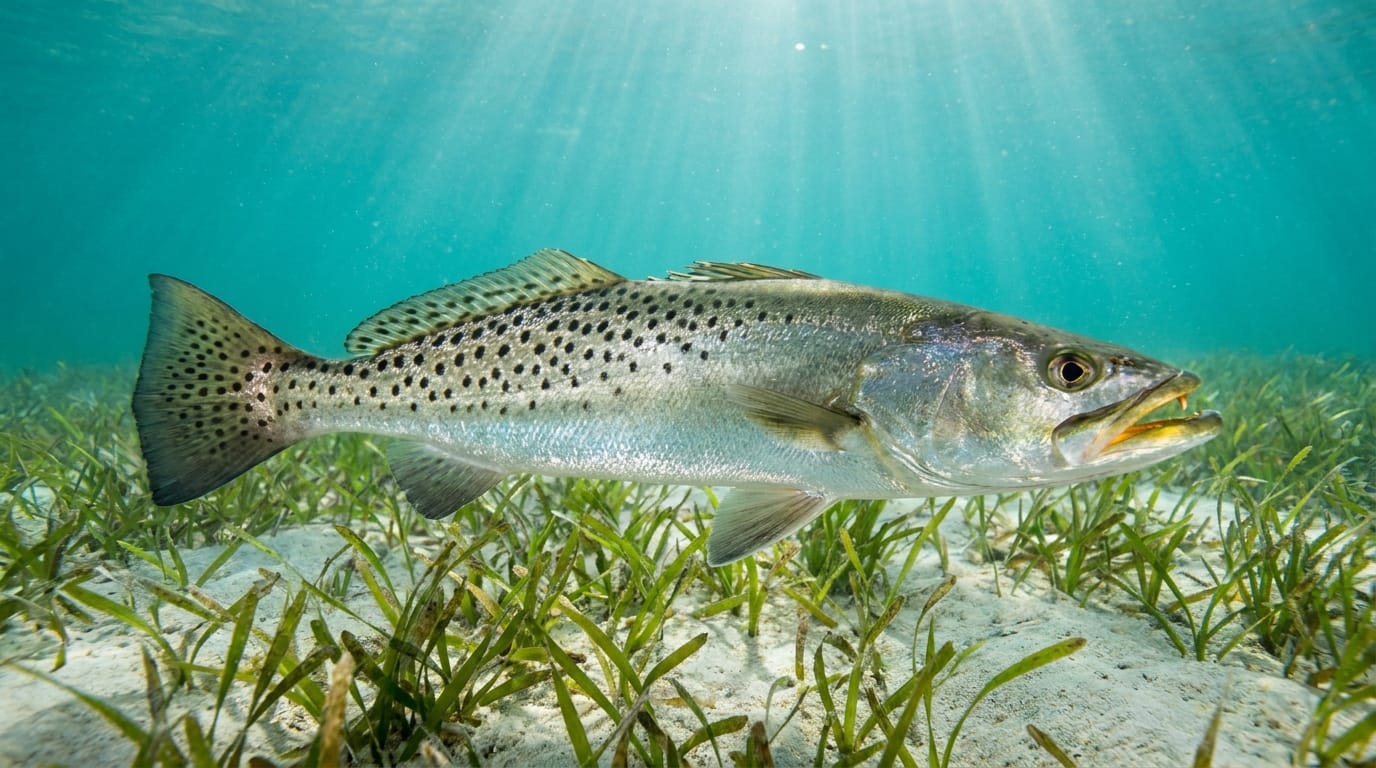
Seatrout hold over seagrass in two to eight feet of water.
Why is trout fishing all about grass?
Because the grass is the food. Turtle grass, shoal grass and manatee grass beds hold grass shrimp, pinfish, pigfish, small crabs and glass minnows; bare sand holds almost none of it. A trout sits in or beside the grass and eats what the tide pushes past.
That makes the productive water the edges, not the middle of a bed:
- Potholes — bare sand holes scattered through a grass bed. A fish sitting in the hole sees anything that crosses it.
- The deep edge — where grass quits, usually around 6–8 feet here, and the bottom drops toward a channel.
- The shoreline edge — where the bed ends against a bar, a dock line, or a mangrove point.
- Moving water over any of the above. Slack tide over grass is dead water.
Where are the best grass flats for trout in Sarasota Bay?
Trout live over grass in 2 to 8 feet of water, and Sarasota Bay is ringed with it.
Deep grass (3–8’): the Middle Grounds in the center of the bay, the Radio Tower flats east of Longboat Key, the Bishops Point area, the Marina Jack bayfront edge, the outside edge of Buttonwood Harbor, the grass off Ken Thompson Park and City Island, the Blackburn Bay and Little Sarasota Bay channels, and Lemon Bay down toward Englewood.
Skinny water for gators: potholes on the Bulkhead and Palma Sola grass at first light — the same water the redfish tail on, one hour earlier.
Night: every lighted dock from Longboat to Venice, the Venice jetties, and the bridge lights at Stickney Point and Siesta Drive.
Shore access: Tony Saprito Pier on the Ringling Causeway, Ken Thompson Park, Bayfront Park, and the Venice jetties. A shore angler gets the over-slot allowance individually — one fish over 19 inches within the three-fish bag.
What is the best rig for spotted seatrout?
The Sarasota standard is a live shrimp under a popping cork, drifted across deep grass. Pop the cork, let it sit, pop it again — the chug mimics feeding fish and the shrimp hangs in the strike zone. It is deadly twelve months a year and the best kids-and-beginners rig on the bay. Full setup on our popping cork guide.
The rest of the program:
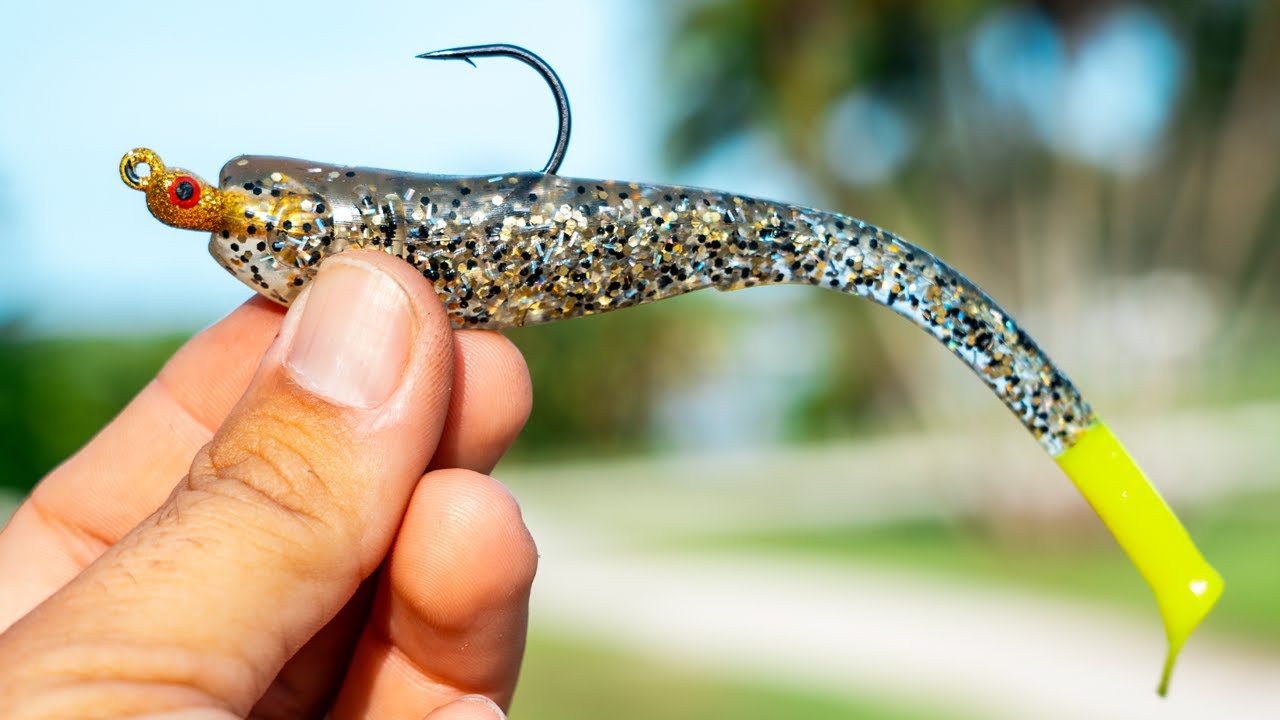
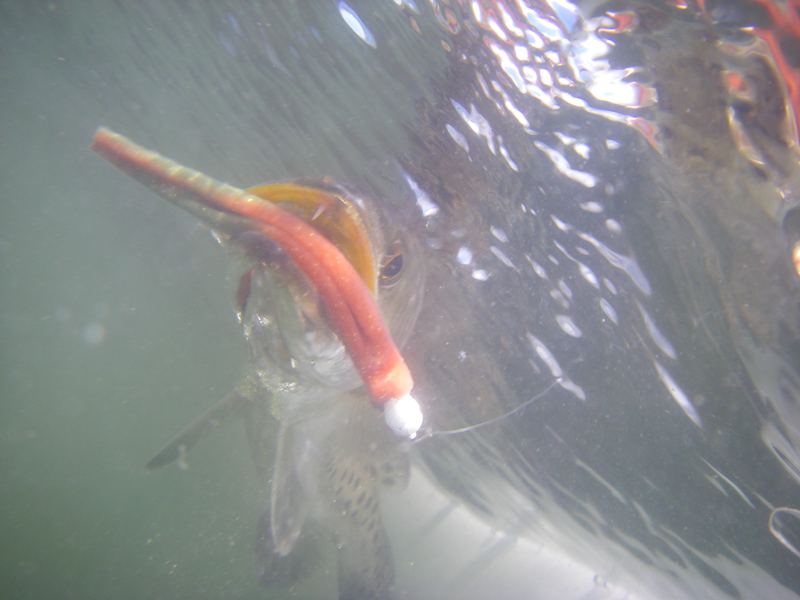
- Drift and jig: 1/4 oz jighead with a 3–4” paddletail or shrimp tail, bounced along bottom as the boat drifts the flat — the classic Sarasota search technique, covered in our jigging guide. Chartreuse, root beer, or white; confidence matters more than color.
- Gator hunting: full-size topwater walkers at gray light over potholes, or a live pinfish free-lined in skinny water.
- Tackle: 7’ medium-light to medium spinning rod, 2500–3000 reel, 10 lb braid, 20 lb fluorocarbon leader.
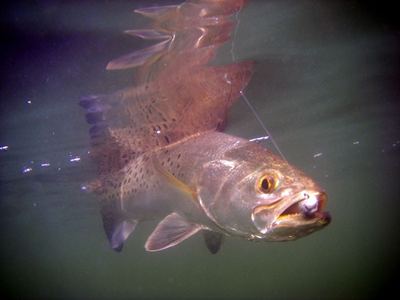
Two handling rules, because trout are the most fragile fish in the bay. First, the soft mouth: their two canine fangs sit in tissue that tears, so no hard hooksets and no bulldogging — reel tight and lift with a loose drag. Second, the slime coat: dry hands and gripping devices damage fish you intend to release. Wet hands, keep over-slot females in the water, and unhook them boatside.
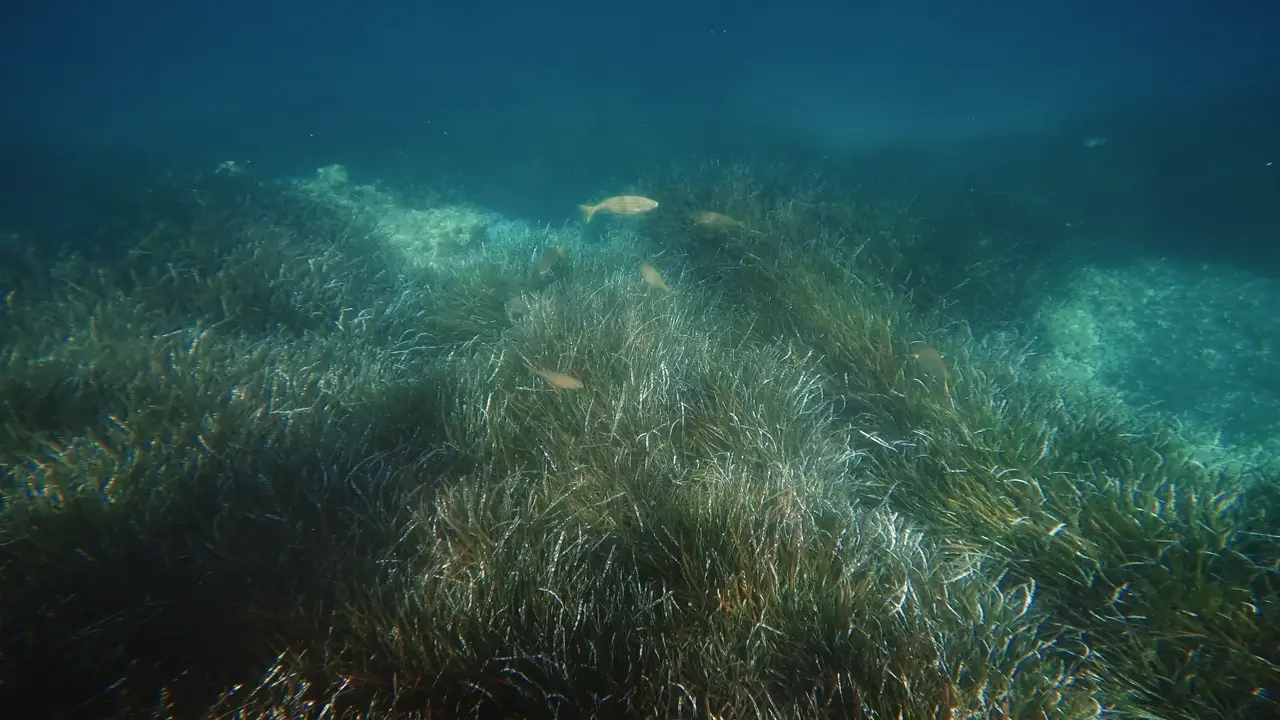
Trout scatter across the grass — you drift to cover water, not anchor on a spot.
When is the best trout fishing in Sarasota?
| Month | Pattern |
|---|---|
| Dec–Feb | Deeper grass in 4–8’, channel edges, residential canals, and dock lights on cold snaps. Slow sink-and-draw with shrimp or soft plastics. Warmed flats on incoming afternoon tides. |
| Mar–May | Prime. Pre-spawn and spawning fish flood the 2–6’ grass; big females go shallow at dawn — the topwater window. |
| Jun–Aug | Dawn bite on deep grass edges (Middle Grounds, Radio Tower), then dock lights at night; midday fish slide to 6–10’. |
| Sep–Nov | Strong again as bait floods the bay. Trout mix with ladyfish, mackerel, and jacks on the deep grass — classic drift-and-jig season. |
Trout spawn spring through summer inside the bay — on a quiet dusk near a channel edge you can hear the males drumming. Moving tide over grass is the constant; check NOAA tide predictions and drift with the current. After any prolonged red tide event, ease off the trout — they are among the hardest-hit species; current status is on the FWC red tide map.
What are the most common seatrout mistakes?
- Anchoring instead of drifting — you cover no water and trout are scattered feeders
- Swinging hard on the bite and tearing the soft mouth
- Boca-gripping and dry-handling fish you plan to release
- Keeping an over-slot female when the vessel’s one over-slot fish is already in the box
- Fishing dead-still water at midday in summer — start at dawn or fish the lights
Local intel is cheap: CB’s Saltwater Outfitters on Stickney Point Road posts what the flats are doing, and New Pass Grill on City Island sells live shrimp on the way to the bayfront.
FAQ
What is the seatrout limit in Florida in 2026? In the Sarasota Bay Region: 3 per person per day, 15–19 inch slot, plus one fish over 19 inches per vessel (or per shore angler) counted within the bag. New regional rules took effect April 1, 2026.
Are spotted seatrout good to eat? Yes — mild, white, and best fresh; the flesh is soft and doesn’t freeze as well as other species. Keep mid-slot fish, release the big females.
What is a gator trout? A seatrout over roughly 24 inches. Nearly all are female repeat spawners. In Sarasota they come from skinny-water potholes at dawn, usually on big topwaters or live pinfish.
What’s the easiest way for a beginner to catch trout in Sarasota? A live shrimp under a popping cork, drifted over the Middle Grounds or Radio Tower grass on a moving tide. It’s the closest thing to a guaranteed bite in the bay.
Can you catch seatrout at night? Yes — lighted docks and bridge lights from Longboat to Venice hold trout most nights, especially on winter cold snaps.
Related reading
Trout are the middle of the inshore day here: throw topwater for gators at dawn, drift the grass mid-morning, then go find redfish on the bars or snook on the edges. In winter, pair a trout drift with sheepshead on the nearest bridge — the two bites peak together.