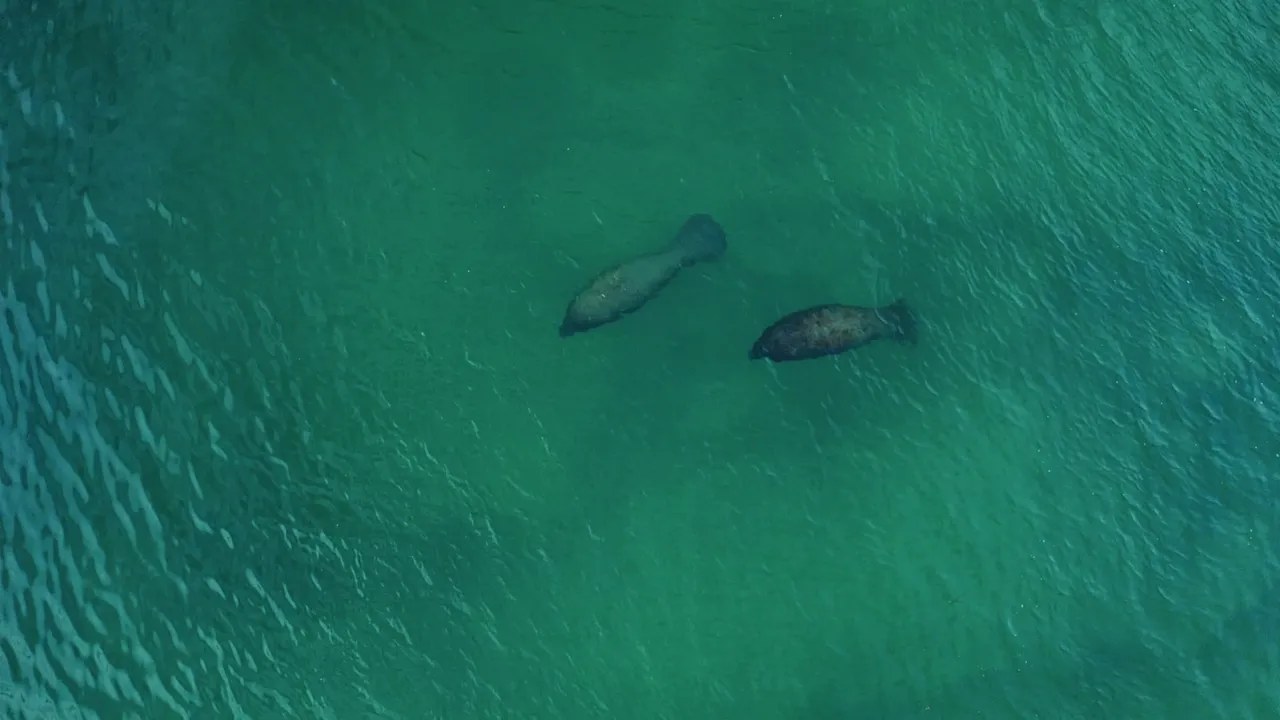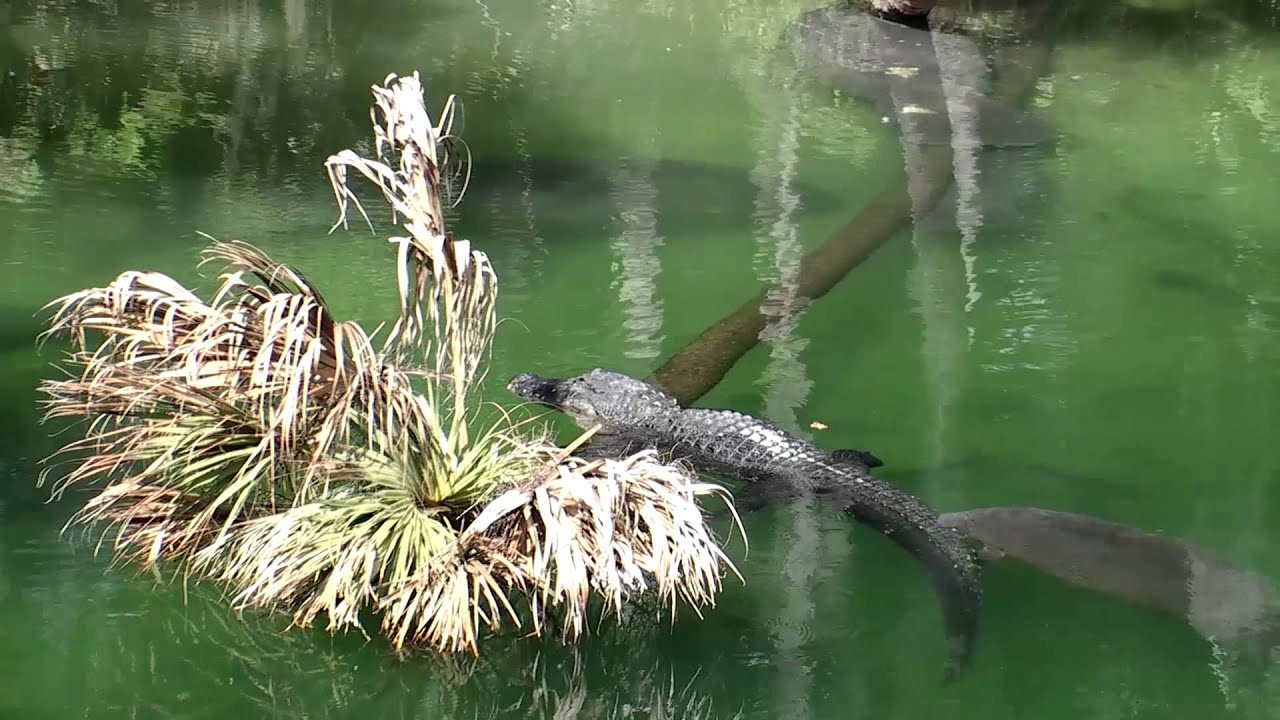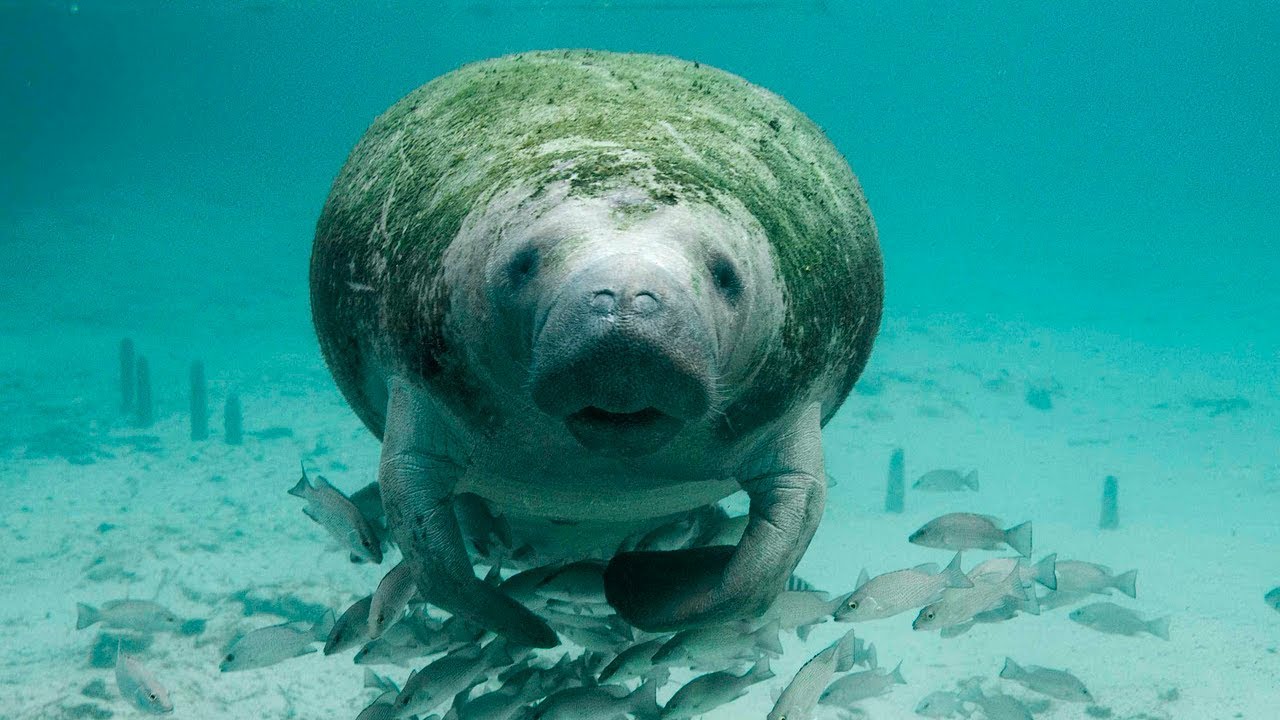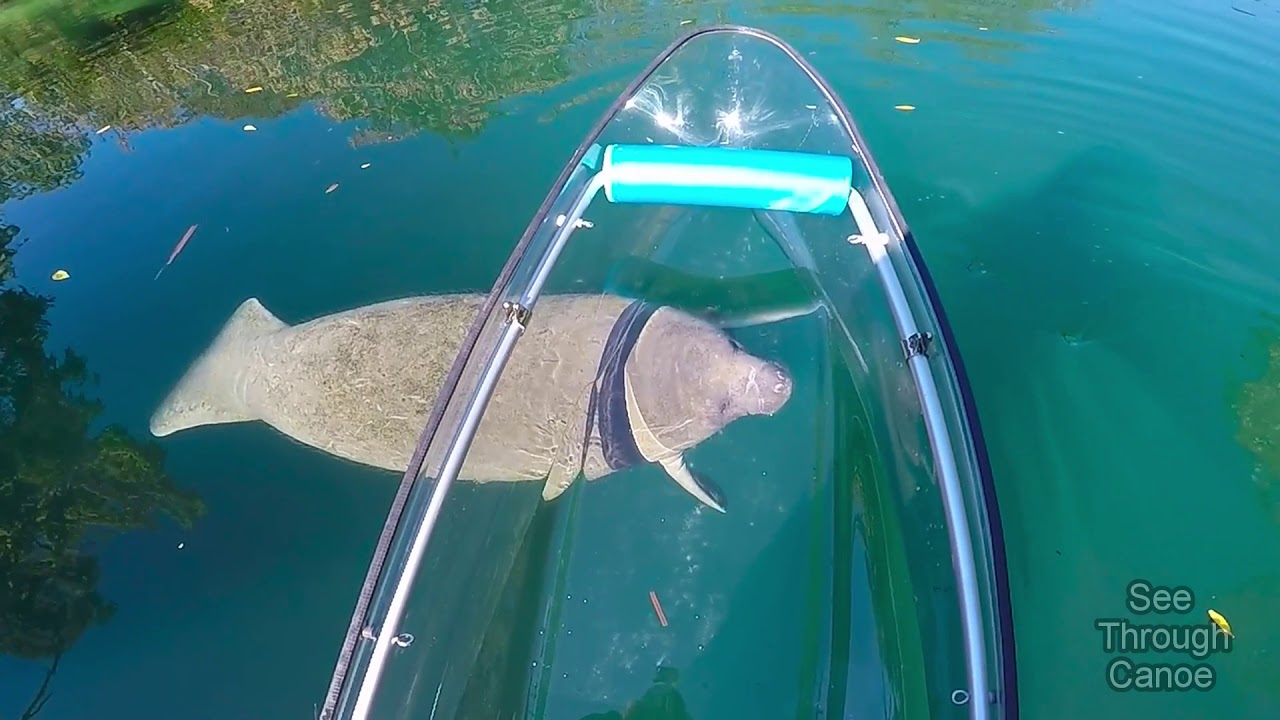
Manatees are around Sarasota year-round, but where you see them flips with the season. In the warm months (roughly April–October) they graze the open seagrass flats and mangrove creeks all over the bay. In winter (November–March), when Gulf water drops below about 68°F, they abandon the flats and pack into warm-water refuges — natural springs and creeks, deep canals, and power-plant discharges. The single most important natural refuge in Southwest Florida is Warm Mineral Springs Creek in North Port, which holds 125+ manatees at the peak of a cold snap. The catch: it’s a closed protection zone in winter, so the best legal, reliable viewing is from a kayak or a slow boat on the creeks and flats, or a day trip to a viewing center.
This guide covers what a manatee actually is, how its biology drives that seasonal movement, exactly where and when to look near Sarasota, and the laws that keep both you and the animal out of trouble.
What is a manatee, exactly?
The animal you see in Sarasota Bay is the Florida manatee (Trichechus manatus latirostris), a subspecies of the West Indian manatee. It belongs to the order Sirenia — the “sea cows” — a small group of fully aquatic, plant-eating mammals. The other West Indian subspecies is the Antillean manatee (Trichechus manatus manatus), which ranges through the Caribbean, Central America, and the northern coast of South America; you won’t see that one here, but it’s the same species.
The name “sea cow” fits the diet and the temperament, but the family tree is stranger than it looks. A manatee’s closest living relatives aren’t whales or seals — they’re elephants and hyraxes. Manatees share ancestry with elephants: toenails on the flippers, a similar tooth-replacement system, and a long herbivorous evolutionary history on land before returning to the water tens of millions of years ago.
A few anatomical quirks worth knowing before you meet one:
- Marching molars. Manatees have no biting teeth — only flat grinding molars. New teeth erupt at the back of the jaw and migrate forward about a centimeter a month, replacing worn front teeth that fall out. It’s an adaptation to a lifetime of chewing gritty, abrasive seagrass.
- Six neck vertebrae. Almost every mammal, from a mouse to a giraffe, has seven cervical vertebrae. Manatees have six. They can’t turn their heads sideways — to look behind them, they roll the whole body around.
- Flaking, algae-covered skin. Their thick, leathery skin continuously sheds. Algae grows on the back and tail of slow-moving adults, which is why a resting manatee often looks green or brown.
The primary sources on all of this are the Florida Fish and Wildlife Conservation Commission’s manatee facts page and the Save the Manatee Club manatee facts. The U.S. Fish & Wildlife Service species profile covers federal status.
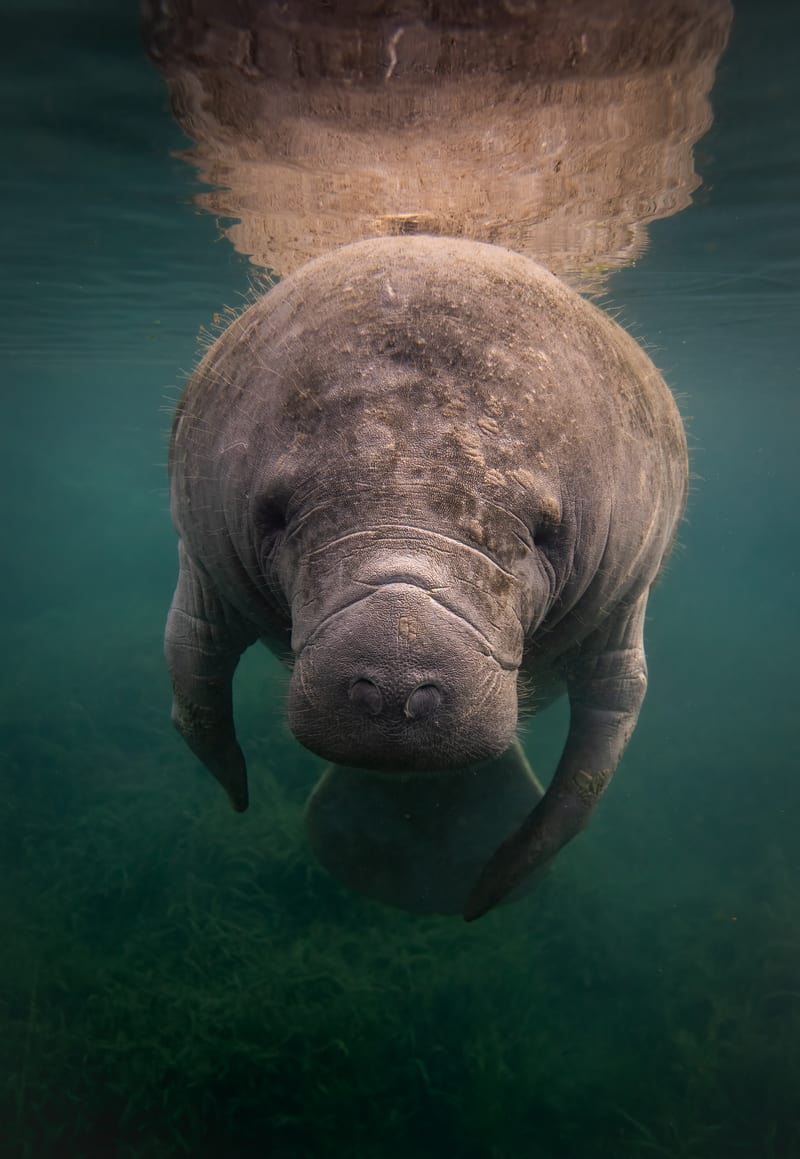
How big do manatees get, and how long do they live?
Adults typically run 9–10 feet long and around 1,000 pounds, though large individuals exceed 13 feet and 3,500 pounds. They can live a long time — over 65 years in captivity — but in the wild most don’t reach 30, because nearly all the pressure on them is human-caused (boats, cold events, habitat loss). The majority of documented deaths fall in the first ten years of life.
| Trait | Florida manatee |
|---|---|
| Length (adult) | 9–10 ft typical; up to 13+ ft |
| Weight (adult) | ~1,000 lb typical; up to 3,500+ lb |
| Lifespan | 30+ yrs wild; 65+ yrs documented |
| Diet | Herbivore — seagrass & aquatic plants |
| Daily food intake | ~10–15% of body weight |
| Feeding time | 4–8 hours/day grazing |
| Cold limit | Cannot tolerate water below ~68°F for long |
| Breathing | Surfaces every 3–5 min (up to ~20 min resting) |
| Reproduction | 1 calf every 2–5 yrs; ~13-month gestation |
| Calf dependency | Stays with mother up to 2 years |
| Natural predators | None |
| FL population (minimum) | ~8,350+ |
Why can’t manatees handle cold water?
This one fact explains almost everything about where manatees go and when. A manatee cannot tolerate water below about 68°F (20°C) for a sustained period. It’s a big, warm-blooded mammal with a surprisingly low metabolic rate and relatively little insulating fat for its size, so it can’t generate enough internal heat to stay warm in cold water. Prolonged exposure causes cold stress syndrome — a slow, debilitating condition that can kill even when the water never freezes.
So when Gulf and bay temperatures fall below 68°F, usually with the first strong cold fronts of the season, manatees stop feeding on the open flats and migrate to warm water. Three kinds of refuge draw them:
- Natural springs, which flow at a constant ~72°F year-round.
- Warm creeks and deep canals fed by spring discharge or protected from wind.
- Industrial warm-water discharges, most famously power-plant cooling outflows.
They will crowd into these refuges by the dozens or hundreds, often skipping meals for days, because staying warm matters more in the short term than eating. When the water warms back past 68°F, they disperse to feed. That yo-yo — warm up, then go eat — repeats all winter.
What do manatees eat, and why does it matter?
Manatees are pure herbivores. They graze 4–8 hours a day and eat roughly 10–15% of their body weight in vegetation — for a 1,000-pound adult, that’s 100–150 pounds of wet plant matter daily. On the Sarasota flats the staple is seagrass (turtle grass, manatee grass, shoal grass); in rivers and springs they switch to freshwater plants, and they’ll also take floating and shoreline vegetation. They steer and hold food with their flippers and use a split, prehensile upper lip that works almost like a pair of grasping pads to tear vegetation loose.
That appetite makes them a working part of the seagrass ecosystem — the same grass beds that feed spotted seatrout and redfish. Healthy grass supports the whole inshore food web; when grass collapses, manatees are the large, visible animals that starve first. Which is exactly what happened on the other side of the state, covered in the conservation section below.
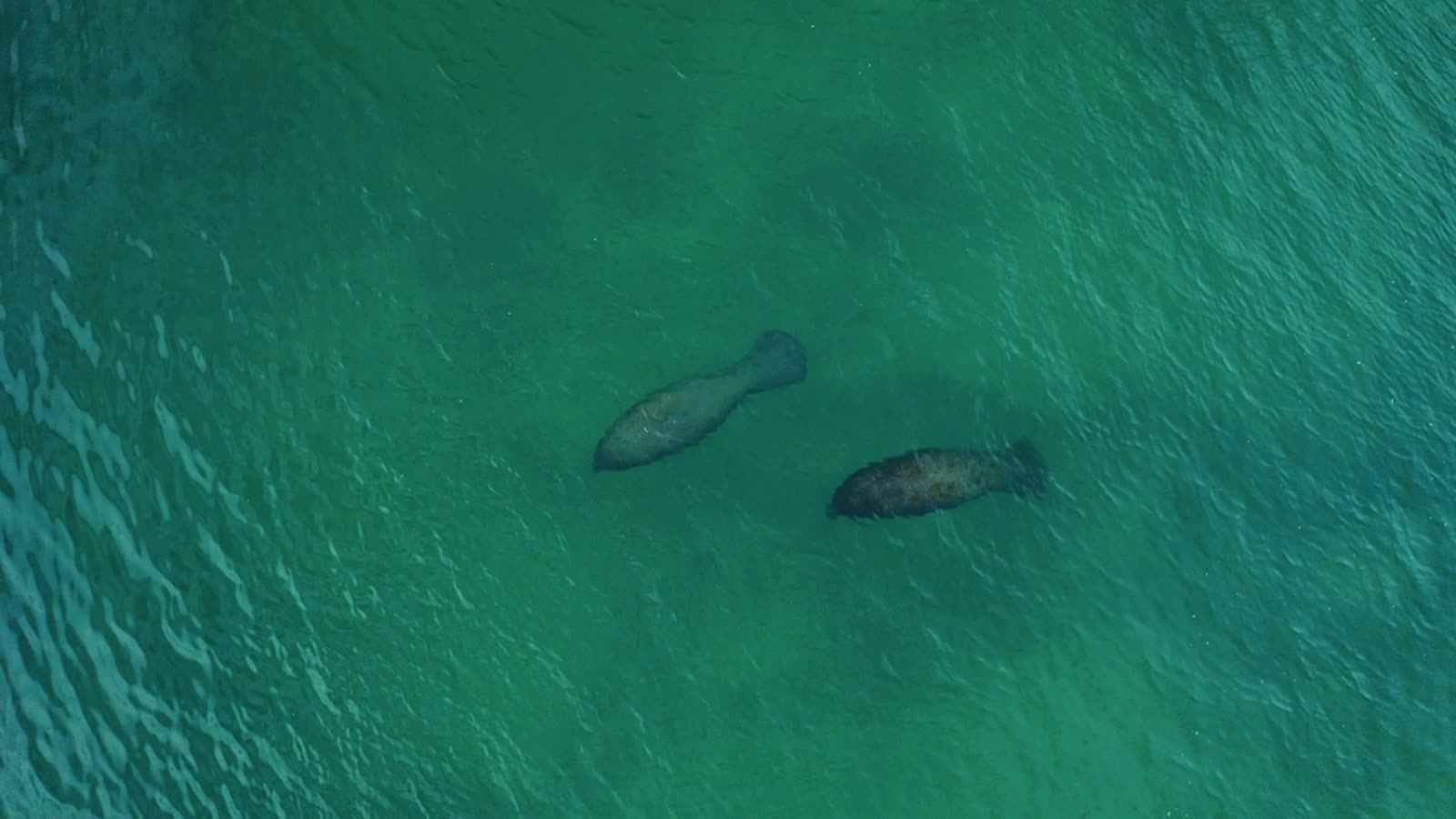
The bay empties. The warm creeks fill.
When is manatee season near Sarasota?
There are two seasons, and they send you to different water.
| Season | Months | Where manatees are | Best way to see them |
|---|---|---|---|
| Warm season | Apr–Oct | Open grass flats, mangrove creeks, passes, canals | Kayak or slow boat on the flats; nature tour |
| Cold season | Nov–Mar | Warm-water refuges: springs, warm creeks, deep canals, power-plant outflows | Viewing centers; protected creeks (where legal) |
The general rule most local sources give: November through March is the concentrated “manatee season,” when cooling Gulf water pushes animals into predictable refuges. But summer is not a dead season — it’s just diffuse. From late spring through fall, manatees spread across the whole estuary, so you’re more likely to bump into one crossing a flat or surfacing in a canal than to find a crowd. Visit Sarasota County’s manatee guide and the FWC “Where Can I See Manatees” page both point to the same November–March window for reliable numbers.
Where can I see manatees around Sarasota?
Here are the real spots, sorted by how local they are. Note the important accuracy point up front: the biggest natural refuge in the region is closed to viewing in winter, so don’t plan a trip expecting to watch the herd there.
Local — Sarasota & Manatee County
- Warm Mineral Springs Creek, North Port. The spring flows at roughly 85–87°F and feeds Warm Mineral Springs Creek and Salt Creek, which connect to the Myakka River. Over 125 manatees have been documented using this creek system in cold weather — the most important natural warm-water refuge in Southwest Florida. Habitat restoration here was a genuine conservation win (details from FWC). Important: the creek is an FWC No Entry Zone from November 15 to March 15 to protect the animals, so you cannot go in and watch them at the peak of the season. Off-season, it’s a striking spot to understand why manatees need it.
- Phillippi Creek, Sarasota. A quiet, low-traffic urban creek off Roberts Bay where cows and calves are commonly seen — the calm water makes it a nursery. Launch from Phillippi Estate Park. It’s also a winter snook hole; see our rivers & backcountry guide.
- South Lido mangrove tunnels, Lido Key. Launch a kayak or paddleboard from Ted Sperling Park and work the mangrove channels — slow, protected water where manatees rest and pass through.
- Jim Neville Marine Preserve, Siesta Key. A short paddle from Turtle Beach into calm inlets and mangrove edges.
- Myakka River, east Sarasota County. Manatees push upriver from Charlotte Harbor mainly in summer, when rains raise water levels. Wildlife boat tours run out of Myakka River State Park.
- Bradenton & the Manatee River. The lower Manatee River, canals, and Intracoastal freshwater outflows hold manatees, especially around the marinas and dock lines they favor for calm water and freshwater seeps.
Within reach — Venice, Englewood & the harbor
- Venice jetties & Intracoastal, Venice. North and South Jetties see manatees, most often in summer, and the ICW through Casey Key holds them in the canals.
- Lemon Bay Park, Englewood. A protected preserve with shallow seagrass — best late fall through early spring.
- Charlotte Harbor & the Peace River. The harbor is a major manatee estuary; the Peace and Myakka Rivers feeding it are summer travel corridors.
Day trips — the most reliable viewing
- TECO Manatee Viewing Center, Apollo Beach (~1 hr north). The classic. Manatees have gathered in the warm discharge canal of Tampa Electric’s Big Bend Power Station since the early 1970s, once Tampa Bay cools to 68°F or below. Free admission and parking, a 50-foot observation tower, seasonal (roughly November 1–April 15), closed in summer. Details at the TECO Manatee Viewing Center.
- Blue Spring State Park, Orange City (day trip, ~3 hrs). A first-magnitude spring that holds a constant 72°F. It’s become one of the great manatee success stories — from 14 manatees tracked in 1970 to record winter counts approaching 1,000 animals in a single gathering. A raised boardwalk lets you watch without entering the water. Park info: Florida State Parks — Blue Spring.
How should I behave around a manatee?
Passive observation, always. The single best thing you can do is nothing — float quietly and let the animal decide how close to come. Specifics from Florida and federal law:
- Never touch, chase, or ride a manatee. Manatees are protected under the federal Endangered Species Act and Marine Mammal Protection Act, and by Florida’s own Manatee Sanctuary Act. Harassment — including pursuing or repeatedly approaching — is illegal.
- Never feed a manatee or give it fresh water. It feels friendly; it’s dangerous. Feeding and watering habituate manatees to boats, docks, and people, which pulls them toward the propellers and structures that kill them. It’s also illegal.
- Don’t corner one or separate a calf from its mother. Give a wide berth; don’t block the animal’s path to open water.
- Idle in manatee zones. Slow-speed and idle-speed zones exist because a manatee surfaces to breathe every few minutes and can’t dodge a boat. Trim up, slow down, and post a lookout on the bow in shallow, grassy water.
If you’re on a wildlife trip rather than in your own kayak, a licensed captain-naturalist keeps you legal and at the right distance — the ethos behind our informative nature tours and dolphin tours, which treat manatees as animals to watch, never approach.
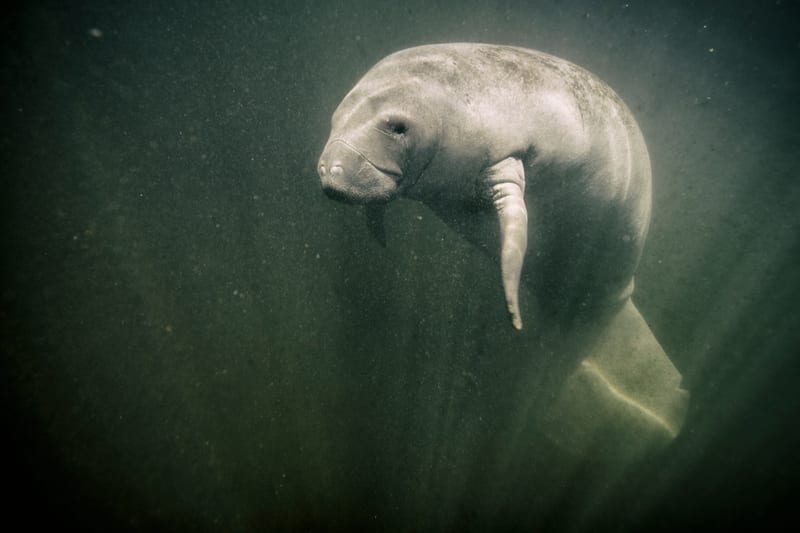
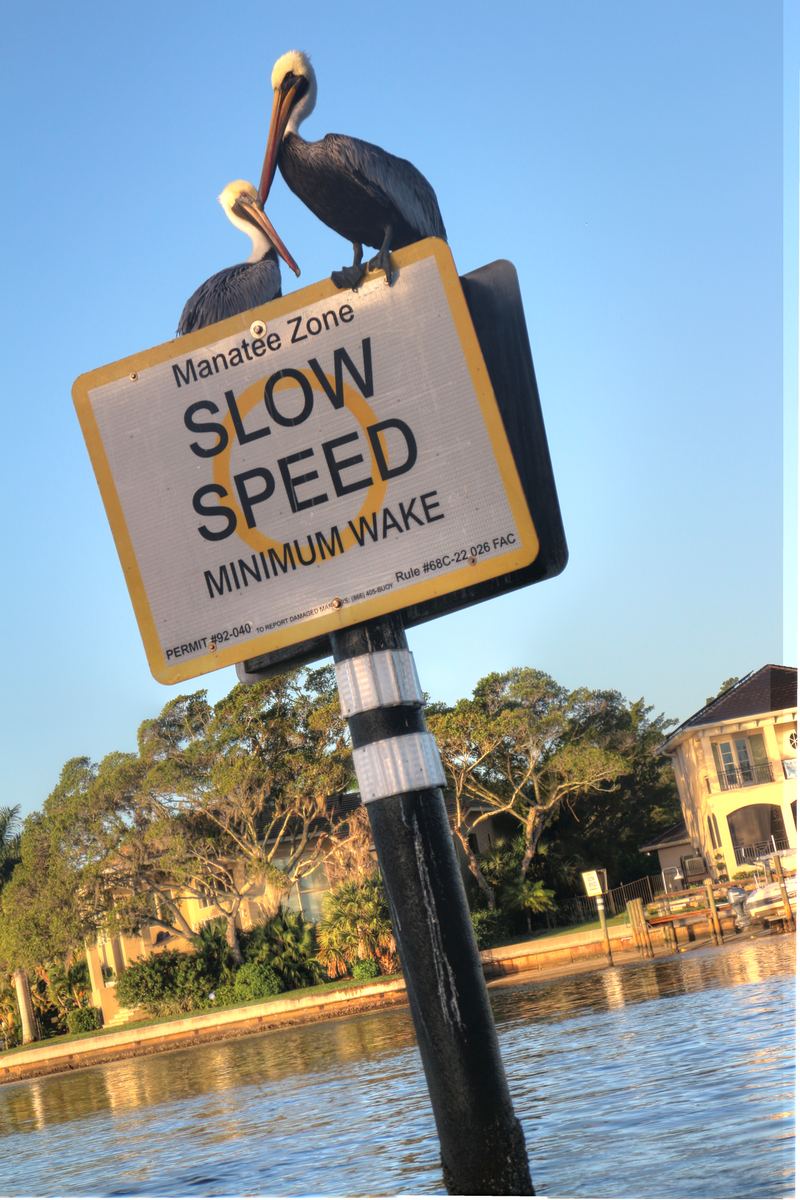
What are the biggest threats to manatees?
Manatees have no natural predators and a slow reproductive rate — one calf every two to five years, after a roughly 13-month gestation. That combination means the population can’t absorb heavy losses quickly. The threats are almost entirely human or human-influenced.
- Boat strikes. The leading cause of human-related manatee death. Nearly every adult manatee carries a unique pattern of propeller and hull scars on its back — researchers actually use these scar patterns to identify individuals. Slow-speed zones, idle zones, and a bow lookout are the front-line defense.
- The 2020–2022 Unusual Mortality Event. Between December 2020 and April 2022, 1,255 manatee carcasses were documented on Florida’s Atlantic coast — an unprecedented die-off. The cause was starvation: decades of nutrient pollution in the Indian River Lagoon fueled algae blooms that wiped out roughly 95% of the seagrass since 2011, leaving wintering manatees with nothing to eat in their warm-water refuge. It was the first manatee UME ever caused by starvation. State and federal agencies ran an emergency supplemental-feeding program, distributing over 200,000 pounds of produce in the winter of 2021–2022. Full record at the FWC Unusual Mortality Event page. The event was concentrated on the Atlantic coast, not the Sarasota area — but it’s the clearest warning of what seagrass loss does.
- Red tide. Blooms of Karenia brevis release toxins that manatees inhale at the surface and ingest on contaminated seagrass, causing neurological harm and death. Sarasota gets red tide; check conditions with our red tide and water quality guide.
- Cold stress. Extended cold, or being cut off from a warm-water refuge, kills manatees outright and weakens survivors.
- Habitat loss. Seawalls, dredging, dock construction, and boat traffic degrade the grass flats and quiet creeks manatees depend on.
Who rescues and rehabilitates manatees?
Florida runs a coordinated rescue-and-rehab network, the Manatee Rescue & Rehabilitation Partnership. Locally and regionally:
- The Bishop Museum of Science and Nature, Bradenton. Home of the Parker Manatee Rehabilitation Habitat — a 60,000-gallon Stage 2 facility with above- and below-water viewing, where recovering manatees regain weight before release. The Bishop’s manatee work traces back to Snooty, who arrived in Bradenton in 1949. This is the closest place to see rehabilitating manatees and learn the science.
- Mote SEA, Sarasota. Mote’s aquarium houses resident manatees (Lou and Buffett) in an educational setting and its scientists contribute to marine-mammal research and stranding response.
- ZooTampa at Lowry Park, SeaWorld Orlando, and the Jacksonville Zoo operate the critical-care hospitals that take the most badly injured animals first.
What should I do if I see a hurt or distressed manatee?
Report it — don’t handle it. If you see a manatee that is injured, entangled, orphaned, distressed, or dead, call the FWC Wildlife Alert Hotline at 888-404-3922 (cell users can dial *FWC or #FWC). Give a precise location. Early reporting is what puts a rescue team in motion; trying to move or “help” the animal yourself usually makes things worse and can injure you. FWC’s reporting page has the details.
FAQ
When is the best time to see manatees in Sarasota? For concentrated numbers, November through March, when Gulf water drops below 68°F and manatees pack into warm-water refuges. In summer they’re spread across the flats and creeks — fewer crowds, but you can encounter them anywhere in the estuary.
Can I see manatees at Warm Mineral Springs in North Port? Not in winter. The springs and creek are the region’s most important natural warm-water refuge (125+ manatees), and the creek is an FWC No Entry Zone from November 15 to March 15 to protect them. It’s closed to viewing exactly when the animals are there.
Where is the most reliable place to see manatees near Sarasota? The most reliable option is the TECO Manatee Viewing Center at Apollo Beach (about an hour north, seasonal Nov–Apr, free) or a day trip to Blue Spring State Park. Locally, quiet water like Phillippi Creek and the South Lido mangrove tunnels are your best kayak bets.
Is it legal to swim with or touch a manatee in Sarasota? No touching, feeding, chasing, or pursuing — it’s illegal under state and federal law and harmful to the animal. Passive observation only. (Designated swim-with-manatee programs exist elsewhere in Florida, such as Crystal River, under strict rules; that isn’t a Sarasota activity.)
Why do manatees gather at power plants? They can’t survive prolonged water below about 68°F. Power plants like TECO’s Big Bend discharge warm cooling water, creating an artificial refuge that manatees have used since the 1970s when the surrounding bay turns cold.
How can I tell manatees apart? By their scars. Nearly every adult carries a unique pattern of boat-strike scars, and researchers use those patterns to identify and track individuals over decades — a grim but useful fingerprint.
What do I do if I see an injured manatee? Call the FWC Wildlife Alert Hotline at 888-404-3922 with a precise location. Don’t touch or move it.
Related
Manatees and the seagrass they graze are the same flats that hold spotted seatrout and redfish, fed by the rivers and backcountry that double as winter refuges. Watch water quality with our red tide guide, and if you’d rather watch wildlife than fish, our nature tours and dolphin tours run the same protected water — slowly, and at a respectful distance. Always verify current manatee-zone boundaries and protection-zone dates with FWC before you go.